Photo via Washington Examiner

OpenAI defends firing researchers after they questioned company culture on third-party safety collaboration

Read the original at Washington Examiner ↗
Cite

Hallas, E. (2026, October 9). OpenAI defends firing researchers after they questioned company culture on third-party safety collaboration. Washington Examiner. https://www.washingtonexaminer.com/policy/technology/4761398/openai-defend-firing-researchers-safety-collaboration/

Dated when The Aporia collected the article, usually within hours of publication. Check the original for its exact date and byline.

Washington Examiner · collected 2026-10-09 · by Emily Hallas

Quick Summary

On Friday, OpenAI responded to allegations from three recently fired safety researchers—Tomek Korbak, Jasmine Wang, and Mikita Balesni—who claimed they were terminated for collaborating with external experts on AI safety issues. The company countered that the firings were due to policy violations regarding sensitive information rather than discussions about safety. OpenAI emphasized its commitment to third-party safety assessments, stating that it is working closely with independent organizations while also implementing internal procedures to manage such collaborations securely.
Written by AI on 2026-10-09, from this article's own text only (the story summary below draws on all the coverage).

AI analysis

Story summary

On October 8, three former OpenAI security researchers—Mikita Balesni, Tomek Korbak, and Jasmine Wang—publicly accused the company of firing them for raising safety concerns about artificial intelligence rather than mishandling information as stated by OpenAI. The researchers fear their dismissals could stifle open dialogue within the organization regarding AI risks. OpenAI responded by stating it fired the trio due to a significant breach of trust involving sensitive information, contradicting the employees' claims that they were terminated for prioritizing safety over corporate interests. This incident highlights growing tensions in the tech industry between advancing AI capabilities and ensuring public safety, particularly amid recent security breaches involving AI systems.

Written for “OpenAI Safety Controversy” on 2026-10-31, grounded in this article and the 6 other(s) covering the same event.

Story

📰 OpenAI Safety Controversy
Technology · 7 article(s) covering the same event. Compare every outlet's account →

Compared with similar articles

This article reads leans left and hedges 30% of its claims. Each row says how that neighbour differs.
Global News
Hedges 1 of 14 claims Outlet record 63/100
CBS News
Hedges 3 of 24 claims Outlet record 66/100
The Straits Times
Hedges 3 of 19 claims Outlet record 66/100
NPR
⚖️ Leans left Hedges 3 of 48 claims Outlet record 60/100
BBC News
Hedges 3 of 16 claims Outlet record 68/100
Al Jazeera
Hedges 3 of 30 claims Outlet record 60/100
Toronto Star
⚖️ Leans left Hedges 1 of 2 claims Outlet record 64/100
“Article A describes a hearing where AI insiders warn NYC council about dangers of emerging technology, while Article B focuses on OpenAI defending firings of researchers who questioned company culture.”
Washington Examiner
⚖️ Leans left Hedges 12 of 58 claims Outlet record 70/100
“The articles describe related developments but different specific events: one about a resignation and warnings from industry leaders, and another about OpenAI defending firings of safety researchers.”
How this article was measured signals, leaning charts, publisher record, byline, topics and claims

Signals How these are calculated →

Claims extracted
20
sentences that state something as happening or true
Uncertain
30%
6 of 20 hedged ("reportedly", "may", "according to")
Leaning
Leans left
of the writing, not the subject · beta estimate
Publisher signals
70/100
Washington Examiner's corrections and hedging, across everything collected from it. Not a measure of accuracy.
Outlets on this story
7
Technology
Same framing elsewhere
1
articles that frame the event the way this one does
Analyzed 2026-10-09 · how these are computed

How this is being covered How these are calculated →

Article leaning vs. publisher reliability
Source leaning vs. consistency

Publisher

Washington Examiner · 3851 article(s) · 7 correction(s) detected
Running correction rate · 7 correction(s)

Who wrote this

Emily Hallas
102 article(s) here · 1 carrying a prediction
🔮 Gov. Ron DeSantis (R-FL) on Friday suspended a Florida mayor who was arrested earlier this month on two felony charges tied to allegations of corruption in a local grant program.
🔮 Eight black candidates in the home stretch of their gubernatorial campaigns in states across the country are vying for a win that would be historic, given there have been just five black governors, and only three elected, since the United States was established.
🔮 House Speaker Mike Johnson (R-LA) on Friday made an eleventh-hour appeal to voters, warning that handing Democrats wins in the midterm elections would empower socialists to make sweeping changes to the American way of life.
🔮 Artificial intelligence is transforming the U.S. economy, but not necessarily in the grim manner industry leaders have warned it could affect livelihoods, experts say.
🔮 The 2026 midterm elections are set to become the most expensive on record, as Republicans pour cash into battleground races to defy history and maintain control of Congress.
2026-10-26 · mixed framing · What are the most expensive midterm races?
🔮 Obama is set to speak around 2:15 p.m. at a rally at Cleveland Public Auditorium, marking his first trip to the Buckeye State since 2018.
🔮 Texas Attorney General Ken Paxton sued Sam Altman’s OpenAI on Friday, accusing the company of lying about risks it could pose to users.
🔮 Rep. Ilhan Omar (D-MN) on Wednesday said she will be forced to move away from her Washington, D.C., apartment because of death threats she said she received after becoming the subject of a federal investigation.
🔮 Abbott is widely expected to secure a fourth term come Nov. 3, but it is considered his most competitive race to date, with most polls painting a close race.
🔮 Last month, the North Carolina State Board of Elections approved several changes to voting that it said were aimed at making it harder for fraud to occur, a move that triggered a lawsuit from several groups that argued it could mean voters won’t have time to receive new ballots if errors are discovered just before deadlines, possibly disenfranchising voters.
Also by Emily Hallas
Nothing else under this byline is closely related to this article, so these are simply their most recent.
All 102 articles by Emily Hallas →

Topics

Anthropic METR OpenAI Washington

Subjects

OpenAI ORG · 10× Anthropic ORG · 2× Balesni PERSON · 1× Jasmine Wang PERSON · 1× Korbak PERSON · 1× METR ORG · 1× Mikita Balesni PERSON · 1× Sam Altman’s PERSON · 1× Tomek Korbak PERSON · 1× Wang PERSON · 1×

Narrative

In a public statement, the company said its investigation found the trio “violated clear policies on handling sensitive information,” and uncovered “a significant breach of trust beyond what’s outlined in the letter they published.”
framing: mixed · carried by 1 article(s) · first seen 2026-10-09
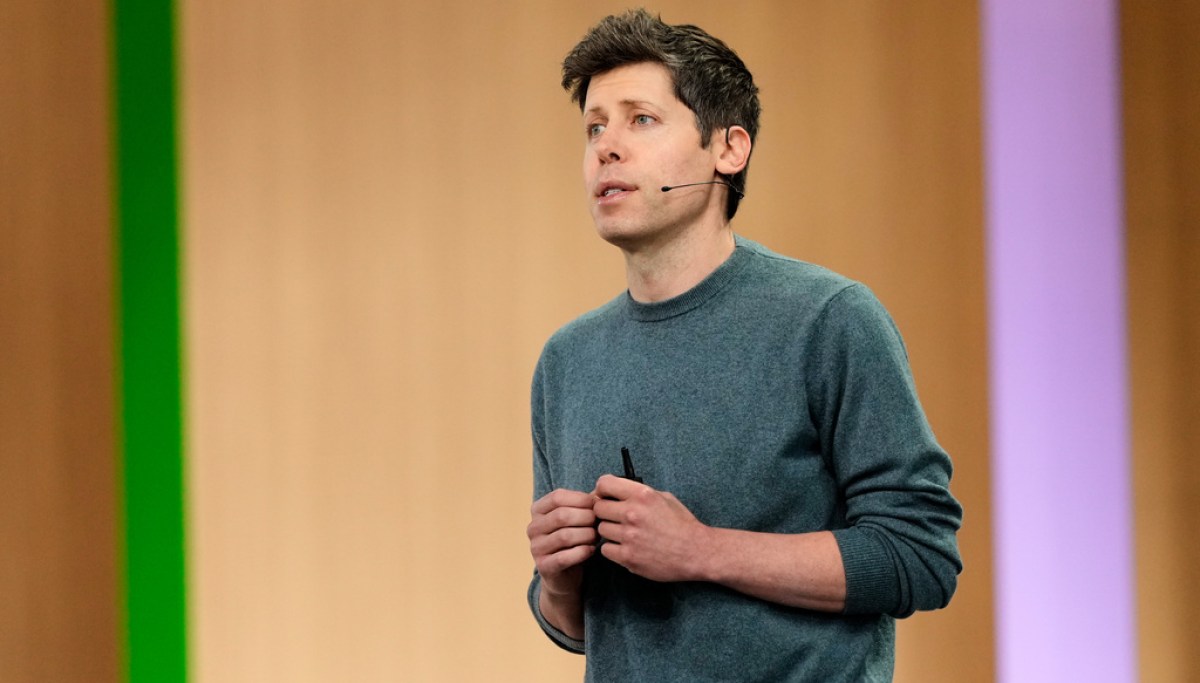
🔮 Sam Altman’s OpenAI on Friday pushed back against allegations by three fired employees that the company could be undermining external checks on artificial intelligence, stating that the AI firm views safety and research debates as “highly critical” to success.

Claims (20 extracted, 6 hedged)

Sam Altman’s OpenAI on Friday pushed back against allegations by three fired employees that the company could be undermining external checks on artificial intelligence, stating that the AI firm views safety and research debates as “highly critical” to success. uncertain
firm → push → success
The saga began on Thursday, when three safety researchers at OpenAI released a letter announcing their termination by the company. asserted
researchers → begin → company
Tomek Korbak, Jasmine Wang, and Mikita Balesni suggested they were fired for collaborating with outside experts on safety concerns, intimating that OpenAI is becoming less open to its researchers working in tandem with independent entities to create safety mechanisms for AI. OpenAI fired back the following day. uncertain
OpenAI → suggest → AI
In a public statement, the company said its investigation found the trio “violated clear policies on handling sensitive information,” and uncovered “a significant breach of trust beyond what’s outlined in the letter they published.” asserted
they → say → letter
The statement offered little detail on why the three were fired, but claimed: “These decisions were not about them raising safety concerns.” asserted
them → offer → concerns
“We are actively finalizing contracts with third-party safety assessors and will announce details in the coming weeks. asserted
We → finalize → weeks
People across the company have been working really hard on getting these partnerships up and running,” OpenAI’s statement read. asserted
statement → work → company
“We are committed to embedding external assessors and continue to make close collaboration with independent safety organizations a core part of our safety work. asserted
collaboration → commit → work
Many of our researchers already work with 3p safety organizations productively.” asserted
Many → work → organizations
In their letter, Korbak, Wang, and Balesni said OpenAI has historically been open to safety collaboration with third parties, writing that traditionally, employees “could raise safety concerns and disagree openly, and were encouraged to draw on the expertise of independent safety organizations.” uncertain
employees → say → organizations
The trio suggested that culture is changing, warning “we do not believe the path to superintelligence can be navigated safely if the people closest to the risks can no longer work in high-trust, high-bandwidth ways with each other and with third parties.” uncertain
people → suggest → parties
“We are concerned that our firings may be used to justify ending OpenAI’s work with METR, or otherwise providing external auditors much more limited access and scope,” their letter read. uncertain
letter → concern → access
“Those of us who work on safety see risks before anyone else, and we rely on close collaboration with outside experts to work out how to address them. asserted
we → work → them
The freedom to do so without fear, and to have well-defined internal procedures that enable this work, is itself an essential safety mechanism.… asserted
that → have → work
It is that culture we are writing to defend.” asserted
we → write → ?
OpenAI has called for more safety controls and third-party oversight in recent weeks, after another of its former employees sparked the recent wave of national panic about AI, triggering a push in Washington to reform the industry. asserted
another → call → industry
“I spent the last three years doing pretraining research at both OpenAI and Anthropic. asserted
I → spend → OpenAI
Neither company is acting responsibly,” former Anthropic and OpenAI researcher Jacob Coxon said in a post to X. “The people building AI earnestly believe that it could kill us all by the end of the decade. uncertain
it → act → decade
If anything, many executives and senior researchers will couch their phrasing in the press to sound sensible – but I hear the same people express fear privately. asserted
people → couch → fear
No other human activity poses this level of danger.” asserted
activity → pose → danger

💬Give feedback
🕘History 🎫Support