Photo via BBC News

Canada braces for prolonged trade war as counter-tariffs on US take effect

Read the original at BBC News ↗
Cite

Yousif, N. (2026, September 8). Canada braces for prolonged trade war as counter-tariffs on US take effect. BBC News. https://www.bbc.co.uk/news/articles/c8jdev0422jo?at_medium=RSS&at_campaign=rss

Dated when The Aporia collected the article, usually within hours of publication. Check the original for its exact date and byline.

BBC News · collected 2026-09-08 · by Nadine Yousif

Quick Summary

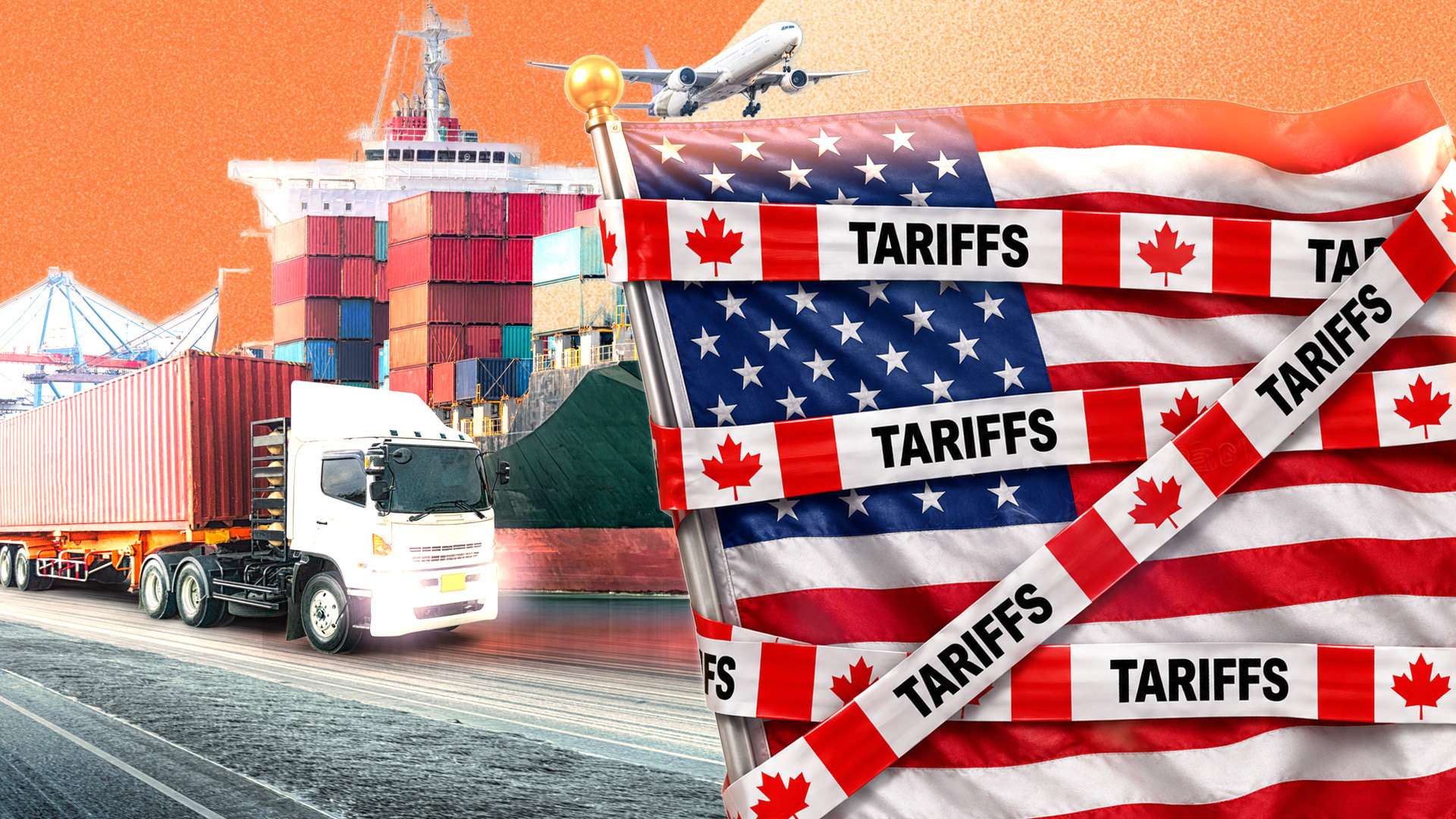
Canada has imposed retaliatory tariffs on US goods worth nearly C$28bn ($20bn; £15bn) as of Tuesday, in response to the ongoing trade tensions between the two countries. The counter-tariffs, which range from 15% to 50%, affect hundreds of American products, including steel, furniture, and clothing. Despite both sides expressing a desire for a deal, US Trade Representative Jamieson Greer suggests that Canada is responsible for the stalled negotiations, while Canadian Prime Minister Mark Carney has stated that any agreement must be "durable" and in both countries' interests. The tariffs are part of the largest bilateral trading relationship in the world, valued at nearly $900bn in 2025.
Written by AI on 2026-09-08, from this article's own text only (the story summary below draws on all the coverage).

AI analysis

Story summary

As of September 4, 2026, a tentative trade deal between Canada and the U.S., aimed at avoiding damaging tit-for-tat tariffs, collapsed just hours before its deadline. This breakdown triggered President Donald Trump to impose new 50% tariffs on $28 billion worth of Canadian exports. Prime Minister Mark Carney responded by announcing Canada's intention to match these tariffs dollar for dollar to protect domestic workers and businesses. The escalating trade tensions have led to the U.S. Justice Department ordering a freeze on all antitrust work with Canada, exacerbating the economic conflict between the neighboring countries.

The dispute has also spurred a "Buy Canadian" movement among consumers who are actively seeking out locally made products over American alternatives as part of their show of solidarity amid the ongoing trade war. Additionally, retaliatory tariffs have been imposed on various goods including dairy, motorcycles, and alcoholic beverages, further complicating economic relations between the two nations. This conflict comes amidst broader political tensions highlighted by President Trump's repeated rhetoric about annexing Canada. Despite historic close ties, both countries face significant challenges in resolving their trade disputes amicably.

Written for “U.S.-Canada Trade War Escalates” on 2026-10-30, grounded in this article and the 53 other(s) covering the same event.

Story

📰 U.S.-Canada Trade War Escalates
Economy/Business · 54 article(s) covering the same event. See how they differ ↓

Compared with similar articles

This article reads unscored and hedges 6% of its claims. Each row says how that neighbour differs.
The Guardian
Hedges 1 of 19 claims Outlet record 66/100
The Guardian
Hedges 1 of 52 claims Outlet record 66/100
Global News
Hedges 2 of 19 claims Outlet record 63/100
Los Angeles Times
Hedges 3 of 45 claims Outlet record 95/100
The Globe and Mail
⚖️ Leans left Hedges 0 of 4 claims Outlet record 52/100
Retaliation Same event
Reason
Hedges 3 of 43 claims Outlet record 67/100
The Globe and Mail
⚖️ Leans strongly right Hedges 3 of 28 claims Outlet record 52/100
CBC News
⚖️ Centre Hedges 1 of 1 claims Outlet record 74/100
National Post
Hedges 8 of 25 claims Outlet record 60/100
CBC News
⚖️ Leans right Hedges 14 of 89 claims Outlet record 74/100
How this article was measured signals, leaning charts, publisher record, byline, topics and claims

Signals How these are calculated →

Claims extracted
31
sentences that state something as happening or true
Uncertain
6%
2 of 31 hedged ("reportedly", "may", "according to")
Leaning
withheld
no quote in the article backed the model's score
Publisher signals
69/100
BBC News's corrections and hedging, across everything collected from it. Not a measure of accuracy.
Outlets on this story
54
Economy/Business
Same framing elsewhere
1
articles that frame the event the way this one does
Analyzed 2026-09-08 · how these are computed

How this is being covered How these are calculated →

Article leaning vs. publisher reliability
Source leaning vs. consistency

Publisher

BBC News · 4709 article(s) · 5 correction(s) detected
Running correction rate · 5 correction(s)

Who wrote this

Nadine Yousif
12 article(s) here · 1 carrying a prediction
🔮 Thursday and Friday's summit will be closely watched for details on how Canada and the European bloc deepen their ties.
🔮 Smith herself opposed the separatist push but said the public will for a vote was undeniable.
2026-10-20 · assertive framing · Alberta votes overwhelmingly to remain part of Canada
🔮 - Published It was a decisive result in a referendum that could have strained the bonds of national unity.
🔮 Of the 39 injured people being cared for in hospital, at least 19 are in a critical condition, Alberta Premier Danielle Smith said at a press briefing on Sunday evening. Fire and rescue teams are remaining at the scene to contain any potential flare-ups, Wainwright Mayor Bruce Pugh told the BBC.
🔮 The province will hold a referendum on 19 October, giving residents two options: vote to stay in Canada, or vote to move ahead with a formal binding referendum on independence at a later date.
🔮 - Published Canada says it will indefinitely suspend plans to expand its medically assisted dying law to people whose sole condition is mental illness, citing a lack of consensus on who would be eligible.
🔮 In 2025, the US president said it was "highly unlikely" that the US would ever use force against Canada.
2026-10-04 · assertive framing · Why Canada is preparing for a (long shot) US invasion
🔮 Police said the driver "may have been experiencing a medical emergency" before the collision.
🔮 Canada is not expected to retaliate further, with Prime Minister Mark Carney saying earlier this month that the impact the import bans will have on Canada's economy is "modest".
🔮 The counter-tariffs will apply to nearly C$28bn ($20bn; £15bn) worth of American products, from steel to furniture to cotton T-shirts, and will be as high as 50%.
Also by Nadine Yousif
Nothing else under this byline is closely related to this article, so these are simply their most recent.
All 12 articles by Nadine Yousif →

Topics

American Americans Canada Canadian Fox News

Subjects

Canada GPE · 14× Canadian NORP · 6× American NORP · 3× Carney PERSON · 3× Canadians NORP · 2× Donald Trump PERSON · 2× Greer PERSON · 2× Mexico GPE · 2× Americans NORP · 1× Mark Carney PERSON · 1×

Narrative

Polls suggest the majority of Canadians support, external their country imposing retaliatory tariffs on the US. But economists warn that the latest counter-tariffs will raise prices for consumers, external on everyday goods like clothing, food and furniture.
framing: assertive · carried by 1 article(s) · first seen 2026-09-08
🔮 The counter-tariffs will apply to nearly C$28bn ($20bn; £15bn) worth of American products, from steel to furniture to cotton T-shirts, and will be as high as 50%.

Claims (31 extracted, 2 hedged)

- Published Canada's retaliatory tariffs on a range of US goods came into effect on Tuesday, with no sign of a trade deal on the horizon. asserted
tariffs → publish → horizon
The counter-tariffs will apply to nearly C$28bn ($20bn; £15bn) worth of American products, from steel to furniture to cotton T-shirts, and will be as high as 50%. asserted
tariffs → apply → shirts
Fresh fish and lobster were also on the list, but Canada later omitted them after pushback from its seafood industry - a sign of the tricky balance it has to strike as it retaliates against its largest trading partner. asserted
it → omit → partner
Both US and Canadian officials have said they would like to strike a deal, but no movement has been made to resume talks after they collapsed in late August. asserted
they → say → August
Speaking to reporters last week, Prime Minister Mark Carney said that Canada is still in search of a deal with the US that is "durable" and in the best interests of both countries. asserted
that → speak → countries
"We're ready to sit down and strike that deal when the Americans are ready," Carney said. asserted
Carney → sit → deal
US trade representative Jamieson Greer said on Thursday the ball is in Canada's court. asserted
ball → say → court
"We offered them the best deal, they looked at it square in the face and turned around," Greer said in an interview with Fox News, adding that there has been sparse communication with the Canadians since talks collapsed. asserted
talks → offer → Canadians
In a separate interview with Canadian broadcaster CBC, Greer cautioned against retaliation and suggested the US might hit back by banning the import of some Canadian products. uncertain
US → caution → products
President Donald Trump threatened on Monday to halt all US business with Canada-based airplane maker Bombardier unless it moved its manufacturing south. asserted
it → threaten → manufacturing
The aerospace giant is one of the largest in the country, contributing over C$7bn to Canada's annual GDP in 2024, according to a report by accounting firm PwC. Trump took aim at Canada in a series of other Truth Social posts over the weekend, including one that called Canada's exchange rate with the US "unacceptable". uncertain
that → contribute → US
Another post showed a map of North America - including Canada and Mexico - and Greenland all overlaid with the US flag. asserted
post → show → flag
Canada and the US have the world's largest bilateral trading relationship valued at nearly $900bn in 2025. asserted
Canada → have → 2025
With new US tariffs and Canadian counter-tariffs now in effect, businesses on both side are scrambling to deal with what comes next. asserted
what → scramble → side
The US currently has in place a 25% tax on Canadian cars and trucks, as well as taxes on Canadian steel, aluminium and lumber. asserted
US → have → steel
In late August, President Donald Trump imposed new 50% tariffs on other goods like dairy, alcohol, hockey sticks and perfume. asserted
Trump → impose → dairy
Canada's counter-tariffs, which were described by Carney as "dollar-for-dollar" and range from 15% to 50%, will from Tuesday be applied to hundreds of items coming in from the US. asserted
which → describe → US
Products like American milk, golf clubs, steel, aluminium and certain clothing like jackets and T-shirts will face 50% tariffs. asserted
Products → face → tariffs
Cheese, toilet paper and certain household appliances like air conditioners will face 25% tariffs, while fork-lift trucks and industrial moulds will be hit with 15% tariffs. asserted
trucks → face → tariffs
These levies are in addition to existing retaliatory taxes Canada had placed on finished American cars and trucks that are non-compliant with a free trade agreement between Canada, the US and Mexico, known as the USMCA in the US and CUSMA in Canada. asserted
that → exist → Canada
Polls suggest the majority of Canadians support, external their country imposing retaliatory tariffs on the US. But economists warn that the latest counter-tariffs will raise prices for consumers, external on everyday goods like clothing, food and furniture. asserted
tariffs → suggest → clothing
The Canadian Chamber of Commerce has also urged the Carney government to take a surgical approach to retaliation. asserted
Chamber → urge → retaliation
"Businesses understand retaliation but don't want to see endless escalation," said the Chamber's CEO and President Candace Laing in a statement to the BBC on Friday, though she added that businesses "are preparing for this trade dispute to last". asserted
dispute → understand → Friday
Pushback from the fisheries industry was enough for Canada to alter its counter-tariffs by removing dozens of seafood items to avoid unintended consequences to its own economy. asserted
Canada → alter → economy
The lobster industry in both Canada and the US are heavily dependent on the other, with American-caught lobster often sent north to be processed before it is shipped back to the US and sold. asserted
it → catch → US
Ahead of the latest tariffs, Canada's economy had shown signs of resliency. asserted
economy → show → resliency
Its GDP grew 3.3% in the second quarter and it had gained 181,000 jobs from April to July. asserted
it → grow → July
But around 41,000 jobs were lost in August, a period that coincided with the new US tariffs on Canada and the collapse in trade talks. asserted
that → lose → talks
One sector that saw a modest bump was manufacturing - a gain the Canadian government attributes to consumers and businesses buying more made-in-Canada products. asserted
consumers → see → products
Carney has said he wants to diversify Canada's trade away from the US. asserted
he → say → US
July figures show the share of US-bound Canadian exports dropped to 66% from an average of 75% before the trade war. asserted
share → show → war

💬Give feedback
🕘History 🎫Support