Photo via Reason

Why Conservative Republicans Are Worried About License Plate Cameras

Read the original at Reason ↗
Cite

Sullum, J. (2026, September 9). Why Conservative Republicans Are Worried About License Plate Cameras. Reason. https://reason.com/2026/09/09/why-conservative-republicans-are-worried-about-license-plate-cameras/

Dated when The Aporia collected the article, usually within hours of publication. Check the original for its exact date and byline.

Reason · collected 2026-09-09 · by Jacob Sullum

Quick Summary

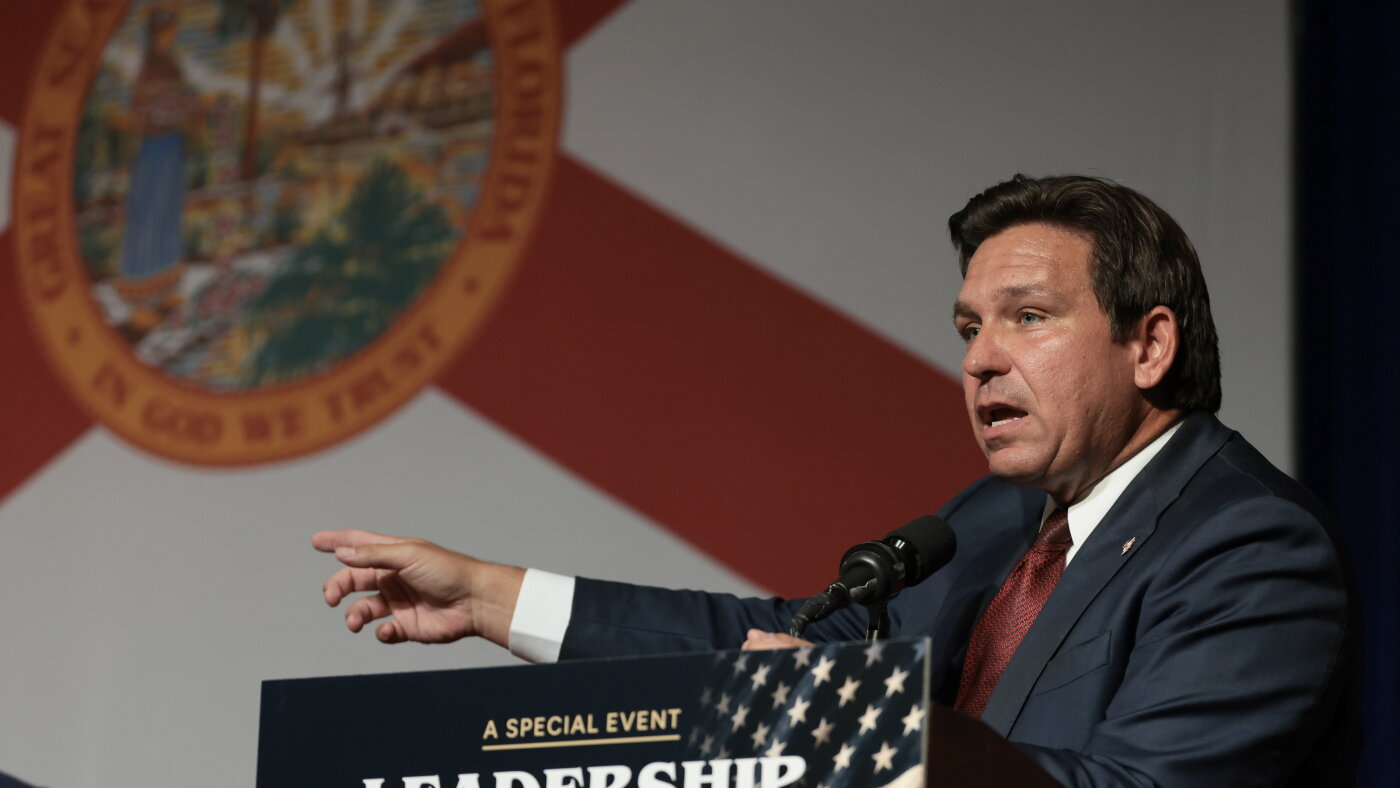
Texas Governor Greg Abbott and Florida Governor Ron DeSantis, both Republicans, have expressed concerns about automated license plate readers (ALPRs) due to reports of police officers misusing the technology for personal purposes. A recent report by The Institute for Justice found that 181 local governments have canceled or declined to renew ALPR contracts since January 2025, with at least 23 jurisdictions in Texas dropping their contracts. According to a YouGov survey, 46% of respondents oppose police use of ALPRs, a reversal from last year when 45% of Americans supported the practice. The growing concern over ALPR misuse has led some local officials to question the technology's implications on privacy and potential for abuse.
Written by AI on 2026-09-09, from this article's own text only (the story summary below draws on all the coverage).

AI analysis

Story summary

Texas Governor Greg Abbott has frozen state funding for automated license plate readers (ALPRs) due to concerns about warrantless surveillance and the potential for misuse by law enforcement. This move follows a similar stance taken by Florida Governor Ron DeSantis, who declared ALPRs "out of control". The decision was prompted by recent reports of police officers using ALPR data for personal purposes, including stalking ex-girlfriends or family members without judicial oversight. In Texas, a Lufkin police officer was charged with misusing ALPR information over 10,000 times** to track an individual and their acquaintances. Similarly, in Florida, officers in Sarasota and Haines City were arrested for misusing ALPR data. The incidents have raised public concerns about the risks of giving law enforcement widespread access to such surveillance technology.

Written for “License Plate Camera Controversy” on 2026-11-02, grounded in this article and the 0 other(s) covering the same event.

Story

📰 License Plate Camera Controversy
Crime & Law · 1 article(s) covering the same event.

Compared with similar articles

This article reads leans left and hedges 4% of its claims. Each row says how that neighbour differs.
NPR
⚖️ Leans left Hedges 1 of 26 claims Outlet record 60/100
“Article A discusses general opposition to Flock cameras from both parties, while Article B reports on two specific governors taking action in response to incidents involving police misuse of ALPR data”
Mother Jones
⚖️ Leans left Hedges 3 of 30 claims Outlet record 60/100
“Article A reports on Florida's decision to revoke ALPR permits and remove cameras, while Article B mentions Texas' freezing of state funding for ALPRs in response to a fellow Republican governor's declaration that ALPRs are 'out of control'”
Reason
Hedges 4 of 51 claims Outlet record 67/100
“Article A mentions two representatives introducing a bill, while Article B refers to governors taking actions in Texas and Florida”
The Guardian
⚖️ Leans left Hedges 4 of 33 claims Outlet record 66/100
“Article A mentions a bipartisan backlash against Flock Safety cameras in general, while Article B specifically references Texas and Florida governors taking action on ALPRs, indicating separate events or incidents.”
How this article was measured signals, leaning charts, publisher record, byline, topics and claims

Signals How these are calculated →

Claims extracted
28
sentences that state something as happening or true
Uncertain
4%
1 of 28 hedged ("reportedly", "may", "according to")
Leaning
Leans left
of the writing, not the subject · beta estimate
Publisher signals
67/100
Reason's corrections and hedging, across everything collected from it. Not a measure of accuracy.
Outlets on this story
1
Crime & Law
Same framing elsewhere
1
articles that frame the event the way this one does
Analyzed 2026-09-09 · how these are computed

How this is being covered How these are calculated →

Article leaning vs. publisher reliability
Source leaning vs. consistency

Publisher

Reason · 1056 article(s) · 4 correction(s) detected
Running correction rate · 4 correction(s)

Who wrote this

Jacob Sullum
33 article(s) here · 1 carrying a prediction
🔮 The New York Times presents Ho's speech as evidence that he hopes Trump will nominate him to the Supreme Court, assuming that opportunity arises during the next two years.
🔮 Question 8, a.k.a. the Eliminate Recreational Marijuana Sales and Allow Limited Possession Initiative, would permit adults 21 or older to possess up to an ounce of cannabis.
🔮 In a July 16 letter to California Secretary of State Shirley Weber, the Department of Homeland Security (DHS) said a "preliminary review" suggested there "may be as many as 190,832 non-citizens registered to vote" in her state.
🔮 But the Justice Department's manual for prosecutors says they should not pursue criminal charges unless "the admissible evidence will probably be sufficient" to meet the latter test.
🔮 I would tell you what I did with it, but I don't want to implicate myself in a federal felony.
🔮 The new case "would almost be funny if it weren't such an appalling abuse of the Department of Justice," Comey said in an online video on Monday.
🔮 But as two recent cases illustrate, there are limits to this license for misconduct, meaning officials may still be held accountable when they flout longstanding constitutional principles, even when they do so in novel ways.
🔮 Their divorced parents, Bart Rockett and Kami Ballard, agreed that Ballard, who at that point lived in Missouri, would have primary custody of the children, while Rockett, who was living in California, would be "responsible for them at the beginning of each month and 'during TV pilot season.'"
🔮 But in a decision that could signal a shift in the legal treatment of Flock cameras, a federal judge in Oklahoma recently recognized that they enable "a type of indiscriminate mass surveillance."
🔮 According to the Department of Justice (DOJ), which last Friday demanded network communications regarding the TV pool, that show of solidarity may have violated the Sherman Antitrust Act.
Also by Jacob Sullum
Nothing else under this byline is closely related to this article, so these are simply their most recent.
All 33 articles by Jacob Sullum →

Topics

Florida Republican Texas YouGov the Institute for Justice

Subjects

Texas GPE · 3× Abbott PERSON · 2× DeSantis PERSON · 2× Florida GPE · 2× YouGov ORG · 2× the Institute for Justice ORG · 2× Greg Abbott PERSON · 1× Lufkin GPE · 1× Republican NORP · 1× Ron DeSantis PERSON · 1×

Narrative

The congressional response to ALPRs, including several bills and an investigation that Sen. Josh Hawley (R–Mo.) announced last month, has been dominated by conservative Republicans, which confirms that the backlash is not limited to libertarian or left-leaning critics.
framing: assertive · carried by 1 article(s) · first seen 2026-09-09
🔮 The Institute for Justice has identified "well over 100" such incidents, which it notes "may be just the tip of the iceberg" given the reality of lax oversight and widespread data sharing.

Claims (28 extracted, 1 hedged)

Last month, Texas Gov. Greg Abbott froze state funding for automated license plate readers (ALPRs), acknowledging concerns about the warrantless surveillance enabled by such AI-assisted cameras. asserted
Abbott → freeze → cameras
Abbott took that step the day after Florida Gov. Ron DeSantis, a fellow Republican, declared that ALPRs are "out of control." asserted
ALPRs → take → control
Both governors cited recent reports about police officers accused of using ALPR data for personal purposes, which seem to be driving a shift in public opinion about the technology. asserted
which → cite → technology
Such incidents highlight the perils of giving cops across the country easy access to such data, which they can use to track your travels, identify nearby vehicles, and even predict your itinerary, without judicial oversight or meaningful internal supervision. asserted
they → highlight → oversight
Abbott mentioned a Lufkin, Texas, police officer who was charged with using ALPR information to stalk an ex-girlfriend, her relatives, and her acquaintances more than 10,000 times. asserted
who → mention → girlfriend
DeSantis alluded to similar cases in Florida, where officers in Sarasota and Haines City had recently been arrested for misusing ALPR data. asserted
officers → allude → data
"When I see, like, a police officer using this to track, like, an ex-girlfriend," DeSantis said, "I'm like, you know, what the hell's going on?" asserted
hell → see → girlfriend
Local officials are beginning to ask the same question. asserted
officials → begin → question
As of Tuesday, the Institute for Justice counted 181 local governments that have canceled or declined to renew ALPR contracts since the beginning of 2025. asserted
that → count → 2025
In Texas alone, The Dallas Express reports, at least 23 jurisdictions have dropped contracts, suspended service, or reduced the size of their ALPR networks. asserted
jurisdictions → report → networks
Some 7,000 police departments have installed those networks, which include around 140,000 cameras, without giving much thought to the privacy implications or the potential for abuse. asserted
which → instal → abuse
But some of them are now having second thoughts, reflecting rising public skepticism of unconstrained ALPR use. asserted
some → have → use
In a YouGov survey last month, 46 percent of respondents opposed police use of ALPRs, including 31 percent who were "strongly" opposed, while 38 percent favored the practice. asserted
percent → oppose → practice
A year ago, by contrast, YouGov found that 45 percent of Americans supported ALPRs, while 33 percent opposed them, including 20 percent who were "strongly" opposed. asserted
who → find → percent
That reversal coincides with proliferating reports of blatant ALPR abuses. asserted
reversal → coincide → abuses
The Institute for Justice has identified "well over 100" such incidents, which it notes "may be just the tip of the iceberg" given the reality of lax oversight and widespread data sharing. uncertain
it → identify → oversight
Police officers are supposed to use that information, which they can access on computers or mobile phones, only for legitimate law enforcement purposes. asserted
they → suppose → purposes
But as a Wichita police supervisor conceded in 2024, it's "not even possible" to enforce that policy by making sure that each search complies with it. asserted
search → concede → it
Compounding that challenge, each agency typically shares ALPR information with many others. asserted
agency → compound → others
Once that happens, The Wichita Eagle noted in 2022, local police officials have "no control over how those outside agencies use it and no way to flag unlawful searches." asserted
agencies → happen → searches
In Norfolk, Virginia, a local radio station reported last April, police officers often give "incomplete and imprecise reasons" for ALPR searches, including "suspect," "suspicious," and "investigation" or "inv." asserted
officers → report → suspect
Such vague labels hardly seem consistent with a state law requiring that cops state a "specific purpose," including "the offense type," thereby providing enough information to determine whether a search is legitimate. asserted
search → seem → information
"The police cannot police themselves," says Institute for Justice attorney Robert Frommer. asserted
Frommer → police → Justice
His organization argues that a warrant generally should be required to access ALPR data—a policy it aims to establish by challenging ALPR networks on Fourth Amendment grounds and urging states to enact protective legislation. asserted
it → argue → legislation
The congressional response to ALPRs, including several bills and an investigation that Sen. Josh Hawley (R–Mo.) announced last month, has been dominated by conservative Republicans, which confirms that the backlash is not limited to libertarian or left-leaning critics. asserted
backlash → include → critics
Whether it will yield effective constraints is another question. asserted
yield → yield → constraints
ALPRs are "easily containable," Abbott says, a bit overoptimistically. asserted
Abbott → say → ?
"They're going to be required to be used responsibly if they're used at all." asserted
they → go → ?

💬Give feedback
🕘History 🎫Support