The Aporia
Horsley, S. (2026, October 12). Two Americans win Nobel Prize in Economics for work on boom-bust cycles. NPR. https://www.npr.org/2026/10/09/nx-s1-5996634/nobel-prize-in-economics
Horsley, Scott. “Two Americans win Nobel Prize in Economics for work on boom-bust cycles.” NPR, 12 Oct. 2026, https://www.npr.org/2026/10/09/nx-s1-5996634/nobel-prize-in-economics.
Horsley, Scott. “Two Americans win Nobel Prize in Economics for work on boom-bust cycles.” NPR, October 12, 2026. https://www.npr.org/2026/10/09/nx-s1-5996634/nobel-prize-in-economics.
Dated when The Aporia collected the article, usually within hours of publication. Check the original for its exact date and byline.
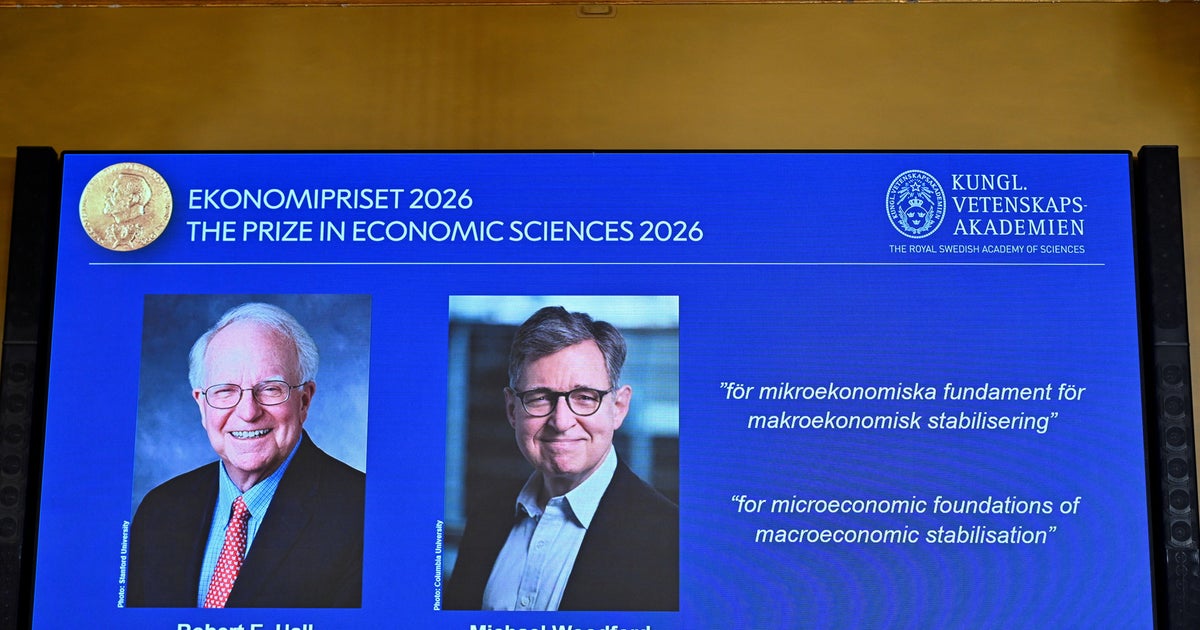
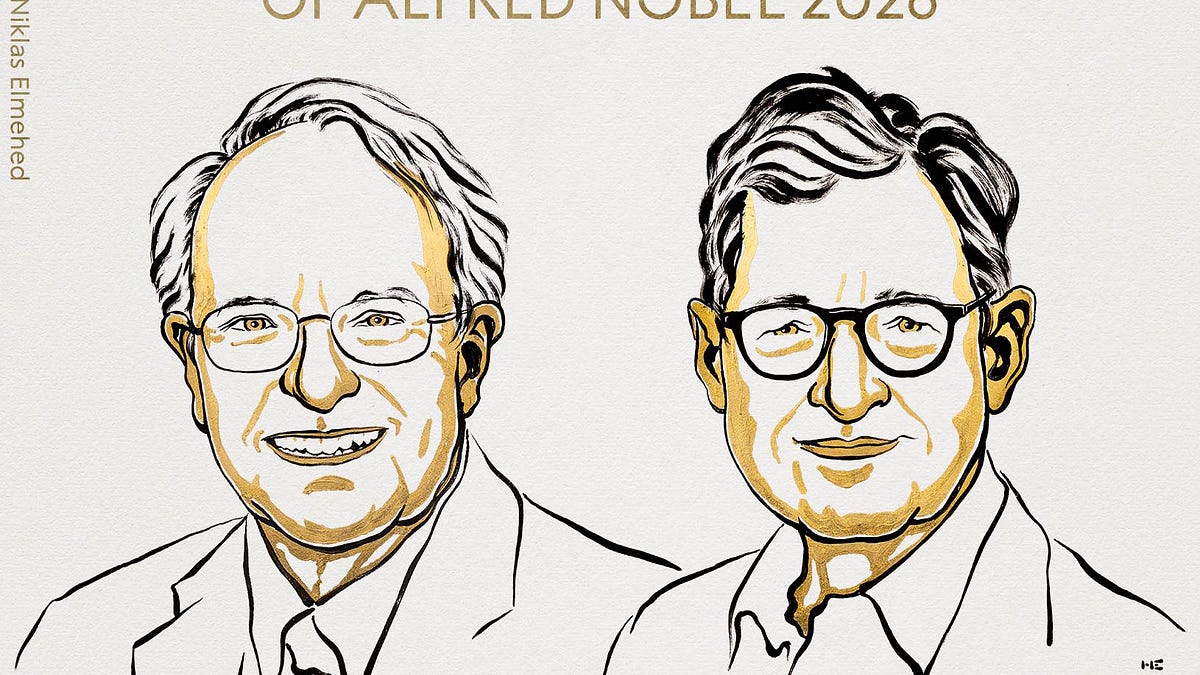
Robert Hall from Stanford University and Michael Woodford from Columbia University have been awarded the 2026 Nobel Prize in Economics "for microeconomic foundations of macroeconomic stabilisation," announced by the Royal Swedish Academy of Sciences on October 12, 2026. The prize recognizes their work on developing new models that improve policymakers' ability to manage economic shocks and reduce peaks and troughs in economies. Each laureate received $1.2 million (12 million Swedish crowns), making it the final Nobel Prize for this year. Hall’s affiliation with Stanford University, California, and Woodford's connection to Columbia University, New York, underscores their contributions to economic theory and practice globally. The award highlights the advancement of stabilisation policies over traditional models that struggled during historical crises like the 1970s oil shock.