Photo via The Independent

Meet Robert E. Hall and Michael Woodford: The Nobel Prize-winning economists

Read the original at The Independent ↗
Cite

Manenkov, K., Wiseman, P., & Dazio, S. (2026, October 12). Meet Robert E. Hall and Michael Woodford: The Nobel Prize-winning economists. The Independent. https://www.independent.co.uk/news/world/americas/nobel-prize-economics-robert-hall-michael-woodford-b3065217.html

Dated when The Aporia collected the article, usually within hours of publication. Check the original for its exact date and byline.

The Independent · collected 2026-10-12 · by Kostya Manenkov, Paul Wiseman, Stefanie Dazio

Quick Summary

Robert E. Hall and Michael Woodford were awarded the Nobel memorial prize in economics for developing models that help governments and central banks manage economic shocks such as energy crises and inflation. The Royal Swedish Academy of Sciences announced their win, citing their work's significant impact on economic policies during recent global crises. Both economists are associated with prestigious U.S. institutions—Hall with Stanford University and Woodford with Columbia University—and their research overturned earlier assumptions about how to stabilize economies effectively.
Written by AI on 2026-10-12, from this article's own text only (the story summary below draws on all the coverage).

AI analysis

Story summary

Robert Hall from Stanford University and Michael Woodford from Columbia University have been awarded the 2026 Nobel Prize in Economics "for microeconomic foundations of macroeconomic stabilisation," announced by the Royal Swedish Academy of Sciences on October 12, 2026. The prize recognizes their work on developing new models that improve policymakers' ability to manage economic shocks and reduce peaks and troughs in economies. Each laureate received $1.2 million (12 million Swedish crowns), making it the final Nobel Prize for this year. Hall’s affiliation with Stanford University, California, and Woodford's connection to Columbia University, New York, underscores their contributions to economic theory and practice globally. The award highlights the advancement of stabilisation policies over traditional models that struggled during historical crises like the 1970s oil shock.

Written for “Nobel Economics Prize 2026” on 2026-10-30, grounded in this article and the 10 other(s) covering the same event.

Story

📰 Nobel Economics Prize 2026
Economy/Business · 11 article(s) covering the same event. Compare every outlet's account →

Compared with similar articles

This article reads unscored and hedges 0% of its claims. Each row says how that neighbour differs.
South China Morning Post
Hedges 0 of 6 claims Outlet record 64/100
The Hindu
Hedges 0 of 15 claims Outlet record 77/100
The Straits Times
Hedges 0 of 10 claims Outlet record 66/100
CBS News
Hedges 0 of 11 claims Outlet record 66/100
Al Jazeera
Hedges 2 of 15 claims Outlet record 60/100
The Guardian
Hedges 1 of 22 claims Outlet record 66/100
The Hindu
⚖️ Leans left Hedges 5 of 58 claims Outlet record 77/100
“While both articles mention Robert E. Hall and Michael Woodford winning the Nobel Prize in Economics, Article B discusses their work in a broader historical context rather than reporting on the specific announcement of the prize.”
How this article was measured signals, leaning charts, publisher record, byline, topics and claims

Signals How these are calculated →

Claims extracted
29
sentences that state something as happening or true
Uncertain
0%
0 of 29 hedged ("reportedly", "may", "according to")
Leaning
not political
takes no side on a contested political question
Publisher signals
59/100
The Independent's corrections and hedging, across everything collected from it. Not a measure of accuracy.
Outlets on this story
11
Economy/Business
Same framing elsewhere
1
articles that frame the event the way this one does
Analyzed 2026-10-12 · how these are computed

How this is being covered How these are calculated →

Article leaning vs. publisher reliability
Source leaning vs. consistency

Publisher

The Independent · 3414 article(s) · 7 correction(s) detected
Running correction rate · 7 correction(s)

Who wrote this

Kostya Manenkov
11 article(s) here · 1 carrying a prediction
🔮 The 2 overturned earlier economic assumptions For decades, governments responded to economic shocks by following the Depression-era prescriptions of the British economist John Maynard Keynes: intervene in the economy by lowering taxes and hiking government spending, thereby encouraging consumers and businesses to spend and invest and help restart growth.
🔮 STOCKHOLM (AP) — The Nobel memorial prize in economics, the final award in this year’s cycle, will be announced Monday by the Royal Swedish Academy of Sciences in Stockholm. Last year, three researchers who study business innovation won for explaining how new products and inventions promote economic growth and human welfare, even as they leave older companies in the dust.
🔮 Her win is expected to be seen as a high-profile rebuke to US president Donald Trump and Israeli prime minister Benjamin Netanyahu, both of whom have rejected the findings of a UN commission she led that Israel committed genocide in Gaza.
🔮 The winner of the Nobel Peace Prize, widely regarded as the world's most prestigious accolade, is set to be revealed on Friday in Oslo, Norway.
🔮 Carson also has translated works of classical Greek literature that, the Swedish Academy said, “may be regarded as independent works in their own right”.
🔮 The Royal Swedish Academy of Sciences will award the Nobel Prize in chemistry Wednesday in Stockholm.
2026-10-07 · assertive framing · Nobel Prize in chemistry set to be awarded in Stockholm
🔮 STOCKHOLM (AP) — The Nobel Prize in physics will be announced Tuesday by the Royal Swedish Academy of Sciences in Stockholm.
2026-10-06 · assertive framing · Nobel Prize in physics to be awarded in Stockholm
🔮 A political crisis in May over the handling of stray drones suspected of coming from Ukraine brought down the governing coalition that had been under strain over several other issues.
🔮 A political crisis in May over the handling of stray drones suspected to be from Ukraine brought down the governing coalition that had been under strain due to multiple other issues.
🔮 Voters in Sweden will go to the polls on Sunday in a contest that will decide if the conservative government stays in power, potentially granting a hard-right party its first cabinet seats, or if the centre-left will regain control.
Also by Kostya Manenkov
Nothing else under this byline is closely related to this article, so these are simply their most recent.
All 11 articles by Kostya Manenkov →
Paul Wiseman
8 article(s) here · 1 carrying a prediction
🔮 The changes will take effect Oct. 30.
🔮 The U.S. government has been working for years to deny China and other adversaries investments that could help them boost their military power.
🔮 The 2 overturned earlier economic assumptions For decades, governments responded to economic shocks by following the Depression-era prescriptions of the British economist John Maynard Keynes: intervene in the economy by lowering taxes and hiking government spending, thereby encouraging consumers and businesses to spend and invest and help restart growth.
🔮 When the Labor Department releases hiring and unemployment numbers for September, they’re likely to be solid once again: Forecasters surveyed by the data firm FactSet expect that employers – businesses, government agencies and nonprofits – added 90,000 jobs last month and that unemployment remained low at 4.1%.
🔮 Openings came in below the 7.2 million that forecasters had expected and were the lowest since they hit 6.9 million in March.
🔮 Jacob Jensen, director of trade policy at the center-right American Action Forum think tank, calculates that the ban would cover $967 million worth of Canadian imports, based on 2025 numbers.
🔮 The biggest policy announcement of the visit was modest: an agreement to extend by two months a trade truce that had been set to expire in November.
🔮 WASHINGTON (AP) — Canada might seem an unlikely target for a U.S. trade war.
Also by Paul Wiseman
Nothing else under this byline is closely related to this article, so these are simply their most recent.
All 8 articles by Paul Wiseman →
Stefanie Dazio
9 article(s) here · 1 carrying a prediction
🔮 The 2 overturned earlier economic assumptions For decades, governments responded to economic shocks by following the Depression-era prescriptions of the British economist John Maynard Keynes: intervene in the economy by lowering taxes and hiking government spending, thereby encouraging consumers and businesses to spend and invest and help restart growth.
🔮 STOCKHOLM (AP) — The Nobel memorial prize in economics, the final award in this year’s cycle, will be announced Monday by the Royal Swedish Academy of Sciences in Stockholm. Last year, three researchers who study business innovation won for explaining how new products and inventions promote economic growth and human welfare, even as they leave older companies in the dust.
🔮 Her win is expected to be seen as a high-profile rebuke to US president Donald Trump and Israeli prime minister Benjamin Netanyahu, both of whom have rejected the findings of a UN commission she led that Israel committed genocide in Gaza.
🔮 The winner of the Nobel Peace Prize, widely regarded as the world's most prestigious accolade, is set to be revealed on Friday in Oslo, Norway.
🔮 Carson also has translated works of classical Greek literature that, the Swedish Academy said, “may be regarded as independent works in their own right”.
🔮 The Royal Swedish Academy of Sciences will award the Nobel Prize in chemistry Wednesday in Stockholm.
2026-10-07 · assertive framing · Nobel Prize in chemistry set to be awarded in Stockholm
🔮 STOCKHOLM (AP) — The Nobel Prize in physics will be announced Tuesday by the Royal Swedish Academy of Sciences in Stockholm.
2026-10-06 · assertive framing · Nobel Prize in physics to be awarded in Stockholm
🔮 A political crisis in May over the handling of stray drones suspected of coming from Ukraine brought down the governing coalition that had been under strain over several other issues.
Also by Stefanie Dazio
Nothing else under this byline is closely related to this article, so these are simply their most recent.
All 9 articles by Stefanie Dazio →

Topics

American Independent New York Stockholm the Royal Swedish Academy of Sciences

Subjects

Woodford GPE · 6× Hall PERSON · 5× New York GPE · 2× American NORP · 1× Independent NORP · 1× Michael Woodford PERSON · 1× Robert E. Hall PERSON · 1× Stanford University ORG · 1× Stockholm GPE · 1× the Royal Swedish Academy of Sciences ORG · 1×

Narrative

“Using models based upon this approach, rather than simply studying the economy from a macro perspective, like a bird’s eye view, Hall’s and Woodford’s research has generated a paradigm shift in the theory of stabilisation policy.’’ Hall studied consumer decisions Hall studied the way that consumers’ decisions about whether and how much to spend depend on what they expect their future income to be.
framing: assertive · carried by 1 article(s) · first seen 2026-10-12
🔮 The 2 overturned earlier economic assumptions For decades, governments responded to economic shocks by following the Depression-era prescriptions of the British economist John Maynard Keynes: intervene in the economy by lowering taxes and hiking government spending, thereby encouraging consumers and businesses to spend and invest and help restart growth.
2026-10-12 · The Independent
Meet Robert E. Hall and Michael Woodford: The Nobel Prize-winning economists · assertive framing

Claims (29 extracted, 0 hedged)

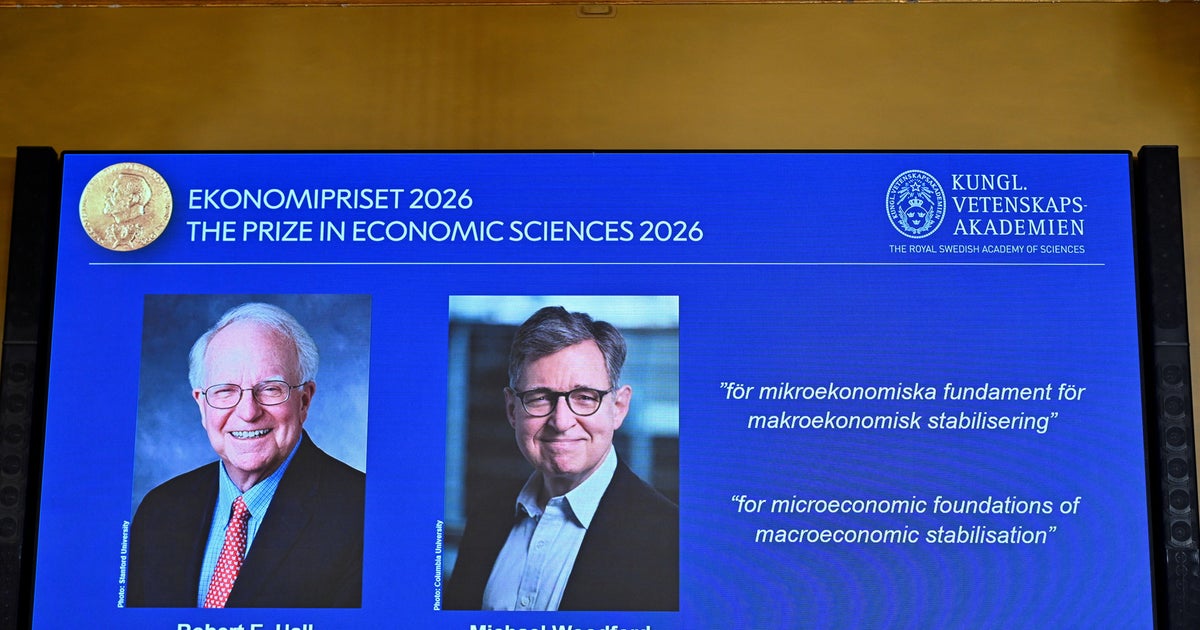
Robert E. Hall and Michael Woodford have been awarded the Nobel memorial prize in economics for their work on models that have aided governments and central banks manage economic shocks, such as energy crises and inflation. asserted
governments → award → crises
The winners were announced in Stockholm by the Royal Swedish Academy of Sciences, who said the American economists were being honoured for work that has helped policymakers deal with economic fluctuations. asserted
policymakers → announce → fluctuations
“The laureates’ research has made it possible to manage major macroeconomic crises far more effectively than before,” the Nobel committee wrote. asserted
committee → make → crises
“It has been hugely beneficial during the pandemic and the energy crises of recent years.″ Hall is affiliated with Stanford University in California, and Woodford with Columbia University in New York. asserted
Hall → affiliate → York
Woodford spoke to the committee by phone on Monday from New York, saying: “It’s a tremendous honour, it’s a surprise." The Nobel committee said the laureates' work has created the theoretical foundation for models now used by central banks and governments around the world. asserted
work → speak → world
“With them, we are better equipped to deal with shocks in the economy, such as energy crises or sudden changes in how much households consume," John Hassler, chair of the Committee for the Prize in Economic Sciences, said in a news release. asserted
Hassler → equip → release
The 2 overturned earlier economic assumptions For decades, governments responded to economic shocks by following the Depression-era prescriptions of the British economist John Maynard Keynes: intervene in the economy by lowering taxes and hiking government spending, thereby encouraging consumers and businesses to spend and invest and help restart growth. asserted
governments → overturn → growth
“This is the Keynesian recipe and it worked well — until it didn’t,’’ said Timo Boppart of the Nobel economics prize committee. asserted
Boppart → work → committee
Policymakers had thought economic management involved simple trade-offs – unemployment, for instance, would stay low at a time of high inflation and rise when inflation fell. asserted
inflation → think → inflation
But the “stagflation’’ of the 1970s – when the world economy experienced simultaneous high inflation and high unemployment – proved the formula was simplistic. asserted
formula → experience → inflation
Some economists argued that government attempts to intervene in the economy were doomed to fail. asserted
attempts → argue → economy
But Hall and Woodford, in separate contributions, set about improving the Keynesian model to take into account how consumers and businesses actually make decisions about whether to invest and spend. asserted
consumers → set → decisions
“Economic outcomes are the result of millions of decisions made at the microlevel by households and businesses,’’ the Nobel committee wrote. asserted
committee → make → households
“Using models based upon this approach, rather than simply studying the economy from a macro perspective, like a bird’s eye view, Hall’s and Woodford’s research has generated a paradigm shift in the theory of stabilisation policy.’’ Hall studied consumer decisions Hall studied the way that consumers’ decisions about whether and how much to spend depend on what they expect their future income to be. asserted
income → use → much
“If they are optimistic, they will consume more than if they are pessimistic,’’ the committee wrote. asserted
committee → consume → more
But consumer expectations can change unexpectedly as new information about the economy comes in. asserted
information → change → economy
And some households are so poor they can’t borrow or tap savings in response to economic changes. asserted
they → borrow → changes
In a 1982 paper with the economist Fredric Mishkin, Hall found that around 80 per cent of households made spending decisions based on their expectations for the future “while the rest lived hand to mouth,’’ the committee wrote. asserted
committee → find → mouth
Woodford analysed how businesses make decisions Woodford’s research established that businesses make decisions about prices based on where they think interest rates will go in the future. asserted
rates → analyse → future
“If the business believes that its competitors’ prices and its own costs will increase, it is best to set a higher price than it would with the opposite expectation,” the Nobel committee wrote. asserted
committee → believe → expectation
“Businesses’ decisions are thus also governed by their expectations.’’ asserted
decisions → govern → expectations
Therefore, central banks such as the US Federal Reserve, which set short-term interest rates, should provide “clear and credible communication about how they reason and what they plan to do.’’ asserted
they → set → what
Central banks have responded to this insight by working harder to explain what they are doing. asserted
they → respond → what
During the phone call broadcast at the news conference, Woodford said his work has stressed “the understanding of the people who are in the markets and making decisions about spending.” asserted
who → broadcast → spending
The economics prize is the last Nobel announcement this year Last year, three researchers who study business innovation won for explaining how new products and inventions promote economic growth and human welfare, even as they leave older companies in the dust. asserted
they → study → dust
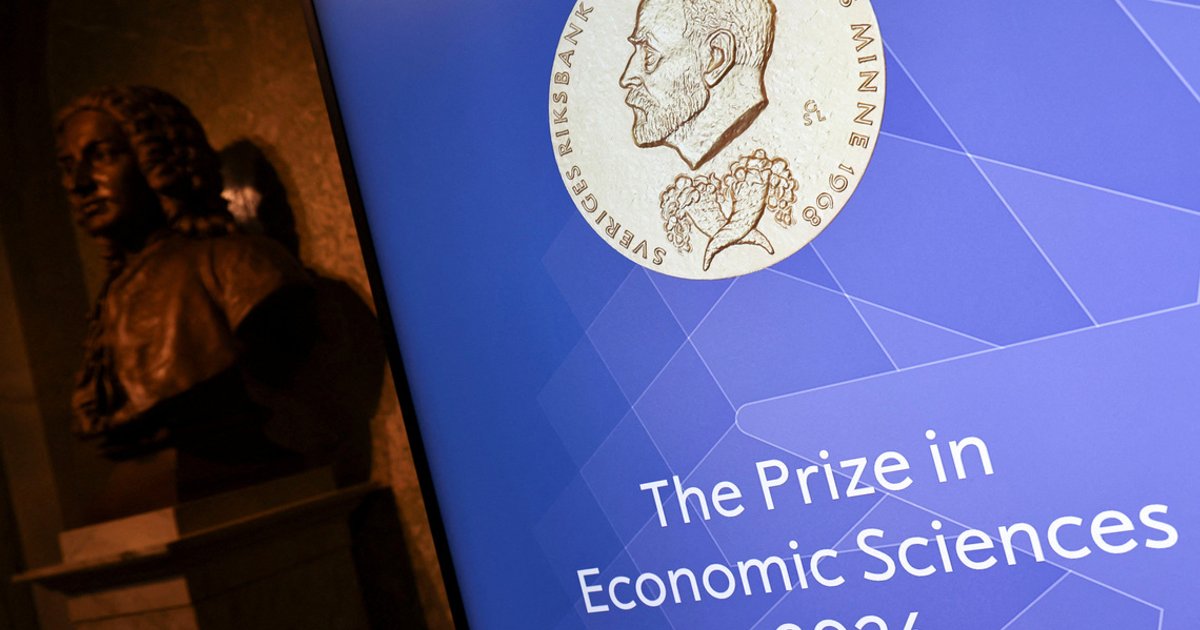
The economics prize is formally known as the Bank of Sweden Prize in Economic Sciences in Memory of Alfred Nobel. asserted
prize → know → Nobel
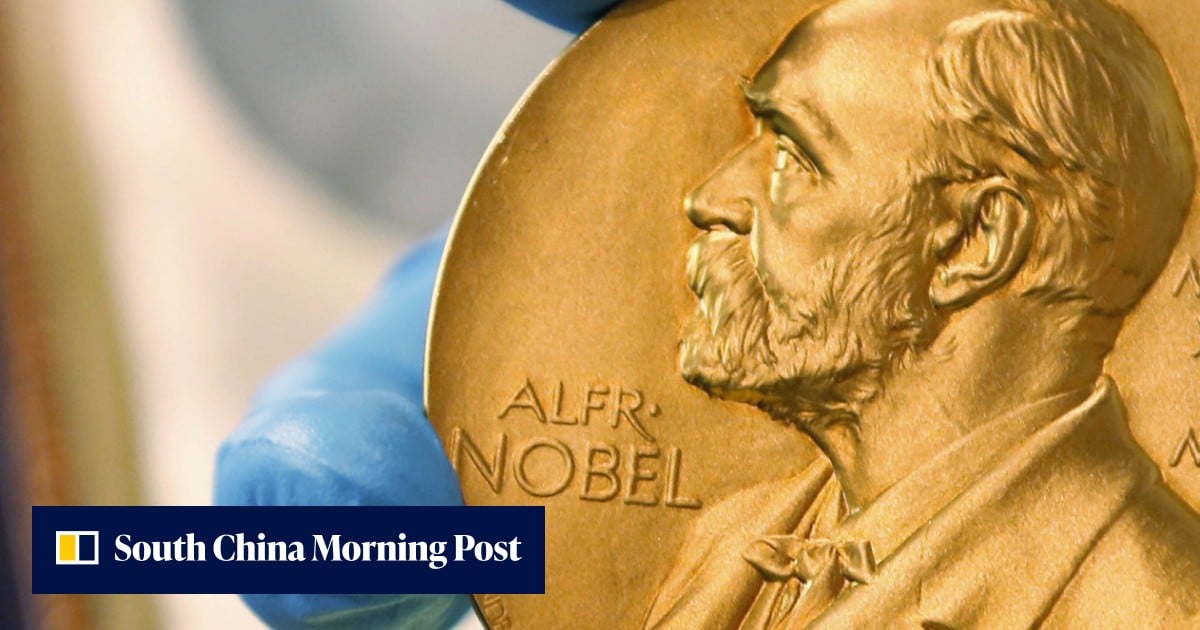
The central bank established it in 1968 as a memorial to Nobel, the 19th-century Swedish businessman and chemist who invented dynamite and established the five Nobel Prizes. asserted
who → establish → Prizes
Nobel honours were announced last week in medicine, physics, chemistry, literature and peace. asserted
honours → announce → medicine
Dr. Karl Deisseroth shared the medicine prize with Peter Hegemann and Georg Nagel for their work that led to a tool that uses light to help unravel how the brain works. asserted
brain → share → light

💬Give feedback
🕘History 🎫Support