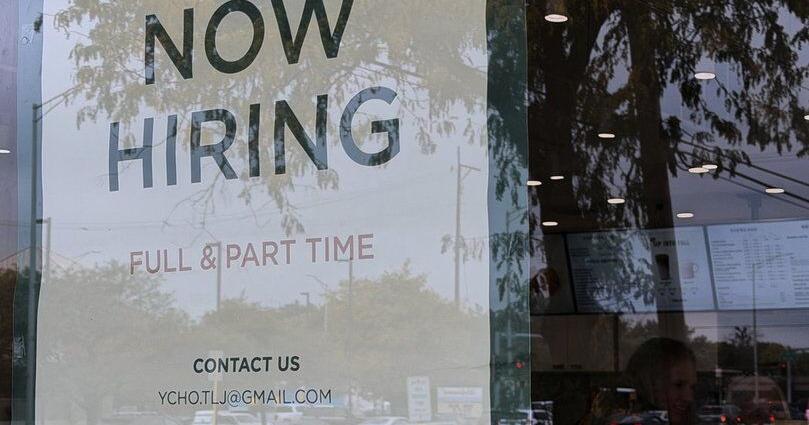
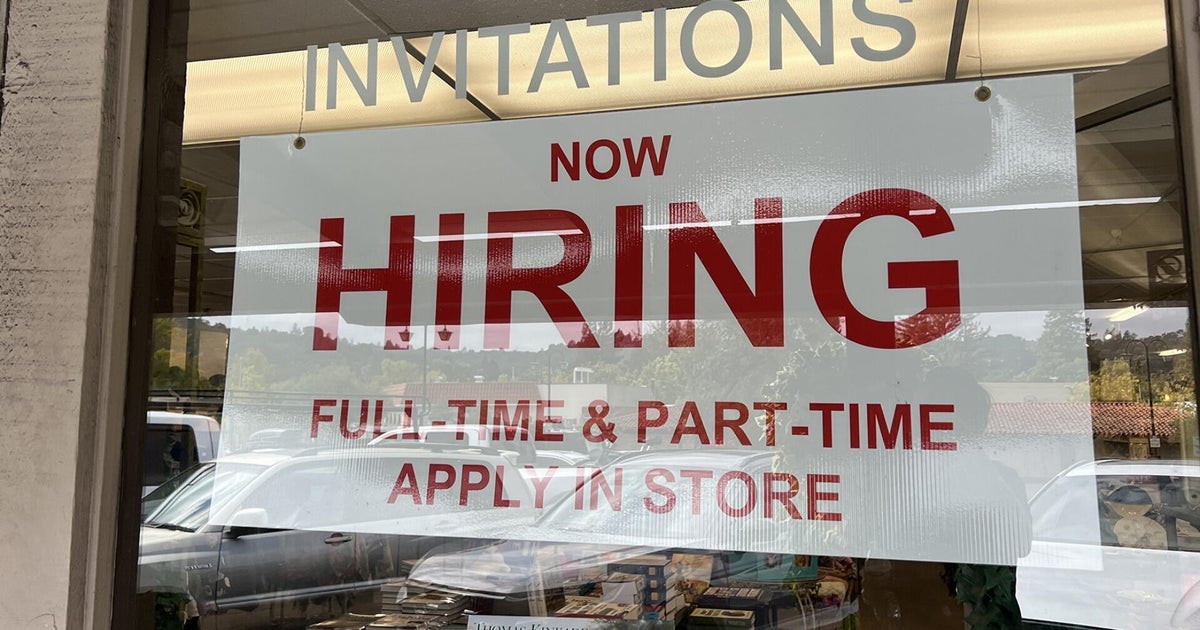
Photo via Toronto Star

Confidence about the economy is in short supply despite a relatively solid job market

Read the original at Toronto Star ↗
Cite

Wiseman, P. (2026, October 2). Confidence about the economy is in short supply despite a relatively solid job market. Toronto Star. https://www.thestar.com/news/world/united-states/confidence-about-the-economy-is-in-short-supply-despite-a-relatively-solid-job-market/article_d918ec15-ba9d-55c3-b456-b11032ba4691.html

Dated when The Aporia collected the article, usually within hours of publication. Check the original for its exact date and byline.

Toronto Star · collected 2026-10-02 · by Paul Wiseman

Quick Summary

Despite the U.S. adding an estimated 90,000 jobs in September and maintaining a low unemployment rate of 4.1%, consumer confidence has reached its lowest point in over a decade, according to the Conference Board. This pessimism stems from widespread concerns about job availability and economic instability, exacerbated by high inflation and rising interest rates. Workers are increasingly anxious about layoffs and job security, with many feeling stuck in their current positions due to the difficulties of finding new employment.
Written by AI on 2026-10-02, from this article's own text only (the story summary below draws on all the coverage).

AI analysis

Story summary

The U.S. economy added only 29,000 jobs in September, falling far short of economists' forecasts of around 90,000 jobs, and the unemployment rate ticked up to 4.2% from 4.1%. This report comes amid high inflation due to the conflict with Iran and rising interest rates by the Federal Reserve aimed at curbing price increases. Despite the strong job market indicators seen earlier this year, recent data shows signs of strain, with consumer confidence at its lowest level in over a decade. The poor jobs numbers could influence upcoming midterm elections, as voters are increasingly concerned about economic conditions ahead of the polls.

Written for “US Job Growth Slows” on 2026-11-06, grounded in this article and the 7 other(s) covering the same event.

Story

📰 US Job Growth Slows
Economy/Business · 8 article(s) covering the same event. Compare every outlet's account →

Compared with similar articles

This article reads leans left and hedges 11% of its claims. Each row says how that neighbour differs.
Global News
Hedges 6 of 45 claims Outlet record 63/100
Al Jazeera
⚖️ Leans left Hedges 4 of 28 claims Outlet record 60/100
Toronto Star
Hedges 3 of 43 claims Outlet record 64/100
“The articles discuss general economic conditions and public sentiment over different days, not a single specific incident.”
The Independent
Hedges 1 of 29 claims Outlet record 59/100
“The articles discuss different aspects of the economy and do not describe the same specific incident or occurrence.”
CBS News
Hedges 0 of 1 claims Outlet record 69/100
“The articles discuss job market conditions in the U.S., but they seem to cover different aspects or times of reporting around the same general topic, not a single specific event.”
How this article was measured signals, leaning charts, publisher record, byline, topics and claims

Signals How these are calculated →

Claims extracted
35
sentences that state something as happening or true
Uncertain
11%
4 of 35 hedged ("reportedly", "may", "according to")
Leaning
Leans left
of the writing, not the subject · beta estimate
Publisher signals
64/100
Toronto Star's corrections and hedging, across everything collected from it. Not a measure of accuracy.
Outlets on this story
8
Economy/Business
Same framing elsewhere
1
articles that frame the event the way this one does
Analyzed 2026-10-02 · how these are computed

How this is being covered How these are calculated →

Article leaning vs. publisher reliability
Source leaning vs. consistency

Publisher

Toronto Star · 11921 article(s) · 28 correction(s) detected
Running correction rate · 28 correction(s)
2026-10-26
Correction
2026-10-24
Correction
2026-10-07
Correction
2026-09-24
Correction

Who wrote this

Paul Wiseman
9 article(s) here · 1 carrying a prediction
🔮 President Donald Trump's plan to allow imports of Russian diesel appeared to falter this week after state and federal officials warned that handling any shipments could bring legal consequences and two tankers initially bound for the United States changed course.
🔮 The changes will take effect Oct. 30.
🔮 The U.S. government has been working for years to deny China and other adversaries investments that could help them boost their military power.
🔮 The 2 overturned earlier economic assumptions For decades, governments responded to economic shocks by following the Depression-era prescriptions of the British economist John Maynard Keynes: intervene in the economy by lowering taxes and hiking government spending, thereby encouraging consumers and businesses to spend and invest and help restart growth.
🔮 When the Labor Department releases hiring and unemployment numbers for September, they’re likely to be solid once again: Forecasters surveyed by the data firm FactSet expect that employers – businesses, government agencies and nonprofits – added 90,000 jobs last month and that unemployment remained low at 4.1%.
🔮 Openings came in below the 7.2 million that forecasters had expected and were the lowest since they hit 6.9 million in March.
🔮 Jacob Jensen, director of trade policy at the center-right American Action Forum think tank, calculates that the ban would cover $967 million worth of Canadian imports, based on 2025 numbers.
🔮 The biggest policy announcement of the visit was modest: an agreement to extend by two months a trade truce that had been set to expire in November.
🔮 WASHINGTON (AP) — Canada might seem an unlikely target for a U.S. trade war.
Also by Paul Wiseman
Nothing else under this byline is closely related to this article, so these are simply their most recent.
All 9 articles by Paul Wiseman →

Topics

Glassdoor Iran U.S. WASHINGTON the Labor Department

Subjects

Glassdoor ORG · 3× U.S. GPE · 3× Trump PERSON · 2× Zhao PERSON · 2× Americans NORP · 1× Donald Trump PERSON · 1× FactSet ORG · 1× Iran GPE · 1× WASHINGTON GPE · 1× the Labor Department ORG · 1×

Narrative

When the Labor Department releases hiring and unemployment numbers for September, they’re likely to be solid once again: Forecasters surveyed by the data firm FactSet expect that employers – businesses, government agencies and nonprofits – added 90,000 jobs last month and that unemployment remained low at 4.1%.
framing: assertive · carried by 1 article(s) · first seen 2026-10-02
🔮 When the Labor Department releases hiring and unemployment numbers for September, they’re likely to be solid once again: Forecasters surveyed by the data firm FactSet expect that employers – businesses, government agencies and nonprofits – added 90,000 jobs last month and that unemployment remained low at 4.1%.

Claims (35 extracted, 4 hedged)

The official numbers show that the U.S. job market has proved sturdy in the face of one shock after another – President Donald Trump’s trade wars, persistent inflation, high interest rates, and a conflict with Iran that has sent gasoline prices rocketing higher, squeezing family budgets. asserted
that → show → budgets
When the Labor Department releases hiring and unemployment numbers for September, they’re likely to be solid once again: Forecasters surveyed by the data firm FactSet expect that employers – businesses, government agencies and nonprofits – added 90,000 jobs last month and that unemployment remained low at 4.1%. asserted
unemployment → release → %
Layoffs are rare, and most workers enjoy job security. asserted
workers → enjoy → security
But ordinary Americans are not feeling it. asserted
Americans → feel → it
U.S. consumer confidence dropped this month to the lowest level in more than a decade, according to an index published by the Conference Board. uncertain
confidence → drop → Board
One reason: More than 28% of the respondents told the business think tank that they expect fewer jobs to be available in six months, double the 14% who expect more. asserted
who → tell → more
The online jobs site Glassdoor reports that its employee confidence index, based on how workers view prospects for their own companies, dropped last month to the lowest level in records going back to the beginning of 2016, a period that includes a global pandemic. asserted
that → report → pandemic
“Employee confidence has been continuously grinding downwards over the last year as workers grow increasingly anxious about everything from layoffs to AI,’’ said Glassdoor chief economist Daniel Zhao. asserted
Zhao → grind → AI
The public discontent with the economy comes barely a month before voters go to the polls for midterm elections that will determine whether Trump’s Republicans maintain full control over Congress. asserted
Republicans → come → Congress
A Thursday poll from The Associated Press-NORC Center for Public Affairs Research finds that only 17% of U.S. adults approve of Trump’s handling of the cost of living. asserted
% → find → living
Just 26% approve of his handling of the economy overall, marking a new low. asserted
% → approve → low
The public’s misgivings about jobs partly reflect an odd feature of the current labor market: Employers aren’t laying off many workers, but they aren’t hiring many either. asserted
they → reflect → many
A Labor Department measure of gross hiring – before subtracting those who quit or lose their jobs – has been stuck in a rut for more than two years. asserted
who → subtract → years
So economists describe a “ low-hire, low-fire ’’ job market in which those who have jobs are mostly secure, but jobseekers struggle to find work. asserted
jobseekers → describe → work
“People know that being laid off is unusually costly right now,” said Glassdoor’s Zhao. asserted
Zhao → know → ?
“They hear from their friends how long they’ve been out of work and had such a difficult time finding a job. asserted
they → hear → job
That does make layoffs even more scary than usual.’’ In that chilly environment, fewer workers are willing to quit their jobs. asserted
workers → make → jobs
“They often feel stuck,’’ Zhao said. asserted
Zhao → feel → ?
“Workers aren’t finding there’s opportunity on the open market to find a better job – one that pays more or offers better work-life balance. asserted
that → find → balance
The weak hiring means more meager wage gains, too. asserted
hiring → mean → gains
Average hourly pay rose just 3.1% in August from a year earlier – the stingiest year-over-year increase since May 2021. uncertain
pay → rise → May
Researchers at the Federal Reserve Bank of San Francisco reported in August that the job search has become tougher for two groups that should be doing well this deep into an economic expansion. asserted
that → report → expansion
Normally at this point – the last recession was six years ago — employers would need workers so badly they’d be willing to take a chance on applicants who are young or have little experience or proven skills. asserted
who → need → experience
But no: “Instead of being pulled in, the pipeline into employment is shrinking such that the recovery is no longer reaching workers at the margins,’’ the researchers noted. asserted
researchers → pull → margins
Moreover, the unemployed people who normally get back to work the fastest – those in their prime working years (25 to 54) and with college educations – are struggling to find new jobs. asserted
who → get → jobs
The San Francisco Fed researchers aren’t sure what’s making the job search so tough. asserted
search → make → ?
They suspect it might have to do with Trump’s immigration crackdown, hiring slowdowns specifically at tech companies and government contractors, “the early effects of AI-related displacement in professional occupations,’’ uncertainty over the direction of government policy or “early signals of broader labor market deterioration.’’ uncertain
it → suspect → deterioration
Complicating the picture: The United States doesn’t need as many jobs as it used to keep the unemployment rate stable. asserted
it → complicate → rate
Baby boomer retirements and Trump’s immigration crackdown mean fewer people are competing for work. asserted
people → mean → work
As a result, economists say, the so-called “break-even’’ rate of hiring could be as low as zero jobs a month, down from perhaps 150,000 a year or so ago. uncertain
rate → say → 150,000
So far this year, employers have been adding an average 80,000 jobs a month, more than enough to keep the unemployment rate low, and a big improvement on the 2025 average of just 9,700 jobs a month – the feeblest hiring outside a recession since 2002. asserted
employers → add → 2002
Still, hiring remains well below the 166,000 monthly jobs created, on average, in 2023 and 2024 and the 491,000 a month recorded during the 2021-2022 hiring boom that followed pandemic lockdowns. asserted
that → remain → lockdowns
“We are seeing a modest improvement,’’ said Glassdoor’s Zhao. asserted
Zhao → see → improvement
“Whether that’s enough to really make workers feel good about the job market is a different question. asserted
workers → ’ → market
A modest improvement is not really the same as opening up opportunities and really making people feel like they can advance their careers.’’ asserted
they → open → careers

💬Give feedback · no sign-in needed

No sign-in needed for now. Your note is sent without a name, so it cannot be answered.

🕘History 🎫Support