Photo via Washington Examiner

Here is how much prices for groceries, gas, utilities, and shelter are up under Trump

Read the original at Washington Examiner ↗
Cite

Halaschak, Z. (2026, October 14). Here is how much prices for groceries, gas, utilities, and shelter are up under Trump. Washington Examiner. https://www.washingtonexaminer.com/news/white-house/4764878/how-much-groceries-gas-utilities-and-shelter-are-up-under-trump/

Dated from the outlet's own feed. Check the original for its byline.

Washington Examiner · collected 2026-10-14 · by Zach Halaschak

Quick Summary

The article reports on price increases during President Trump's second term, noting an overall 5.4% rise since he entered office. It highlights specific areas: groceries are up 3.3%, while gas prices have risen significantly by 39%. The analysis focuses on how these cumulative price hikes affect families and voter sentiment, with a particular emphasis on the impact of inflation under both Trump and Biden's presidencies.
Written by AI on 2026-10-14, from this article's own text only (the story summary below draws on all the coverage).

AI analysis

Story summary

As of October 14, 2026, inflation increased to 3.7% year-over-year, up from 3.4% in August, according to the Bureau of Labor Statistics' latest Consumer Price Index report. This rise is primarily attributed to a significant surge in gas prices, which rose by 9.1% in September alone. The inflation data comes at a critical time for President Donald Trump and Republicans ahead of November's midterm elections, as rising costs have become a major issue for voters concerned about affordability and economic stability. Despite the increase, underlying core inflation (excluding volatile food and energy items) rose to 2.6%, showing only modest gains compared to previous months but still above the Federal Reserve’s target of 2%, indicating continued pressure on the Fed to manage interest rates effectively.

Written for “US Inflation Rises Before Midterms” on 2026-10-31, grounded in this article and the 16 other(s) covering the same event.

Story

📰 US Inflation Rises Before Midterms
Economy/Business · 17 article(s) covering the same event. Compare every outlet's account →

Compared with similar articles

This article reads leans left and hedges 17% of its claims. Each row says how that neighbour differs.
Washington Examiner
⚖️ Leans left Hedges 1 of 15 claims Outlet record 70/100
Washington Examiner
⚖️ Leans left Hedges 1 of 15 claims Outlet record 70/100
The Guardian
⚖️ Leans left Hedges 6 of 19 claims Outlet record 66/100
Washington Examiner
Hedges 3 of 27 claims Outlet record 70/100
Toronto Star
⚖️ Leans left Hedges 2 of 32 claims Outlet record 64/100
“The articles discuss different timeframes and focus on distinct aspects of inflation data, with Article A forecasting September's inflation report and Article B reporting actual figures from that report.”
NBC News
⚖️ Leans right further right than this Hedges 0 of 11 claims Outlet record 60/100
Al Jazeera
Hedges 4 of 25 claims Outlet record 60/100
CBS News
⚖️ Leans left Hedges 0 of 2 claims Outlet record 66/100
“While both articles discuss price increases under President Trump, they cover different aspects and timespans of this general topic.”
New York Post
⚖️ Leans right further right than this Hedges 0 of 5 claims Outlet record 66/100
“While both articles discuss September's Consumer Price Index report, Article A focuses on the details of the report and expectations for future interest rate hikes, while Article B contextualizes the inflation numbers within Trump's presidency and election politics.”
The Independent
⚖️ Leans left Hedges 3 of 31 claims Outlet record 59/100
“Both articles discuss economic issues under President Trump, but they focus on different aspects and data points; Article A focuses on a specific anticipation of a fresh CPI report impact ahead of the midterms, while Article B discusses overall price increases since Trump's presidency began.”
How this article was measured signals, leaning charts, publisher record, byline, topics and claims

Signals How these are calculated →

Claims extracted
30
sentences that state something as happening or true
Uncertain
17%
5 of 30 hedged ("reportedly", "may", "according to")
Leaning
Leans left
of the writing, not the subject · beta estimate
Publisher signals
70/100
Washington Examiner's corrections and hedging, across everything collected from it. Not a measure of accuracy.
Outlets on this story
17
Economy/Business
Same framing elsewhere
1
articles that frame the event the way this one does
Analyzed 2026-10-14 · how these are computed

How this is being covered How these are calculated →

Article leaning vs. publisher reliability
Source leaning vs. consistency

Publisher

Washington Examiner · 3851 article(s) · 7 correction(s) detected
Running correction rate · 7 correction(s)

Who wrote this

Zach Halaschak
19 article(s) here · 1 carrying a prediction
🔮 The Federal Reserve voted to hold its interest rate target steady, a decision that investors mostly anticipated, but that nonetheless had markets on edge because of the off-chance that the central bank could hike rates just before the midterm elections in light of the high rate of inflation.
🔮 Republicans had hoped that the passage of new tax cuts would buoy them in the midterm elections, but their ability to campaign on their signature legislation has been diminished by the war with Iran and high gas prices.
🔮 Voters in Florida, Oklahoma, North Carolina, Wyoming, and other states will all vote on ballot measures in the midterm elections that would lower property tax burdens for homeowners.
🔮 “They cooled off in 2024, and now in 2025 and 2026, food price inflation has overall been about normal, about what we would expect for year-over-year inflation,” Volpe said, noting that despite that, there have been “pain points” for specific food items.
🔮 The report is clearly bad news for the Trump administration, which has been working to reassure voters weary of price hikes, especially given that the November election will determine if Republicans hold the House of Representatives and the Senate.
🔮 A White House memo said the group will look into whether Cook made “false statements in connection with one or more mortgage instruments” and will conduct an in-person hearing in November.
🔮 The Federal Reserve will not publicly disclose communications between its chairman and President Donald Trump unless they are scheduled telephone calls or meetings.
🔮 On one hand, they might price out some potential buyers who may be waiting until they come down some before they buy.
🔮 Californians will decide this November whether to impose a historic one-time wealth tax on billionaires.
Also by Zach Halaschak
Nothing else under this byline is closely related to this article, so these are simply their most recent.
All 19 articles by Zach Halaschak →

Topics

Allianz Trade Americas California Polytechnic State University’s Iran the Federal Reserve the Washington Examiner

Subjects

Trump PERSON · 8× the Washington Examiner ORG · 4× Iran GPE · 2× Allianz Trade Americas ORG · 1× Biden PERSON · 1× Dan North PERSON · 1× Donald Trump PERSON · 1× Joe Biden PERSON · 1× Ricky Volpe PERSON · 1× the Federal Reserve ORG · 1×

Narrative

Since the inflationary plague first began in March 2021, the overall price level has risen by over 26%, leaving many households struggling to maintain their standard of living and causing voters to disapprove of Trump. “I think the overwhelming thing, the thing that’s really important, is that overall, consumers have still never really recovered from that surge in inflation in ‘21 and ‘22 …
framing: assertive · carried by 1 article(s) · first seen 2026-10-14
🔮 “They cooled off in 2024, and now in 2025 and 2026, food price inflation has overall been about normal, about what we would expect for year-over-year inflation,” Volpe said, noting that despite that, there have been “pain points” for specific food items.
2026-10-14 · Washington Examiner
Here is how much prices for groceries, gas, utilities, and shelter are up under Trump · assertive framing

Claims (30 extracted, 5 hedged)

Prices are up 5.4% overall since President Donald Trump entered office, according to the final inflation report before the midterm elections. uncertain
Trump → enter → elections
The September consumer price index report showed that prices rose 3.7% on an annual basis. asserted
prices → show → basis
Trump ran on vanquishing the inflation experienced under former President Joe Biden, who presided over the worst wave of inflation in decades. asserted
who → run → decades
But the Trump administration has been unable to return inflation back to the 2% level the Federal Reserve considers healthy. asserted
Reserve → return → level
And, for families, what matters is not the inflation rate at any one time, but how much prices have risen cumulatively in the past few years. asserted
prices → matter → years
Since the inflationary plague first began in March 2021, the overall price level has risen by over 26%, leaving many households struggling to maintain their standard of living and causing voters to disapprove of Trump. “I think the overwhelming thing, the thing that’s really important, is that overall, consumers have still never really recovered from that surge in inflation in ‘21 and ‘22 … asserted
consumers → begin → 21
ever since then, consumers have never caught up,” Dan North, a senior economist with Allianz Trade Americas, told the Washington Examiner. asserted
North → catch → Examiner
A big chunk of the overall inflation during Trump’s second term has been driven by increased energy prices resulting from the war with Iran and higher oil prices. asserted
chunk → drive → Iran
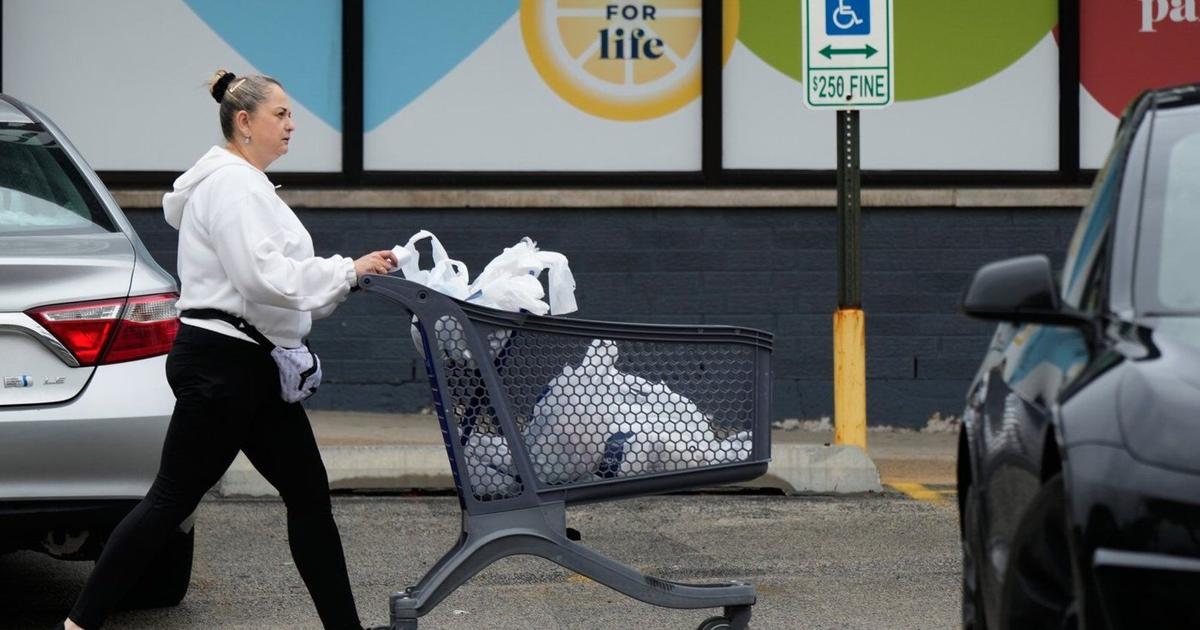
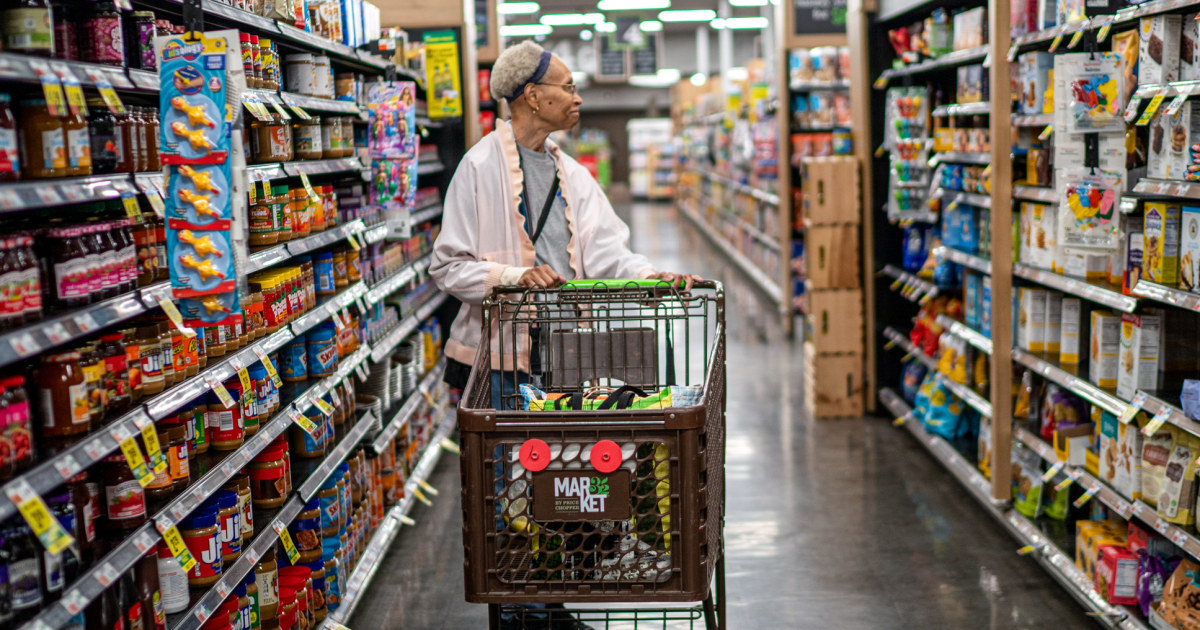
Groceries Grocery prices have risen much more modestly, up 3.3% since Trump entered office in January 2025. asserted
Trump → rise → January
Still, shoppers have complained about the prices they pay at the grocery store, largely because of the years of cumulative growth that food prices have seen and how certain grocery items, like beef, have risen at a much greater rate. asserted
items → complain → rate
Since January 2021, under Biden, grocery prices have spiked a shocking 27%. asserted
prices → spike → Biden
Ricky Volpe, a professor at California Polytechnic State University’s agribusiness department and former economist with the USDA, told the Washington Examiner that 2021 and 2022 were years when consumers experienced “historic” food inflation. asserted
consumers → tell → inflation
“They cooled off in 2024, and now in 2025 and 2026, food price inflation has overall been about normal, about what we would expect for year-over-year inflation,” Volpe said, noting that despite that, there have been “pain points” for specific food items. asserted
Volpe → cool → items
Gas Gasoline prices have seen perhaps the most noticeable increase for consumers during Trump’s second term. asserted
prices → see → term
As of Wednesday, according to AAA, consumers are shelling out $4.34 for a gallon of regular gasoline. uncertain
consumers → accord → gasoline
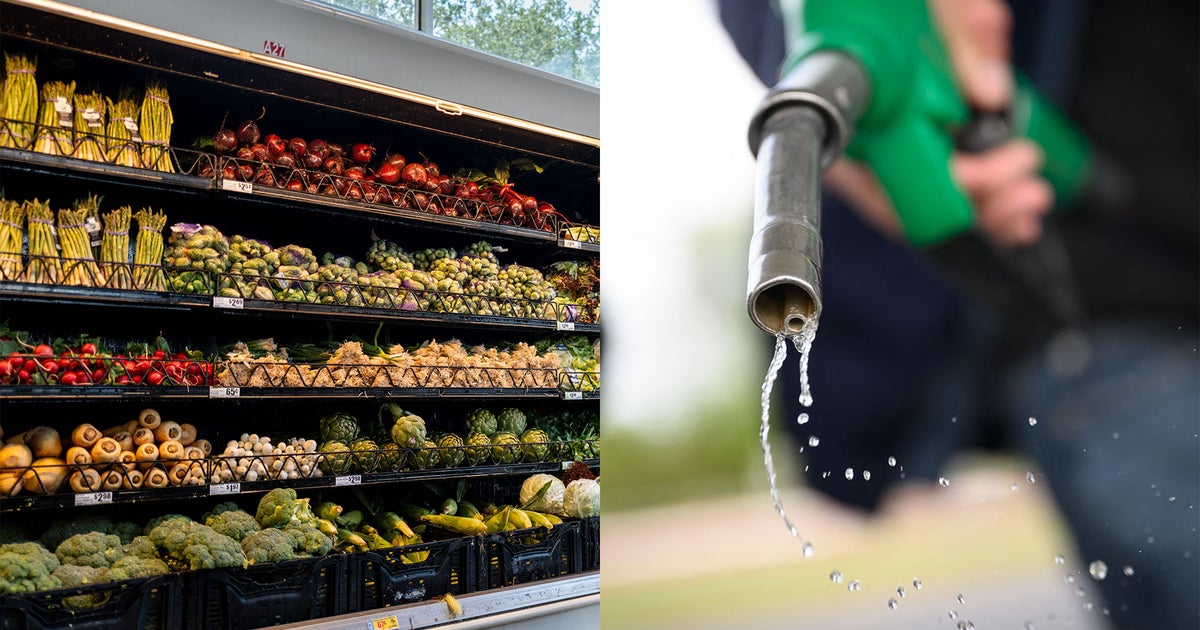
Looking at the consumer price index metrics for gasoline, gas prices have risen 39% since Trump began his second term, with much of that increase coming this year as a result of the war with Iran. “That’s the one that people hate the most; they love to hate gasoline prices because they’re right in your face every time, and you have to buy it,” North said. asserted
North → look → it
Analysts fear that it might take some time for gasoline prices to come back down, even if the war were to end immediately. uncertain
war → fear → time
Ryan Young, senior economist at the Competitive Enterprise Institute, recently told the Washington Examiner that he thinks that oil prices will remain high at least into 2027. asserted
prices → tell → 2027
He said that the oil and energy infrastructure destroyed during the war will take time to rebuild, which will affect oil supply coming from the region. asserted
which → say → region
Electricity prices, on average, have risen 8.4% since January 2025. asserted
prices → rise → January
The cost of electricity has been in the news as well, in large part due to the discourse surrounding data centers and their energy usage. asserted
cost → surround → centers
“We’re becoming increasingly reliant on electricity, and data centers are obviously a big part of that — but connected homes are a big part of that, and the utilization of electric vehicles is part of that,” Mark Hamrick, chief economic analyst for the Hamrick Brief, told the Washington Examiner. asserted
Hamrick → become → Examiner
Taking an even longer view, electricity prices have risen considerably since inflation first breached 2% under Biden. asserted
inflation → take → Biden
The housing market has also been a sore spot for consumers, with many struggling to afford a home and the median age of homebuyers increasing. Shelter costs tracked by the consumer price index are up about 5.5% since Trump entered office. asserted
Trump → struggle → office
The real price growth when it comes to housing came during the pandemic-era housing boom. asserted
it → come → boom
Shelter costs have risen over 30% since inflation began rising back in 2021. asserted
inflation → rise → 2021
But the situation for homebuyers is considerably worse when the run-up in mortgage rates is taken into account. asserted
up → take → account
As of Tuesday, the average rate on a 30-year fixed-rate mortgage has risen to 7.46%, according to Mortgage News Daily, which tracks rates daily. uncertain
which → fix → rates
“Coming into the war with Iran, we saw a short period where we thought the average 30-year fixed might have a sustained period below 6%, and now 7% seems to be the norm,” Hamrick said. uncertain
Hamrick → come → %
Consequently, the monthly payment on a mortgage for the typical home has more than doubled since early 2021. asserted
payment → double → 2021

💬Give feedback
🕘History 🎫Support