Photo via Times of India

How Chinese parts are fuelling Houthi ambitions to strike Israel and Saudi Arabia

Read the original at Times of India ↗
Cite

Patnaik, P. (2026, October 15). How Chinese parts are fuelling Houthi ambitions to strike Israel and Saudi Arabia. Times of India. https://timesofindia.indiatimes.com/world/middle-east/how-chinese-parts-are-fuelling-houthi-ambitions-to-strike-israel-and-saudi-arabia/articleshow/134955625.cms

Dated from the outlet's own feed. Check the original for its byline.

Times of India · collected 2026-10-15 · by Prisha Patnaik

Quick Summary

Yemen's Houthi rebels are reportedly using Chinese parts to manufacture advanced ballistic missiles, according to reports by the Wall Street Journal and Bloomberg. The Wall Street Journal cites Conflict Armament Research findings that two intercepted shipments contained components for building Iran’s Kheibar Shekan missile, including metal parts, stabilizing fins, and rocket motor pieces. Bloomberg's investigation found four seized shipping containers with suspected missile parts, drone components, and industrial machinery en route to Houthi-controlled ports. Both reports suggest the Houthis are aiming to produce more of their own weapons rather than relying solely on Iran for finished systems, though the extent of their manufacturing capability remains unclear.
Written by AI on 2026-10-15, from this article's own text only (the story summary below draws on all the coverage).

AI analysis

Story summary

As of October 15, 2026, Conflict Armament Research (CAR) reports that Houthi rebels in Yemen are using parts from Chinese suppliers to develop advanced ballistic missiles capable of reaching up to 1,200 miles, putting all of Saudi Arabia and Israel within range. This finding is based on intercepted shipments containing custom metal components for missile motors and airframes, stabilizing fins, and solid-propellant rocket motor parts, which were seized by Yemeni authorities last year. The analysis suggests the Houthis are mimicking Iran’s Kheibar Shekan precision-guided missiles, which have been used in attacks against US forces in the region since 2022. While the extent of Houthi manufacturing capability remains uncertain, these developments raise concerns over regional security and arms proliferation.

Written for “Houthis Building Missiles With Chinese Parts” on 2026-10-31, grounded in this article and the 3 other(s) covering the same event.

Story

📰 Houthis Building Missiles With Chinese Parts
Politics · 4 article(s) covering the same event. Compare every outlet's account →

Compared with similar articles

This article reads unscored and hedges 11% of its claims. Each row says how that neighbour differs.
New York Post
Hedges 5 of 12 claims Outlet record 66/100
Daily Mail
Hedges 6 of 64 claims Outlet record 68/100
CBS News
Hedges 1 of 2 claims Outlet record 66/100
Toronto Star
⚖️ Leans right Hedges 4 of 39 claims Outlet record 64/100
“Article A discusses the supply of Chinese parts aiding Houthi ambitions to manufacture weapons, while Article B reports on actual recent strikes by the Houthis against Saudi Arabia.”
Al Jazeera
Hedges 1 of 43 claims Outlet record 60/100
“The articles describe different aspects related to the conflict but not the same specific incident. Article A focuses on the supply network and weapon manufacturing by Houthis, while Article B reports on intercepted drones and missiles in a separate military operation.”
South China Morning Post
Hedges 0 of 6 claims Outlet record 64/100
“The articles discuss related topics regarding Chinese technology and the Houthis but describe different aspects and sources of information.”
The Straits Times
Hedges 0 of 26 claims Outlet record 66/100
“The articles describe different aspects of a broader conflict, with Article A discussing the procurement and manufacturing capabilities of the Houthis, while Article B reports on Saudi Arabia intercepting incoming attacks from Yemen's Houthis.”
How this article was measured signals, leaning charts, publisher record, byline, topics and claims

Signals How these are calculated →

Claims extracted
35
sentences that state something as happening or true
Uncertain
11%
4 of 35 hedged ("reportedly", "may", "according to")
Leaning
not political
takes no side on a contested political question
Publisher signals
59/100
Times of India's corrections and hedging, across everything collected from it. Not a measure of accuracy.
Outlets on this story
4
Politics
Same framing elsewhere
1
articles that frame the event the way this one does
Analyzed 2026-10-15 · how these are computed

How this is being covered How these are calculated →

Article leaning vs. publisher reliability
Source leaning vs. consistency

Publisher

Times of India · 3764 article(s) · 2 correction(s) detected
Running correction rate · 2 correction(s)

Who wrote this

Prisha Patnaik
73 article(s) here · 1 carrying a prediction
🔮 Sylvia said he could not recall its precise contents and claimed he had deleted the message, believing he had accidentally erased the entire conversation thread.
🔮 The proposed partnership could make Canada the EU’s first “associate member”, bringing it closer to the bloc without formal membership.
🔮 Rezaei said last week that Iran would not negotiate with Washington until its core demands were met.
🔮 He also thanked US president Donald Trump and Argentine president Javier Milei for their support, portraying the United States as a place where his family could find the legal security he claimed was no longer available at home.
🔮 It would almost be funny if it weren’t such an appalling abuse of the Department of Justice, one that we cannot become numb to,” Comey said after the charges were made public.
🔮 We will now breathe freely,” Milica, a law student, told Reuters said as supporters celebrated in Belgrade.
🔮 I am thrilled to announce to you that our leader, my dear María Corina, is on Venezuelan soil,” he wrote, adding that he would return soon.
🔮 The 19-year-old transgender teen accused of plotting a racist mass shooting at a Hindu temple near Chicago will reportedly continue receiving hormone injections for gender transition while in jail awaiting trial, after a judge ordered his detention without bail.
🔮 North Korean premier Pak Thae Song said the bridge would help advance prosperity and improve people’s well-being, according to the countries’ state media.
🔮 The issue is reaching national politics, too, as politicians from both parties are facing pressure to explain how they would regulate the industry's growth, even as President Donald Trump has championed the expansion of artificial intelligence and criticised opposition to data centres.
Also by Prisha Patnaik
Nothing else under this byline is closely related to this article, so these are simply their most recent.
All 73 articles by Prisha Patnaik →

Topics

Bloomberg China Houthis Iran Yemen

Subjects

Iran GPE · 5× Bloomberg ORG · 4× Houthis NORP · 4× Aden GPE · 3× Chinese NORP · 3× Houthi NORP · 3× Iranian NORP · 3× Yemen GPE · 3× China GPE · 2× Saudi Arabia GPE · 2×

Narrative

The WSJ report, based on findings from Conflict Armament Research (CAR), a group that traces weapons and their supply chains in conflict zones, said Yemeni authorities intercepted two shipments last year containing components needed to build a missile modelled on Iran’s Kheibar Shekan precision-guided ballistic missile.
framing: assertive · carried by 1 article(s) · first seen 2026-10-15
🔮 Some of the seized equipment could have legitimate civilian uses.

Claims (35 extracted, 4 hedged)

Yemen’s Iran-backed Houthi rebels are seeking to manufacture advanced ballistic missiles using components sourced from China, potentially giving the group the ability to strike targets across Saudi Arabia and Israel, according to a new report by the Wall Street Journal. uncertain
rebels → back → Journal
A separate investigation by Bloomberg has documented a wider supply network bringing missile parts, drone components and industrial machinery into Yemen. asserted
investigation → document → Yemen
The findings point to the Houthis’ growing ambition to manufacture more of their own weapons instead of relying primarily on Iran for finished systems. asserted
findings → point → systems
However, the extent of their ability to produce advanced missiles independently remains uncertain. asserted
extent → produce → missiles
Chinese shipments reveal missile-building ambitions asserted
shipments → reveal → ambitions
The WSJ report, based on findings from Conflict Armament Research (CAR), a group that traces weapons and their supply chains in conflict zones, said Yemeni authorities intercepted two shipments last year containing components needed to build a missile modelled on Iran’s Kheibar Shekan precision-guided ballistic missile. asserted
authorities → base → missile
The cargo included custom-made metal parts for missile motors and airframes, stabilising fins and solid-propellant rocket motor components. asserted
cargo → include → motors
Investigators also identified material used to make heat shields that protect missiles during atmospheric flight. asserted
that → identify → flight
Some of the components were specifically designed for missile production, while others had potential civilian applications. asserted
others → design → applications
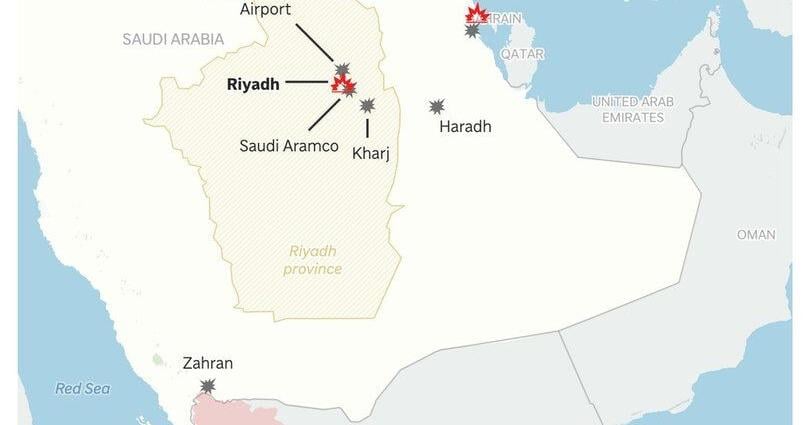
The Kheibar Shekan, first revealed by Iran in 2022, has a reported range of around 2,000km, potentially placing all of Saudi Arabia and Israel within reach. asserted
Shekan → reveal → reach
Its manoeuvrability is also intended to make interception by air-defence systems more difficult. asserted
interception → intend → systems
Fabian Hinz, a senior analyst at CAR, told WSJ that the arrival of Chinese components suggested the Houthis were either already manufacturing missiles or attempting to do so. uncertain
Houthis → tell → missiles
He cautioned that their heavily concealed weapons facilities made it difficult to establish how far production had progressed. asserted
production → caution → ?
A September 23 investigation by Bloomberg examined four shipping containers seized at Yemen’s southern port of Aden. asserted
investigation → examine → Aden
The cargo had been shipped from China and was bound for Hodeidah, a Red Sea port controlled by the Houthis. asserted
cargo → ship → Houthis
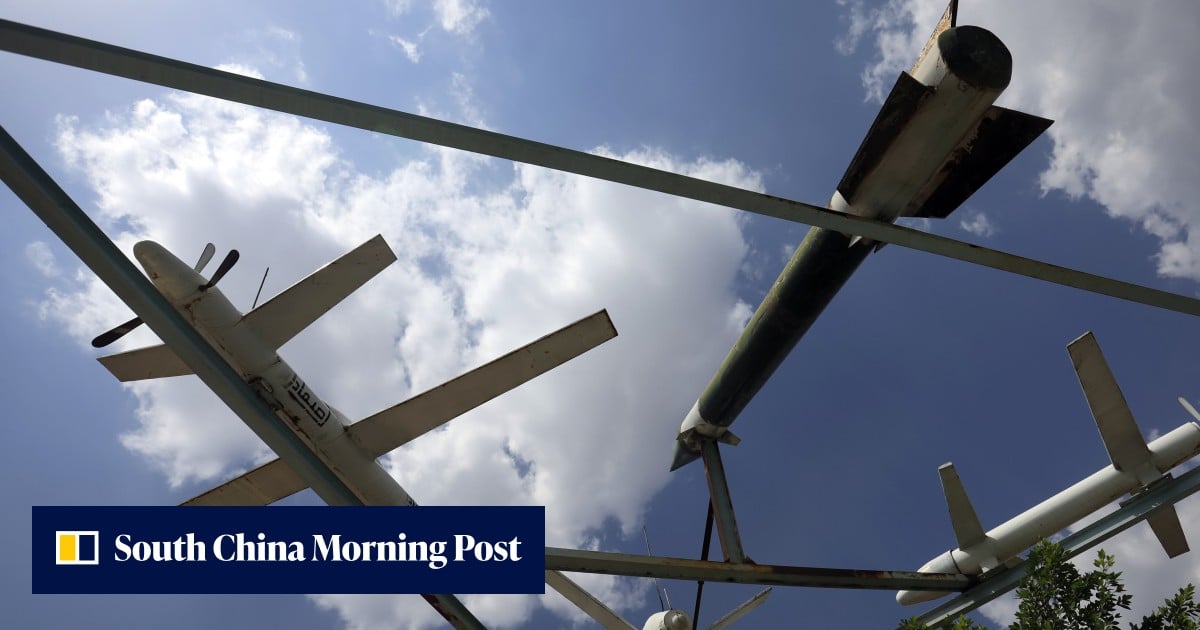
Weapons experts found suspected missile parts, drone components, control systems, launch equipment, computer-controlled machine tools, engines and tunnelling equipment. asserted
experts → find → parts
The material included rear fins resembling components used in Iranian ballistic missiles and phenolic resin, which can be used to manufacture heat-resistant missile shields. asserted
which → include → shields
Fawaz Al Bsesi, director general of Aden’s Land, Sea and Air Ports Department, told Bloomberg that the components appeared to have been distributed across four containers to make them harder to detect. asserted
them → tell → containers
In a note to his superiors, he wrote that he had come across what appeared to be a complete missile structure spread across three containers. asserted
what → write → containers
The investigation also identified a broader commercial network connecting Chinese exporters with cargo bound for Houthi-controlled territory. asserted
investigation → identify → territory
Shipping records reviewed by Bloomberg showed dozens of containers moving under 41 bills of lading. asserted
dozens → review → lading
In 25 cases, the Yemeni importer named in the shipping documents was changed while the cargo was in transit. asserted
cargo → name → transit
Aden authorities said the changes were intended to conceal the Houthi-linked companies behind the shipments. asserted
changes → say → shipments
Some of the seized equipment could have legitimate civilian uses. uncertain
Some → seize → uses
But weapons experts said the combination of components pointed to a supply chain capable of supporting domestic missile and drone production. asserted
combination → say → production
From Iranian weapons to domestic production The Houthis have expanded their arsenal over years of conflict with support from Iran and Lebanon’s Hezbollah. asserted
Houthis → expand → Iran
Between 2015 and 2019, they relied heavily on importing Iranian missiles in disassembled form and reassembling them. asserted
they → rely → them
From 2020 to 2023, they increasingly imported components to assemble or upgrade weapons, including systems operated under names such as Burkan and Quds. asserted
they → import → Burkan
Analysts say the group is now diversifying its procurement networks and developing greater domestic manufacturing capacity. asserted
group → say → capacity
Mohammed Albasha, founder of the US-based security advisory firm Basha Report, told The Wall Street Journal that the Houthis had expanded their supply chains, accumulated operational experience and incorporated artificial intelligence into software for their missiles and drones. asserted
Houthis → base → missiles
Henry Thompson, a former expert on the UN panel monitoring sanctions on Yemen, said there was evidence that the Houthis had been importing components for solid-fuel ballistic missiles from China for at least two years. asserted
Houthis → monitor → years
Medium-range ballistic missiles, he warned, could allow the group to strike deeper into Saudi Arabia with larger payloads than cruise missiles and drones. uncertain
group → warn → missiles
China has said it complies with the UN arms embargo on the Houthis and maintains controls on military exports and dual-use goods. asserted
it → say → exports
The reports, however, raise questions about how specialised components and industrial equipment are reaching the group through commercial supply chains. asserted
components → raise → chains
The investigations suggest that the Houthis are seeking the components, machinery and procurement networks needed to build a more self-sufficient weapons programme inside Yemen. asserted
Houthis → suggest → Yemen

💬Give feedback
🕘History 🎫Support