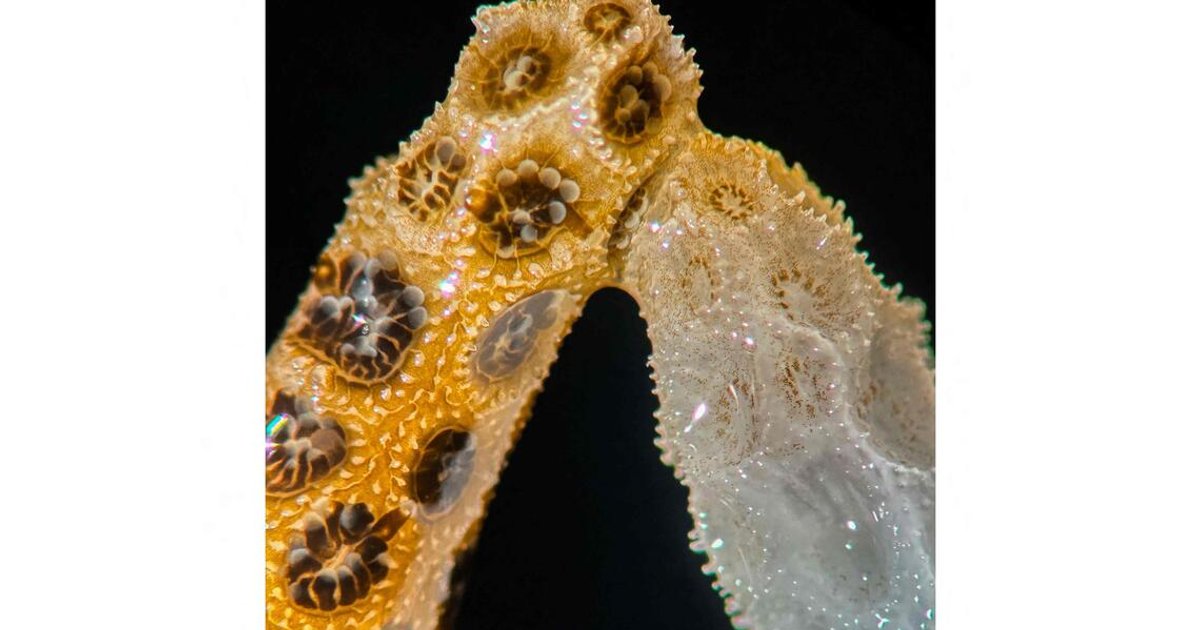
Photo via The Straits Times

Healthy corals help bleached neighbours regain colour: Study

Read the original at The Straits Times ↗
Cite

The Straits Times. (2026, October 15). Healthy corals help bleached neighbours regain colour: Study. The Straits Times. https://www.straitstimes.com/world/united-states/healthy-corals-help-bleached-neighbours-regain-colour-study

Dated from the outlet's own feed. Check the original for its byline.

The Straits Times · collected 2026-10-15 · by The Straits Times

Quick Summary

Scientists at Stanford University have discovered that placing healthy corals near their bleached counterparts can help the latter regain color and health. Published on October 14 in Science Advances, the study found that five days of direct contact between a healthy coral and a bleached one was sufficient for the bleached coral to recover due to the transfer of beneficial algae known as symbionts. This method, informally called "helping hands," could potentially aid in real-world interventions to save coral reefs affected by rising seawater temperatures caused by climate change.
Written by AI on 2026-10-15, from this article's own text only (the story summary below draws on all the coverage).

AI analysis

Story summary

Scientists at Stanford University have discovered that placing healthy coral in contact with bleached coral can help revive the dying ones. The study, published on October 14 in Science Advances, was prompted by an accidental observation made by Stephen Palumbi, the senior author of the research. In his lab, he noticed a bleached coral starting to recover when it came into contact with a healthy one. This finding could lead to potential real-world interventions for coral reef recovery if scalable methods can be developed. Coral reefs are under severe threat due to rising seawater temperatures caused by climate change and exacerbated by the 2026 El Niño phenomenon, which has led to widespread bleaching. Lead author Daniel Collins emphasized the significance of this discovery, describing it as a "eureka moment." While previous efforts focused on artificial nurseries or cultivating heat-tolerant species, this new approach offers hope for reversing coral bleaching and restoring damaged reefs.

Written for “Coral Bleaching Recovery Helped By Healthy Corals” on 2026-11-04, grounded in this article and the 0 other(s) covering the same event.

Story

📰 Coral Bleaching Recovery Helped By Healthy Corals
Environment · 1 article(s) covering the same event.

Compared with similar articles

Nothing to compare against. No article is close enough to this one for the pipeline to have linked or judged the pair.
How this article was measured signals, leaning charts, publisher record, byline, topics and claims

Signals How these are calculated →

Claims extracted
25
sentences that state something as happening or true
Uncertain
8%
2 of 25 hedged ("reportedly", "may", "according to")
Leaning
not political
takes no side on a contested political question
Publisher signals
66/100
The Straits Times's corrections and hedging, across everything collected from it. Not a measure of accuracy.
Outlets on this story
1
Environment
Same framing elsewhere
1
articles that frame the event the way this one does
Analyzed 2026-10-15 · how these are computed

How this is being covered How these are calculated →

Article leaning vs. publisher reliability
Source leaning vs. consistency

Publisher

The Straits Times · 4299 article(s) · 5 correction(s) detected
Running correction rate · 5 correction(s)

Who wrote this

The Straits Times
2813 article(s) here · 1 carrying a prediction
🔮 NEW YORK - Ballot machines malfunctioned in a hotly contested House race in New York state on Nov 3, prompting right-wing influencers to fling unfounded allegations of US midterms voter fraud even as local election officials insisted all ballots would be counted.
🔮 Black and Latino voters make up a majority in many of the jurisdictions, which are concentrated in states that could determine control of the US Senate.
🔮 BERLIN - Thirty-three people were killed and more than 50 could be trapped in rubble a day after multiple Russian strikes on a Ukrainian village, President Volodymyr Zelensky said in Berlin on Nov 3, calling it one of Moscow’s worst attacks of the war.
🔮 "But I would also say it is important for Russia to finally engage in serious negotiations on a ceasefire and a subsequent peace agreement," he added.
🔮 "Whether we will be able to restore trust between the military and society, which has once again been undermined by yesterday's events, is an open question," she wrote on Facebook.
2026-11-03 · assertive framing · Ukraine probes clashes at military recruitment dorm
🔮 Pope Leo is healthy and ready to depart this week for an intense three-country tour of South America less than a month after his lung cancer surgery, Vatican officials said on Nov 3, adding that no extra medical precautions were being taken for the trip. Leo, 71, leaves on Nov 6 for a 12-day tour of Uruguay, Argentina and Peru, set to be one of the most intense a pope has taken in decades. He had surgery on Oct 13 to remove the lower lobe of his right lung. “The pope is in good health,” Vatican spokesperson Matteo Bruni said at a briefing.
🔮 “There are so many vulnerabilities out there that in some ways you could say are waiting to be exploited,” he said following a speech to coincide with the release of his agency’s annual report.
🔮 "But I would also say it is important for Russia to finally engage in serious negotiations on a ceasefire and a subsequent peace agreement.
🔮 Those rulings all came after the US Supreme Court swiftly rejected the administration's request that it intervene in a Justice Department lawsuit seeking to order California election officials not to count any mail ballots received from more than 20,000 people it says may be noncitizens.
🔮 Ceding control of either chamber to the Democrats would imperil Trump's legislative agenda and open the door to Democratic-led congressional investigations targeting him and his administration.
Also by The Straits Times
Nothing else under this byline is closely related to this article, so these are simply their most recent.
All 2813 articles by The Straits Times →

Topics

AFP El Nino Stanford Stanford University WASHINGTON

Subjects

Collins PERSON · 3× AFP ORG · 2× Stanford ORG · 2× Daniel Collins PERSON · 1× Science Advances ORG · 1× Stanford University ORG · 1× Stephen Palumbi PERSON · 1× WASHINGTON GPE · 1×

Narrative

The second was a happy accident observed by Stephen Palumbi, the study’s senior author, also at Stanford, who noticed in his lab that a healthy coral and bleached coral had tipped over and were touching each other, and the bleached coral had started to recover.
framing: assertive · carried by 1 article(s) · first seen 2026-10-15
🔮 But a new lab study by scientists at Stanford University finds that simply placing healthy, colourful coral in contact with their bleached counterparts is enough to bring the dying ones back from the brink – a finding that could eventually pave the way for real-world interventions if it can be scaled.
2026-10-15 · The Straits Times
Healthy corals help bleached neighbours regain colour: Study · assertive framing

Claims (25 extracted, 2 hedged)

Healthy corals help bleached neighbours regain colour: Study AI generated asserted
AI → help → colour
The world’s coral reefs face an existential threat from rising seawater temperatures that trigger widespread bleaching, a problem driven by climate change and compounded by 2026’s intense El Nino phenomenon. asserted
that → face → phenomenon
But a new lab study by scientists at Stanford University finds that simply placing healthy, colourful coral in contact with their bleached counterparts is enough to bring the dying ones back from the brink – a finding that could eventually pave the way for real-world interventions if it can be scaled. uncertain
it → find → interventions
“It’s stunning,” lead author Daniel Collins told AFP about the outcome of the experiments, recalling the “eureka moment” when he first saw positive results and rushed to his PhD supervisor’s office to share the news. asserted
he → ’ → news
The paper was published on Oct 14 in the journal Science Advances. asserted
paper → publish → journal
Coral reef recovery is a highly active area of research, with efforts ranging from using artificial nurseries to rescue reefs to finding and cultivating more heat-tolerant species. asserted
efforts → range → species
Bleached corals had been largely written off because of their high mortality rate, said Collins – though the new work instead demonstrates they “really shouldn’t be thought of as a lost cause.” asserted
they → bleach → cause
The Stanford team ran a series of tests with pairs of cauliflower corals, finding five days of contact between healthy and bleached fragments was all it took for the latter to mount a spectacular recovery, at which point they could be safely pried apart. uncertain
they → run → recovery
The key to the success of the method – which the team informally dubbed “helping hands” – is the transfer of healthy photosynthetic algae, also known as symbionts, from which corals derive their colour. asserted
corals → dub → colour
Corals are marine invertebrates made up of hundreds to thousands of tiny, soft-bodied organisms called polyps. asserted
Corals → make → organisms
They have a mutualistic relationship with symbionts, which produce the vast majority of food the corals require, in return for shelter, as well as water and the carbon dioxide they need to photosynthesise. asserted
they → have → shelter
But in times of heat stress, algae can produce toxins, forcing their hosts to expel them. asserted
algae → produce → them
Collins said the idea for the experiment came from two sources. asserted
idea → say → sources
The first was a study that showed plastic waste in the ocean can promote disease in corals by transferring harmful pathogens, which made him wonder whether it would be possible to flip that mechanism on its head with a health-promoting transfer. asserted
it → show → transfer
The second was a happy accident observed by Stephen Palumbi, the study’s senior author, also at Stanford, who noticed in his lab that a healthy coral and bleached coral had tipped over and were touching each other, and the bleached coral had started to recover. asserted
coral → observe → other
The scaling challenge The experiments revealed important constraints. asserted
experiments → reveal → constraints
Three days of contact was the minimum required for a bleached coral to begin to recover, and five ensured full recovery. asserted
five → require → recovery
They also had to be in direct contact – a few millimetres apart, and nothing significant happened. asserted
nothing → have → contact
A major limitation was that the process only worked when the two corals shared the same genetic background, or “genet.” asserted
corals → work → background
Mixed-genet pairings resulted in the corals deploying stinging cells, a hostile response that can be likened to organ rejection in humans. asserted
that → mix → humans
Powerful laser microscopy revealed the mechanism: after a day or two of contact, the corals’ tissues began fusing, creating a “nutrient highway” between the pair. asserted
tissues → reveal → pair
The biggest challenge will be translating an exciting lab finding into a real-world solution. asserted
challenge → translate → solution
“We likely will not be touching corals to each other on reefs,” said Collins, noting the sheer size of reefs tends to preclude this option. asserted
size → touch → option
However, it is possible to extract healthy symbionts and culture them – and the team is now thinking about ways to re-introduce them en masse to bleached coral. asserted
team → extract → coral
This also has the benefit of side-stepping the genetic mismatch problem, which applies to the corals, not the symbionts. asserted
which → have → corals

💬Give feedback
🕘History 🎫Support