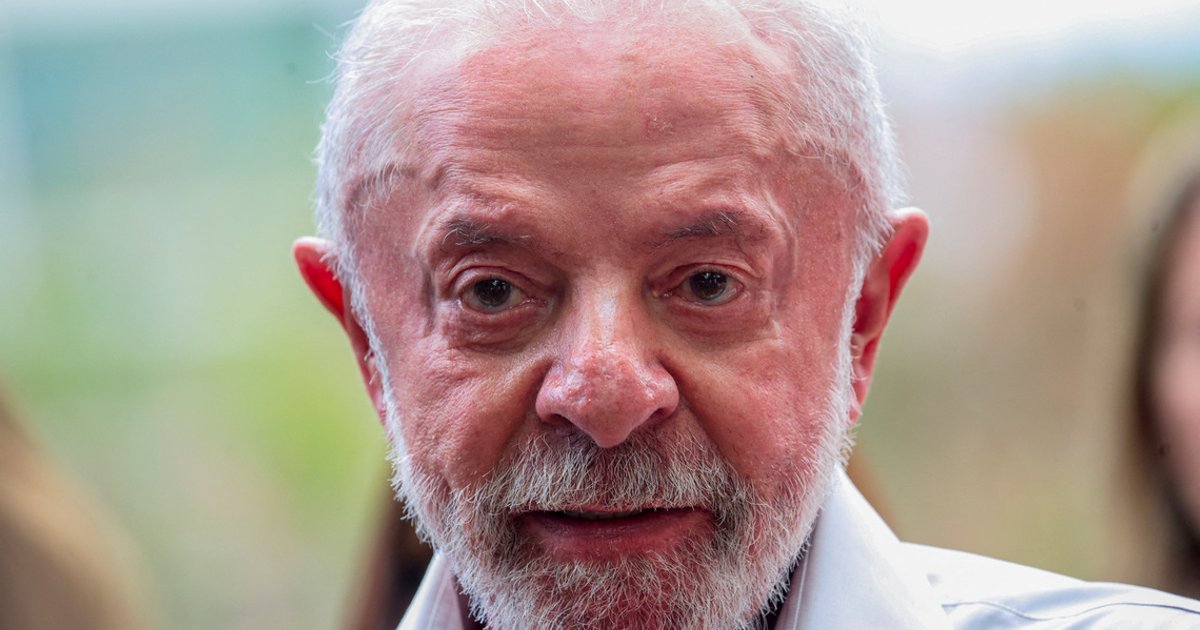
Photo via BBC News

Brazil's Congress approves shorter working week in win for Lula

Read the original at BBC News ↗
Cite

Buschschlüter, V., Schreiber, M., & Tavares, V. (2026, October 15). Brazil's Congress approves shorter working week in win for Lula. BBC News. https://www.bbc.co.uk/news/articles/cmwy43pp08elo?at_medium=RSS&at_campaign=rss

Dated from the outlet's own feed. Check the original for its byline.

BBC News · collected 2026-10-15 · by Vanessa Buschschlüter, Mariana Schreiber, Vitor Tavares

Quick Summary

Brazil's Congress has approved a constitutional amendment that reduces the working week from 44 hours to 40 hours, giving employees two days off per week without cutting their salary. This significant change in workers' rights was championed by President Luiz Inácio Lula da Silva and passed with an overwhelming vote of 75 to one in the Senate. The amendment is expected to benefit over 30 million workers and may boost Lula's chances against his rival, Flávio Bolsonaro, in the upcoming presidential election on October 25th.
Written by AI on 2026-10-15, from this article's own text only (the story summary below draws on all the coverage).

AI analysis

Story summary

Brazil's Senate approved a constitutional amendment on October 14, 2026, reducing the maximum workweek from 44 to 40 hours without cutting salaries. The measure passed with overwhelming support: 75 votes in favor and only 1 against, cast by former Vice President Hamilton Mourão. President Luiz Inácio Lula da Silva, who championed this initiative, hopes it will boost his standing ahead of the October 25 presidential runoff against Flávio Bolsonaro. Initially opposed, Bolsonaro voted in favor remotely to avoid alienating voters. The amendment affects over 30 million workers and bans six-day workweeks currently followed by about 16 million Brazilians. Retail, restaurant, and hotel workers are expected to benefit most from the change, which will take effect gradually over 14 months.

Written for “Brazil Shortens Work Week For Lula” on 2026-11-04, grounded in this article and the 4 other(s) covering the same event.

Story

📰 Brazil Shortens Work Week For Lula
Politics · 5 article(s) covering the same event. Compare every outlet's account →

Compared with similar articles

This article reads leans left and hedges 5% of its claims. Each row says how that neighbour differs.
The Guardian
Hedges 6 of 32 claims Outlet record 66/100
Toronto Star
⚖️ Leans left Hedges 3 of 35 claims Outlet record 64/100
The Straits Times
⚖️ Leans left Hedges 1 of 17 claims Outlet record 66/100
Daily Mail
⚖️ Leans left Hedges 1 of 23 claims Outlet record 69/100
The Straits Times
⚖️ Leans left Hedges 1 of 13 claims Outlet record 66/100
“The articles describe different legislative actions: one about reducing the workweek to 40 hours and another about proposing free weekend public transport.”
The Straits Times
⚖️ Leans left Hedges 0 of 9 claims Outlet record 66/100
“The articles describe different aspects related to President Lula's measures but refer to distinct events in time and content: one approves a shorter working week, while the other discusses budget reshuffling needs for upcoming fiscal year.”
How this article was measured signals, leaning charts, publisher record, byline, topics and claims

Signals How these are calculated →

Claims extracted
20
sentences that state something as happening or true
Uncertain
5%
1 of 20 hedged ("reportedly", "may", "according to")
Leaning
Leans left
of the writing, not the subject · beta estimate
Publisher signals
66/100
BBC News's corrections and hedging, across everything collected from it. Not a measure of accuracy.
Outlets on this story
5
Politics
Same framing elsewhere
1
articles that frame the event the way this one does
Analyzed 2026-10-15 · how these are computed

How this is being covered How these are calculated →

Article leaning vs. publisher reliability
Source leaning vs. consistency

Publisher

BBC News · 5059 article(s) · 7 correction(s) detected
Running correction rate · 7 correction(s)

Who wrote this

Vanessa Buschschlüter
12 article(s) here · 1 carrying a prediction
🔮 The Carter Center, which had sent independent observers to Venezuela, also said that the election "could not be considered democratic".
🔮 In the letter, he alleges, without offering evidence, that he was the victim of "electoral fraud" and says that he will lead the opposition from the US.
🔮 The US has said it would grant visas to Bolsonaro and his family, who travelled with him.
🔮 His passports were cancelled on Tuesday after he missed a deadline to hand them over to authorities, prompting widespread speculation that he may have left Brazil.
🔮 But the showdown was marked by personal attacks and analysts have warned that its aggressive tone may increase the abstention rate further.
🔮 - Published Brazil's Congress has approved a constitutional amendment that will cut the working week from 44 hours to 40 and give employees two days off per week without cutting their salary.
🔮 The incumbent, veteran left-wing leader Luíz Inácio Lula da Silva, will be challenged by 11 candidates, the most prominent of whom is right-winger Flávio Bolsonaro.
🔮 - Published People living on the northern Pacific coast of Mexico are bracing for the arrival of Hurricane Polo, which is forecast to make landfall later on Monday or early on Tuesday. The category three storm, with maximum sustained winds near 115 mph (185 km/h), is expected to move over the state Baja California Sur, a region popular with tourists and home to the resort destination of Los Cabos. Meteorologists at the US-based National Hurricane Center (NHC) have warned of heavy rainfall which could lead to life-threatening flooding and mudslides, especially in areas of steep terrain. Residents on Sunday stocked up on essentials such as drinking water and food as the storm approached.
2026-09-28 · mixed framing · Mexico's Pacific coast braces for Hurricane Polo
🔮 More than three million people live in Sinaloa and many say that the war between the two rival factions - known as Los Chapitos and La Mayiza - has blighted their lives.
🔮 - Published The Argentine government has said that it would file criminal charges against oil company Navitas Petroleum for operating in seas off the Falkland Islands.
Also by Vanessa Buschschlüter
Nothing else under this byline is closely related to this article, so these are simply their most recent.
All 12 articles by Vanessa Buschschlüter →
Mariana Schreiber
2 article(s) here · 1 carrying a prediction
🔮 But the showdown was marked by personal attacks and analysts have warned that its aggressive tone may increase the abstention rate further.
🔮 - Published Brazil's Congress has approved a constitutional amendment that will cut the working week from 44 hours to 40 and give employees two days off per week without cutting their salary.
Also by Mariana Schreiber
Nothing else under this byline is closely related to this article, so these are simply their most recent.
Vitor Tavares
1 article(s) here · 1 carrying a prediction
🔮 - Published Brazil's Congress has approved a constitutional amendment that will cut the working week from 44 hours to 40 and give employees two days off per week without cutting their salary.
The only article under this byline in the corpus.

Topics

Brazil Brazilians Congress Latin American the Chamber of Deputies

Subjects

Brazil GPE · 3× Lula PERSON · 3× Bolsonaro PERSON · 2× Flávio Bolsonaro PERSON · 2× Brazilians NORP · 1× Congress ORG · 1× Jair Bolsonaro PERSON · 1× Latin American NORP · 1× Luiz Inácio Lula da Silva PERSON · 1× the Chamber of Deputies ORG · 1×

Narrative

Flávio Bolsonaro, who is currently a senator, dropped his previous opposition to the measure and also cast a "yes" vote. Announcing his change of heart on Tuesday, he argued that he had been swayed by the measure's popularity, commenting: "Most Brazilian workers want to see the end of the six-day workweek, so I'm going to vote in favour of ending it." The younger Bolsonaro had earlier denounced the proposal as an "opportunistic" attempt by his presidential rival to appeal to working-class voters.
framing: assertive · carried by 1 article(s) · first seen 2026-10-15
🔮 - Published Brazil's Congress has approved a constitutional amendment that will cut the working week from 44 hours to 40 and give employees two days off per week without cutting their salary.
2026-10-15 · BBC News
Brazil's Congress approves shorter working week in win for Lula · assertive framing

Claims (20 extracted, 1 hedged)

- Published Brazil's Congress has approved a constitutional amendment that will cut the working week from 44 hours to 40 and give employees two days off per week without cutting their salary. asserted
that → publish → salary
The change represents the biggest overhaul to workers' rights since Brazil's return to democracy in 1988. asserted
change → represent → 1988
Senators passed the amendment, which left-wing President Luiz Inácio Lula da Silva had championed, less than two weeks before a second round in the Latin American nation's presidential election. asserted
Silva → pass → election
Lula's supporters are hoping that its passage, which is estimated to benefit more than 30 million workers, will boost his chances of closing in on his right-wing rival, Flávio Bolsonaro, in the 25 October run-off. asserted
which → hop → off
The son of former President Jair Bolsonaro won the first round of the presidential election with 47% of the vote, ahead of Lula on 45.2%. asserted
son → win → %
Both fell short of the 50% of valid votes needed to stave off a decisive second round. asserted
Both → fall → round
Opinion polls suggest that the move to cut the working week is very popular, with one nationwide survey finding that almost 70% of Brazilians backed it. asserted
% → suggest → it
The measure had already passed in the Chamber of Deputies, Brazil's lower house, in May, before senators overwhelmingly backed the measure on Wednesday by 75 votes to one. uncertain
senators → pass → one
Flávio Bolsonaro, who is currently a senator, dropped his previous opposition to the measure and also cast a "yes" vote. Announcing his change of heart on Tuesday, he argued that he had been swayed by the measure's popularity, commenting: "Most Brazilian workers want to see the end of the six-day workweek, so I'm going to vote in favour of ending it." The younger Bolsonaro had earlier denounced the proposal as an "opportunistic" attempt by his presidential rival to appeal to working-class voters. asserted
Bolsonaro → drop → voters
Before his about-turn, he had said that it should be down to employees and employers to agree on a work schedule, rather than restrictions being imposed by a constitutional amendment. asserted
it → say → amendment
Lula described Bolsonaro's policy reversal as "electoral opportunism" and celebrated the amendment's approval, saying it would make a real difference to workers. asserted
it → describe → workers
"It means more time to live, rest, be with family, watch your children grow up, look after yourself and enjoy life," he wrote on social media. asserted
he → mean → media
Critics of the measure have warned that it will raise production costs, which will eventually be passed on to the consumer, resulting in higher prices. asserted
which → warn → prices
But its supporters argue that having two days off a week will allow workers to be better rested and therefore more productive in the hours that they do work. asserted
they → argue → that
The change is due to be phased in, with the working week first being shortened to 42 hours after a two-month grace period and then again to 40 hours at a later stage. asserted
week → phase → stage
The changes will take more than a year to entirely take effect but many of its backers are already celebrating. asserted
many → take → backers
Luciana de Almeida, 36, who works six days a week as a cashier in a supermarket, said it would "make a lot of difference" to her life. asserted
it → work → life
The single mother, who lives in Rio de Janeiro, said she has been missing out on time with her three children as the only day off she had was usually spent doing domestic chores. asserted
she → live → chores
"My body, and my mind in particular, are very tired," she told BBC Brasil. asserted
she → tell → Brasil
"I need time with my daughters, have some leisure time, or even just some time resting at home." asserted
I → need → home

💬Give feedback
🕘History 🎫Support