Photo via Toronto Star

Brazil's Senate approves a shorter workweek in major win for Lula ahead of runoff

Read the original at Toronto Star ↗
Cite

Savarese, M., & Hughes, E. (2026, October 15). Brazil's Senate approves a shorter workweek in major win for Lula ahead of runoff. Toronto Star. https://www.thestar.com/news/world/americas/brazil-s-senate-approves-a-shorter-workweek-in-major-win-for-lula-ahead-of-runoff/article_d380ff8f-fd83-5545-ba58-075a335f8fb4.html

Dated from the outlet's own feed. Check the original for its byline.

Toronto Star · collected 2026-10-15 · by Mauricio Savarese, Eléonore Hughes

Quick Summary

Brazil’s Senate has approved reducing the maximum workweek from 44 to 40 hours without salary cuts, a move seen as a political boost for President Lula ahead of the October 25 runoff election against Flávio Bolsonaro. The amendment passed with only one dissenting vote and will be signed into law next week after receiving approval in two rounds of voting by 75 senators out of 81. This change benefits over 37 million workers and is part of Lula’s efforts to rally support before the election, including recent initiatives like fuel tax cuts and increased welfare payments.
Written by AI on 2026-10-15, from this article's own text only (the story summary below draws on all the coverage).

AI analysis

Story summary

Brazil's Senate approved a constitutional amendment on October 14, 2026, reducing the maximum workweek from 44 to 40 hours without cutting salaries. The measure passed with overwhelming support: 75 votes in favor and only 1 against, cast by former Vice President Hamilton Mourão. President Luiz Inácio Lula da Silva, who championed this initiative, hopes it will boost his standing ahead of the October 25 presidential runoff against Flávio Bolsonaro. Initially opposed, Bolsonaro voted in favor remotely to avoid alienating voters. The amendment affects over 30 million workers and bans six-day workweeks currently followed by about 16 million Brazilians. Retail, restaurant, and hotel workers are expected to benefit most from the change, which will take effect gradually over 14 months.

Written for “Brazil Shortens Work Week For Lula” on 2026-11-03, grounded in this article and the 4 other(s) covering the same event.

Story

📰 Brazil Shortens Work Week For Lula
Politics · 5 article(s) covering the same event. Compare every outlet's account →

Compared with similar articles

This article reads leans left and hedges 9% of its claims. Each row says how that neighbour differs.
BBC News
⚖️ Leans left Hedges 1 of 20 claims Outlet record 68/100
Daily Mail
⚖️ Leans left Hedges 1 of 23 claims Outlet record 69/100
The Guardian
Hedges 6 of 32 claims Outlet record 66/100
The Straits Times
⚖️ Leans left Hedges 1 of 17 claims Outlet record 66/100
The Straits Times
⚖️ Leans left Hedges 0 of 9 claims Outlet record 66/100
“The articles describe different aspects related to Lula's policies and their implementation rather than the same specific incident.”
The Hindu
Hedges 0 of 14 claims Outlet record 77/100
“The articles describe two different government actions by Lula's administration: lowering fuel prices and approving a shorter workweek, both ahead of the runoff election but distinct events.”
How this article was measured signals, leaning charts, publisher record, byline, topics and claims

Signals How these are calculated →

Claims extracted
35
sentences that state something as happening or true
Uncertain
9%
3 of 35 hedged ("reportedly", "may", "according to")
Leaning
Leans left
of the writing, not the subject · beta estimate
Publisher signals
64/100
Toronto Star's corrections and hedging, across everything collected from it. Not a measure of accuracy.
Outlets on this story
5
Politics
Same framing elsewhere
1
articles that frame the event the way this one does
Analyzed 2026-10-15 · how these are computed

How this is being covered How these are calculated →

Article leaning vs. publisher reliability
Source leaning vs. consistency

Publisher

Toronto Star · 11297 article(s) · 28 correction(s) detected
Running correction rate · 28 correction(s)
2026-10-26
Correction
2026-10-24
Correction
2026-10-07
Correction
2026-09-24
Correction

Who wrote this

Mauricio Savarese
24 article(s) here · 1 carrying a prediction
🔮 Politicians say Lula could have won by more but voters were hampered by bus shortages in Sao Paulo and Salvador, where the president is popular.
🔮 Brazilians will choose between incumbent President Luiz Inácio Lula da Silva and Flávio Bolsonaro in Sunday’s polarizing presidential election, a contest that will determine whether the U.S. will significantly expand its growing influence in Latin America.
🔮 Polls published on Saturday suggest it will be a nail-biting election that could be decided on details.
🔮 Meta will continue to enforce its rules, comply with Brazilian electoral legislation, correct errors when they occur, and ensure a level playing field for everyone who uses our services,” Meta said.
🔮 Brazil’s Senate approved a constitutional amendment Wednesday to reduce the country’s maximum workweek from 44 to 40 hours without a salary cut, a move backed by President Luiz Inácio Lula da Silva, who hopes it will boost his standing against Flávio Bolsonaro in the Oct. 25 presidential runoff.
🔮 FIFA will propose to its members a $6.35 billion fund for soccer development between 2027 and 2030, including a boosted amount of $25 million for each national association, according to a document reviewed by The Associated Press on Tuesday.
🔮 The U.S. and Brazil have had an extradition agreement since 1961, but it wasn’t immediately clear whether the terms would apply.
🔮 Since neither candidate secured an absolute majority, they will face off again in three weeks.
🔮 If no candidate gets more than 50% of the vote, the top two vote-getters will head to a runoff on Oct. 25 in Latin America’s economic powerhouse.
🔮 Observers say he would likely be released from prison if his son wins the election.
Also by Mauricio Savarese
Nothing else under this byline is closely related to this article, so these are simply their most recent.
All 24 articles by Mauricio Savarese →
Eléonore Hughes
14 article(s) here · 1 carrying a prediction
🔮 One meme titled “Which costume would you use to flee?” presented Bolsonaro in a range of outfits to resemble a Rastafarian, Mario, former soccer player Ronaldo and John Lennon, among others.
🔮 The departure of the 45-year-old ally of U.S. President Donald Trump from Brazil days after losing the runoff vote is sending shock waves across Brazil’s right and reverberating across the region, and it may spell more trouble for relations between Washington and Brasilia.
🔮 Brazilians will choose between incumbent President Luiz Inácio Lula da Silva and Flávio Bolsonaro in Sunday’s polarizing presidential election, a contest that will determine whether the U.S. will significantly expand its growing influence in Latin America.
🔮 A victory by Sen. Bolsonaro would add Brazil to a list of Latin American countries — including Argentina, Chile, Colombia, Costa Rica and Peru — that have elected Trump-friendly governments in recent years.
🔮 “Whether they win or lose the second round, the Brazilian left may have begun — in this 2026 election — its process of digital transformation,” said Bites director Manoel Fernandes in an Oct. 17 statement.
🔮 Brazil’s Senate approved a constitutional amendment Wednesday to reduce the country’s maximum workweek from 44 to 40 hours without a salary cut, a move backed by President Luiz Inácio Lula da Silva, who hopes it will boost his standing against Flávio Bolsonaro in the Oct. 25 presidential runoff.
🔮 Fuel prices are a particularly sensitive issue for voters, who will decide on Oct. 25 whether to elect Sen. Flávio Bolsonaro, a son of former President Jair Bolsonaro, or grant Lula a fourth, nonconsecutive term.
🔮 Observers say he would likely be released from prison if his son wins the election.
🔮 Millions of Brazilians will vote Sunday in an election dominated by two rivals: incumbent President Luiz Inácio Lula da Silva and Sen. Flávio Bolsonaro, the son of ex-leader Jair Bolsonaro who Lula defeated four years ago.
🔮 Also on Friday, Brazil’s federal police said they executed search and seizure warrants in Sao Paulo and the Federal District as part of an investigation into suspected plans that could threaten U.S. diplomatic facilities in Brazil.
Also by Eléonore Hughes
Nothing else under this byline is closely related to this article, so these are simply their most recent.
All 14 articles by Eléonore Hughes →

Topics

Brazil SAO PAULO Senate Workers’ Party

Subjects

Lula PERSON · 8× Brazil GPE · 6× Senate ORG · 5× Bolsonaro PERSON · 4× Flávio Bolsonaro PERSON · 2× SAO PAULO GPE · 2× Davi Alcolumbre PERSON · 1× Hamilton Mourao PERSON · 1× Jair Bolsonaro PERSON · 1× Luiz Inácio Lula da Silva PERSON · 1×

Narrative

Brazil’s president using government tools to reach out to voters Lula has taken a number of steps in recent days to shore up support before the runoff, including new fuel tax cuts, the extension of existing subsidies, the pledge to pardon debts of more than 3.6 million small businesses with the federal government, the decision to block signal for cellphones around prisons, and a boost in payments of a welfare program for university students.
framing: assertive · carried by 1 article(s) · first seen 2026-10-15
🔮 Brazil’s Senate approved a constitutional amendment Wednesday to reduce the country’s maximum workweek from 44 to 40 hours without a salary cut, a move backed by President Luiz Inácio Lula da Silva, who hopes it will boost his standing against Flávio Bolsonaro in the Oct. 25 presidential runoff.

Claims (35 extracted, 3 hedged)

Brazil’s Senate approved a constitutional amendment Wednesday to reduce the country’s maximum workweek from 44 to 40 hours without a salary cut, a move backed by President Luiz Inácio Lula da Silva, who hopes it will boost his standing against Flávio Bolsonaro in the Oct. 25 presidential runoff. asserted
it → approve → runoff
Lula is expected to sign the shorter workweek into law next week after the measure passed the Senate in two rounds of voting with the same result: 75 to 1 out of 81 members. asserted
measure → expect → result
The sole vote against it came from former Vice President Hamilton Mourao, who served under President Jair Bolsonaro. asserted
who → come → Bolsonaro
Flávio Bolsonaro, who opposed the initiative until early this week, voted for it remotely as he campaigned in southern Brazil. asserted
he → oppose → Brazil
Analysts and politicians say his allies in the Senate stopped blocking the popular move so he wouldn’t be hurt in his neck-to-neck race against Lula. asserted
he → say → Lula
The amendment gives businesses 14 months to adopt the shorter workweek, which was a key sticking point in the negotiations. asserted
which → give → negotiations
Many business leaders and lawmakers wanted the changes to be made gradually over 10 years. asserted
changes → want → years
The constitutional amendment establishes a 40-hour weekly limit and two rest days without reducing pay. asserted
amendment → establish → pay
More than 37 million workers could benefit from the new rules, according to the government. uncertain
workers → benefit → government
Brazil’s president was quick to celebrate the decision. asserted
president → celebrate → decision
“Today is a day to celebrate a historic achievement for millions of workers,” Lula said in a statement. asserted
Lula → celebrate → statement
“This means having more time to live, rest, be with family, watch your children grow up, take care of yourself, and enjoy life. asserted
children → mean → life
Those who work so hard to build Brazil also deserve to have time to live.” Many senators chanted Lula’s name after the vote, while Bolsonaro supporters quickly left the chamber. asserted
supporters → work → chamber
“Didn’t I say this was going to work?” Davi Alcolumbre, the president of Brazil’s Senate, told a leading senator of Lula’s Workers’ Party after the result. asserted
Alcolumbre → say → result
He timed the decision to take place between the first and the second round of the election, which benefits the incumbent. asserted
which → time → incumbent
Recent polls indicated widespread support for the measure, despite the opposition of many business owners. asserted
polls → indicate → owners
Many Bolsonaro allies said in their remarks they see the cost of living going up because of the new schedule. asserted
cost → say → schedule
Brazil’s president using government tools to reach out to voters Lula has taken a number of steps in recent days to shore up support before the runoff, including new fuel tax cuts, the extension of existing subsidies, the pledge to pardon debts of more than 3.6 million small businesses with the federal government, the decision to block signal for cellphones around prisons, and a boost in payments of a welfare program for university students. asserted
Lula → use → students
The change in the workweek system is regarded as the pinnacle of those initiatives. asserted
change → regard → initiatives
Bolsonaro, who bested Lula by 2.2 million votes in the first-round election, reversed his long-standing opposition to the measure on Tuesday. asserted
who → best → Tuesday
He previously advocated for a more flexible payment-by-the-hour regime, called for individual negotiations between employees and employers and repeatedly called the legislation election-motivated. asserted
He → advocate → legislation
Hours after announcing his support for the change, Bolsonaro told business owners that the new Congress, where his party could reach a simple majority with other allied parties come February, could review the measure, local newspaper O Globo reported. uncertain
Globo → announce → measure
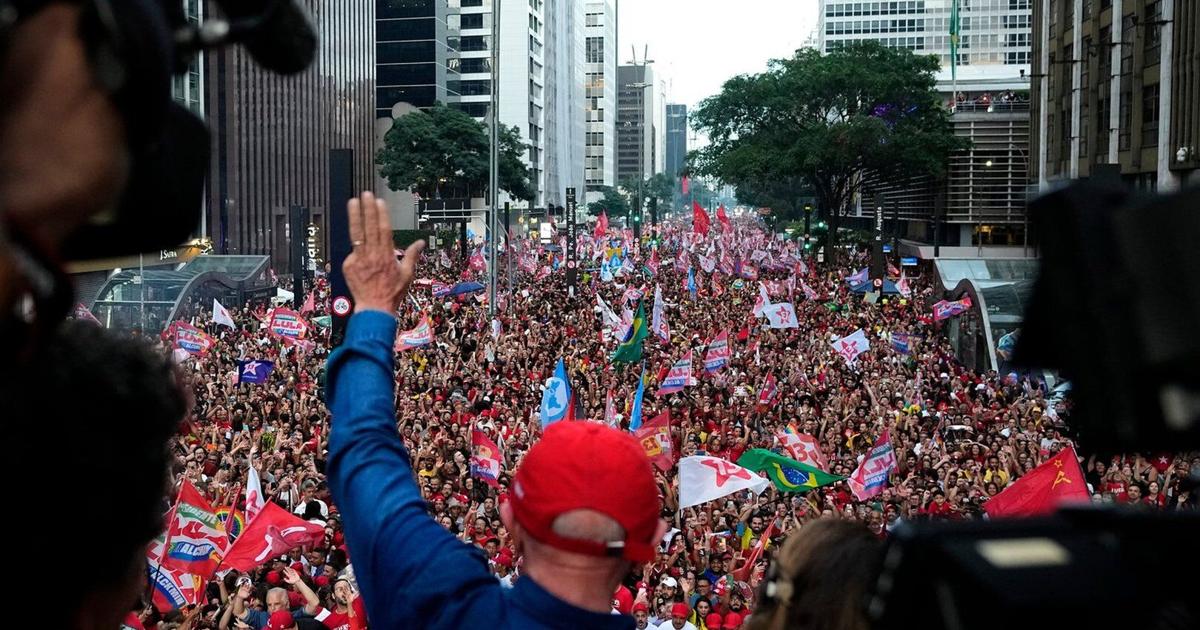
The approval of the reduced workweek was a theme in dozens of pro-Lula protests taking place nationwide since last week. asserted
approval → reduce → week
Some celebrated the Senate vote on Wednesday in streets of Rio de Janeiro and Sao Paulo. asserted
Some → celebrate → Janeiro
“We needed the people out on the streets,” said Lunna Normande, 23, during a protest with hundreds of people in Rio. asserted
Normande → need → Rio
“We will continue to be on the streets until this inhumane work week ends.” asserted
week → continue → streets
Lula’s government has been working on the proposal since last year. asserted
government → work → year
“Any change made in an election year can be considered an electoral measure,” said Carla Beni, an economist at the Getulio Vargas Foundation, a think-tank and university. asserted
Beni → make → Foundation
People working in the shadow economy, such as freelancers and delivery drivers, will not be affected by the new legislation. The momentum behind this reform reflects a growing trend across Latin America. asserted
momentum → work → America
Neighboring countries such as Chile and Colombia have recently enacted landmark legislation to shorten their respective workweeks to 40 and 42 hours, which emboldened Brazilian labor groups to seek the same. asserted
which → neighbor → same
In February, Mexican lawmakers approved a proposal by President Claudia Sheinbaum to trim the 48-hour workweek. asserted
lawmakers → approve → workweek
Working hours will be shortened gradually to a 40-hour workweek by 2030. asserted
hours → work → 2030
Chile in 2023 passed the so-called 40-Hour Law, which reduced its workweek to 40 hours as of last year. asserted
which → pass → year
It applies to all workers under Chile’s Labor Code, without reducing pay. asserted
It → apply → pay
But Argentina has bucked that trend under President Javier Milei and may extend its 48-hour workweek. ___ Hughes reported from Rio de Janeiro. ___ uncertain
Hughes → buck → Janeiro

💬Give feedback
🕘History 🎫Support