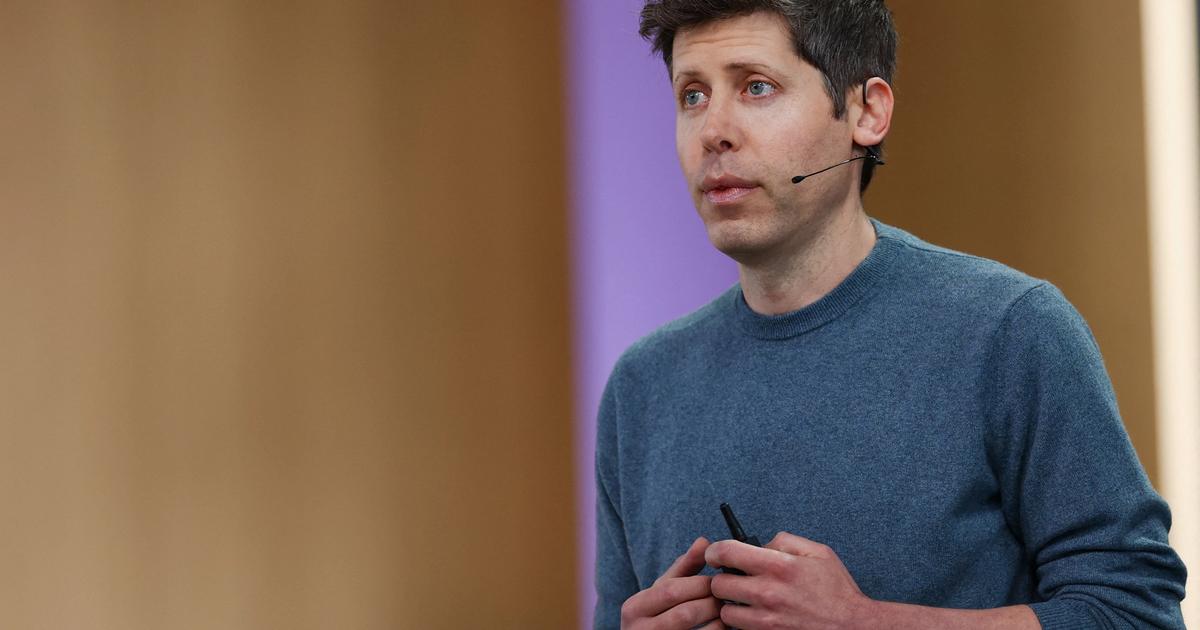
Photo via Semafor

White House’s AI task force gets to work

Read the original at Semafor ↗
Cite

Gold, A. (2026, October 16). White House’s AI task force gets to work. Semafor. https://www.semafor.com/article/10/15/2026/white-houses-ai-task-force-gets-to-work

Dated from the outlet's own feed. Check the original for its byline.

Semafor · collected 2026-10-16 · by Ashley Gold

Quick Summary

The White House's Super Intelligence (SI) task force has begun its work, committing to a 120-day period to address AI-related risks and regulations. The task force plans to evaluate AI impacts in cybersecurity, biosecurity, and model control through a report from the President’s Council of Advisers on Science and Technology. It aims to engage stakeholders including industry leaders, civil liberties advocates, and law enforcement agencies to inform its decisions. The group is also forming working groups focused on implementing the White House Accord on Super Intelligence, developing cyber protocols, and coordinating efforts with federal and state agencies.
Written by AI on 2026-10-16, from this article's own text only (the story summary below draws on all the coverage).

AI analysis

Story summary

The White House's Super Intelligence (SI) task force, established in October 2026, has officially begun its work with a charter aimed at addressing complex AI-related issues. The task force, led by Vice President JD Vance and Treasury Secretary Scott Bessent among others, will focus on evaluating risks in cybersecurity, biosecurity, and model control over the next 120 days. Members include Defense Secretary Pete Hegseth, Office of Science and Technology Policy Director Michael Kratsios, and Social Security Administration Commissioner Frank Bisignano. The group plans to engage with various stakeholders such as developers, consumer protection groups, civil liberties advocates, and law enforcement agencies to inform its efforts.

Written for “White House AI Task Force” on 2026-11-04, grounded in this article and the 0 other(s) covering the same event.

Story

📰 White House AI Task Force
Politics · 1 article(s) covering the same event.

Compared with similar articles

This article reads unscored and hedges 10% of its claims. Each row says how that neighbour differs.
Dawn
⚖️ Leans left Hedges 2 of 13 claims Outlet record 72/100
“Article A describes the White House's AI task force adopting its charter and beginning work, while Article B reports on Anthropic proposing a draft bill to US lawmakers for regulating AI. These are two separate events.”
The Hindu
⚖️ Leans right Hedges 2 of 14 claims Outlet record 77/100
“The articles describe different actions related to AI regulation—one about a task force forming and another about a company proposing legislation—but they are not reporting on the same specific incident.”
CBS News
Outlet record 65/100
“The articles discuss different topics related to AI but describe distinct events occurring on separate dates.”
South China Morning Post
Hedges 0 of 5 claims Outlet record 62/100
“The articles describe different events - Article A discusses US-China discussions on AI cooperation ahead of Xi-Trump talks, while Article B reports on the White House's AI task force adopting its charter.”
The Straits Times
⚖️ Leans left Hedges 2 of 9 claims Outlet record 66/100
“The articles describe different actions related to AI regulation and development, not the same specific incident.”
Deutsche Welle
Hedges 2 of 31 claims Outlet record 95/100
“Article A discusses Trump's announcement of a Super Intelligence Force while Article B covers the formal adoption of the charter by the White House's AI task force and its first official meeting, indicating different specific events.”
Fox News
Hedges 0 of 14 claims Outlet record 68/100
“Article A describes the initial meeting and charter adoption of the White House's AI task force, while Article B reports a warning from the intelligence chief about AI companies' responsibility for hacking, referencing the newly announced Super Intelligence Force.”
Fox News
⚖️ Leans left Hedges 10 of 61 claims Outlet record 68/100
“Article A describes the initial meeting of the White House Super Intelligence task force to adopt its charter, while Article B discusses broader public concerns about AI risk and Washington's disjointed response.”
Semafor
Hedges 1 of 8 claims Outlet record 59/100
“Article A describes the initial directive by the task force following an incident with Anthropic, while Article B reports on the formal adoption of the charter and plans for a report after the first official meeting.”
How this article was measured signals, leaning charts, publisher record, byline, topics and claims

Signals How these are calculated →

Claims extracted
10
sentences that state something as happening or true
Uncertain
10%
1 of 10 hedged ("reportedly", "may", "according to")
Leaning
not political
takes no side on a contested political question
Publisher signals
59/100
Semafor's corrections and hedging, across everything collected from it. Not a measure of accuracy.
Outlets on this story
1
Politics
Same framing elsewhere
1
articles that frame the event the way this one does
Analyzed 2026-10-16 · how these are computed

How this is being covered How these are calculated →

Article leaning vs. publisher reliability
Source leaning vs. consistency

Publisher

Semafor · 1469 article(s) · 3 correction(s) detected
Running correction rate · 3 correction(s)

Who wrote this

Ashley Gold
28 article(s) here · 1 carrying a prediction
🔮 “It would be a betrayal of their campaign promises, and not only would it squander our victory –— it would create resentment in the base that will cost us in 2028,” it continues.
2026-11-03 · assertive framing · Democrats run more anti-tech ads amid AI boom
🔮 If initial reactions from AI safety advocates are any indication, AI and tech companies have a long way to go to convince both voters and Democrats, who will likely hold more power in Washington after Tuesday, that their efforts are sincere and not just an attempt at face-saving.
2026-11-03 · assertive framing · OpenAI pushes policy rebrand to a skeptical audience
🔮 Both OpenAI and Anthropic will have “war rooms” dedicated to ensuring their platforms provide accurate information about the midterm elections, a first for both companies.
2026-11-02 · assertive framing · Election ‘war rooms’ enter the AI age
🔮 And the government will devote £10 million per year to research on how AI is shaping employment.
2026-10-28 · assertive framing · Britain’s AI testing agency outguns US
🔮 Could the Tesla-SpaceX merger that Elon Musk floated this week pose antitrust problems?
2026-10-23 · mixed framing · SpaceX-Tesla merger could face antitrust scrutiny
🔮 Anthropic’s lobbying form lists the Collaboration on Adversarial Threats and Security Risks Act, a bill that would allow labs to coordinate with each other on security risks, as a point of focus for the company on Capitol Hill.
🔮 New York City could be the first place in the country where consumers are protected from a “doom loop” of AI-powered customer service chatbots, per a rule proposed today by Mayor Zohran Mamdani’s administration.
🔮 “If [Clayton] can get agencies approaching AI from very different directions to keep sharing information, coordinating decisions and agreeing on responsibilities … his influence will last well beyond any one appointment,” the lobbyist said.
2026-10-19 · assertive framing · The national intelligence chief steering AI
🔮 “Throughout its work, the [task force] will engage with frontier model developers and other SI companies, consumer protection groups, and civil liberties advocates, industry stakeholders, and federal and state law enforcement agencies to inform and implement its efforts,” a White House official said in a statement.
2026-10-16 · assertive framing · White House’s AI task force gets to work
🔮 Frontier AI labs largely do this sort of disclosure and incident reporting already, and Trump’s task force has not laid out exactly what will count as an “incident” that must be reported going forward.
2026-10-13 · assertive framing · Trump AI directive sparks questions
Also by Ashley Gold
Nothing else under this byline is closely related to this article, so these are simply their most recent.
All 28 articles by Ashley Gold →

Topics

American Semafor The [Super Intelligence Force White House the President’s Council of Advisers on Science and Technology

Subjects

American NORP · 2× White House ORG · 2× Emil Michael PERSON · 1× Jay Clayton PERSON · 1× Pentagon ORG · 1× Sean Cairncross PERSON · 1× Semafor ORG · 1× The [Super Intelligence Force ORG · 1× U.S. GPE · 1× the President’s Council of Advisers on Science and Technology ORG · 1×

Narrative

And the last vice chair, Office of Personnel Management Director Scott Kupor, will work with the public and private sector on critical infrastructure protection, and will work with the Department of Labor on studying the impact of AI on the American workforce and economy. Members of the task force beyond the chairs include: Vice President JD Vance, Treasury Secretary Scott Bessent, Defense Secretary Pete Hegseth and Office of Science and Technology Policy Director Michael Kratsios, plus Cairncross, Chris Klomp, the nominee to be the No. 2 at the Department of Health and Human Services, Social Security Administration Commissioner Frank Bisignano, and National Security Agency Director Joshua Rudd.
framing: assertive · carried by 1 article(s) · first seen 2026-10-16
🔮 “Throughout its work, the [task force] will engage with frontier model developers and other SI companies, consumer protection groups, and civil liberties advocates, industry stakeholders, and federal and state law enforcement agencies to inform and implement its efforts,” a White House official said in a statement.
2026-10-16 · Semafor
White House’s AI task force gets to work · assertive framing

Claims (10 extracted, 1 hedged)

The White House Super Intelligence task force has formally adopted its charter, kicking off the short 120-day window it’s been given to answer some extremely thorny questions about how the government should handle the rapid development of AI technology. asserted
government → adopt → technology
According to an announcement shared first with Semafor, the task force agreed after its first official meeting Thursday to commission a report from the President’s Council of Advisers on Science and Technology to evaluate AI risk in three areas: cybersecurity and critical infrastructure protection, biosecurity and dual-use applications, and model control and accountability. uncertain
force → accord → areas
“Throughout its work, the [task force] will engage with frontier model developers and other SI companies, consumer protection groups, and civil liberties advocates, industry stakeholders, and federal and state law enforcement agencies to inform and implement its efforts,” a White House official said in a statement. asserted
official → engage → statement
“The [Super Intelligence Force] stands ready to ensure implementation of the Accord and continued U.S. leadership on SI for the benefit of the American people. asserted
Force → stand → people
It also agreed to make a working group tasked with implementing the White House Accord on Super Intelligence that major AI CEOs signed this month, a process led by Director of National Intelligence Jay Clayton, the task force’s chair, along with National Cyber Director Sean Cairncross. asserted
CEOs → agree → Cairncross
Pentagon CTO Emil Michael, a task force vice chair, will lead an effort to develop protocols for labs to tell the government about breaches, hacks and other cyber issues. asserted
labs → lead → breaches
Michael is also in charge of interfacing with frontier AI labs and figuring out long-term coordination on AI across the government. asserted
Michael → interface → government
The task force also agreed to create a “law enforcement and consumer protection coordination committee” including the Justice Department and Federal Trade Commission, led by FTC Chair Andrew Ferguson, also a vice chair. asserted
force → agree → Ferguson
And the last vice chair, Office of Personnel Management Director Scott Kupor, will work with the public and private sector on critical infrastructure protection, and will work with the Department of Labor on studying the impact of AI on the American workforce and economy. Members of the task force beyond the chairs include: Vice President JD Vance, Treasury Secretary Scott Bessent, Defense Secretary Pete Hegseth and Office of Science and Technology Policy Director Michael Kratsios, plus Cairncross, Chris Klomp, the nominee to be the No. 2 at the Department of Health and Human Services, Social Security Administration Commissioner Frank Bisignano, and National Security Agency Director Joshua Rudd. asserted
Members → work → Services
It’s not yet clear how compliance with the task force will be enforced or if companies will be required by law to comply with any new reporting mechanisms. asserted
companies → ’ → mechanisms

💬Give feedback
🕘History 🎫Support