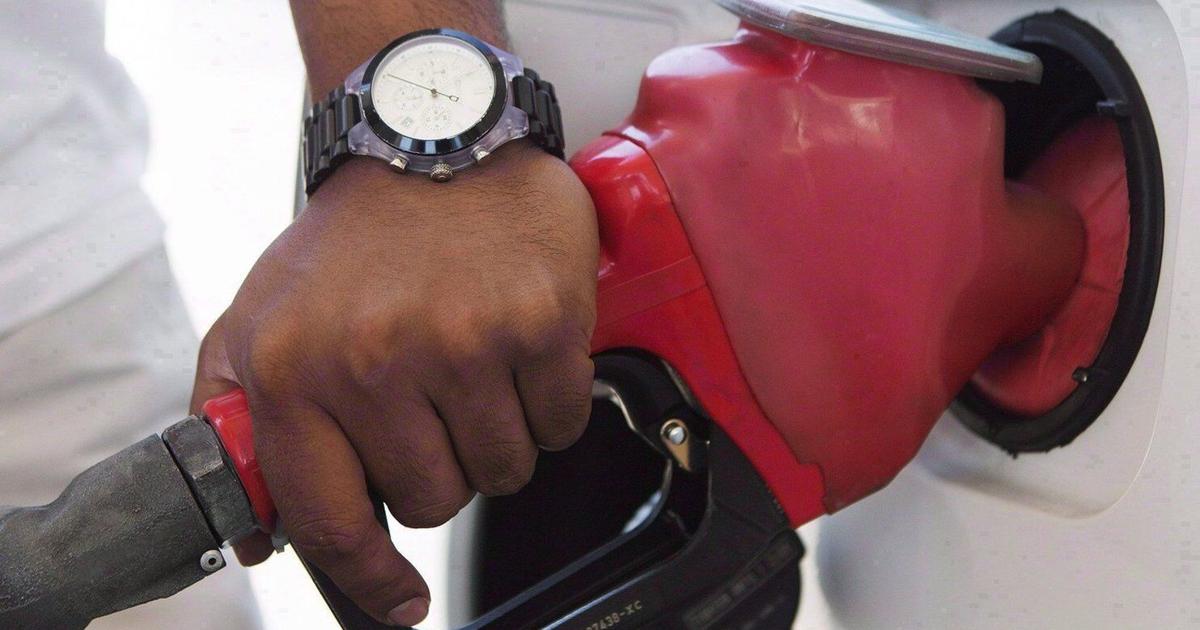
Photo via Evening Standard

UK inflation expected to have accelerated in September after fuel surge

Read the original at Evening Standard ↗
Cite

Wise, A. (2026, October 21). UK inflation expected to have accelerated in September after fuel surge. Evening Standard. https://www.standard.co.uk/business/business-news/office-for-national-statistics-bank-of-england-middle-east-international-monetary-fund-deutsche-bank-b1301699.html

Dated from the outlet's own feed. Check the original for its byline.

Evening Standard · collected 2026-10-21 · by Anna Wise

Quick Summary

Economists predict UK inflation rose to 3.4% in September from 3.1% in August, largely due to increased fuel and energy costs. Higher motor fuel prices, especially diesel surpassing £2 per litre for the first time, are cited as major contributors. The article highlights that this September's inflation rate will influence benefit increases and the pension triple lock mechanism, which determines state pension rises.
Written by AI on 2026-10-21, from this article's own text only (the story summary below draws on all the coverage).

AI analysis

Story summary

The UK inflation rate rose to 3.5% in September 2026, up from 3.1% in August, according to figures released by the Office for National Statistics (ONS). This marks the highest rate since October 2025 and exceeds economists' expectations of around 3.4%. The surge was primarily driven by higher fuel prices, with diesel surpassing £2 per litre for the first time ever at the start of September, according to RAC figures. Fuel inflation spiked to 26.5% year-over-year, reflecting ongoing conflicts in Iran and Ukraine that have disrupted global oil supplies. This increase is expected to put pressure on Chancellor John Healey ahead of his upcoming Budget statement next week.

Written for “UK Inflation Surges Due To Fuel Prices” on 2026-11-01, grounded in this article and the 5 other(s) covering the same event.

Story

📰 UK Inflation Surges Due To Fuel Prices
Economy/Business · 6 article(s) covering the same event. Compare every outlet's account →

Compared with similar articles

This article reads unscored and hedges 29% of its claims. Each row says how that neighbour differs.
Evening Standard
Hedges 3 of 23 claims Outlet record 65/100
Toronto Star
Hedges 0 of 7 claims Outlet record 64/100
“The articles describe different country's inflation reports, Canada and UK respectively.”
BBC News
Hedges 1 of 4 claims Outlet record 68/100
Evening Standard
Hedges 0 of 17 claims Outlet record 65/100
CBC News
Hedges 1 of 5 claims Outlet record 74/100
“The articles describe inflation rates and fuel price increases but refer to different countries (Canada and UK) with slightly differing figures, indicating they are not describing the exact same specific event.”
Evening Standard
Hedges 2 of 27 claims Outlet record 65/100
“While both articles discuss UK inflation in September, Article A predicts an increase to 3.4%, whereas Article B reports the actual figure of 3.5% and discusses its implications for interest rates.”
Daily Mail
Hedges 1 of 34 claims Outlet record 68/100
“The articles discuss similar economic conditions but describe different aspects of the situation and do not focus on the exact same data point or incident.”
How this article was measured signals, leaning charts, publisher record, byline, topics and claims

Signals How these are calculated →

Claims extracted
14
sentences that state something as happening or true
Uncertain
29%
4 of 14 hedged ("reportedly", "may", "according to")
Leaning
withheld
no quote in the article backed the model's score
Publisher signals
65/100
Evening Standard's corrections and hedging, across everything collected from it. Not a measure of accuracy.
Outlets on this story
6
Economy/Business
Same framing elsewhere
1
articles that frame the event the way this one does
Analyzed 2026-10-21 · how these are computed

How this is being covered How these are calculated →

Article leaning vs. publisher reliability
Source leaning vs. consistency

Publisher

Evening Standard · 8048 article(s) · 68 correction(s) detected
Running correction rate · 68 correction(s)

Who wrote this

Anna Wise
72 article(s) here · 1 carrying a prediction
🔮 Bank of England expected to raise interest rates for first time since 2023 Borrowers could be facing a squeeze as the Bank of England is expected to hike interest rates for the first time in more than three years.
🔮 However, he said the measure was temporary and would be in place for 15 months, marking a less severe change than some in the industry had feared.
🔮 Bank taxes are set to rise by less than some in the industry had feared, as the Chancellor said he was asking “a bit more” from banks to help fund support on energy bills.
🔮 But this was set against bigger AI spending ambitions, he said, adding: “The four biggest hyperscalers are projected to spend over five trillion US dollars (£3.76 trillion) on AI-related capital expenditure between 2025 and 2030.
🔮 The costs were partly offset by TSB’s contribution to profits of £96 million from May to September, while customer deposits and the mortgage loan book also increased following the acquisition. Santander said it was still integrating the smaller rival after nearly 1,000 of its staff moved over at the beginning of the month. But it is also expecting to find cost “synergies” worth around £400 million by the end of 2028 from the merger. UK chief executive Mahesh Aditya also said the bank was targeting further cost efficiency savings this year “driven by simplification and automation”. “We also continued to deliver against our wider strategic priorities to deepen customer relationships and enhance operational efficiency, while leveraging Banco Santander’s global technology platforms and AI capabilities to provide the support our customers need,” he said.
🔮 Claude chatbot maker Anthropic has kicked off plans to launch its shares on the US’s stock market, proclaiming artificial intelligence could help cure diseases such as cancer and grow economies around the world.
🔮 Banks set to report stronger profits as they face prospect of tax hike Banks are widely speculated to be a target with Mr Healey thought to be considering increasing the surcharge on profits from 3% to 8% – reversing a tax cut for the sector introduced by former Conservative chancellor Jeremy Hunt.
Also by Anna Wise
Nothing else under this byline is closely related to this article, so these are simply their most recent.
All 72 articles by Anna Wise →

Topics

Deutsche Bank Pantheon Pantheon Macroeconomics RAC the Bank of England

Subjects

Deutsche Bank ORG · 1× Elliott Jordan-Doak PERSON · 1× Ofgem ORG · 1× Pantheon ORG · 1× Pantheon Macroeconomics ORG · 1× RAC ORG · 1× Rob Wood PERSON · 1× Sanjay Raja PERSON · 1× The International Monetary Fund ORG · 1× the Bank of England ORG · 1×

Narrative

He also cautioned that the cost of living is set to rise further, with an increase to Ofgem’s price cap on household energy bills kicking in at the start of October, meaning higher prices for dual-fuel households over the winter.
framing: mixed · carried by 1 article(s) · first seen 2026-10-21
🔮 UK inflation expected to have accelerated in September after fuel surge UK inflation is expected to have accelerated last month as higher fuel and energy costs continue to push up the cost of living, economists think.
2026-10-21 · Evening Standard
UK inflation expected to have accelerated in September after fuel surge · mixed framing

Claims (14 extracted, 4 hedged)

UK inflation expected to have accelerated in September after fuel surge UK inflation is expected to have accelerated last month as higher fuel and energy costs continue to push up the cost of living, economists think. asserted
economists → expect → living
The September inflation rate will be watched closely by economists as it is typically used to decide the level that many benefits will increase. asserted
benefits → watch → level
Most forecasters are expecting the rate of Consumer Prices Index (CPI) inflation to have risen to 3.4% in September, from 3.1% in August, according to a consensus provided by Pantheon Macroeconomics. uncertain
rate → expect → Macroeconomics
August’s CPI rate came in at 3.1%, which is above the 2% target that the Bank of England is set. asserted
Bank → come → England
Rob Wood and Elliott Jordan-Doak, UK economists for Pantheon, said they expect higher motor fuel prices to have been a major contributor to higher inflation in September. asserted
prices → say → September
This is largely driven by diesel, with average prices rising to surpass £2 a litre for the first time ever at the beginning of this month, according to RAC figures. uncertain
prices → drive → figures
The economists also said prices will have risen after a temporary summer VAT cut on family attractions such as theme parks and zoos ended in September. asserted
cut → say → September
Sanjay Raja, chief UK economist for Deutsche Bank, said food price rises have been more limited thanks to “fierce” competition between supermarkets to keep prices low for shoppers, but he said this could change from September as the energy shock and extreme weather take effect. uncertain
shock → say → effect
He also cautioned that the cost of living is set to rise further, with an increase to Ofgem’s price cap on household energy bills kicking in at the start of October, meaning higher prices for dual-fuel households over the winter. asserted
increase → caution → winter
The International Monetary Fund (IMF) recently warned that cost-of-living crises fall harder on poorer households who dedicate a larger proportion of their income to everyday essentials such as food and energy. asserted
who → warn → food
Meanwhile, the September inflation rate is typically used to decide the level of increase for many benefits, such as universal credit, tax credits and disability benefits. asserted
rate → use → credit
This rate is also a key part of the pension triple lock, which is used to decide how much pensions will increase by in the following April. asserted
pensions → use → April
But the increase is based on either this inflation rate, average earnings growth between May and July, or 2.5%. uncertain
increase → base → May
State pensions are, therefore, widely expected to increase by 3.9% next year based on wage growth figures which have already been published by the ONS. asserted
which → expect → ONS

💬Give feedback
🕘History 🎫Support