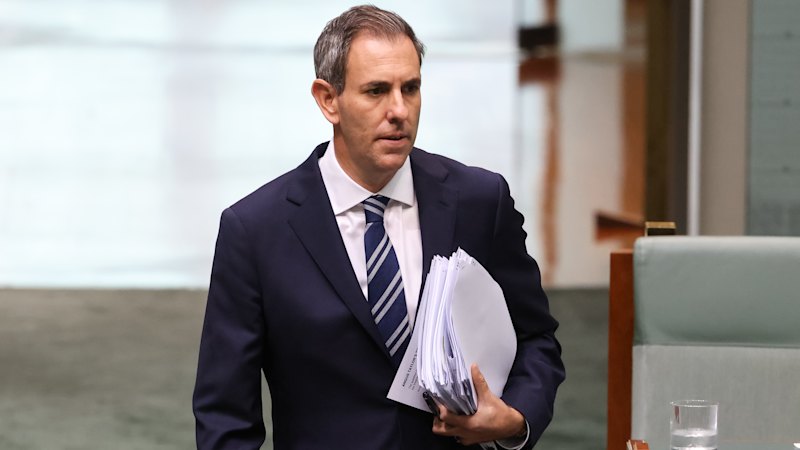
Photo via Evening Standard

Government borrowing rises above forecasts to £24.5bn ahead of Budget

Read the original at Evening Standard ↗
Cite

Saker-Clark, H. (2026, October 21). Government borrowing rises above forecasts to £24.5bn ahead of Budget. Evening Standard. https://www.standard.co.uk/business/business-news/budget-gdp-office-for-budget-responsibility-government-b1301708.html

Dated from the outlet's own feed. Check the original for its byline.

Evening Standard · collected 2026-10-21 · by Henry Saker-Clark

Quick Summary

Government borrowing rose above forecasts to £24.5 billion in September, according to the Office for National Statistics (ONS). This figure is up from the same period last year due to increased debt interest payments linked to higher global borrowing costs. Total government spending reached £111.3 billion, a 5.6% increase from the previous year. Public sector net debt surpassed £3 trillion for the first time, rising by £91.7 billion compared with a year earlier. Economists warn that Chancellor John Healey must address high inflation and record debt levels in his upcoming Budget to manage both cost-of-living pressures and government borrowing effectively.
Written by AI on 2026-10-21, from this article's own text only (the story summary below draws on all the coverage).

AI analysis

Story summary

As of October 21, 2026, the UK government reported £24.5 billion in borrowing for September, exceeding forecasts and pushing public sector net debt past the symbolic threshold of £3 trillion for the first time. This surge in borrowing is linked to higher interest payments due to increased global borrowing costs from the Middle East conflict. With inflation rising to 3.5%, economists predict further pain for mortgage-payers as the Bank of England may raise interest rates next month, adding pressure on families already struggling with cost-of-living pressures. Chancellor John Healey is set to deliver his first Budget the following week, facing the challenge of balancing fiscal restraint with measures to ease economic hardships without exacerbating borrowing costs.

Written for “UK Debt Surges Ahead Of Budget” on 2026-11-02, grounded in this article and the 2 other(s) covering the same event.

Story

📰 UK Debt Surges Ahead Of Budget
Economy/Business · 3 article(s) covering the same event. See how they differ ↓

Compared with similar articles

This article reads unscored and hedges 0% of its claims. Each row says how that neighbour differs.
Evening Standard
Hedges 0 of 18 claims Outlet record 65/100
Washington Examiner
⚖️ Leans right Hedges 0 of 2 claims Outlet record 70/100
“The articles describe different reporting periods and financial metrics for government deficit and borrowing.”
Daily Mail
Hedges 3 of 30 claims Outlet record 68/100
“Article A discusses Kemi Badenoch's warning about John Healey's budget compared to previous ones, while Article B reports on government borrowing rising above forecasts ahead of the Budget.”
Daily Mail
⚖️ Leans left Hedges 3 of 18 claims Outlet record 68/100
“Article A reports on public expectations regarding tax hikes ahead of a Budget announcement, while Article B discusses government borrowing figures and spending trends. They are related to the upcoming Budget but describe different specific events.”
The Guardian
⚖️ Leans strongly right Hedges 3 of 36 claims Outlet record 66/100
“The articles describe different aspects of the lead-up to Chancellor John Healey's first budget; one discusses the decision on capital gains tax, while the other reports on government borrowing and spending forecasts.”
Daily Mail
Hedges 1 of 19 claims Outlet record 68/100
“The articles discuss different aspects of government finances and spending, not a single specific incident or occurrence.”
The Sydney Morning Herald
⚖️ Leans left Hedges 2 of 36 claims Outlet record 61/100
“The articles describe different aspects of government finances over time, with Article A reporting on current borrowing figures ahead of a Budget announcement, while Article B focuses on the Treasurer's stance regarding spending caps and fiscal discipline.”
Evening Standard
Hedges 0 of 27 claims Outlet record 65/100
“The articles describe different aspects of fiscal matters around the upcoming Budget but do not focus on the same specific incident or occurrence.”
Evening Standard
Hedges 1 of 9 claims Outlet record 65/100
“Article A discusses Chancellor John Healey's expectations for his first Budget announcement on October 28, while Article B reports on actual government borrowing figures prior to the budget announcement.”
How this article was measured signals, leaning charts, publisher record, byline, topics and claims

Signals How these are calculated →

Claims extracted
17
sentences that state something as happening or true
Uncertain
0%
0 of 17 hedged ("reportedly", "may", "according to")
Leaning
withheld
no quote in the article backed the model's score
Publisher signals
65/100
Evening Standard's corrections and hedging, across everything collected from it. Not a measure of accuracy.
Outlets on this story
3
Economy/Business
Same framing elsewhere
2
articles that frame the event the way this one does
Analyzed 2026-10-21 · how these are computed

How this is being covered How these are calculated →

Article leaning vs. publisher reliability
Source leaning vs. consistency

Publisher

Evening Standard · 8091 article(s) · 68 correction(s) detected
Running correction rate · 68 correction(s)

Who wrote this

Henry Saker-Clark
92 article(s) here · 1 carrying a prediction
🔮 The Competition and Markets Authority (CMA) said Meta’s commercial terms could allow it to access and use content from news publishers’ websites to develop and provide its own products and services.
🔮 Inflation to surge beyond forecasts as UK economy set for growth slowdown
🔮 The economy is now expected to slow next year as accelerating inflation puts pressure on households and businesses, according to new forecasts published alongside the autumn Budget.
🔮 Inflation to surge beyond forecasts as UK economy set for growth slowdown
🔮 UK growth forecast slashed to 1% for next year amid Iran war impact The economy is now expected to slow next year as accelerating inflation puts pressure on households and businesses, according to new forecasts published alongside the autumn Budget.
🔮 The performance was also significantly stronger than expected, with economists having forecast a rate of 51.7 for the month. Any score above 50.0 indicates activity is growing while any score below means it is contracting.
🔮 It was a steeper drop than expected, with economists having predicted a decline of 0.1% for the month.
🔮 The Competition and Markets Authority (CMA) said including the German discounters in the same land agreement rules as competitors including Tesco and Sainsbury’s will help “to ensure customers get the best choice of where to shop”.
Also by Henry Saker-Clark
Nothing else under this byline is closely related to this article, so these are simply their most recent.
All 92 articles by Henry Saker-Clark →

Topics

Budget GDP Government ONS The Office for National Statistics

Subjects

ONS ORG · 3× Budget ORG · 2× Government ORG · 2× GDP ORG · 1× Grant Fitzner PERSON · 1× Greg Thwaites PERSON · 1× John Healey PERSON · 1× Matt Swannell PERSON · 1× The Office for National Statistics ORG · 1× the Resolution Foundation ORG · 1×

Narrative

Greg Thwaites, interim chief economist at the Resolution Foundation, said: “Rising inflation and record levels of debt illustrate the double dilemma facing the Chancellor – how to ease cost of living pressures for families while keeping a lid on Government borrowing.
framing: assertive · carried by 2 article(s) · first seen 2026-10-21
🔮 Government borrowing rises above forecasts to £24.5bn ahead of Budget
2026-10-21 · Evening Standard
Government borrowing rises above forecasts to £24.5bn ahead of Budget · assertive framing
2026-10-21 · Evening Standard
Government borrowing rises above forecasts to £24.5bn ahead of Budget · assertive framing

Claims (17 extracted, 0 hedged)

Government borrowing rises above forecasts to £24.5bn ahead of Budget asserted
borrowing → rise → Budget
The Office for National Statistics (ONS) reported that public sector net borrowing increased by £1.8 billion compared with the same month last year. asserted
borrowing → report → month
It comes only a week ahead of Chancellor John Healey’s first Budget, where he is expected to increase bank taxes as higher borrowing costs weigh down on fiscal headroom. asserted
costs → come → headroom
Total Government spending rose by 5.6% to £111.3 billion in September, compared with a year earlier. asserted
spending → rise → September
The rise came on the back of higher debt interest payments, linked to the increase in global borrowing costs largely linked to the conflict in the Middle East. asserted
rise → come → East
Central government debt interest costs were £10.9 billion for September, up £1.6 billion against the same month last year, and marking the largest September figure on record. asserted
costs → mark → record
Meanwhile, net spending on social benefits rose by £1.6 billion to £30.6 billion for the month. asserted
spending → rise → month
The data also showed that public sector net debt surpassed £3 trillion for the first time, up £91.7 billion compared with a year earlier. asserted
debt → show → time
ONS chief economist Grant Fitzner said: “Borrowing in the first six months of the current financial year remained below the same period last year, thanks to higher receipts, although it was still above the official forecast. asserted
it → say → forecast
“Preliminary figures suggest that although debt in cash terms continues to rise, as a proportion of GDP it has fallen over the year. asserted
it → suggest → year
Read More “On this latter basis it remains at levels last seen in the early 1960s. asserted
it → read → 1960s
It came as separate data from the ONS showed that UK inflation lifted to an 11-month-high of 3.5% last month, partly driven by rising fuel costs linked to the Iran war. asserted
inflation → come → war
Greg Thwaites, interim chief economist at the Resolution Foundation, said: “Rising inflation and record levels of debt illustrate the double dilemma facing the Chancellor – how to ease cost of living pressures for families while keeping a lid on Government borrowing. asserted
inflation → say → borrowing
“Borrowing is already off track this year, debt has hit £3 trillion, and markets are closely scrutinising government’s ability to keep on top of the public finances. asserted
markets → hit → finances
“The Chancellor must confront this double dilemma head on in his Budget next week rather than duck reality.” asserted
Chancellor → confront → reality
Matt Swannell, chief economic adviser to the Item Club, said: “The public finances remain in a fragile position, and next week’s Budget looks set to be a relatively low-key affair. asserted
Budget → say → position
“Higher gilt yields have dented the Chancellor’s fiscal headroom, likely leaving between £10 billion and £15 billion of margin for error against his primary fiscal rule. asserted
yields → dent → rule

💬Give feedback
🕘History 🎫Support