Photo via Times of India

California geologist finds creek fossil using Google image search

Read the original at Times of India ↗
Cite

TOI World Desk. (2026, October 22). California geologist finds creek fossil using Google image search. Times of India. https://timesofindia.indiatimes.com/world/us/a-california-geologist-spotted-a-strange-object-sticking-out-of-a-creek-a-google-reverse-image-search-suggested-it-was-an-ice-age-mastodon-tooth-at-least-10000-years-old/articleshow/135111228.cms

Dated from the outlet's own feed. Check the original for its byline.

Times of India · collected 2026-10-22 · by TOI World Desk

Quick Summary

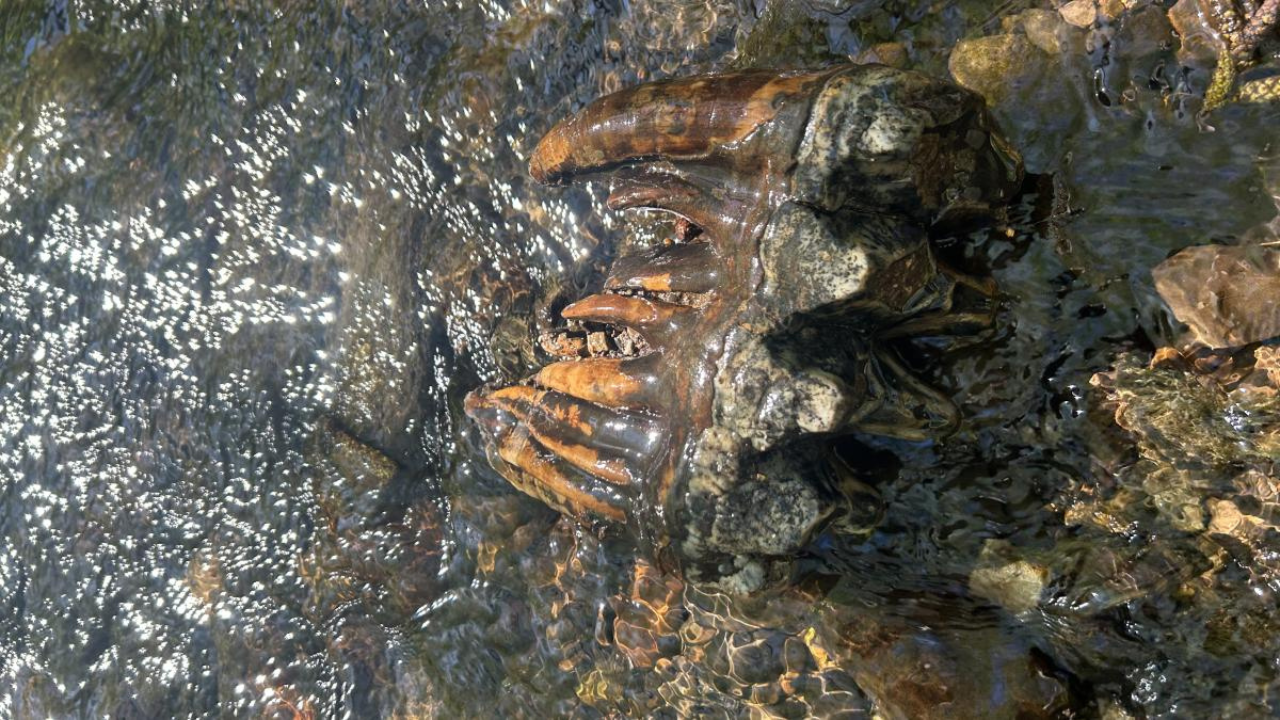
A California geomorphologist named Brigid Lynch discovered a large tooth while conducting surveys for a habitat restoration project near San Mateo County. Using Google’s reverse image search, she identified it as an Ice Age mastodon molar, which was later confirmed by paleontologist Wayne Thompson from Pacific Paleontology. The fossil measures approximately 8.5 inches long and is estimated to be at least 10,000 years old, possibly up to 100,000 years old. Stanford University will analyze the tooth to study its age and environmental context.
Written by AI on 2026-10-22, from this article's own text only (the story summary below draws on all the coverage).

AI analysis

Story summary

Brigid Lynch, a geomorphologist with Balance Hydrologics, discovered what appeared to be an unusual fossil during field surveys for a habitat enhancement project in San Mateo County's Midpeninsula Regional Open Space District (Midpen) preserve on October 21, 2026. Unfamiliar with the object’s origins, Lynch used Google’s reverse image search, which suggested it could be a molar from an Ice Age mastodon. She then contacted Wayne Thompson, a paleontologist with Pacific Paleontology, who confirmed that the fossil was indeed an upper left molar of a Pacific mastodon (Mammut pacificus), measuring approximately 8.5 inches long and 7 inches wide. The discovery is significant as it provides insight into ancient megafauna that once roamed North America thousands of years ago and highlights the importance of habitat restoration efforts in uncovering prehistoric remains.

Written for “California Fossil Discovery” on 2026-11-02, grounded in this article and the 0 other(s) covering the same event.

Story

📰 California Fossil Discovery
Science · 1 article(s) covering the same event.

Compared with similar articles

Nothing to compare against. No article is close enough to this one for the pipeline to have linked or judged the pair.
How this article was measured signals, leaning charts, publisher record, byline, topics and claims

Signals How these are calculated →

Claims extracted
28
sentences that state something as happening or true
Uncertain
21%
6 of 28 hedged ("reportedly", "may", "according to")
Leaning
not political
takes no side on a contested political question
Publisher signals
59/100
Times of India's corrections and hedging, across everything collected from it. Not a measure of accuracy.
Outlets on this story
1
Science
Same framing elsewhere
1
articles that frame the event the way this one does
Analyzed 2026-10-22 · how these are computed

How this is being covered How these are calculated →

Article leaning vs. publisher reliability
Source leaning vs. consistency

Publisher

Times of India · 3941 article(s) · 3 correction(s) detected
Running correction rate · 3 correction(s)

Who wrote this

TOI World Desk
1376 article(s) here · 1 carrying a prediction
🔮 Hundreds of polar bears are expected to gather near the Canadian town of Churchill in Manitoba as temperatures fall and the animals wait for Hudson Bay to freeze.
🔮 Together they would support the reforestation of Mutuba trees in Uganda for three years.
🔮 In the letter, he apologised for forgetting to send his greetings earlier and expressed hope that they would meet the following year again.
🔮 Meeker told Signal Akron that the sculpture contained details that people could continue discovering over time.
🔮 The possibility that the farm could eventually reach another generation now seems less remote.
🔮 According to his plea agreement, he repeatedly gave investors false information about how their money would be used.
🔮 The couple challenged the move in court, and a judge subsequently ordered that the fence could not be removed or relocated while the legal dispute continued.
🔮 According to the court's ruling, available on Justia under Lampton Securities Partnership, LLP v. Louisville-Jefferson County Metro Government, the landowner had not obtained a final decision from the relevant authorities about what could be built on the property.
🔮 In one incident in May 2025, Scotty took the child out of school without informing Jill or the school.
🔮 The idea was met with resistance from administrators who believed it would be too complicated to implement.
Wire or desk byline, not an individual reporter.
Also by TOI World Desk
Nothing else under this byline is closely related to this article, so these are simply their most recent.
All 1376 articles by TOI World Desk →

Topics

California Google Midpen San Mateo County Stanford

Subjects

Midpen PERSON · 4× California GPE · 3× Stanford ORG · 2× Thompson PERSON · 2× Balance Hydrologics ORG · 1× Brigid Lynch PERSON · 1× Google ORG · 1× Pacific Paleontology ORG · 1× San Mateo County GPE · 1× Wayne Thompson PERSON · 1×

Narrative

A reverse image search pointed to the identification Brigid Lynch, a geomorphologist with Balance Hydrologics, found the object while conducting field surveys for the habitat enhancement project.
framing: mixed · carried by 1 article(s) · first seen 2026-10-22
🔮 The search suggested it might be a molar from an Ice Age mastodon, and a paleontologist later confirmed it.
2026-10-22 · Times of India
California geologist finds creek fossil using Google image search · mixed framing

Claims (28 extracted, 6 hedged)

A California geomorphologist surveying a creek for a habitat restoration project noticed an unusual object lying half in and half out of the water. asserted
geomorphologist → survey → water
Unsure what she had found, she turned to Google’s reverse image search for clues. asserted
she → Unsure → clues
The search suggested it might be a molar from an Ice Age mastodon, and a paleontologist later confirmed it. uncertain
paleontologist → suggest → it
The tooth belonged to an ancient Pacific mastodon, a mammal that roamed North America thousands of years ago. asserted
that → belong → years
It was found in a Midpeninsula Regional Open Space District (Midpen) preserve in San Mateo County, during work to improve habitat for threatened California red-legged frogs. asserted
It → find → frogs
Researchers are now working to establish its age and significance. asserted
Researchers → work → age
A reverse image search pointed to the identification Brigid Lynch, a geomorphologist with Balance Hydrologics, found the object while conducting field surveys for the habitat enhancement project. asserted
Lynch → point → project
When a reverse image search suggested it could be a mastodon molar, Midpen and her team contacted paleontologists for confirmation. uncertain
Midpen → suggest → confirmation
Wayne Thompson, a paleontologist with Pacific Paleontology, confirmed it as an upper left molar from a Pacific mastodon (Mammut pacificus). asserted
Thompson → confirm → mastodon
The tooth measures about 8.5 inches long, 7 inches deep and 3 inches wide, and it retains both its crown and roots. asserted
it → measure → crown
Thompson called it “the most complete mastodon molar from our area” and the most spectacular he has ever seen. asserted
he → call → area
Mastodon teeth are often found broken, which makes the condition of this one especially significant. asserted
condition → find → one
The tooth is at least 10,000 years old, and may be much older The tooth is estimated to be at least 10,000 years old, but its precise age has not been established. uncertain
age → estimate → ?
Thompson told Fox News Digital it could be between 50,000 and 100,000 years old. uncertain
it → tell → Digital
Researchers at Stanford University’s Doerr School of Sustainability plan to analyze the tooth to learn more about its age, the animal’s diet and its environment. asserted
Researchers → plan → age
Pacific mastodons were large herbivores that lived in western North America during the Pleistocene epoch, which ended about 11,700 years ago. asserted
which → live → epoch
Although related to modern elephants, they differed from mammoths in several ways, including their teeth and feeding habits. asserted
they → relate → teeth
Mastodons primarily browsed on leaves, shoots and other vegetation rather than grazing mainly on grasses. asserted
Mastodons → browse → grasses
Pacific mastodons were identified as a species distinct from the American mastodon in 2019, following extensive study of mastodon bones found in Southern California. asserted
mastodons → identify → California
Stanford will keep and scan the fossil Midpen donated the fossil to Stanford University to support further scientific study. asserted
Midpen → keep → study
Stanford will also produce a 3D scan of the tooth for Midpen to use in educational outreach, which allows people to examine the specimen without handling the original. asserted
people → produce → original
The fossil could help scientists understand the animals that once inhabited the Bay Area and the ecosystems in which they lived. uncertain
they → help → which
Such discoveries provide clues about past biodiversity and environmental change. asserted
discoveries → provide → biodiversity
The discovery site will remain undisclosed Midpen is not revealing the exact location, so that visitors do not go looking for their own fossils. asserted
visitors → remain → fossils
Thompson has said the tooth may have recently separated from a skull that remains buried at the site, though this has not been confirmed. uncertain
this → say → site
The find also offers an unexpected link between ancient wildlife and modern conservation. asserted
find → offer → wildlife
Lynch came across the fossil while working on a project to improve habitat for the threatened California red-legged frog. asserted
Lynch → come → frog
A survey meant to support a species facing present-day pressures instead uncovered evidence of an animal that disappeared thousands of years ago. asserted
that → mean → years

💬Give feedback
🕘History 🎫Support