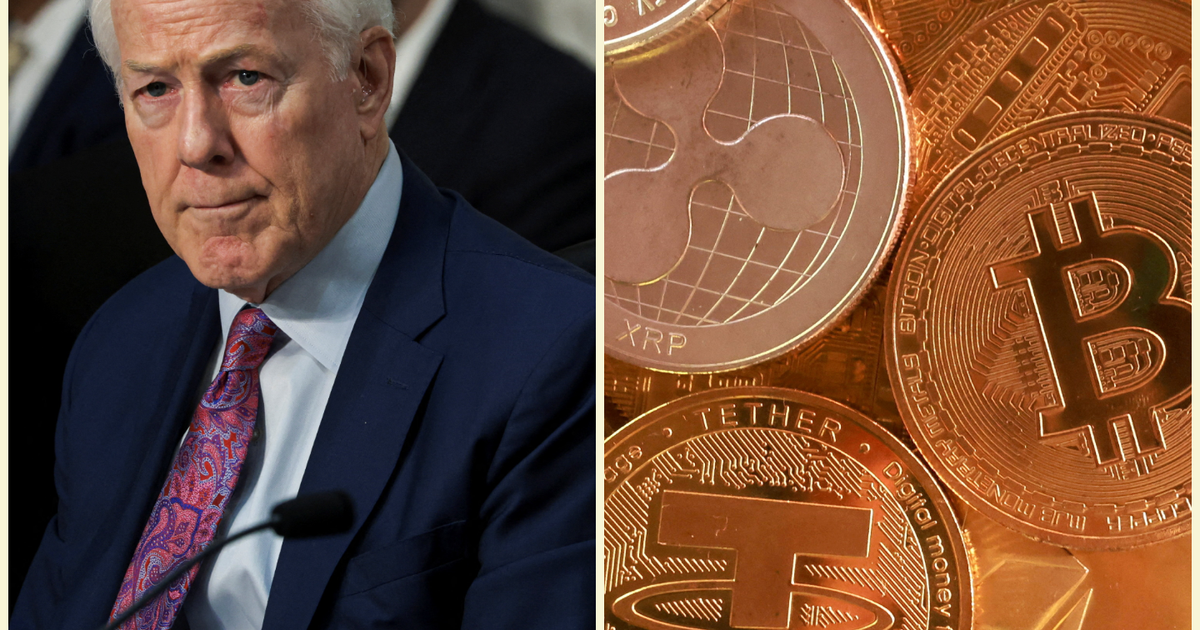
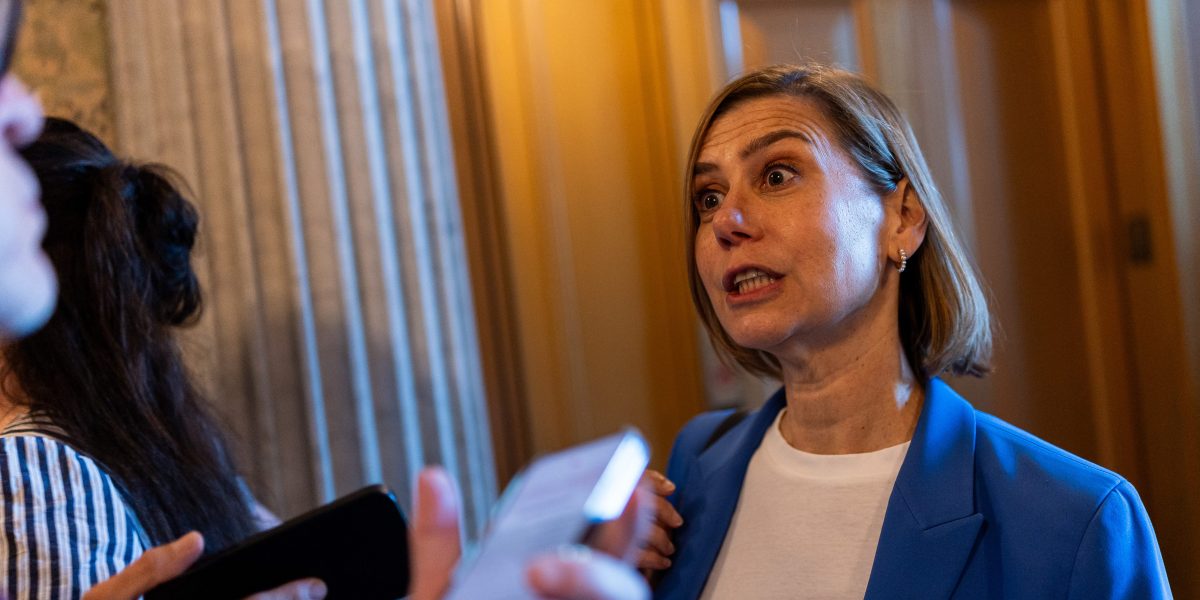
Photo via The Intercept

Crypto Darling Gillibrand’s 11th-Hour Flip-Flop Helps Block Trump Crypto Bill

Read the original at The Intercept ↗
Cite

Sledge, M. (2026, September 15). Crypto Darling Gillibrand’s 11th-Hour Flip-Flop Helps Block Trump Crypto Bill. The Intercept. https://theintercept.com/2026/09/15/congress-trump-crypto-clarity-blocked/

Dated when The Aporia collected the article, usually within hours of publication. Check the original for its exact date and byline.

The Intercept · collected 2026-09-15 · by Matt Sledge

Quick Summary

Senator Kirsten Gillibrand initially lobbied fellow Democrats to support a crypto bill before voting against it at the last minute, joining progressives in blocking its advancement due to concerns over President Trump's significant cryptocurrency profits. The vote on October 13th fell short of the required 60 votes with a tally of 49–50, highlighting the political challenges for moderate Democrats who previously supported crypto-friendly regulations but now face public pressure from progressives against perceived conflicts involving Trump’s financial interests in the industry.
Written by AI on 2026-09-15, from this article's own text only (the story summary below draws on all the coverage).
See how they differ ↓

AI analysis

Story summary

On September 15, the U.S. Senate was set to vote on advancing the Clarity Act, a bill that aims to establish federal regulations for digital assets like cryptocurrency. The House had already passed the legislation, but disagreements persisted over ethics and regulatory concerns. Key opponents included Senator Mike Rounds (R-SD) and Senator Thom Tillis (R-NC), who warned it was unlikely to pass due to unresolved issues regarding President Donald Trump's conflicts of interest in crypto investments. Despite support from industry groups that spent $451 million on lobbying, significant hurdles remained, with some Democrats demanding stronger ethics provisions to prevent financial conflicts for the president and his family. The vote was seen as a critical test for both the cryptocurrency market and political forces ahead of the November midterm elections.

Written for “Crypto Regulation Debate” on 2026-11-21, grounded in this article and the 13 other(s) covering the same event.

How they differ

9 outlets covered “Crypto Regulation Debate”.

What each outlet says

One AI summary per outlet of its latest article on this story, written from that article alone and checked against it. Open the article for the outlet's own words.

The InterceptThis outlet15 Sep

Senator Kirsten Gillibrand initially lobbied fellow Democrats to support a crypto bill before voting against it at the last minute, joining progressives in blocking its advancement due to concerns over President Trump's significant cryptocurrency profits. The vote on October 13th fell short of the required 60 votes with a tally of 49–50, highlighting the political challenges for moderate Democrats who previously…

Crypto Darling Gillibrand’s 11th-Hour Flip-Flop Helps Block Trump Crypto Bill (this article)
Semafor15 Sep

Senators failed to advance the cryptocurrency industry's top legislative priority, dealing a significant blow to efforts aimed at regulating digital assets. Despite heavy lobbying from the industry and fears among traditional banks about increased competition, three Republican senators joined all Democrats in rejecting the bill. The failure underscores the difficulty of achieving bipartisan support on crypto…

Crypto industry’s top legislative priority implodes →4 articles from Semafor on this story
Washington Examiner20 Sep

The Senate's failure to advance the CLARITY Act highlights ongoing regulatory uncertainty in the U.S. for digital assets, despite their rapid development and adoption. AXG, a company focused on regulation-first stablecoin issuance, reported significant growth with $1.04 billion in trading volume and $848.8 million in assets under administration recently, showcasing the scale of activity in this space. The article…

Washington stalled. Crypto didn’t →3 articles from Washington Examiner on this story
Zeteo15 Sep

Senators are preparing to consider a bill that would provide favorable regulatory treatment for the cryptocurrency industry, which has spent over $450 million on political campaigns in the 2024 election cycle. Critics argue this regulation will instead "supercharge" former President Trump's cryptocurrency schemes, including his family’s memecoin and crypto exchange funded by foreign interests. The bill needs seven…

Will Dems Help ‘Supercharge’ Trump’s Crypto Corruption? →
NPR15 Sep

The Senate is set to vote on the Digital Asset Market Clarity Act, a 600-page bill that aims to establish the first regulatory framework for cryptocurrencies in U.S. history. Proponents like Ryan VanGrack of Coinbase argue it clarifies oversight needed for tens of millions of Americans investing in crypto products without clear rules. Opponents view the act as too lenient on the industry, particularly because it…

This bill could reshape crypto in America -- and it's sparking a major battle →
The Straits Times15 Sep

On September 15, the U.S. Senate plans to vote on advancing the Clarity Act, a bill aimed at creating regulatory clarity for digital assets. Crypto companies have spent hundreds of millions campaigning for it, but analysts doubt it will secure the necessary 60 votes. The revised bill includes provisions addressing conflicts of interest for public officeholders and concerns from the banking sector, though these…

US Senate to vote on advancing landmark crypto bill →
Show 3 more outlets
Toronto Star15 Sep

The Senate is scheduled to vote on Tuesday regarding a new regulatory framework for cryptocurrency, an issue worth $2.3 trillion. Democrats are pushing back on the bill, arguing that it does not sufficiently address conflicts of interest related to former President Donald Trump's investments in cryptocurrencies during his presidency. The article highlights the tension between creating industry-friendly regulations…

Senate is to vote on cryptocurrency regulation as Democrats push back on Trump investments →
CBS News15 Sep

The Senate failed to advance the Clarity Act, a cryptocurrency regulation bill, on Tuesday with a vote of 49 to 50, falling short of the required 60 votes. Republicans, including Majority Leader John Thune, pushed for the bill's passage, arguing it would establish clear regulatory guidelines and ensure cooperation between financial regulators. However, Democrats such as Senator Elizabeth Warren opposed the bill…

Senate fails to advance Clarity Act amid Democratic concerns about crypto bill →
Reason17 Sep

The Senate failed a procedural vote on the Digital Asset Market Clarity Act, which aimed to provide regulatory clarity for the crypto industry but faced opposition due to concerns over potential conflicts of interest involving former President Donald Trump's significant cryptocurrency earnings, totaling $1.4 billion according to recent financial disclosures. Democrats were particularly concerned that the bill’s…

Trump's $1.4 Billion Crypto Haul Sinks the Senate's Crypto Bill →

Where they agree and split

Agreed

AI · cited, from two or more outlets

  • The CLARITY Act would establish a clearer federal framework for digital asset markets by defining regulatory responsibilities and creating more predictable rules for market participants.12

Disputed

Picked by our model, which is sometimes wrong

  • While some outlets argue that the bill's failure is a significant setback for the crypto industry, others suggest it may not be the end of America’s digital asset experiment and could force more practical questions about financial system regulation.45

Framing

How the first headlines put it

  • The Washington Examiner frames the issue as a concern over Trump's conflicts of interest, while NPR presents it as a major battle with significant implications for crypto regulation in America.12
  • The Toronto Star highlights the vote on cryptocurrency regulation and Democratic pushback against Trump investments, whereas CBS News focuses solely on the failure of the Clarity Act amid concerns about ethics provisions.36
The full story: what happened, how it changed, and all 14 articles →

Compared with similar articles

This article reads leans left and hedges 6% of its claims. Each row says how that neighbour differs.
CBS News
Hedges 2 of 24 claims Outlet record 66/100
Fox News
Hedges 5 of 63 claims Outlet record 66/100
“The articles discuss different aspects of political events related to crypto legislation and foreign influence operations, not the same specific incident.”
Semafor
Hedges 3 of 22 claims Outlet record 64/100
“The articles describe different legislative events and negotiations in the Senate.”
The Straits Times
Hedges 4 of 14 claims Outlet record 64/100
“The articles discuss different aspects of the crypto bill vote; Article A covers the general context and vote, while Article B focuses on Sen. Gillibrand's flip-flop hours before the vote.”
Washington Examiner
Leans left Hedges 3 of 34 claims Outlet record 67/100
“While both articles discuss conflicts over Trump's influence on crypto regulation and the CLARITY Act, they describe different stages of the legislative process.”
The Hindu
Leans left Hedges 10 of 39 claims Outlet record 60/100
“Article A discusses Trump's concessions on ethics rules to advance a crypto bill, while Article B focuses on Sen. Gillibrand's failed effort to support the bill, which was blocked by progressives.”
Semafor
Hedges 8 of 114 claims Outlet record 64/100
“The articles discuss related actions around the crypto bill but describe different aspects of events surrounding its passage, not the exact same incident.”
Semafor
Hedges 2 of 30 claims Outlet record 64/100
“The articles describe different aspects of the crypto legislation effort — one focuses on the White House's efforts to push the bill, while the other details a senator's flip-flop and actions that helped block it.”
Reason
Leans left Hedges 4 of 26 claims Outlet record 67/100
“While both articles discuss the failure of a crypto-related bill in the Senate, they focus on different aspects and outcomes of the incident.”
Washington Examiner
Leans left Hedges 1 of 35 claims Outlet record 67/100
“Article A focuses on Sen. Kirsten Gillibrand's change of stance and lobbying efforts around a crypto bill, while Article B discusses the broader implications and failure of the CLARITY Act in Congress.”

Story

Crypto Regulation Debate
Politics · 14 article(s) covering the same event. Compare every outlet's account →
How this article was measured signals, leaning charts, publisher record, byline, topics and claims

Signals How these are calculated →

Claims extracted
62
sentences that state something as happening or true
Uncertain
6%
4 of 62 hedged ("reportedly", "may", "according to")
Leaning
Leans left
of the writing, not the subject · beta estimate
Publisher signals
96/100
The Intercept's corrections and hedging, across everything collected from it. Not a measure of accuracy.
Outlets on this story
14
Politics
Same framing elsewhere
6
articles that frame the event the way this one does
Analyzed 2026-09-15 · how these are computed

How this is being covered How these are calculated →

Article leaning vs. publisher reliability
Source leaning vs. consistency

Publisher

The Intercept · 205 article(s) · 0 correction(s) detected
No corrections detected for this publisher. That may mean careful reporting, or simply that nothing has been checked.

Who wrote this

Matt Sledge
19 article(s) here · 1 carrying a prediction
He was little known outside the White House before Trump nominated him earlier this month to serve at the Office of the Director of National Intelligence, a Cabinet-level department where he would coordinate legal advice for the 18 different agencies making up the intelligence community.
A proposed “buffer zone” around religious facilities across the country — touted as protecting the right to worship — is alarming free-speech advocates who say the Trump administration could use it to crack down on protests.
Now, Lawkowski could serve in an obscure but crucial role within the nation’s top intelligence agency, the Office of the Director of National Intelligence.
The push for bipartisan relationships began months ago, but it could pay dividends as Democrats take over both chambers of a Congress, said Ella Fanger, the corporate power policy adviser for Demand Progress.
When progressive Will Lawrence beat two moderates in a Michigan congressional primary earlier this year, some Democrats were worried about his ability to win one of the nation’s most evenly divided districts.
Said, who lives in the Arab enclave of Dearborn, Michigan, especially praised El-Sayed’s willingness to buck party leadership and speak out on U.S.–Israel policy.
And some of El-Sayed’s allies worry that the Muslim and Arab-baiting attacks will work.
The industry’s avoidance of the contested races that could determine control of the next Congress suggest that the PACs have realized how the public has soured on the tech, campaign finance and industry observers told The Intercept.
When it was founded a year ago, news reports suggested that Fellowship PAC would concentrate on supporting Republicans.
Now those votes could help Democrats retake Congress — and they will immediately have opportunities to follow through on their anti-war rhetoric.
Also by Matt Sledge
Nothing else under this byline is closely related to this article, so these are simply their most recent.
All 19 articles by Matt Sledge →

Topics

Democrat Democrats N.Y. Republicans Senate

Subjects

Trump PERSON · 8× Gillibrand PERSON · 7× Democrats NORP · 6× Senate ORG · 5× Warren GPE · 3× Donald Trump PERSON · 2× Republicans NORP · 2× the Senate Banking Committee ORG · 2× Democrat NORP · 1× Kirsten Gillibrand PERSON · 1×

Narrative

Yet far too many are still covering Trump’s assault on democracy like politics as usual, with flattering headlines describing Trump as “unconventional,” “testing the boundaries,” and “aggressively flexing power.” The Intercept has long covered authoritarian governments, billionaire oligarchs, and backsliding democracies around the world.
framing: assertive · carried by 6 article(s) · first seen 2026-08-28
Sen. Kirsten Gillibrand, D-N.Y., a centrist who leads the Democratic Senatorial Campaign Committee, privately urged fellow Democrats to support advancing a crypto bill that would have created a regulatory framework for the industry, according to reporting in Politico.
2026-09-06 · The Intercept
Christian Employers Can Now Discriminate Against Trans People · assertive framing

Claims (62 extracted, 4 hedged)

Hours before joining progressives to block a crypto bill that critics said was a handout to President Donald Trump, a top Senate Democrat was lobbying her colleagues to pass the legislation. asserted
Democrat → join → legislation
Sen. Kirsten Gillibrand, D-N.Y., a centrist who leads the Democratic Senatorial Campaign Committee, privately urged fellow Democrats to support advancing a crypto bill that would have created a regulatory framework for the industry, according to reporting in Politico. uncertain
that → lead → Politico
Her pleas fell on deaf ears, however, as progressives including Sen. Elizabeth Warren, D-Mass., mounted a public campaign against the bill. asserted
progressives → fall → bill
The critics said the bill would allow President Donald Trump to add to the $1.4 billion in crypto profits he pocketed last year. asserted
he → say → profits
When it came time for the final vote, Gillibrand joined all Democrats in voting against a motion to advance the bill. asserted
Gillibrand → come → bill
Four Republicans also voted against the motion, which fell far short of the 60 votes needed to proceed to a full debate. asserted
which → vote → debate
Gillibrand’s flip-flop reflected the bind that Trump has placed on moderate Democrats during his second term. asserted
Trump → reflect → term
Many of those centrists previously backed crypto-friendly regulations, but the historic scale of Trump’s profits on his meme coin and other crypto ventures has made them reluctant to publicly side with the industry. asserted
them → back → industry
Gillibrand’s office did not immediately respond to a request for comment. asserted
office → respond → comment
In a statement, the progressive group Demand Progress criticized her for previously trying to rally support for the bill. asserted
group → criticize → bill
“While Sen. Gillibrand switched her support for the bill at the last minute, we deserve to know why she tried to get her colleagues to rubber-stamp this corrupt crypto deal, particularly at a time when she is claiming to oppose Trump’s corruption,” said the group’s corporate power policy adviser, Ella Fanger. asserted
adviser → switch → corruption
Before the vote, an aide argued in a written statement that it would be best to proceed to debate on the Clarity Act, stating, “Senator Gillibrand would relish the chance to debate real ethics reforms on the floor — in full view of the public, seven weeks out from the midterms.” asserted
Gillibrand → argue → midterms
Trump and Senate Republicans tried to win over the dozen or so Senate Democrats who have proven friendly to the crypto industry in the past with concessions they said would rein in the president’s crypto ventures. asserted
they → try → ventures
In remarks on the Senate floor, one of the bill’s sponsors, Sen. Cynthia Lummis, R-Wy., highlighted Gillibrand’s role in negotiations over the text as evidence of its bipartisan backing. asserted
one → highlight → backing
Lummis also argued that the White House had conceded virtually everything that Democrats had asked for when it came to ethics provisions over the course of months of negotiations. asserted
it → argue → negotiations
“President Trump gave more than anyone in this town expected, twice. asserted
anyone → give → town
It is time for this body to take yes for an answer,” she said. asserted
she → take → answer
Warren and others warned that the supposed concessions were shot through with loopholes. asserted
concessions → warn → loopholes
“We need crypto regulation, but voting to proceed to this bill is a vote to bless Donald Trump’s corruption,” Warren said hours before the vote. asserted
Warren → need → vote
One key provision that Democrats had sought would allow state attorneys general to initiate enforcement actions against the president for ethics violations. asserted
attorneys → seek → violations
However, staffers for Warren on the Senate Banking Committee said that the provision included in the latest version of the bill text was essentially a dead letter, because political officials directed by Trump could issue a legal opinion shutting down the enforcement action. uncertain
officials → say → action
Another provision of the bill allowing Trump to put his crypto assets in a supposedly “blind” trust would not prevent him from favoring the industry to increase his own profits, minority staffers for the Senate Banking Committee said. asserted
staffers → allow → Committee
Trump’s self-dealing was not the only issue hanging over the legislation. asserted
dealing → hang → legislation
The banking industry also flexed its political muscles on the Hill by arguing that the bill would enable crypto start-ups to steal deposits from small local lenders. asserted
ups → flex → lenders
Tuesday’s vote could create a liability for Democrats heading into the midterms. uncertain
vote → create → midterms
Crypto industry super PACs have a massive war chest that they could use to target vulnerable Democrats — a tactic they deployed during the 2024 election. uncertain
they → have → election
Voters want to know that candidates are willing to defy well-funded industries, Warren argued, pointing to the growing number of candidates who bucked crypto during the primary season and won nonetheless. asserted
who → want → season
“The crypto industry doesn’t want to just lobby Congress, they want to buy the Congress that will be favorable to them,” she said. asserted
she → want → them
“It is our job when we run for elected office to stand up and do what’s right. asserted
what → run → office
IT’S EVEN WORSE THAN WE THOUGHT. asserted
WE → ’ → ?
What we’re seeing right now from Donald Trump is a full-on authoritarian takeover of the U.S. government. asserted
seeing → see → government
Court orders are being ignored. asserted
orders → ignore → ?
MAGA loyalists have been put in charge of the military and federal law enforcement agencies. asserted
loyalists → put → military
The Department of Government Efficiency has stripped Congress of its power of the purse. asserted
Department → strip → purse
News outlets that challenge Trump have been banished or put under investigation. asserted
that → challenge → investigation
Yet far too many are still covering Trump’s assault on democracy like politics as usual, with flattering headlines describing Trump as “unconventional,” “testing the boundaries,” and “aggressively flexing power.” The Intercept has long covered authoritarian governments, billionaire oligarchs, and backsliding democracies around the world. asserted
Intercept → cover → world
We understand the challenge we face in Trump and the vital importance of press freedom in defending democracy. asserted
we → understand → democracy
We’re independent of corporate interests. asserted
We → ’re → interests
Will you help us? asserted
you → help → us
We have a president with utter contempt for truth aggressively using the government’s full powers to dismantle the free press. asserted
president → have → press
…and 22 more, not listed.

Give feedback · no sign-in needed

No sign-in needed for now. Your note is sent without a name, so it cannot be answered.

History Support