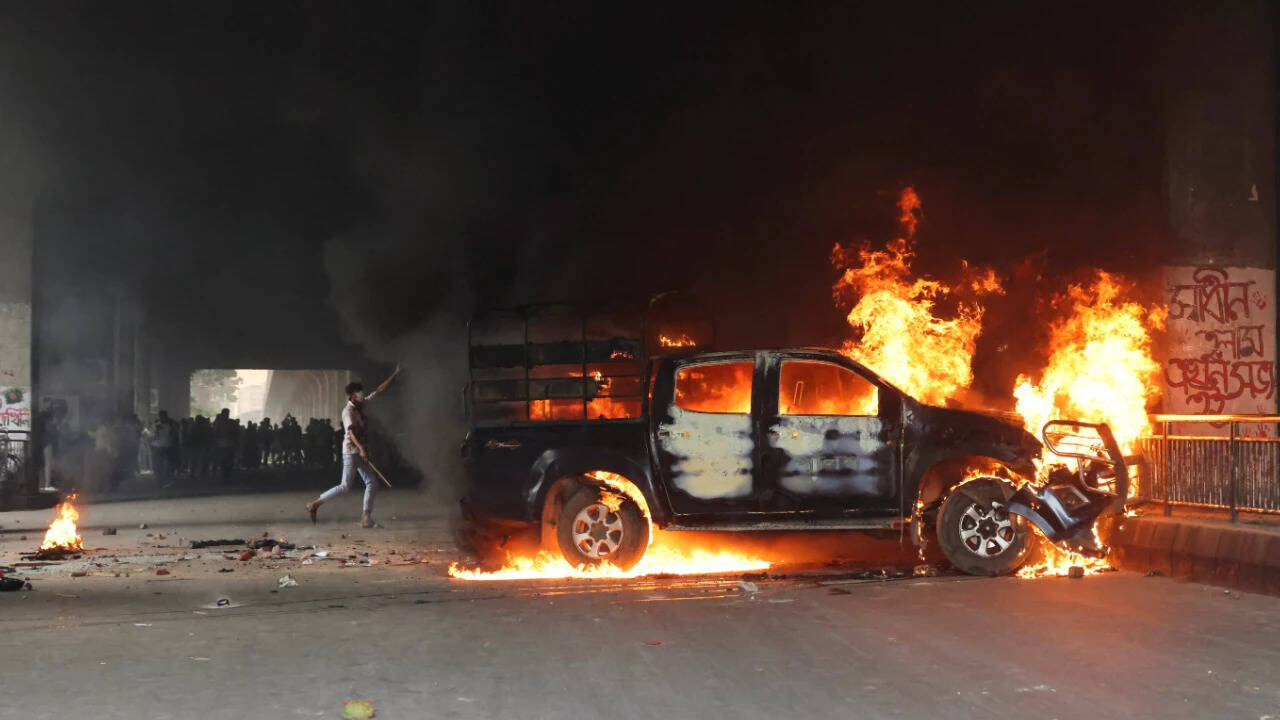
Photo via BBC News

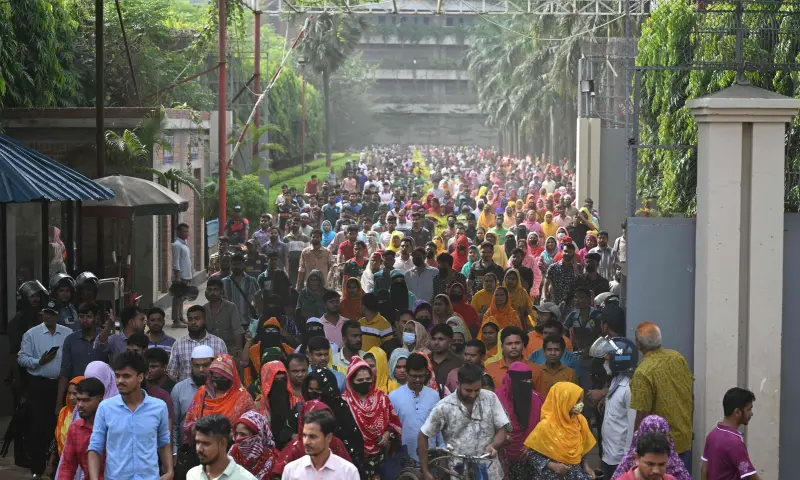
Wage protests force hundreds of Bangladesh garment factories to close

Read the original at BBC News ↗
Cite

Ewe, K., & Ahsan, M. (2026, November 3). Wage protests force hundreds of Bangladesh garment factories to close. BBC News. https://www.bbc.co.uk/news/articles/c3pwg91qjpq7o?at_medium=RSS&at_campaign=rss

Dated from the outlet's own feed. Check the original for its byline.

BBC News · collected 2026-11-03 · by Koh Ewe, Mukimul Ahsan

Quick Summary

In Bangladesh, hundreds of garment factories have closed due to worker protests demanding higher minimum wages, with demonstrators blocking roads and clashing violently with police. Workers are seeking a monthly wage increase from 13,000 taka ($105) to 30,000 taka ($242), citing rising living costs. The unrest has affected production in an industry employing four million workers and generating nearly $40 billion annually for Bangladesh's economy, which relies heavily on garment exports.
Written by AI on 2026-11-03, from this article's own text only (the story summary below draws on all the coverage).
See how they differ ↓

AI analysis

Story summary

As of November 3, 2026, garment workers in Bangladesh have staged a fourth day of protests demanding a significant increase in their minimum monthly wage from 12,500 taka to 30,000 taka. Thousands of protesters have clashed with police and vandalized factories across Dhaka and Gazipur, prompting authorities to deploy paramilitary forces and close hundreds of garment factories. The unrest has disrupted transportation links and factory operations, raising concerns among industry officials about potential delays in shipments and damage to Bangladesh’s reputation as a reliable sourcing hub for global apparel orders. Despite the government forming a new wage board on November 1st, protests continue, defying calls from authorities to end demonstrations.

Written for “Bangladesh Garment Workers Protests” on 2026-11-21, grounded in this article and the 10 other(s) covering the same event.

How they differ

6 outlets covered “Bangladesh Garment Workers Protests”.

What each outlet says

One AI summary per outlet of its latest article on this story, written from that article alone and checked against it. Open the article for the outlet's own words.

BBCThis outlet3 Nov

In Bangladesh, hundreds of garment factories have closed due to worker protests demanding higher minimum wages, with demonstrators blocking roads and clashing violently with police. Workers are seeking a monthly wage increase from 13,000 taka ($105) to 30,000 taka ($242), citing rising living costs. The unrest has affected production in an industry employing four million workers and generating nearly $40 billion…

Wage protests force hundreds of Bangladesh garment factories to close (this article)
Al Jazeera2 Nov

Worker protests over low wages and rising living costs have disrupted hundreds of garment factories in Bangladesh for three consecutive days, with thousands taking to the streets despite police use of tear gas and sound grenades. About 500 factories were temporarily closed after protests began on Saturday. In response, Prime Minister Tarique Rahman formed a wage board to review minimum wages, currently set at 12,500…

Bangladesh garment factories disrupted as protests continue for third day →3 articles from Al Jazeera on this story
The Hindu3 Nov

Garment workers in Bangladesh have continued their protests into a fourth day, demanding a significant wage increase despite government efforts to curb the unrest. Clashes between protesters and police resulted in property damage and injuries; over 58 police officers were hurt while protesters reported numerous injuries as well. The demonstrations, occurring in industrial suburbs around Dhaka including Gazipur and…

Bangladesh garment workers clash with police, defy call to end protests →3 articles from The Hindu on this story
Dawn3 Nov

Garment workers in Bangladesh continued their fourth day of wage protests on Tuesday, disrupting factory operations and transportation links. Despite the government forming a six-member wage board to review salaries, demonstrations intensified with clashes reported across industrial belts near Dhaka. Workers demand a minimum monthly wage increase from 12,500 taka to 30,000 taka ($245), citing rising living costs and…

Bangladesh garment workers stage fourth day of wage protests →2 articles from Dawn on this story
Times of India1 Nov

Garment workers in Bangladesh are staging violent protests demanding a significant increase in their minimum monthly wage from 12,500 taka to 30,000 taka. Clashes have occurred in industrial areas like Mirpur and Konabari, leading to vandalism and road blockages that prompted authorities to deploy police and Border Guard Bangladesh units to restore order. The protests began on Saturday and intensified over the…

Violent protests rock Bangladesh garment hubs as workers demand a steep pay hike →
South China Morning Post2 Nov

Thousands of Bangladeshi garment workers protested on Monday for a significant wage increase, blocking major highways and clashing with police. The protests occurred across industrial hubs like Gazipur and Mirpur, with some workers vandalizing vehicles and others being dispersed by tear gas. With around 4 million people employed in the country’s garment sector, which contributes more than 80% of Bangladesh's export…

Cheap fashion under pressure as Bangladeshi garment workers protest for pay hike →

Where they agree and split

Agreed

Reported by outlets on both sides of the middle

Violent protests have erupted in Bangladesh's garment industry as workers demand a sharp increase in their minimum monthly wage from 12,500 taka to 30,000 taka.

4 outlets

Framing

How the first headlines put it

Stated as fact3
The headlines (3)

Bangladesh forms wage board as garment workers protest Al Jazeera · stated as fact

Violent protests rock Bangladesh garment hubs as workers demand a steep pay hike Times of India · stated as fact

Bangladesh forms wage board as garment workers keep up protests The Hindu · stated as fact

The full story: what happened, how it changed, and all 11 articles →

Compared with similar articles

This article reads leans left and hedges 14% of its claims. Each row says how that neighbour differs.
Times of India
Leans left Hedges 1 of 17 claims Outlet record 59/100
South China Morning Post
Leans left Hedges 0 of 2 claims Outlet record 62/100
Dawn
Leans left Hedges 2 of 21 claims Outlet record 66/100
Al Jazeera
Leans left Hedges 2 of 53 claims Outlet record 60/100
“Article A describes violent protests leading to factory closures, while Article B focuses on workers' struggles with low wages and their daily living conditions.”
The Hindu
Hedges 0 of 29 claims Outlet record 78/100
Dawn
Leans left Hedges 2 of 23 claims Outlet record 66/100
“While both articles describe wage protests in Bangladesh, they refer to different stages of the protest—Article A focuses on violent incidents and factory closures on Sunday, while Article B discusses ongoing unrest and police action on Tuesday.”
The Hindu
Hedges 0 of 6 claims Outlet record 78/100
“Article A describes the violent protests and factory closures, while Article B discusses the political implications of the unrest for Prime Minister Tarique Rahman's visit to India.”
The Hindu
Hedges 2 of 17 claims Outlet record 78/100
“While both articles discuss wage protests in Bangladesh garment factories around the same time period, they describe different phases of the protest and factory closures/reopenings.”
Al Jazeera
Hedges 2 of 15 claims Outlet record 60/100
“While both articles describe wage protests in Bangladesh involving garment workers and clashes with police on the same day, Article A focuses on the formation of a new wage board to address the protests, while Article B reports on the closure of hundreds of factories due to ongoing protests. The events described are related but cover different aspects over time.”
The Hindu
Hedges 1 of 10 claims Outlet record 78/100
“While both articles describe protests in Bangladesh over garment worker wages on November 1, 2026, Article B refers to an update involving factory closures and arrests a few days later, indicating a different specific incident.”

Story

Bangladesh Garment Workers Protests
Politics · 11 article(s) covering the same event. Compare every outlet's account →
How this article was measured signals, leaning charts, publisher record, byline, topics and claims

Signals How these are calculated →

Claims extracted
21
sentences that state something as happening or true
Uncertain
14%
3 of 21 hedged ("reportedly", "may", "according to")
Leaning
Leans left
of the writing, not the subject · beta estimate
Publisher signals
65/100
BBC News's corrections and hedging, across everything collected from it. Not a measure of accuracy.
Outlets on this story
11
Politics
Same framing elsewhere
1
articles that frame the event the way this one does
Analyzed 2026-11-03 · how these are computed

How this is being covered How these are calculated →

Article leaning vs. publisher reliability
Source leaning vs. consistency

Publisher

BBC News · 6377 article(s) · 9 correction(s) detected
Running correction rate · 9 correction(s)

Who wrote this

Koh Ewe
25 article(s) here · 1 carrying a prediction
All this made even honest test takers paranoid. Ahead of the Suneung, one high school senior told the Korea Times that he was worried his horn-rimmed spectacles would be mistaken for smart glasses.
The alleged incursions are a reminder of Russia's military power ahead of the Apec economic summit in China this week, which Vladimir Putin will attend alongside US President Donald Trump.
- Published Indonesia's Vice-President Gibran Rakabuming Raka has submitted his resignation, an aide has told the BBC, in a move which could further strain the political alliance that helped propel President Prabowo Subianto to power.
In a post on his Truth Social platform, Trump derided Greg Abbott, who lost the Texas governor race to Democrat Gina Hinojosa, saying Abbott wouldn't have lost if he "hadn't become a RINO in the last six months", using the acronym for "Republican in Name Only".
There are fears in the industry that the prolonged unrest could disrupt production and affect international buyers, state news agency BSS reported.
"There appears to be the view that the government dropped the ball in dealing with the haze, given that it was known that the El Niño weather phenomenon would be severe and that early warning was given," says Tan.
Moving forward, we will strengthen our review processes for all future collaborative projects.
The company would spend the next 60 days on "restructuring and recapitalisation", though "no outcome is assured", it said.
Starbucks said last year it would sell 60% stake of its business in China as part of a $4bn (£3.04bn) deal with investment firm Boyu Capital.
The government would consider next steps, such as the repatriation of the bodies, after getting information from Saudi authorities, Islam said.
Also by Koh Ewe
Nothing else under this byline is closely related to this article, so these are simply their most recent.
All 25 articles by Koh Ewe →
Mukimul Ahsan
1 article(s) here · 1 carrying a prediction
There are fears in the industry that the prolonged unrest could disrupt production and affect international buyers, state news agency BSS reported.
The only article under this byline in the corpus.

Topics

AFP Bangladesh Dhaka H&M Primark

Subjects

Bangladesh GPE · 3× Dhaka GPE · 3× AFP ORG · 2× BBC Bangla ORG · 1× BSS ORG · 1× China GPE · 1× H&M ORG · 1× Primark ORG · 1× South Asian NORP · 1× Uniqlo ORG · 1×

Narrative

Authorities have accused the Awami League, the banned political party of former leader Sheikh Hasina, for taking advantage of the protest movement to instigate violence - though they did not provide any evidence of this.
framing: assertive · carried by 1 article(s) · first seen 2026-11-03
There are fears in the industry that the prolonged unrest could disrupt production and affect international buyers, state news agency BSS reported.
2026-11-03 · BBC News
Wage protests force hundreds of Bangladesh garment factories to close · assertive framing

Claims (21 extracted, 3 hedged)

- Published Hundreds of garment factories in Bangladesh have been forced to closed after days-long protests by workers demanding higher wages. asserted
Hundreds → publish → wages
On Sunday, protests in the capital Dhaka turned violent with protesters blocking roads, vandalising factories and setting vehicles on fire. asserted
protesters → turn → fire
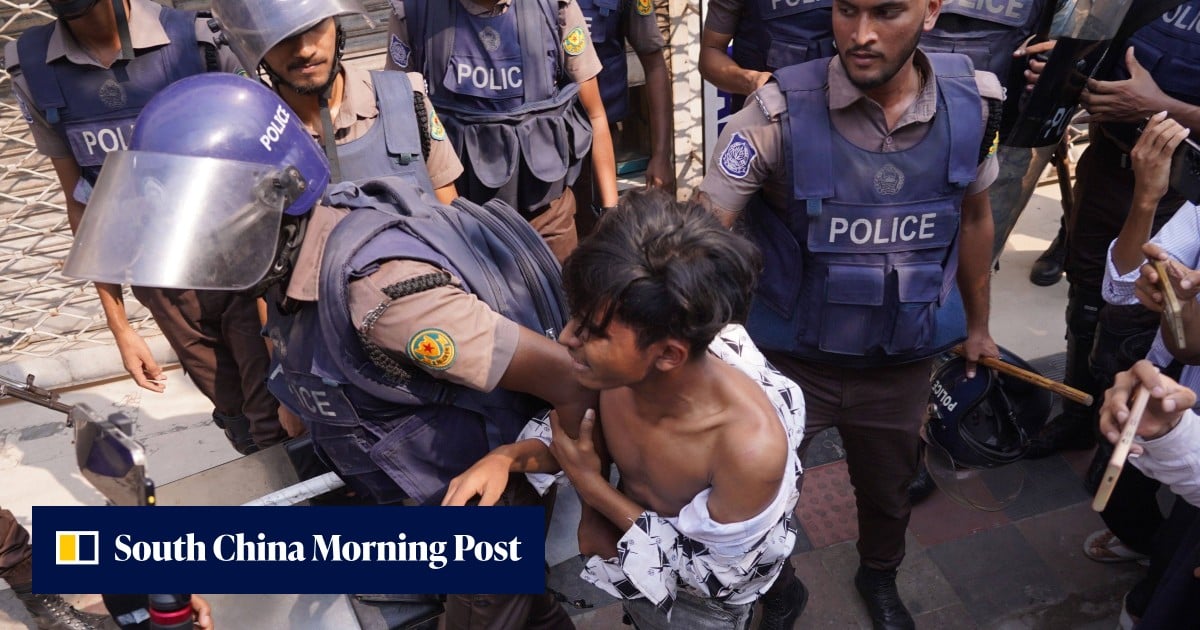
They also clashed with police, who fired tear gas to disperse them. asserted
who → clash → them
Police later said that dozens of protesters had been arrested. asserted
dozens → say → protesters
Workers are demanding a minimum monthly wage of 30,000 taka ($242; £180), more than double the current standard, citing rising costs of living. asserted
Workers → demand → living
Bangladesh's textile industry employs around four million workers and manufactures garments for major global brands including H&M, Primark and Uniqlo. asserted
industry → employ → H&M
There are fears in the industry that the prolonged unrest could disrupt production and affect international buyers, state news agency BSS reported. uncertain
BSS → be → buyers
The garment industry generates nearly $40bn every year for Bangladesh, accounting for around 10% of its GDP. asserted
industry → generate → GDP
The South Asian nation is the world's second-largest garment exporter after China - but its workers are among the lowest-paid in the world, taking home around 13,000 taka ($105; £78) a month. asserted
workers → pay → taka
"We want the government to accept our demands and increase our wages. asserted
government → want → wages
[And] they need to instruct landlords and homeowners not to raise rent and ensure that the prices of essential commodities remain affordable," one female worker told BBC Bangla. asserted
worker → need → Bangla
"Food prices, cooking gas and electricity bills have all gone up," Mamun, a 28-year-old factory worker, told AFP. asserted
Mamun → go → AFP
"The government must either bring down the prices of essential commodities or raise our wages." asserted
government → bring → wages
The government announced on Sunday that it had established a board to review workers' wages, and Prime Minister Tarique Rahman held an emergency meeting with ministers to address the unrest. asserted
Rahman → announce → unrest
But demonstrations continued on Monday in Dhaka and nearby manufacturing hubs including Ashulia, Gazipur and Narayanganj. asserted
demonstrations → continue → Ashulia
Around 670 factories suspended operations on Monday, according to reports by Reuters and AFP, and hundreds in these areas will remain shut on Tuesday. uncertain
hundreds → suspend → Tuesday
At least 29 protesters were arrested as of Monday, according to Dhaka police Deputy Commissioner Mohidul Islam, who said that those who created an "unstable environment in the garment factories" would come under the law. uncertain
who → arrest → law
Authorities have accused the Awami League, the banned political party of former leader Sheikh Hasina, for taking advantage of the protest movement to instigate violence - though they did not provide any evidence of this. asserted
they → accuse → this
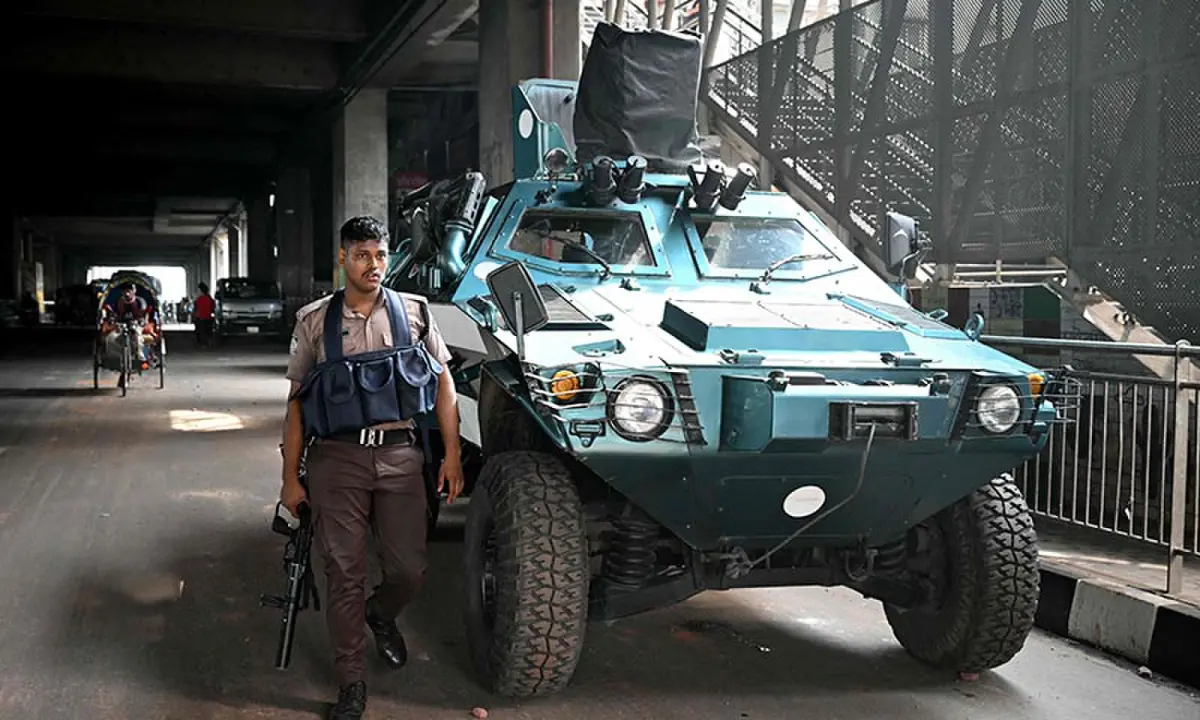
Home minister Salahuddin Ahmed threatened punitive action against protesters who were trying to "destabilise the country" "under the guise of labour protests". asserted
who → threaten → protests
Babul Akhter, a workers' representative on the wage board, urged protesters to go back to work on Monday, promising to "fight for [their] fair wages". " asserted
Akhter → urge → wages
I tell my fellow workers, return to work. asserted
I → tell → work
Give feedback · no sign-in needed

No sign-in needed for now. Your note is sent without a name, so it cannot be answered.

History Support