Photo via The Hindu

Bangladesh garment factories reopen as wage protests keep industry on edge

Read the original at The Hindu ↗
Cite

Reuters. (2026, November 2). Bangladesh garment factories reopen as wage protests keep industry on edge. The Hindu. https://www.thehindu.com/news/international/bangladesh-garment-factories-reopen-as-wage-protests-keep-industry-on-edge/article71655556.ece

Dated from the outlet's own feed. Check the original for its byline.

The Hindu · collected 2026-11-02 · by Reuters

Quick Summary

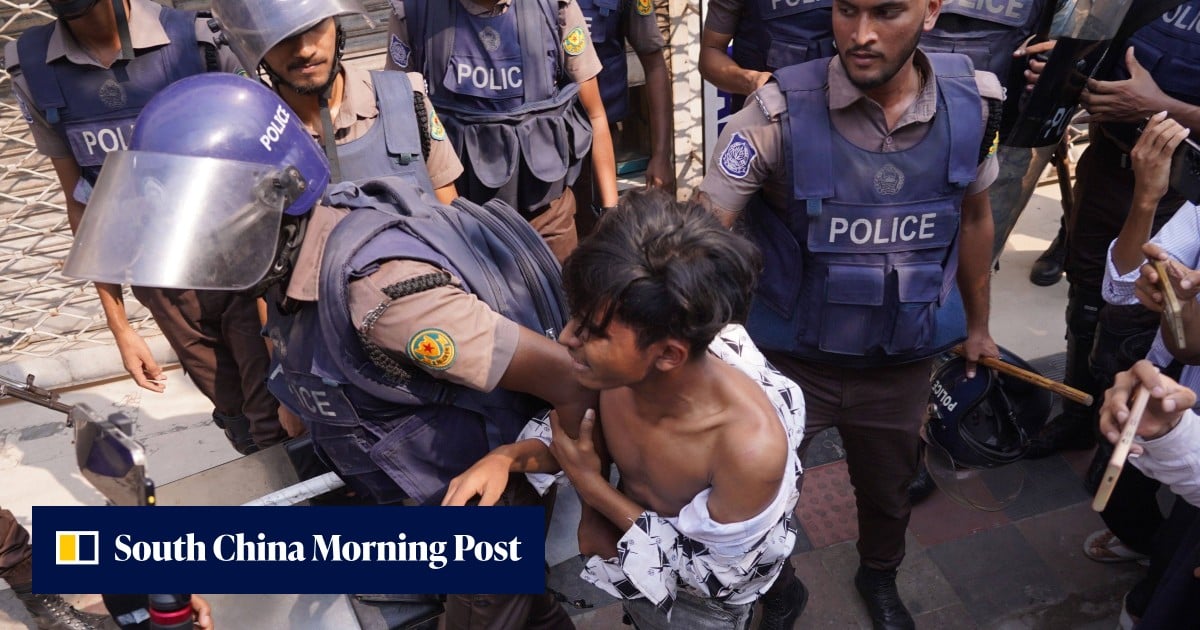
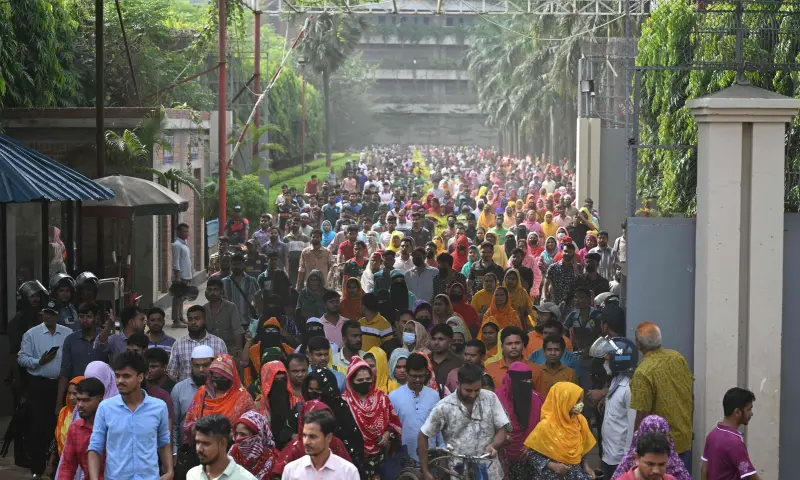
Bangladesh's garment factories reopened on Monday, November 2, 2026, following closures and production disruptions due to worker protests demanding a minimum monthly wage increase from 12,500 taka to 30,000 taka. The unrest affected around 1 million workers in 529 factories across major manufacturing hubs, raising concerns over export shipments and buyer confidence in the country’s garment industry, which employs about 4 million people and accounts for over 80% of Bangladesh’s export earnings. Workers blocked roads and clashed with police, while factory owners warned they may implement "no work, no pay" provisions if protests continue, highlighting tensions between labor demands and industrial sustainability.
Written by AI on 2026-11-02, from this article's own text only (the story summary below draws on all the coverage).
See how they differ ↓

AI analysis

Story summary

As of November 3, 2026, garment workers in Bangladesh have staged a fourth day of protests demanding a significant increase in their minimum monthly wage from 12,500 taka to 30,000 taka. Thousands of protesters have clashed with police and vandalized factories across Dhaka and Gazipur, prompting authorities to deploy paramilitary forces and close hundreds of garment factories. The unrest has disrupted transportation links and factory operations, raising concerns among industry officials about potential delays in shipments and damage to Bangladesh’s reputation as a reliable sourcing hub for global apparel orders. Despite the government forming a new wage board on November 1st, protests continue, defying calls from authorities to end demonstrations.

Written for “Bangladesh Garment Workers Protests” on 2026-11-21, grounded in this article and the 10 other(s) covering the same event.

How they differ

6 outlets covered “Bangladesh Garment Workers Protests”.

What each outlet says

One AI summary per outlet of its latest article on this story, written from that article alone and checked against it. Open the article for the outlet's own words.

The HinduThis outlet2 Nov

Bangladesh's garment factories reopened on Monday, November 2, 2026, following closures and production disruptions due to worker protests demanding a minimum monthly wage increase from 12,500 taka to 30,000 taka. The unrest affected around 1 million workers in 529 factories across major manufacturing hubs, raising concerns over export shipments and buyer confidence in the country’s garment industry, which employs…

Bangladesh garment factories reopen as wage protests keep industry on edge (this article)3 articles from The Hindu on this story
Al Jazeera2 Nov

Worker protests over low wages and rising living costs have disrupted hundreds of garment factories in Bangladesh for three consecutive days, with thousands taking to the streets despite police use of tear gas and sound grenades. About 500 factories were temporarily closed after protests began on Saturday. In response, Prime Minister Tarique Rahman formed a wage board to review minimum wages, currently set at 12,500…

Bangladesh garment factories disrupted as protests continue for third day →3 articles from Al Jazeera on this story
Dawn3 Nov

Garment workers in Bangladesh continued their fourth day of wage protests on Tuesday, disrupting factory operations and transportation links. Despite the government forming a six-member wage board to review salaries, demonstrations intensified with clashes reported across industrial belts near Dhaka. Workers demand a minimum monthly wage increase from 12,500 taka to 30,000 taka ($245), citing rising living costs and…

Bangladesh garment workers stage fourth day of wage protests →2 articles from Dawn on this story
Times of India1 Nov

Garment workers in Bangladesh are staging violent protests demanding a significant increase in their minimum monthly wage from 12,500 taka to 30,000 taka. Clashes have occurred in industrial areas like Mirpur and Konabari, leading to vandalism and road blockages that prompted authorities to deploy police and Border Guard Bangladesh units to restore order. The protests began on Saturday and intensified over the…

Violent protests rock Bangladesh garment hubs as workers demand a steep pay hike →
South China Morning Post2 Nov

Thousands of Bangladeshi garment workers protested on Monday for a significant wage increase, blocking major highways and clashing with police. The protests occurred across industrial hubs like Gazipur and Mirpur, with some workers vandalizing vehicles and others being dispersed by tear gas. With around 4 million people employed in the country’s garment sector, which contributes more than 80% of Bangladesh's export…

Cheap fashion under pressure as Bangladeshi garment workers protest for pay hike →
BBC3 Nov

In Bangladesh, hundreds of garment factories have closed due to worker protests demanding higher minimum wages, with demonstrators blocking roads and clashing violently with police. Workers are seeking a monthly wage increase from 13,000 taka ($105) to 30,000 taka ($242), citing rising living costs. The unrest has affected production in an industry employing four million workers and generating nearly $40 billion…

Wage protests force hundreds of Bangladesh garment factories to close →

Where they agree and split

Agreed

Reported by outlets on both sides of the middle

Violent protests have erupted in Bangladesh's garment industry as workers demand a sharp increase in their minimum monthly wage from 12,500 taka to 30,000 taka.

4 outlets

Framing

How the first headlines put it

Stated as fact3
The headlines (3)

Bangladesh forms wage board as garment workers protest Al Jazeera · stated as fact

Violent protests rock Bangladesh garment hubs as workers demand a steep pay hike Times of India · stated as fact

Bangladesh forms wage board as garment workers keep up protests The Hindu · stated as fact

The full story: what happened, how it changed, and all 11 articles →

Compared with similar articles

This article reads unscored and hedges 12% of its claims. Each row says how that neighbour differs.
Al Jazeera
Leans left Hedges 2 of 53 claims Outlet record 60/100
“Article A describes the reopening of garment factories after closures due to wage protests, while Article B discusses workers' struggles with low wages and mentions ongoing protests but does not focus on a single specific event occurring at the same time.”
Al Jazeera
Hedges 2 of 15 claims Outlet record 60/100
“The articles describe different stages of a protest movement: one on Sunday during ongoing protests and another on Monday as factories reopen after closures.”
The Hindu
Hedges 1 of 10 claims Outlet record 78/100
“The articles describe different days of the protest-related events (Sunday for A, Monday for B), indicating they are reporting on related but distinct phases or outcomes rather than a single identical incident.”
Al Jazeera
Leans left Hedges 0 of 1 claims Outlet record 60/100
“The articles describe different phases of an ongoing situation: one reports on a protest clash with police, while the other discusses factory reopenings and industry concerns in its aftermath.”
South China Morning Post
Leans left Hedges 0 of 2 claims Outlet record 62/100
Dawn
Leans left Hedges 2 of 21 claims Outlet record 67/100
The Hindu
Leans left Hedges 2 of 21 claims Outlet record 78/100
“Article A describes factory reopenings on November 2 due to wage protests, while Article B reports on an agreement by a wage board on November 4 regarding new pay scales. These are different specific events within the same larger context.”
ABC News (AU)
Leans strongly left Hedges 3 of 28 claims Outlet record 67/100
“The articles describe related protests and concerns in Bangladesh's garment industry but occur on different dates, with Article A focusing on factory reopenings after closures due to wage demands while Article B discusses a broader call for ethical consumption based on ongoing worker protests.”
Al Jazeera
Hedges 0 of 20 claims Outlet record 60/100
“Article A reports on the reopening of factories after closures, while Article B describes ongoing disruptions and protests for a third day.”
Dawn
Leans left Hedges 2 of 23 claims Outlet record 67/100
“The articles describe different stages of ongoing protests, with Article A referring to factory reopenings after closures due to wage demands on November 2nd and Article B reporting on continuing wage protests on November 3rd.”

Story

Bangladesh Garment Workers Protests
Politics · 11 article(s) covering the same event. Compare every outlet's account →
How this article was measured signals, leaning charts, publisher record, byline, topics and claims

Signals How these are calculated →

Claims extracted
17
sentences that state something as happening or true
Uncertain
12%
2 of 17 hedged ("reportedly", "may", "according to")
Leaning
withheld
no quote in the article backed the model's score
Publisher signals
78/100
The Hindu's corrections and hedging, across everything collected from it. Not a measure of accuracy.
Outlets on this story
11
Politics
Same framing elsewhere
1
articles that frame the event the way this one does
Analyzed 2026-11-02 · how these are computed

How this is being covered How these are calculated →

Article leaning vs. publisher reliability
Source leaning vs. consistency

Publisher

The Hindu · 1430 article(s) · 2 correction(s) detected
Running correction rate · 2 correction(s)

Who wrote this

Reuters
1200 article(s) here · 1 carrying a prediction
A convoy of vehicles flying Iraqi flags headed into Jurf al-Sakhar on Friday and soldiers took up positions in the center after senior security officials told a press conference that government forces would protect the town.
The Wall Street Journal on Tuesday reported that the SEC was probing Nvidia but said it could not ascertain the focus of the investigation.
Pannun told the court that he was grateful to the US for prosecuting Gupta and said he would keep advocating for Sikh sovereignty.
Estonia will close its road border crossings with Russia on security grounds for at least six months, the Baltic country's government said on Friday (November 20, 2026), prompting a warning from Moscow that it would respond with political and diplomatic measures.
'We will take our future back'
Russian Foreign Ministry spokeswoman Maria Zakharova said on Friday (November 20, 2026) that the participation of Kaja Kallas, the European Union's foreign policy chief, in any potential future negotiations on Ukraine with Moscow would lead to the collapse of talks.
I would like to apologise to Manchester United, Mauricio Pochettino and the players for my actions and sincerely hope those actions do not affect the outcome of any match.”
US Secretary of State Marco Rubio said last month the issue was a “domestic political matter” and Washington would not comment on it.
CA bosses said on Wednesday that an independent forum would be set up to allow players to give their accounts of the incident, but the results would not necessarily be made public and no sanctions would follow.
Some analysts said the outcome of the Shenzhen summit may actually diminish Trump’s stature on the world stage as he enters the lame-duck phase of his presidency, while bolstering two of Washington’s main adversaries.
Wire or desk byline, not an individual reporter.
Also by Reuters
Nothing else under this byline is closely related to this article, so these are simply their most recent.
All 1200 articles by Reuters →

Topics

BGMEA Bangladesh China Dhaka the Bangladesh Garment and Industrial Workers Federation

Subjects

Bangladesh GPE · 6× BGMEA ORG · 2× Babul Akhter PERSON · 1× China GPE · 1× Dhaka GPE · 1× Mahmud Hasan Khan PERSON · 1× Selim Raihan PERSON · 1× The Bangladesh Garment Manufacturers and Exporters Association ORG · 1× the Bangladesh Garment and Industrial Workers Federation ORG · 1× the University of Dhaka ORG · 1×

Narrative

The latest unrest disrupted operations in key manufacturing hubs and raised concerns over export shipments and buyer confidence in Bangladesh, the world’s second-largest apparel exporter after China, as workers demanded a minimum monthly wage of 30,000 taka ($243), up from 12,500 taka.
framing: assertive · carried by 1 article(s) · first seen 2026-11-02
“If protests break out later in the day and we are forced to shut factories, we will have no option but to invoke the ‘no work, no pay’ provision,” he said, adding industry representatives were scheduled to meet the Home Minister to discuss the unrest.

Claims (17 extracted, 2 hedged)

Bangladesh’s garment factories reopened on Monday (November 2, 2026) after widespread closures and production disruptions a day earlier, but manufacturers remain concerned about further unrest over workers’ demands for higher wages. asserted
manufacturers → reopen → wages
The ready-made garment sector accounts for more than 80% of Bangladesh’s export earnings, employs about 4 million workers and contributes around 10% to gross domestic product. asserted
sector → make → product
The latest unrest disrupted operations in key manufacturing hubs and raised concerns over export shipments and buyer confidence in Bangladesh, the world’s second-largest apparel exporter after China, as workers demanded a minimum monthly wage of 30,000 taka ($243), up from 12,500 taka. asserted
workers → disrupt → taka
The demand reflects mounting pressure from rising living costs and persistent inflation. asserted
demand → reflect → costs
The government formed a six-member minimum wage board on Sunday (November 1) to review the demand, but the move failed to immediately quell unrest. asserted
move → form → unrest
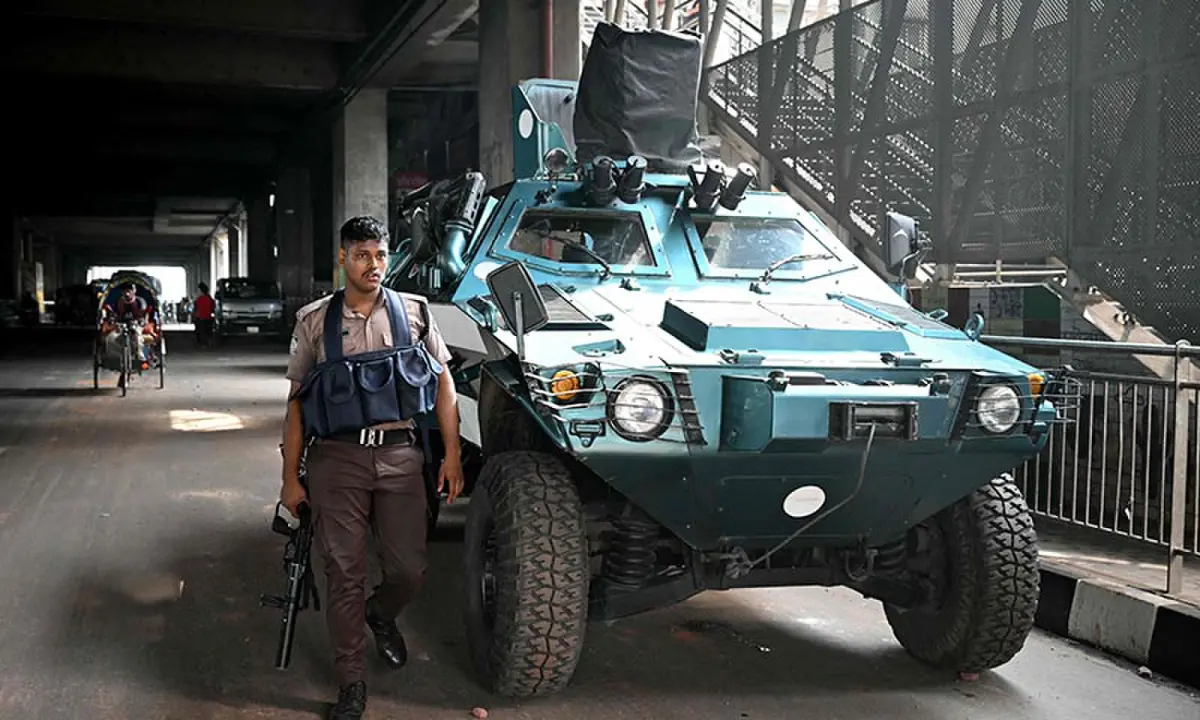
Workers set up road blockades in several industrial areas on Sunday, with police in the capital Dhaka using tear gas and water cannon to disperse protesters. asserted
police → set → protesters
“Bangladesh has among the lowest garment wages in the world,” said Babul Akhter, general secretary of the Bangladesh Garment and Industrial Workers Federation and a workers’ representative on the wage board. asserted
Akhter → have → board
Also Read: Bangladesh garment workers reject 56% pay rise “If factory owners cannot pay workers properly, they should negotiate better prices with international buyers. asserted
they → read → buyers
They cannot build a business on the backs of underpaid workers.” asserted
They → build → workers
‘No work, no pay provision’ Factory owners said the industry faces higher costs, energy market uncertainty linked to conflict in West Asia and slowing demand in key export markets. asserted
industry → say → markets
The Bangladesh Garment Manufacturers and Exporters Association (BGMEA) said demonstrations in multiple cities disrupted operations at 529 factories and affected nearly 1 million workers. asserted
demonstrations → say → workers
“The government has already taken a step by forming the wage board. asserted
government → take → board
We expect workers to allow the review process to proceed,” said BGMEA president Mahmud Hasan Khan. asserted
Khan → expect → ?
“If protests break out later in the day and we are forced to shut factories, we will have no option but to invoke the ‘no work, no pay’ provision,” he said, adding industry representatives were scheduled to meet the Home Minister to discuss the unrest. asserted
representatives → break → unrest
Selim Raihan, an economics professor at the University of Dhaka, said workers’ demands were understandable, given that high inflation and suppressed wages could cause further unrest. uncertain
inflation → say → unrest
However, he cautioned that a substantial wage increase could raise production costs, squeeze exporters’ profit margins and weaken Bangladesh’s price competitiveness. uncertain
increase → caution → competitiveness
“A phased wage adjustment, improved productivity, and fairer pricing from international buyers are essential to balancing workers’ welfare with industrial sustainability.” asserted
adjustment → phase → sustainability
Give feedback · no sign-in needed

No sign-in needed for now. Your note is sent without a name, so it cannot be answered.

History Support