Photo via The Dispatch

The Midterms’ Other Big Loser: AI

Read the original at The Dispatch ↗
Cite

Kubinec, J. (2026, November 6). The Midterms’ Other Big Loser: AI. The Dispatch. https://thedispatch.com/article/midterms-super-pacs-ai-spending/

Dated from the outlet's own feed. Check the original for its byline.

The Dispatch · collected 2026-11-06 · by Jack Kubinec

Quick Summary

The article reports that despite expectations of significant influence, the AI industry faced numerous setbacks during the 2026 midterm elections. A deep-pocketed super PAC supported by Silicon Valley leaders aimed to shape election outcomes but encountered various problems instead. The piece highlights how efforts by corporate AI interests did not achieve their intended impact, reflecting a series of missteps and failures for the sector in this electoral cycle.
Written by AI on 2026-11-06, from this article's own text only (the story summary below draws on all the coverage).
See how they differ ↓

AI analysis

Story summary

In the 2026 US midterm elections, voters across nine states overwhelmingly rejected data center projects, passing moratoriums and outright bans in more than 30 localities. Despite initial concerns and predictions that data centers would play a significant role in shaping election outcomes, the actual election results showed that most voters, including many self-identified Republicans, opposed having new data centers in their communities. This rejection of data centers benefited Democratic candidates, who campaigned against the rapid expansion of AI and data centers, highlighting concerns over job loss, surveillance, and economic impacts. Key Democratic victories in states like Ohio and Texas suggest that issues related to AI and data centers may become a central theme in future American politics, reflecting a growing anti-AI populism.

Written for “Data center backlash in midterms” on 2026-11-21, grounded in this article and the 34 other(s) covering the same event.

How they differ

17 outlets covered “Data center backlash in midterms”.

What each outlet says

One AI summary per outlet of its latest article on this story, written from that article alone and checked against it. Open the article for the outlet's own words.

The DispatchThis outlet6 Nov

The article reports that despite expectations of significant influence, the AI industry faced numerous setbacks during the 2026 midterm elections. A deep-pocketed super PAC supported by Silicon Valley leaders aimed to shape election outcomes but encountered various problems instead. The piece highlights how efforts by corporate AI interests did not achieve their intended impact, reflecting a series of missteps and…

The Midterms’ Other Big Loser: AI (this article)
CBS News6 Nov

Exit polls from the 2026 elections indicate that AI played a significant role for over half of the voters, although data centers were not the most critical issue. The polls showed majorities in all states opposed having new data centers built locally, benefiting Democratic candidates who campaigned against them. However, even many self-identified Republicans were resistant to data center construction despite voting…

Exit polls show data centers weren't winners in 2026 elections →7 articles from CBS News on this story
The Straits Times4 Nov

In the recent US midterm elections, voters in numerous towns across the country overwhelmingly rejected proposals related to data center developments. Notably, Harwood, North Dakota, was the sole exception where residents voted against a measure designed to limit such industrial projects. Around 430 out of about 800 residents cast their ballots, with approximately three-quarters opposing the initiative aimed at…

US midterms: Only one town out of dozens in US voted in favour of data centres →3 articles from The Straits Times on this story
Semafor5 Nov

After winning majorities in Congress, Democrats see artificial intelligence (AI) regulation as a key issue. However, internal disagreements between progressive and business-friendly factions within the party make it challenging to swiftly implement sweeping regulations. Conservative groups argue that voters are concerned about economic issues linked to rapid AI growth under the previous administration. Despite these…

Democrats are fired up on AI. Consensus is harder. →3 articles from Semafor on this story
South China Morning Post6 Nov

Forecasters are warning that the Democratic victory in the midterm elections may lead to regulatory changes that could stall up to 30% of planned artificial intelligence data centers in the United States. This potential clampdown includes project freezes proposed in Texas and increased federal oversight, which would significantly impact Big Tech's infrastructure spending plans.

Does the Democratic midterm victory spell the end of US AI data centre boom? →3 articles from South China Morning Post on this story
Washington Examiner5 Nov

Newly elected Democratic governors in several states are threatening to slow down or impose restrictions on data center development. In Texas, Governor-elect Gina Hinojosa plans to impose a moratorium until the state imposes regulatory guardrails, including requirements for hiring union workers and protecting water resources. Similarly, Georgia’s Governor-elect Keisha Lance Bottoms said she will sign an executive…

Daily on Energy: Newly elected Democratic governors threaten data center development →3 articles from Washington Examiner on this story
Show 10 more outlets
The Guardian9 Nov

Garrison Lovely argues that opposition to artificial intelligence (AI) is becoming a significant political force in America. The Democratic Party's success in the midterms was partly due to voter rejection of AI datacenters, with over 30 localities across nine states passing restrictions or moratoriums on such facilities. Voters cited AI as crucial in their decisions at a rate of 23%, and Democrats won these voters…

Anti-AI populism is the future of American politics | Garrison Lovely →3 articles from The Guardian on this story
404 Media4 Nov

In last night’s midterm elections across America, voters overwhelmingly rejected proposals related to AI data centers, with 38 out of over 40 ballot measures against them in 13 states. Six cities imposed outright bans while twelve others limited the power draw for such facilities. Candidates who supported data centers faced significant losses; notably, Texas Governor Gregg Abbott lost his bid for a fourth term as…

American Voters Overwhelmingly Reject AI Data Centers →2 articles from 404 Media on this story
Reason4 Nov

In the 2026 midterms, data centers became an unexpectedly significant political issue despite initial skepticism. Exit polls showed that AI data centers were crucial or a major factor for many voters, with most ballot initiatives proposing bans or restrictions on them passing overwhelmingly. Although some argued data center issues did not sway votes as strongly as expected based on pre-election polls, the results…

It Was a Data Center Election After All →2 articles from Reason on this story
New York Post2 Nov

The article reports that despite initial media hype about data centers becoming a significant political issue in US midterm elections, voter polls show it ranks among the least important concerns for Americans in key states like Texas and Ohio. Only around 3% of voters in Texas and 2% in Ohio named data centers as their top concern, according to recent CNN polls. Politicians who previously pushed regulations on data…

Data-center fury is a campaign dud →
Time4 Nov

In the 2026 midterm elections on November 3rd, a significant backlash against AI and data center expansion by voters resulted in major defeats for candidates backed by pro-AI industry groups. Democrats spent over $100 million on ads targeting Republicans’ ties to Big Tech, winning key races such as Ohio’s Senate election. Data center bans passed in multiple counties, and mayors supporting these projects were…

How AI Backlash Shaped the 2026 Midterms →
ABC News (AU)5 Nov

Voters in ten US states rejected data centre proposals in recent midterm elections, with about 41 measures overwhelmingly failing. Democrat Gina Hinojosa's victory in Texas, where she campaigned against data centre construction, further underscores the political toxicity of these projects. Political ads heavily criticized data centres, and exit polls showed that three-quarters of voters oppose such constructions in…

US rejection of data centres is a warning for Australia — and maybe leverage →
Mother Jones5 Nov

Voters across ten states rejected data center projects in nearly 40 towns during recent midterms, with only one measure passing in Harwood, North Dakota. Nationally, 77 percent of voters voted against data center development, largely driven by concerns over environmental justice and rising utility costs. In places like Joliet, Illinois, where communities have long fought industrial pollution, nearly 80 percent…

Midterm Rout for Data Centers: Voters in Nearly 40 Towns Rejected Projects →
The Intercept5 Nov

Midterm elections saw a significant victory for candidates and ballot measures restricting or halting data center development across several states. Newly elected Democratic governors in Georgia, Ohio, and Texas have promised moratoriums on new construction, echoing sentiments from local communities that overwhelmingly approved ballot initiatives against these facilities. Public policy experts attribute this trend…

Blue Tsunami’s Clearest Takeaway: People Hate Data Centers →
ABC News (US)6 Nov

In the recent U.S. midterm elections, opposition to data centers emerged as a significant issue in hundreds of millions of dollars' worth of TV ads and campaign promises. Democrats who won governorships in several key states pledged stricter regulation on these energy-intensive facilities. For instance, Clayton Tucker in Texas attributed his victory partly to his stance against data center development due to…

Data centers took a beating in the midterm elections →
BBC6 Nov

A recent US midterms voter poll suggests that data centers were a significant issue for many voters, with 56% saying they were crucial or major factors in their vote and 76% opposing new constructions locally. The poll highlights growing public opposition to the expansion of artificial intelligence infrastructure, particularly among those who voted Democrat. Although other issues like government corruption and cost…

Did a data centre revolt affect the US mid-term election results? →

Compared with similar articles

This article reads leans left and hedges 33% of its claims. Each row says how that neighbour differs.
ProPublica
Leans left Hedges 12 of 88 claims Outlet record 59/100
“The articles discuss different aspects of AI and its impact on politics and infrastructure, but do not describe the same specific incident or occurrence.”
NPR
Hedges 12 of 93 claims Outlet record 60/100
“The articles discuss different aspects of AI's role in politics around the midterms and do not describe the same specific incident or outcome.”
TIME
Leans strongly left further left than this Hedges 10 of 70 claims Outlet record 60/100
Global News
Leans left Hedges 0 of 4 claims Outlet record 63/100
“Article A comments on political parties' views regarding Bell's AI data center, while Article B discusses broader issues faced by the AI industry in the midterms.”
BBC News
Leans left Hedges 6 of 35 claims Outlet record 65/100
No title Different event
The Free Press
Hedges 0 of 6 claims Outlet record 96/100
“The articles discuss different aspects of AI's impact on politics around the midterms; Article A focuses on AI industry setbacks in the election, while Article B discusses broader questions and reflections on AI raised by Yuval Levin.”
The Free Press
Centre further right than this Hedges 0 of 6 claims Outlet record 96/100
“The articles discuss different aspects of AI's impact on politics and society; Article A focuses on the negative outcomes for AI in the midterms, while Article B discusses broader philosophical questions raised by Yuval Levin.”
Washington Examiner
Leans left Hedges 2 of 3 claims Outlet record 67/100
“Article A discusses the impact of AI on the midterm elections generally, while Article B focuses specifically on inauthentic social media activity trying to sow distrust during the final weeks before the election.”
Semafor
Leans left Hedges 0 of 8 claims Outlet record 64/100
“The articles discuss different aspects of AI involvement in elections and do not describe the same specific incident or occurrence.”
NBC News
Outlet record 77/100
“The articles discuss different aspects of AI's impact on the midterms; one focuses on OpenAI’s election activities, while the other summarizes AI's overall performance in influencing the election.”

Story

Data center backlash in midterms
Politics · 35 article(s) covering the same event. See how they differ ↑
How this article was measured signals, leaning charts, publisher record, byline, topics and claims

Signals How these are calculated →

Claims extracted
3
sentences that state something as happening or true
Uncertain
33%
1 of 3 hedged ("reportedly", "may", "according to")
Leaning
Leans left
of the writing, not the subject · beta estimate
Publisher signals
61/100
The Dispatch's corrections and hedging, across everything collected from it. Not a measure of accuracy.
Outlets on this story
35
Politics
Same framing elsewhere
1
articles that frame the event the way this one does
Analyzed 2026-11-06 · how these are computed

How this is being covered How these are calculated →

Article leaning vs. publisher reliability
Source leaning vs. consistency

Publisher

The Dispatch · 541 article(s) · 2 correction(s) detected
Running correction rate · 2 correction(s)

Who wrote this

Jack Kubinec
12 article(s) here · 1 carrying a prediction
Anything that could go wrong, did.
2026-11-06 · mixed framing · The Midterms’ Other Big Loser: AI
As he is wherever he appears in the city these days, Mayor Zohran Mamdani was the main event.
2026-11-02 · assertive framing · The Left’s AI Problem
Tech leaders have long predicted that AI will bring about major changes to the workplace.
2026-10-09 · speculative framing · Welcome to the AI Workplace
This week, President Donald Trump took to social media to weigh in on growing concerns that the development of ever more advanced artificial intelligence could lead to human extinction.
2026-09-17 · mixed framing · The AI Doomsday Scenario: Explained
Also by Jack Kubinec
The Left’s AI Problem
2026-11-02 · The Dispatch
Nothing else under this byline is closely related to this article, so these are simply their most recent.
All 12 articles by Jack Kubinec →

Topics

AFP Pennsylvania Sugarloaf Township

Subjects

AFP ORG · 1× Matthew Hatcher PERSON · 1× Pennsylvania GPE · 1× Sugarloaf Township GPE · 1×

Narrative

Over the past year, as a deep-pocketed AI super PAC backed by Silicon Valley leaders waded into the 2026 midterms, the AI industry seemed poised to be a major player in shaping the election’s outcome.
framing: mixed · carried by 1 article(s) · first seen 2026-11-06
Anything that could go wrong, did.
2026-11-06 · The Dispatch
The Midterms’ Other Big Loser: AI · mixed framing

Claims (3 extracted, 1 hedged)

Over the past year, as a deep-pocketed AI super PAC backed by Silicon Valley leaders waded into the 2026 midterms, the AI industry seemed poised to be a major player in shaping the election’s outcome. asserted
industry → back → outcome
Anything that could go wrong, did. uncertain
that → go → ?
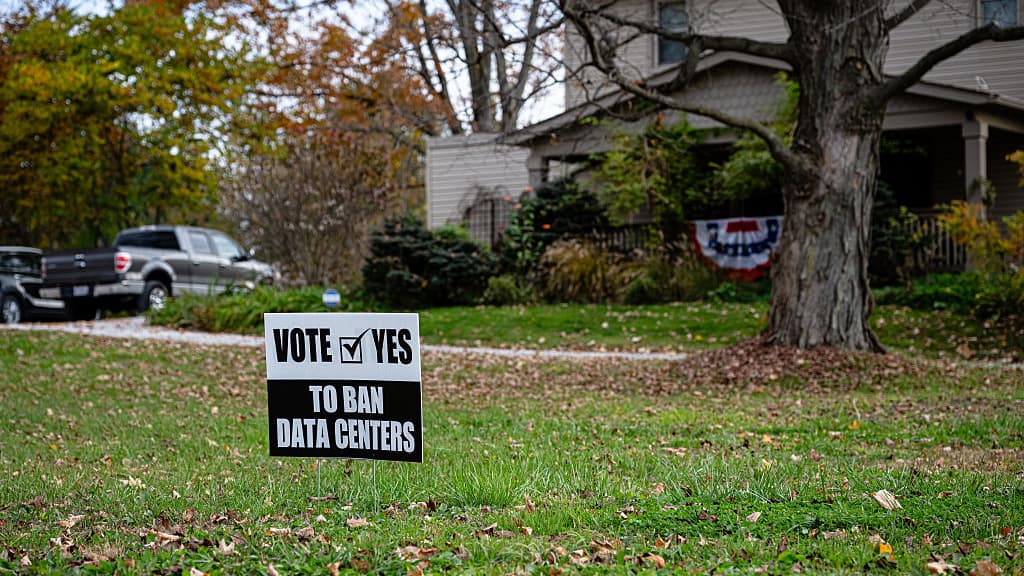
A sign is seen at a home near a proposed data center development in Sugarloaf Township, Pennsylvania. asserted
sign → see → Township
Give feedback · no sign-in needed

No sign-in needed for now. Your note is sent without a name, so it cannot be answered.

History Support