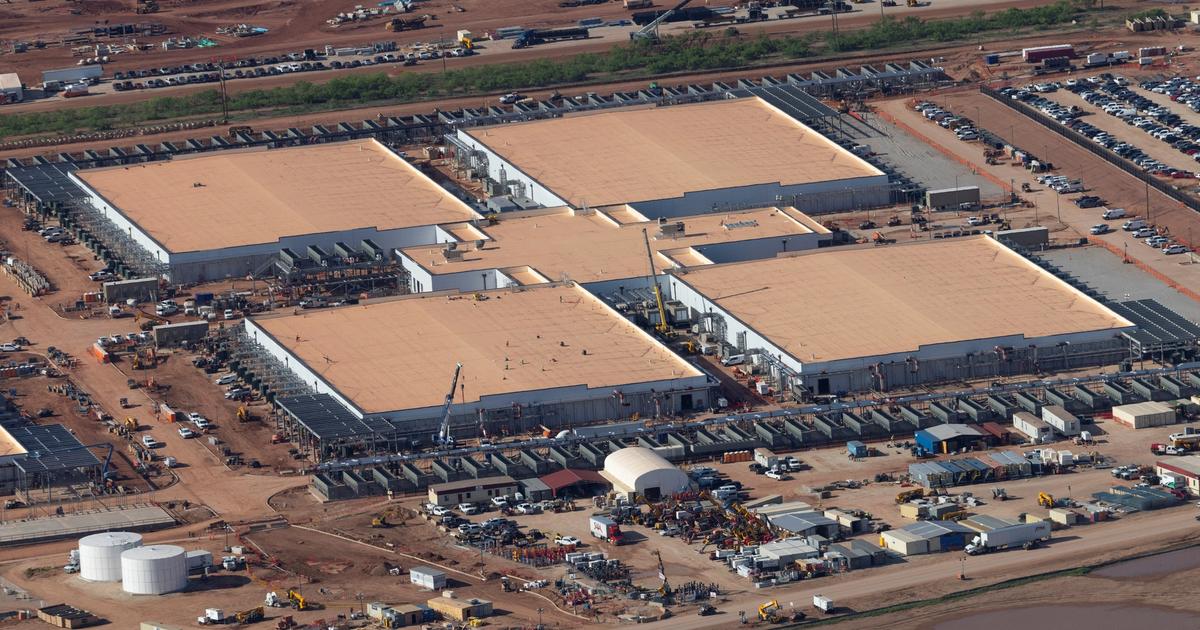
Photo via Semafor

Wall Street's push to trade AI compute hits Washington roadblock

Read the original at Semafor ↗
Cite

Hoffman, L. (2026, November 6). Wall Street's push to trade AI compute hits Washington roadblock. Semafor. https://www.semafor.com/article/11/06/2026/wall-streets-push-to-trade-ai-compute-hits-washington-roadblock

Dated from the outlet's own feed. Check the original for its byline.

Semafor · collected 2026-11-06 · by Liz Hoffman

Quick Summary

Exchange operators are trying to create futures markets for AI compute similar to those for commodities like oil or wheat, but face challenges due to the secretive nature of contracts between AI companies and their suppliers. Intercontinental Exchange CEO Jeff Sprecher expressed optimism about the potential growth in this market, noting that lenders might require companies to lock in GPU prices to secure financing. However, regulatory hurdles exist as past efforts faced pressure from Washington over concerns that transparency could put the US at a disadvantage compared to China in AI technology competition.
Written by AI on 2026-11-06, from this article's own text only (the story summary below draws on all the coverage).

AI analysis

Story summary

Intercontinental Exchange CEO Jeff Sprecher expressed cautious optimism about creating a tradable market for AI compute in Chicago on November 6, 2026. However, the lack of public pricing data and established spot markets for GPU compute complicates Wall Street's efforts to trade AI technology like traditional commodities such as oil or wheat. The biggest buyers of AI compute, including major tech companies under secret contracts, contribute to the scarcity of transparent pricing information. Sprecher suggested that lenders' growing nervousness about financing data centers might push companies to lock in GPU prices through financial instruments, potentially driven by regulatory pressure or demands from executives like Facebook CEO Mark Zuckerberg. Washington's stance remains a significant wildcard in this evolving market landscape.
Written for “Washington Roadblock for AI Trade” on 2026-11-21, grounded in this article and the 0 other(s) covering the same event.

Compared with similar articles

This article reads unscored and hedges 31% of its claims. Each row says how that neighbour differs.
Semafor
Hedges 0 of 7 claims Outlet record 64/100
“The articles discuss different aspects of AI-related financial issues: Article A focuses on Wall Street's push to trade AI compute hitting a roadblock in Washington, while Article B covers the challenges and difficulties in financing AI chip projects.”
Semafor
Leans left Hedges 2 of 3 claims Outlet record 64/100
“The articles discuss different aspects of data center and AI policy issues, with Article A focusing on a Texas gubernatorial race and opposition to data centers, while Article B focuses on Wall Street's efforts to trade AI compute and the complications this faces in Washington.”
Semafor
Hedges 0 of 22 claims Outlet record 64/100
“The articles discuss different aspects of AI policy and market developments, not a single specific incident.”
South China Morning Post
Hedges 0 of 2 claims Outlet record 62/100
“The articles discuss different aspects of the AI chip and compute market without describing the same specific incident.”
The Guardian
Leans strongly left Hedges 5 of 30 claims Outlet record 64/100
“The articles discuss different aspects of AI and market reactions; Article A focuses on Wall Street's push to trade AI compute hitting a roadblock in Washington, while Article B discusses the political backlash against AI during midterms and market reactions.”
New York Post
Leans left Hedges 4 of 24 claims Outlet record 66/100
“While both articles discuss market reactions and concerns related to AI compute and data centers, they describe different time periods and aspects of the situation.”
Semafor
Hedges 1 of 65 claims Outlet record 64/100
“The articles discuss different aspects of AI compute and data center investments without describing the same specific incident.”

Story

Washington Roadblock for AI Trade
Politics · 1 article(s) covering the same event.
How this article was measured signals, leaning charts, publisher record, byline, topics and claims

Signals How these are calculated →

Claims extracted
13
sentences that state something as happening or true
Uncertain
31%
4 of 13 hedged ("reportedly", "may", "according to")
Leaning
withheld
no quote in the article backed the model's score
Publisher signals
64/100
Semafor's corrections and hedging, across everything collected from it. Not a measure of accuracy.
Outlets on this story
1
Politics
Same framing elsewhere
1
articles that frame the event the way this one does
Analyzed 2026-11-06 · how these are computed

How this is being covered How these are calculated →

Article leaning vs. publisher reliability
Source leaning vs. consistency

Publisher

Semafor · 1931 article(s) · 7 correction(s) detected
Running correction rate · 7 correction(s)

Who wrote this

Liz Hoffman
37 article(s) here · 1 carrying a prediction
One former politico-turned-tech executive who had just come from Washington told me this week: “Out here, the question is whether Jensen will be back at Nvidia by Christmas or whether it’ll take a little longer.
2026-11-18 · assertive framing · Tech leaders form tribal loyalties after Huang ouster
The position of Nvidia’s Colette Kress — a relatively unknown CFO, a rare female executive in an industry dominated by men, promoted in a storm and taking the mic for the high-stakes earnings call this afternoon — will ring familiar to old Wall Street hands.
2026-11-17 · assertive framing · Nvidia faces its own Lehman moment
Whoever replaces him will face much higher stakes, akin to Tim Cook after Steve Jobs at Apple.
Much will depend on what those Democrats and Nvidia’s board, which is running its own investigation, unearth about who knew what and when.
Top of mind, too, is what Nvidia would be without Huang, its CEO since he co-founded the company in 1993.
OpenAI set out to raise $30 billion, money it could have put together in its sleep a few months ago, and appears likely to fall far short.
The AI debt boom might just bring the push the markets need.
The original thesis, which investors never bought, was that combining Aetna’s insurance data and CVS’s 10,000 retail pharmacies would cut costs and make care more seamless.
2026-11-05 · assertive framing · CVS joins the M&A unwind club
The two seemed to embody a new type of hard-edged conservative politics that lives at the intersection of Twitter and money, driven by wealthy and successful businessmen who believed their wealth and success would translate into political victories and personal popularity.
2026-11-04 · assertive framing · How big money lost the 2026 midterms
Reports that the White House is planning post-midterm strikes on Iran may push political fallout from an unpopular war outside the election window, but the economic weight of high gas and diesel prices lands on whoever’s nominally in charge come January.
Also by Liz Hoffman
Nothing else under this byline is closely related to this article, so these are simply their most recent.
All 37 articles by Liz Hoffman →

Topics

Chicago China Exchange Intercontinental Exchange Washington

Subjects

Sprecher PERSON · 3× China GPE · 2× Washington GPE · 2× Chicago GPE · 1× Exchange ORG · 1× Intercontinental Exchange ORG · 1× Jeff Sprecher PERSON · 1× Kalshi ORG · 1× Semafor ORG · 1× Zuckerberg PERSON · 1×

Narrative

But that effort is complicated by the fact that the biggest buyers, AI hyperscalers, pay under secret contracts, leaving most of the public data on how much people are paying for compute coming from the spotty offerings from neoclouds.
framing: mixed · carried by 1 article(s) · first seen 2026-11-06
The AI debt boom might just bring the push the markets need.

Claims (13 extracted, 4 hedged)

Wall Street wants a price for AI compute. asserted
Street → want → compute
Exchange operators are racing to make GPU compute a tradable commodity like oil or wheat. asserted
compute → race → oil
But that effort is complicated by the fact that the biggest buyers, AI hyperscalers, pay under secret contracts, leaving most of the public data on how much people are paying for compute coming from the spotty offerings from neoclouds. asserted
people → complicate → neoclouds
Intercontinental Exchange CEO Jeff Sprecher told me when I interviewed him this week at the futures industry’s annual confab in Chicago that he was “bullish but cautious.” asserted
he → tell → Chicago
Futures normally follow an established spot market, and compute doesn’t really have one (see this robust X debate). asserted
compute → follow → debate
“We’re kind of [working] backwards,” Sprecher said. asserted
Sprecher → work → ?
The AI debt boom might just bring the push the markets need. uncertain
markets → bring → push
Sprecher said lenders that are increasingly nervous about financing data centers could start demanding that companies lock in their GPU prices for as long as they’re asking to borrow. uncertain
they → say → prices
“It may be that the capital markets require that, given how much money is being lent,” he said. uncertain
he → require → that
“And then Zuckerberg comes over and says, ‘I need to do a big trade,’” he added with a smile. asserted
he → come → smile
Pressure from the Trump administration forced Kalshi to scrap one of its GPU price trackers in September, Semafor reported, which Sprecher chalked up to concerns that transparent pricing for AI could disadvantage the US in its competition with China. uncertain
pricing → force → China
“The United States is a free market and that has always advantaged us vis-à-vis China, so I suspect that’s where they’ll come out. asserted
they → advantage → China
But we’re all waiting with bated breath.” asserted
we → wait → breath
Give feedback · no sign-in needed

No sign-in needed for now. Your note is sent without a name, so it cannot be answered.

History Support