Photo via The Straits Times

Explainer-How Yemen's Houthis went from a small mountain militia to a big regional threat

Read the original at The Straits Times ↗
Cite

The Straits Times. (2026, September 17). Explainer-How Yemen's Houthis went from a small mountain militia to a big regional threat. The Straits Times. https://www.straitstimes.com/world/middle-east/explainer-how-yemens-houthis-went-from-a-small-mountain-militia-to-a-big-regional-threat

Dated when The Aporia collected the article, usually within hours of publication. Check the original for its exact date and byline.

The Straits Times · collected 2026-09-17 · by The Straits Times

Quick Summary

The article explains how Yemen's Houthi group transformed from a small mountain militia to a significant regional threat, controlling strategic areas like the Bab el-Mandeb Strait. Starting as a Zaydi Shi'ite revival movement in the 1990s, they gained strength through conflicts with the Yemeni government and established ties with Iran. The Houthis seized control of Sanaa in 2014, leading to a Saudi-led military intervention, and have since launched missile attacks on Saudi Arabia and international shipping in the Red Sea, demonstrating their ability to disrupt regional stability and vital maritime routes.
Written by AI on 2026-09-17, from this article's own text only (the story summary below draws on all the coverage).

AI analysis

Story summary

Yemen's Houthi group, which began as a small Zaydi Shi'ite Muslim movement in the late 1990s, has evolved into a significant regional threat with Iranian support. The Houthis waged six wars against the Yemeni government, building a strong local militia. During Yemen’s 2011 Arab Spring, they seized control of Sanaa, the capital, in 2014, leading to a Saudi-led military intervention aimed at supporting the ousted government. This conflict has resulted in years of civil war and a fragile 2022 ceasefire. The Houthis have also expanded their reach by firing missiles and drones at Israel.

Written for “Yemen Houthi Threat Growth” on 2026-11-21, grounded in this article and the 0 other(s) covering the same event.

Compared with similar articles

This article reads unscored and hedges 2% of its claims. Each row says how that neighbour differs.
The Hindu
Leans left Hedges 0 of 11 claims Outlet record 60/100
“The articles describe different aspects of the conflict involving the Houthis and Saudi Arabia; one explains the evolution of the Houthi group, while the other reports on recent military strikes by Saudi Arabia.”
Al Jazeera
Leans left Hedges 6 of 32 claims Outlet record 60/100
“Article A discusses the Houthis' strategic control over the Bab el-Mandeb Strait, while Article B describes ongoing battles for strategic mountains near the Red Sea and allegations of US involvement in the conflict.”
The Straits Times
Leans left Hedges 5 of 41 claims Outlet record 64/100
“Article A reports on a specific Houthi advance and capture of territory around the Bab el-Mandeb Strait, while Article B provides an overview of how the Houthis became a regional threat over time.”
The Straits Times
Leans left Hedges 1 of 32 claims Outlet record 64/100
“Article A describes a specific Houthi Red Sea offensive occurring on September 16, while Article B provides an overview of how the Houthis have become a significant regional threat, mentioning their recent advances but not focusing on one particular event.”
The Straits Times
Leans strongly left Hedges 5 of 42 claims Outlet record 64/100
“Article A describes a recent Houthi advance and capture of islands at the Bab el-Mandeb Strait, while Article B provides an historical overview of how the Houthis became a regional threat.”
The Guardian
Leans left Hedges 8 of 79 claims Outlet record 64/100
“Article A describes the recent lightning advance of Houthi militants and its immediate impact, while Article B provides a broader historical context on how the Houthis became a regional threat.”
NPR
Leans right Hedges 5 of 46 claims Outlet record 60/100
“The articles describe related events but not the exact same occurrence; Article A explains the evolution of the Houthi group and their current strategic position, while Article B focuses on a recent week of attacks by the Houthis that threaten Saudi oil.”
The Straits Times
Hedges 0 of 23 claims Outlet record 64/100
“Article A describes the strategic and historical rise of the Houthis to a regional power with control over the Bab el-Mandeb Strait, while Article B focuses on the humanitarian impact of the Houthi advance, specifically people fleeing their homes due to bombardment.”
South China Morning Post
Leans right Hedges 0 of 4 claims Outlet record 62/100
“While both articles discuss the Houthi group's recent military advances, Article A focuses on Abdul Malik al-Houthi and his latest offensive near Saudi Arabia and the Red Sea coastline, while Article B provides a broader historical context of how the Houthis became a regional threat.”
The Guardian
Hedges 2 of 28 claims Outlet record 64/100
“The articles describe different stages or outcomes of a conflict involving the Houthi group, not the same specific incident.”

Story

Yemen Houthi Threat Growth
Politics · 1 article(s) covering the same event.
How this article was measured signals, leaning charts, publisher record, byline, topics and claims

Signals How these are calculated →

Claims extracted
43
sentences that state something as happening or true
Uncertain
2%
1 of 43 hedged ("reportedly", "may", "according to")
Leaning
not political
takes no side on a contested political question
Publisher signals
64/100
The Straits Times's corrections and hedging, across everything collected from it. Not a measure of accuracy.
Outlets on this story
1
Politics
Same framing elsewhere
1
articles that frame the event the way this one does
Analyzed 2026-09-17 · how these are computed

How this is being covered How these are calculated →

Article leaning vs. publisher reliability
Source leaning vs. consistency

Publisher

The Straits Times · 5640 article(s) · 7 correction(s) detected
Running correction rate · 7 correction(s)

Who wrote this

The Straits Times
3923 article(s) here · 0 carrying a prediction
The apparent compromise of the National Crime Information Center database would mark the second intrusion involving an FBI system in recent months and the latest in a string of cyber incidents that have alarmed US officials over the past week.
Electrify the world Australia’s Climate Minister Chris Bowen, who was shuttling between delegations to seek compromises, said he would work over the “coming hours, for as long as it takes, to get the job done”.
New York City’s Rikers Island jail complex would close by 2032 under a sweeping plan announced Nov 20 by Mayor Zohran Mamdani of New York City, whose strategy for finally shuttering the notorious facility hinges on substantially reducing the number of people kept behind bars.
Prosecutors have alleged that while placing his 911 call, Rinderknecht asked the artificial intelligence app ChatGPT on his phone whether someone could be found at fault for lighting a fire “because of your cigarettes”, to which ChatGPT replied, “Yes”.
A placard beside Trump’s podium listed a series of broad agreements the president had reached with Chinese President Xi Jinping and Russian President Vladimir Putin, which included a reaffirmation that nuclear war would be futile for all nations involved.
He told groups of subordinates that they had become so rich that he couldn’t motivate them simply with money, according to three people who spoke on the condition of anonymity to discuss confidential conversations.
The closed freeway lanes recall stems from unusual circumstances where a Waymo vehicle may enter and continue driving in a closed freeway lane, the company said, adding it is still working on the recall remedy.
Araqchi says Iran wants diplomacy to end war; Trump says terms unacceptable Nov 20 - Iran's Foreign Minister Abbas Araqchi said Tehran still hoped diplomacy could end its war with the United States, while US President Donald Trump said Iran wanted a deal but one that was not acceptable to him.
While You Were Sleeping: 5 stories you might have missed, Nov 21, 2026 Trump, Xi agree military AI decisions should involve humans US President Donald Trump and Chinese President Xi Jinping agreed humans should always be involved in military decisions that use artificial intelligence technologies, even as the two countries compete for AI supremacy, Treasury Secretary Scott Bessent said on Nov 20.
US Vice President Vance declines to say he would have ordered Iran strikes WASHINGTON, Nov 20 - US Vice President JD Vance on Friday declined to say whether he would have authorized strikes on Iran to prevent the country from developing a nuclear weapon, sidestepping President Donald Trump's calls for him to say the attacks were necessary and that he would carry them out again.
Also by The Straits Times
Nothing else under this byline is closely related to this article, so these are simply their most recent.
All 3923 articles by The Straits Times →

Topics

Houthi Houthis Israel Saudi Arabia Yemen

Subjects

Houthis NORP · 8× Houthi NORP · 7× Yemen GPE · 7× Israel GPE · 4× Saudi NORP · 4× Saudi Arabia GPE · 4× Iran GPE · 2× Tihama GPE · 2× Iranian NORP · 1× LONDON GPE · 1×

Narrative

Baraa Shiban, an associate fellow at the Royal United Services Institute in London, said such training had begun soon after the Arab Spring and had helped the Houthis transform from a militia to a more organised military force with changes to their structure and movements.
framing: assertive · carried by 1 article(s) · first seen 2026-09-17

Claims (43 extracted, 1 hedged)

Explainer-How Yemen's Houthis went from a small mountain militia to a big regional threat LONDON, Sept 17 - asserted
Houthis → go → threat
A lightning advance by Yemen's Houthi group has brought the vital Bab el-Mandeb Strait under its control, making the once ragged highland militia a regional player with global clout. asserted
militia → bring → clout
This is how the group evolved into a formidable fighting force with Iranian support that can disrupt vital shipping and strike critical oil and gas facilities in neighbouring Saudi Arabia. asserted
that → evolve → Arabia
Starting out in the late 1990s as a Zaydi Shi'ite Muslim revival movement in north Yemen under the Houthi family, the group waged six wars against the government, building a strong local militia. asserted
group → start → militia
When Yemen's central state disintegrated during the 2011 Arab Spring, the Houthis took advantage, gaining more ground and developing a relationship with Iran and its Lebanese ally Hezbollah. asserted
Houthis → disintegrate → Iran
In 2014 they seized the capital Sanaa, ousting the government, and halting a Gulf-backed political transition. asserted
they → seize → transition
That prompted a Saudi-led military intervention to support the government, leading to years of civil war that ground to a stalemate and a 2022 ceasefire. asserted
that → prompt → stalemate
The Houthis fired missiles and drones at Israel and international shipping in the Red Sea during Israel's war in Gaza from 2023-25 in what they said was solidarity with Palestinians. asserted
they → fire → Palestinians
With their closest ally Iran under attack by the United States since February 28, the Houthis have again been firing on Red Sea shipping as well as energy facilities inside Saudi Arabia. asserted
Houthis → fire → Arabia
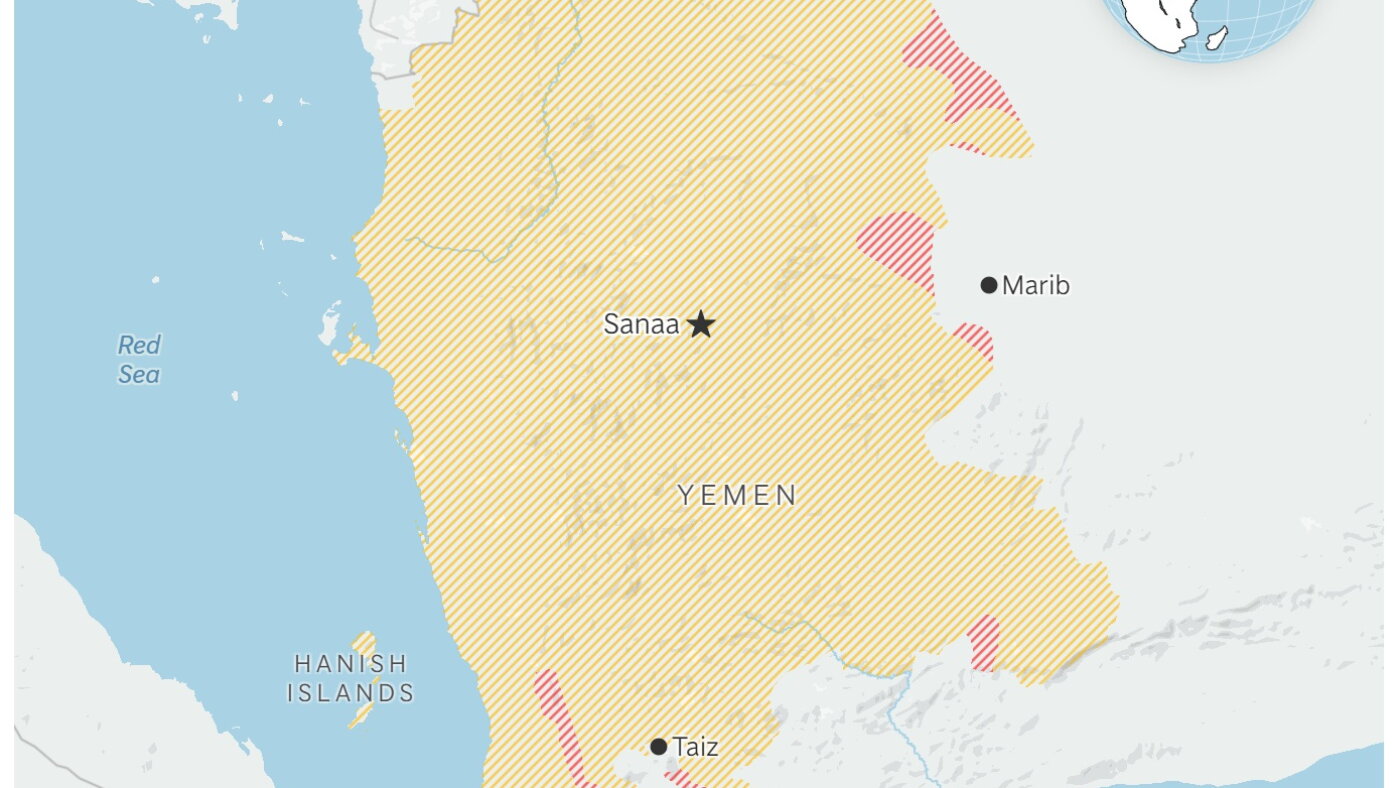
The ceasefire collapsed over recent weeks and fighting resumed along the old front lines: Marib and Jawf governorates in the north, the city of Taiz in the southern highlands, Dhale in central Yemen and the Red Sea coastal strip known as the Tihama. asserted
fighting → collapse → Tihama
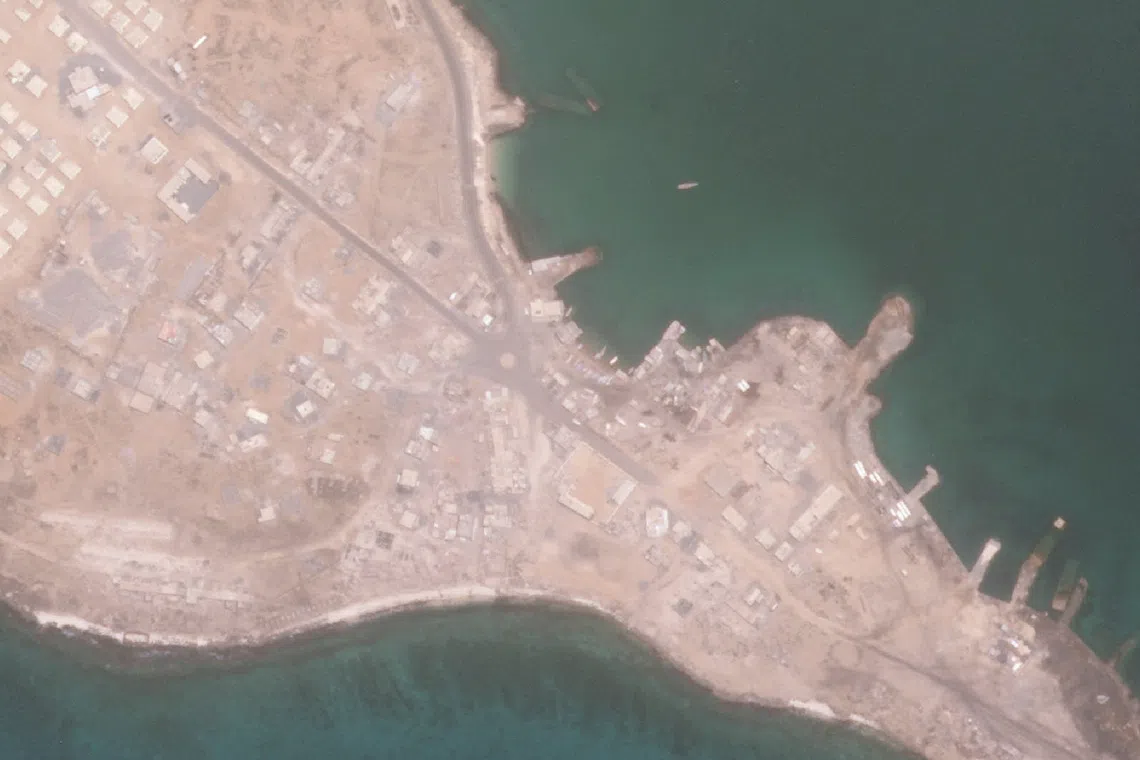
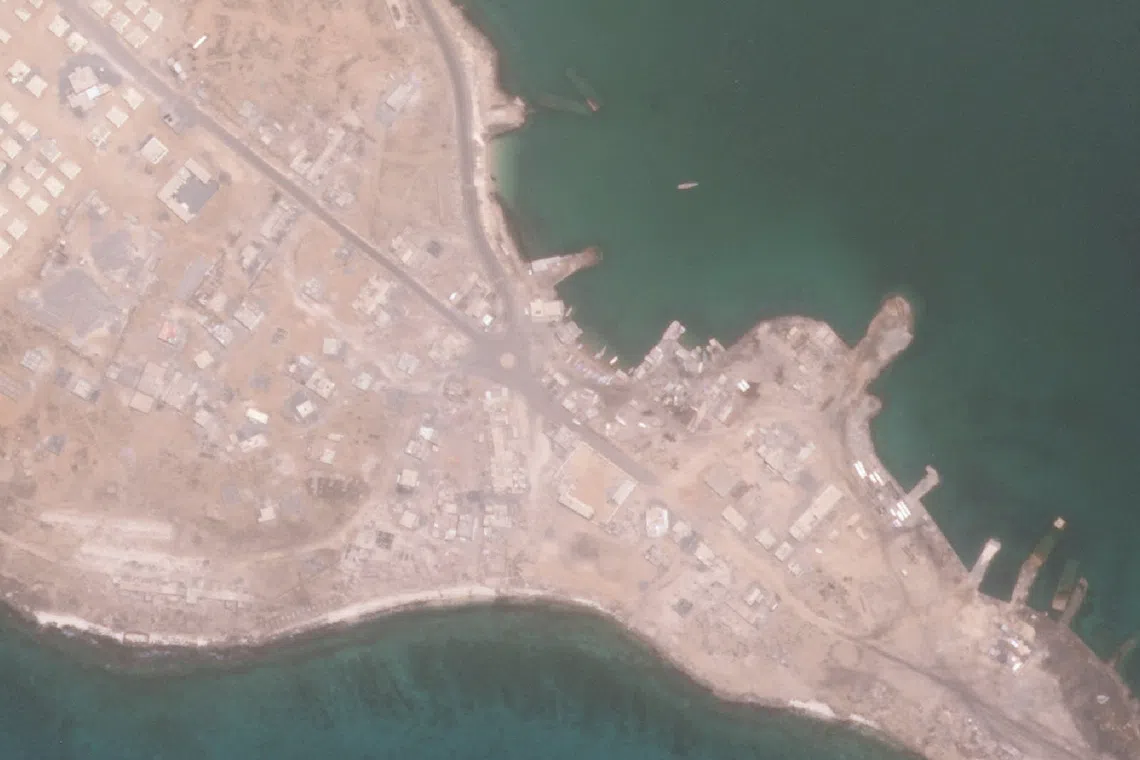
Last week the Houthis rapidly advanced into the southern Tihama, seizing first the port city of Mocha and then the rest of the Red Sea coastline and islands, putting their guns along the whole shore of the 12-mile-wide (19-km-wide) Bab el-Mandeb Strait. asserted
Houthis → advance → Strait
Those territorial gains make it easier to block shipping on the Red Sea, a key route for Saudi oil exports to Asia, and set up a potential launchpad for a new ground thrust towards Aden. asserted
it → make → Aden
Saudi Arabia has conducted airstrikes in support of government-aligned forces. asserted
Arabia → conduct → forces
WHAT DO WE KNOW ABOUT HOUTHI MISSILES AND DRONES? asserted
WE → know → MISSILES
The group's ability to strike at distance with growing accuracy is why it now matters far beyond Yemen. asserted
it → strike → Yemen
Houthi ballistic missiles have reached as far as Israel, more than 1,000 miles (1,800 km) away, and one struck the perimeter of Israel's main airport in 2025. asserted
one → reach → 2025
They have struck more frequently in Saudi Arabia, targeting cities and infrastructure. asserted
They → strike → cities
And Houthi missiles have been fired at ships in the Red Sea, halting traffic in the waterway. asserted
missiles → fire → waterway
Houthi drones have also struck repeatedly at Saudi targets and are now increasingly deployed on the battlefield — a big change from the last bout of civil-war fighting before the 2022 ceasefire. asserted
drones → strike → ceasefire
WHAT EQUIPMENT HAVE THE HOUTHIS BEEN SEEN USING? asserted
HOUTHIS → see → EQUIPMENT
The Houthis have posted videos online since the start of September that show some of the military equipment they are using. asserted
they → post → equipment
Videos show drones dropping different types of mortar and other bombs onto vehicles and opposition fighters, a rocket or missile launching, and precise munition hits on buildings and trucks at a camp, filmed by a high-resolution drone. asserted
Videos → show → drone
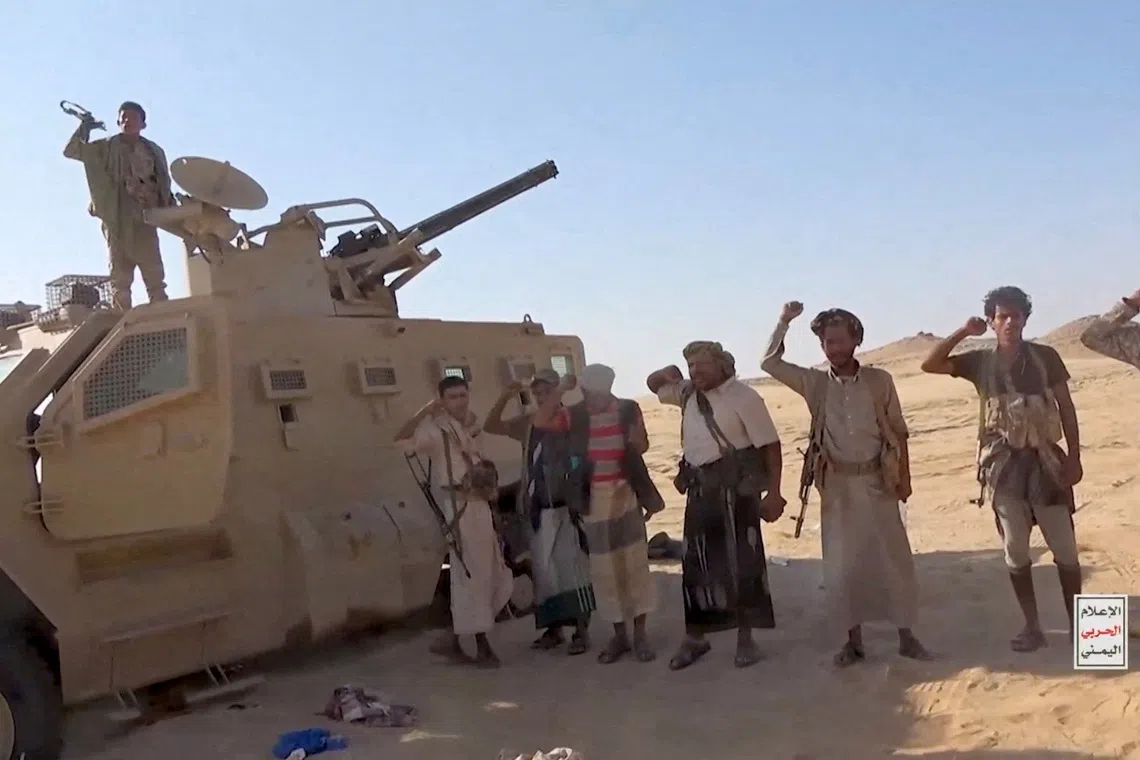
Other videos show Houthi forces on the ground including in pick-up trucks, some mounted with weapons, and on foot. asserted
videos → show → foot
Many fighters are shown in Arab robes rather than uniforms and carrying assault rifles. asserted
fighters → show → rifles
One video also showed a small group of fighters in camouflage uniforms. asserted
video → show → uniforms
In some videos, fighters are shown with light and heavy machine guns and scoped rifles. asserted
fighters → show → guns
Videos showed them parading equipment captured from the Saudi-backed forces in the Tihama including armoured and combat vehicles, a tank, an artillery gun, satellite dish, small arms and a drone jamming device. asserted
them → show → vehicles
But the videos do not generally show the captured hardware in action. asserted
videos → show → action
HOW DO THE HOUTHIS GET THEIR WEAPONS? asserted
HOUTHIS → get → WEAPONS
A United Nations panel of experts' report in 2025 said the Houthis had developed missile and drone technologies through both technical assistance and domestic manufacturing. asserted
Houthis → say → assistance
It found there had been widespread arms smuggling despite a U.N. arms embargo, including overland shipments across the Omani border as well as seaborne smuggling. asserted
It → find → border
Items seized included drone control devices, equipment to receive ships' navigational data, drone engines and missile components. asserted
Items → seize → data
A 2023 U.N. report noted seizures of entire drones, ballistic missile components such as chemical precursors and Iranian-made anti-tank missiles. asserted
report → note → precursors
Iranian sources have said Tehran has supplied its Houthi allies with both weapons and experts. asserted
Tehran → say → weapons
However, Iran has officially denied arming the Houthis in violation of the U.N. arms embargo. asserted
Iran → deny → embargo
A 2025 assessment by the International Institute for Strategic Studies think tank found that while the Houthis had made advances in domestic arms production, they remained dependent on Iran for key technologies and advanced capabilities. asserted
they → find → technologies
IN WHAT OTHER WAYS HAVE THE HOUTHIS DEVELOPED MILITARILY? asserted
HOUTHIS → develop → WAYS
The U.N. panel of experts' report described Houthi military tactics as being focused on infiltration, drone attacks and shelling along front lines, and the laying of mines and other explosive devices. asserted
report → describe → mines
They assessed that the Houthis had 350,000 fighters, partly through the recruitment of fighters under 18. asserted
Houthis → assess → 18
Training by Iran and Hezbollah has been critical for the Houthis, according to Yemen analysts. uncertain
Training → accord → analysts
…and 3 more, not listed.

Give feedback · no sign-in needed

No sign-in needed for now. Your note is sent without a name, so it cannot be answered.

History Support