Photo via The Straits Times

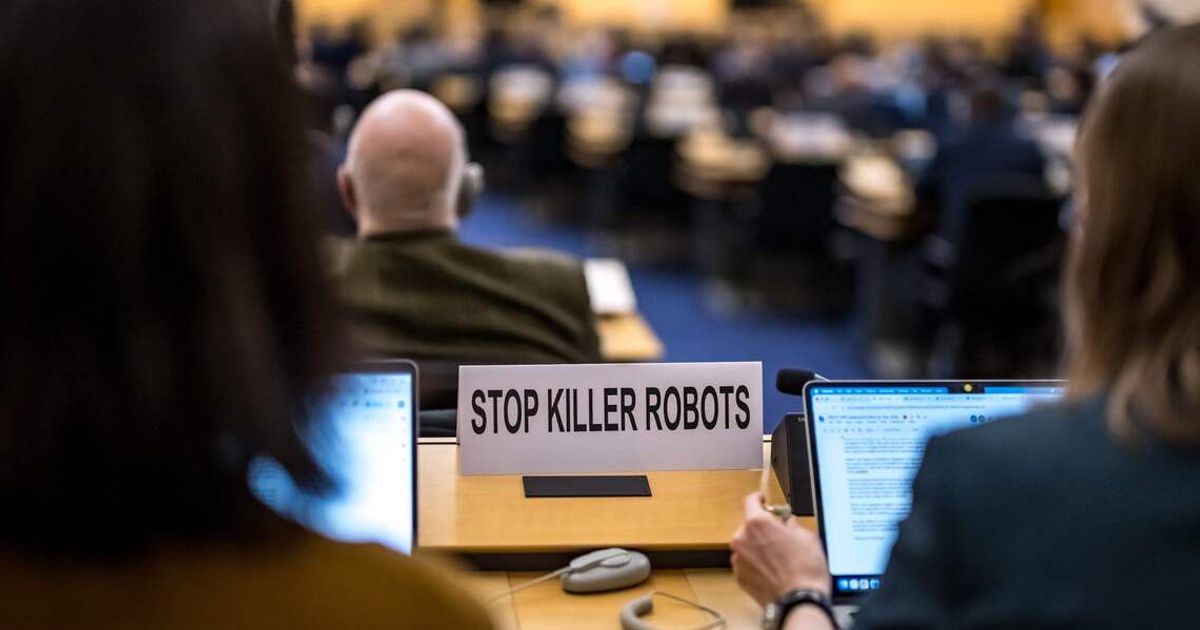
UN to debate rules for ‘killer robots’

Read the original at The Straits Times ↗
Cite

The Straits Times. (2026, November 16). UN to debate rules for ‘killer robots’. The Straits Times. https://www.straitstimes.com/world/un-to-debate-rules-for-killer-robots

Dated from the outlet's own feed. Check the original for its byline.

The Straits Times · collected 2026-11-16 · by The Straits Times

Quick Summary

At a UN conference starting November 16, countries will debate whether to initiate talks on rules for autonomous weapons, often called "killer robots." Warfare is evolving rapidly due to advancements in AI, leading to concerns about the ethical and humanitarian impacts of such technology. Despite widespread support for tighter regulations, major powers like the U.S., Russia, and China are resistant to binding agreements, complicating efforts to establish international norms.
Written by AI on 2026-11-16, from this article's own text only (the story summary below draws on all the coverage).
See how they differ ↓

AI analysis

Story summary

As of November 16, 2026, negotiations on rules for lethal autonomous weapons, or "killer robots," have hit a procedural impasse at the United Nations in Geneva. Russia objected to the agenda, bringing proceedings to a halt before noon and halting discussions on the Convention on Certain Conventional Weapons. The U.N. chief and advocacy groups like Human Rights Watch urge countries to impose strict, binding regulations on the use of such weapons, citing the risk to civilians. Despite calls for decisive action, nine countries, including Iran, Saudi Arabia, and China, abstained from immediate support for strict regulations. The talks aim to address the ethical and legal implications of autonomous weapons, with some experts expressing pessimism about achieving meaningful, binding regulations given the current international legal climate.

Written for “UN Talks on Killer Robots Impasse” on 2026-11-21, grounded in this article and the 9 other(s) covering the same event.

How they differ

6 outlets covered “UN Talks on Killer Robots Impasse”.

What each outlet says

One AI summary per outlet of its latest article on this story, written from that article alone and checked against it. Open the article for the outlet's own words.

The Straits TimesThis outlet16 Nov

At a UN conference starting November 16, countries will debate whether to initiate talks on rules for autonomous weapons, often called "killer robots." Warfare is evolving rapidly due to advancements in AI, leading to concerns about the ethical and humanitarian impacts of such technology. Despite widespread support for tighter regulations, major powers like the U.S., Russia, and China are resistant to binding…

UN to debate rules for ‘killer robots’ (this article)4 articles from The Straits Times on this story
Dawn16 Nov

UN Secretary-General Antonio Guterres urged countries to establish strict rules on lethal autonomous weapons systems, or "killer robots," during a conference in Geneva. The meeting of the UN’s Convention on Conventional Weapons, which includes 128 countries, aims to decide whether to start negotiations on legally binding rules for these weapons. However, there is significant resistance, particularly from nations…

UN chief urges countries to rein in 'merciless' killer robots →2 articles from Dawn on this story
CBC16 Nov

Diplomats from over 100 countries, including Canada, the U.S., Russia, and China, will discuss autonomous weapons at a UN Convention on Certain Conventional Weapons meeting in Geneva this week. However, experts like Paul Lushenko from Cornell University predict that meaningful, binding regulations are unlikely due to concerns over losing military advantages. The U.S. and China notably declined to sign a February…

What will it take for the world's superpowers to agree on AI regulations in war? →
Toronto Star16 Nov

Government envoys at the U.N. offices in Geneva are discussing whether to start negotiations for rules on lethal autonomous weapons, such as killer robots and armed drones. Seven countries, including Austria and New Zealand, have proposed initiating talks on a new legally binding agreement to regulate these weapons. The meeting follows concerns raised by advocacy groups and the U.N. Secretary-General Antonio…

UN-backed talks consider possible rules on lethal autonomous weapons →
The Hindu16 Nov

Government envoys are meeting at UN offices in Geneva to discuss potential regulations for lethal autonomous weapons, such as armed drones. Seven countries, including Austria and New Zealand, have proposed starting negotiations for a legally binding agreement to control these weapons. However, major military powers like the United States and Russia are hesitant to limit their development. The Pope, UN…

UN-backed talks consider possible rules on lethal autonomous weapons →
NPR16 Nov

At the United Nations in Geneva, negotiations are ongoing to establish rules for lethal autonomous weapons, or 'killer robots.' Humanitarian groups and the International Committee of the Red Cross are advocating for legally binding regulations, citing concerns that autonomous weapons cannot uphold the Geneva Conventions, particularly the ability to distinguish between combatants and non-combatants. Countries like…

U.N. talks seek to rein in 'killer robots' as fears over AI weapons grow →

Where they agree and split

The full story: what happened, how it changed, and all 10 articles →

Compared with similar articles

This article reads leans strongly left and hedges 6% of its claims. Each row says how that neighbour differs.
The Hindu
Leans left further right than this Hedges 3 of 23 claims Outlet record 78/100
CBC News
Leans right further right than this Hedges 11 of 41 claims Outlet record 60/100
Dawn
Hedges 2 of 21 claims Outlet record 67/100
NPR
Leans strongly left Hedges 2 of 30 claims Outlet record 60/100
Toronto Star
Leans right further right than this Hedges 3 of 25 claims Outlet record 64/100
The Straits Times
Leans right further right than this Hedges 1 of 19 claims Outlet record 64/100
The Straits Times
Leans right further right than this Hedges 1 of 19 claims Outlet record 64/100
Dawn
Leans left further right than this Hedges 0 of 27 claims Outlet record 67/100
“The articles refer to an upcoming conference about killer robots, but they describe the event at different times—one on the day it starts, the other before it begins—and discuss it with different focuses.”
The Straits Times
Leans right further right than this Hedges 2 of 21 claims Outlet record 64/100
“Article A describes the specific procedural impasse that occurred on Nov 16, while Article B discusses the broader debate and concerns leading up to the conference.”
Dawn
Leans left further right than this Hedges 1 of 11 claims Outlet record 67/100
“The articles refer to the same general event (UN conference on 'killer robots'), but they cover different stages of the conference (initial debate vs. nearing conclusion).”

Story

UN Talks on Killer Robots Impasse
Politics · 10 article(s) covering the same event. Compare every outlet's account →
How this article was measured signals, leaning charts, publisher record, byline, topics and claims

Signals How these are calculated →

Claims extracted
16
sentences that state something as happening or true
Uncertain
6%
1 of 16 hedged ("reportedly", "may", "according to")
Leaning
Leans strongly left
of the writing, not the subject · beta estimate
Publisher signals
64/100
The Straits Times's corrections and hedging, across everything collected from it. Not a measure of accuracy.
Outlets on this story
10
Politics
Same framing elsewhere
1
articles that frame the event the way this one does
Analyzed 2026-11-16 · how these are computed

How this is being covered How these are calculated →

Article leaning vs. publisher reliability
Source leaning vs. consistency

Publisher

The Straits Times · 5640 article(s) · 7 correction(s) detected
Running correction rate · 7 correction(s)

Who wrote this

The Straits Times
3923 article(s) here · 1 carrying a prediction
The apparent compromise of the National Crime Information Center database would mark the second intrusion involving an FBI system in recent months and the latest in a string of cyber incidents that have alarmed US officials over the past week.
Electrify the world Australia’s Climate Minister Chris Bowen, who was shuttling between delegations to seek compromises, said he would work over the “coming hours, for as long as it takes, to get the job done”.
New York City’s Rikers Island jail complex would close by 2032 under a sweeping plan announced Nov 20 by Mayor Zohran Mamdani of New York City, whose strategy for finally shuttering the notorious facility hinges on substantially reducing the number of people kept behind bars.
Prosecutors have alleged that while placing his 911 call, Rinderknecht asked the artificial intelligence app ChatGPT on his phone whether someone could be found at fault for lighting a fire “because of your cigarettes”, to which ChatGPT replied, “Yes”.
A placard beside Trump’s podium listed a series of broad agreements the president had reached with Chinese President Xi Jinping and Russian President Vladimir Putin, which included a reaffirmation that nuclear war would be futile for all nations involved.
He told groups of subordinates that they had become so rich that he couldn’t motivate them simply with money, according to three people who spoke on the condition of anonymity to discuss confidential conversations.
The closed freeway lanes recall stems from unusual circumstances where a Waymo vehicle may enter and continue driving in a closed freeway lane, the company said, adding it is still working on the recall remedy.
Araqchi says Iran wants diplomacy to end war; Trump says terms unacceptable Nov 20 - Iran's Foreign Minister Abbas Araqchi said Tehran still hoped diplomacy could end its war with the United States, while US President Donald Trump said Iran wanted a deal but one that was not acceptable to him.
While You Were Sleeping: 5 stories you might have missed, Nov 21, 2026 Trump, Xi agree military AI decisions should involve humans US President Donald Trump and Chinese President Xi Jinping agreed humans should always be involved in military decisions that use artificial intelligence technologies, even as the two countries compete for AI supremacy, Treasury Secretary Scott Bessent said on Nov 20.
US Vice President Vance declines to say he would have ordered Iran strikes WASHINGTON, Nov 20 - US Vice President JD Vance on Friday declined to say whether he would have authorized strikes on Iran to prevent the country from developing a nuclear weapon, sidestepping President Donald Trump's calls for him to say the attacks were necessary and that he would carry them out again.
Also by The Straits Times
Nothing else under this byline is closely related to this article, so these are simply their most recent.
All 3923 articles by The Straits Times →

Topics

GENEVA ICRC Russia Ukraine the Weapons and Conduct of Hostilities Unit

Subjects

ICRC ORG · 4× GENEVA GPE · 2× Russia GPE · 2× Ukraine GPE · 2× Antonio Guterres PERSON · 1× Human Rights Watch ORG · 1× Laurent Gisel PERSON · 1× Leo XIV PERSON · 1× the International Committee of the Red Cross ORG · 1× the Weapons and Conduct of Hostilities Unit ORG · 1×

Narrative

“The need to regulate autonomous weapons has taken on new urgency” with developments in artificial intelligence, said Laurent Gisel, head of the Weapons and Conduct of Hostilities Unit at the International Committee of the Red Cross (ICRC).
framing: assertive · carried by 1 article(s) · first seen 2026-11-16
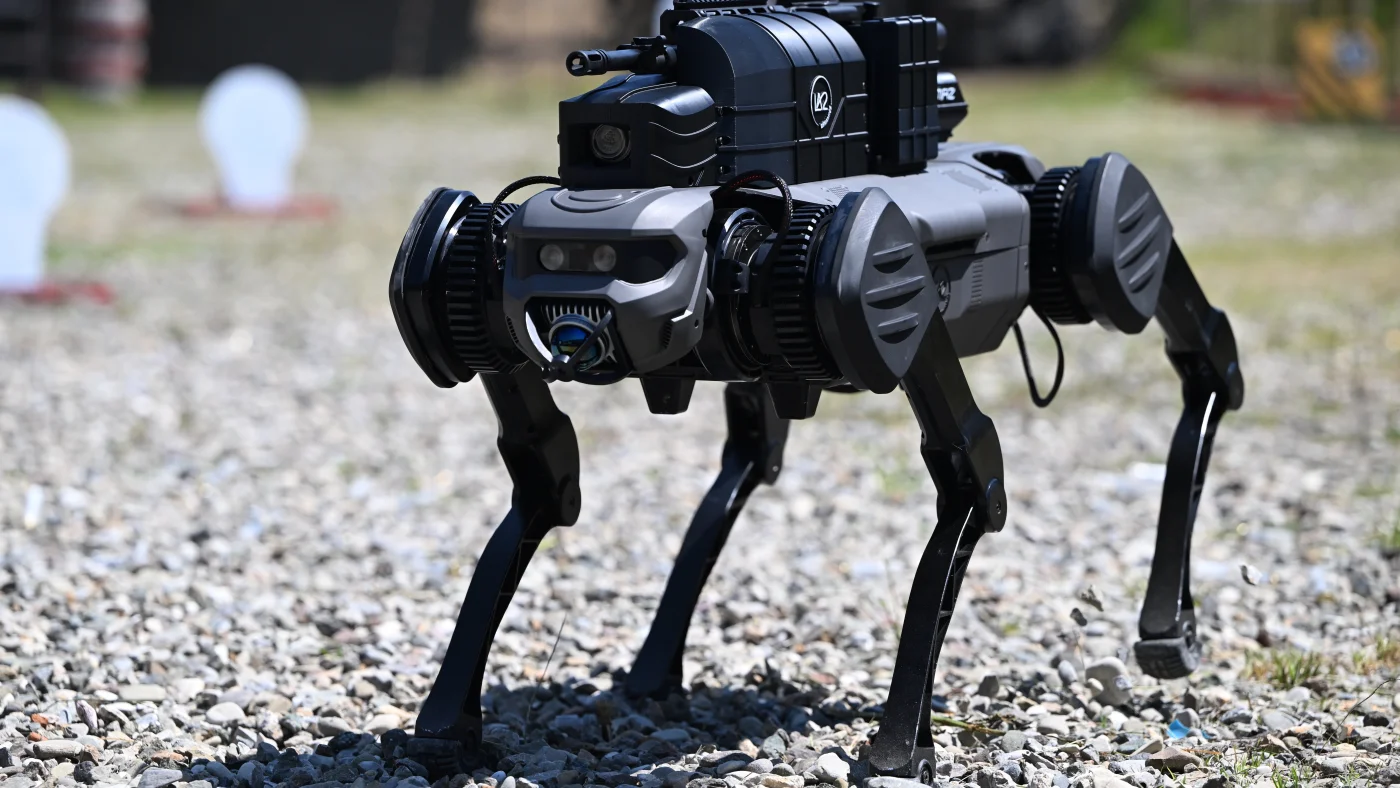
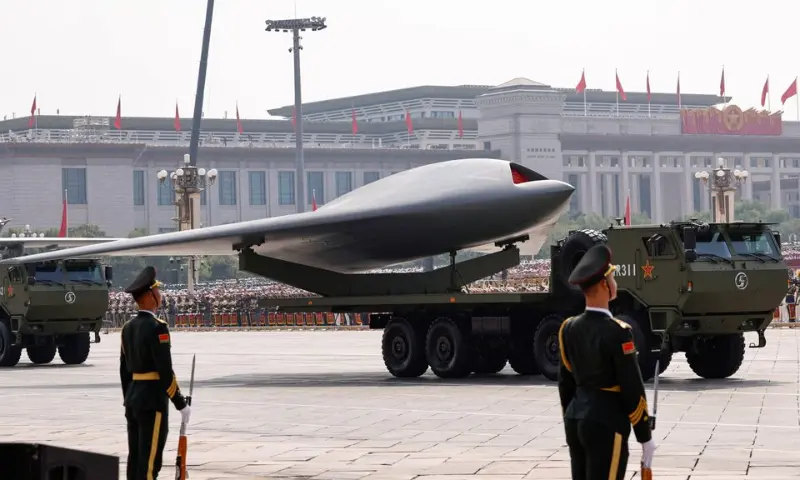
Countries will debate whether to start talks on binding rules for autonomous weapons systems – dubbed “killer robots” by critics – at the UN from Nov 16, as concerns grow about their increasing use on the battlefield.
2026-11-16 · The Straits Times
UN to debate rules for ‘killer robots’ · assertive framing

Claims (16 extracted, 1 hedged)

UN to debate rules for ‘killer robots’ AI generated asserted
UN → debate → robots
Countries will debate whether to start talks on binding rules for autonomous weapons systems – dubbed “killer robots” by critics – at the UN from Nov 16, as concerns grow about their increasing use on the battlefield. asserted
concerns → debate → battlefield
Warfare is undergoing a radical transformation as armies seek to capitalise on the boom in artificial intelligence to boost their fighting abilities by identifying and striking targets more quickly and more accurately. asserted
armies → undergo → targets
But a chorus of voices, from campaigners to UN chief Antonio Guterres and Pope Leo XIV, have warned against the dangers of handing the power of life and death to fully autonomous machines. asserted
chorus → warn → machines
“The need to regulate autonomous weapons has taken on new urgency” with developments in artificial intelligence, said Laurent Gisel, head of the Weapons and Conduct of Hostilities Unit at the International Committee of the Red Cross (ICRC). asserted
Gisel → regulate → Cross
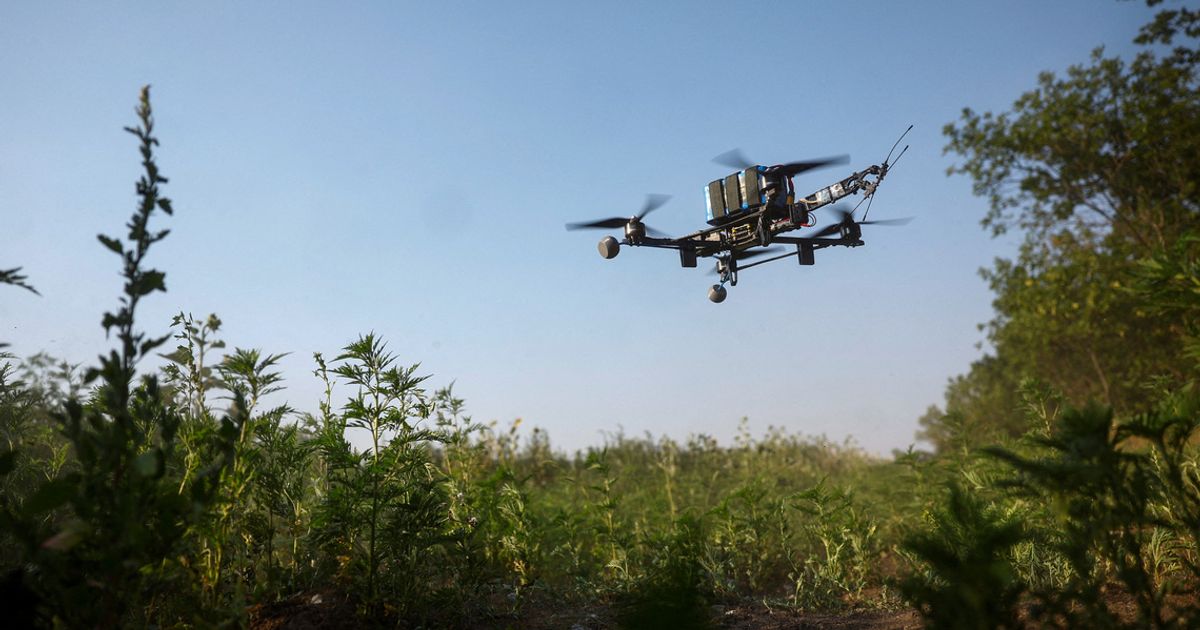
Russia has reportedly used fully autonomous drones to deadly effect in its war on Ukraine, while Ukraine’s own defence industry is pushing to develop autonomous “drone swarms”. uncertain
industry → use → swarms
Human Rights Watch said the meeting in Geneva this week of the UN’s Review Conference of the Convention on Conventional Weapons (CCW) would leave civilians “dangerously exposed” if it failed to act decisively. asserted
it → say → civilians
The meeting will bring together 128 countries to decide whether to open negotiations on legally binding rules. asserted
meeting → bring → rules
But while many states are in favour of tighter rules, as with other advanced military capabilities such as nuclear weapons, countries that have acquired the technology are reluctant to have their hands tied. asserted
hands → acquire → technology
At the UN General Assembly in October, 163 states adopted a resolution calling for negotiations on rules governing autonomous weapons. asserted
states → adopt → weapons
Five countries voted against – the United States, Russia, Belarus, Israel and North Korea, which last week boasted of a new AI-enabled torpedo system. asserted
which → vote → system
Nine abstained, including Iran, Saudi Arabia and China, which has maintained a “carefully cultivated ambiguity”, said Laure de Roucy-Rochegonde of the French Institute of International Relations. asserted
Rochegonde → abstain → Relations
Washington has proposed a five‑year process to develop a non‑binding instrument, while NGOs and the ICRC are advocating for a one‑year timeline. asserted
NGOs → propose → timeline
In 2023, Guterres and ICRC President Mirjana Spoljaric Egger called on states to ban autonomous weapons before 2026. asserted
Guterres → call → 2026
The ICRC is calling for a ban on two categories of autonomous weapons: so‑called “unpredictable autonomous weapons” and those designed or used to directly target humans. asserted
ICRC → call → humans
Given the opposition from leading international powers, observers say it looks unlikely agreement will be reached this week to start talks on binding rules. asserted
agreement → give → rules

Give feedback · no sign-in needed

No sign-in needed for now. Your note is sent without a name, so it cannot be answered.

History Support