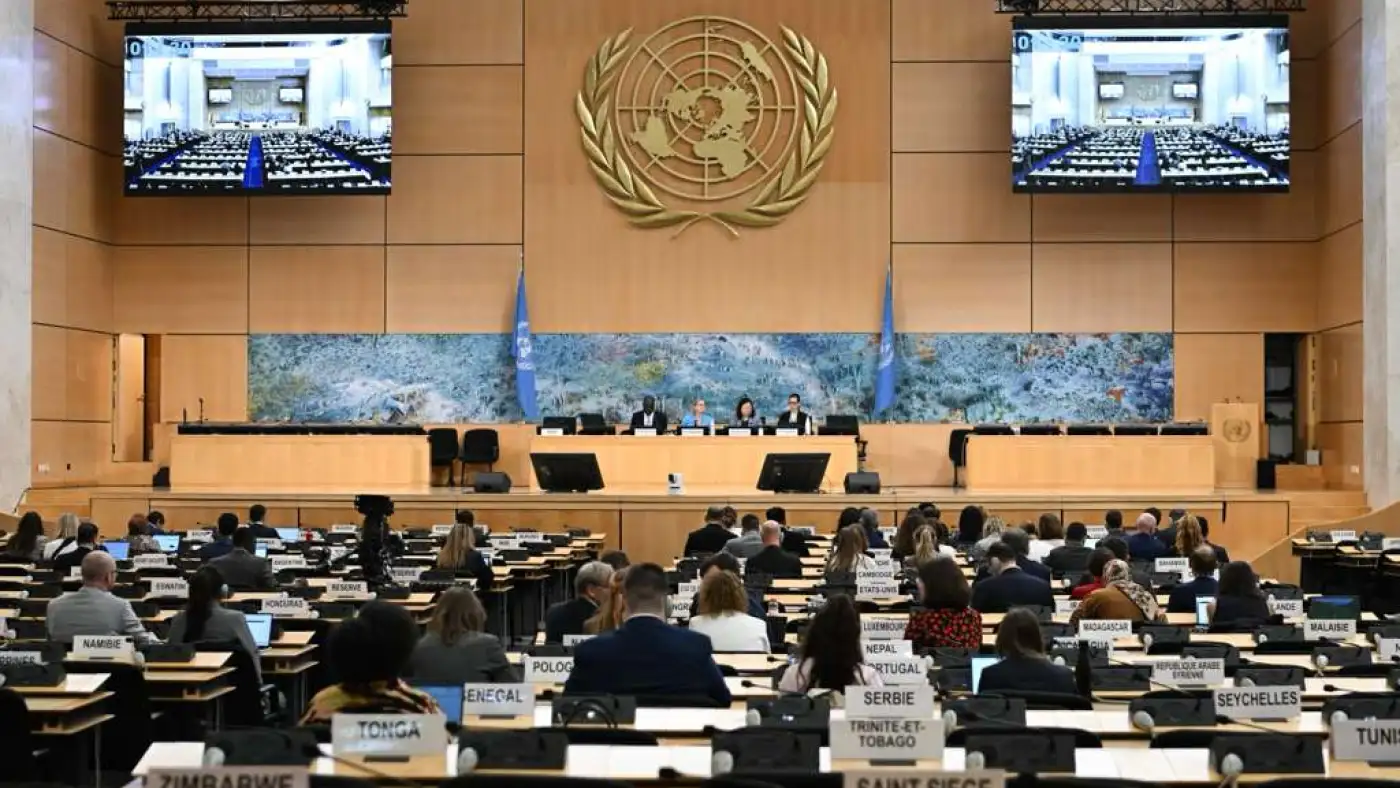
Photo via NPR

U.N. talks seek to rein in 'killer robots' as fears over AI weapons grow

Read the original at NPR ↗
Cite

Foulkes, I. (2026, November 16). U.N. talks seek to rein in 'killer robots' as fears over AI weapons grow. NPR. https://www.npr.org/2026/11/16/nx-s1-6042548/un-killer-robots-ai-weapons-drones

Dated from the outlet's own feed. Check the original for its byline.

NPR · collected 2026-11-16 · by Imogen Foulkes

Quick Summary

At the United Nations in Geneva, negotiations are ongoing to establish rules for lethal autonomous weapons, or 'killer robots.' Humanitarian groups and the International Committee of the Red Cross are advocating for legally binding regulations, citing concerns that autonomous weapons cannot uphold the Geneva Conventions, particularly the ability to distinguish between combatants and non-combatants. Countries like the United States, Russia, and Israel are resistant to such binding rules, while others including Ireland, Italy, and France support them.
Written by AI on 2026-11-16, from this article's own text only (the story summary below draws on all the coverage).
See how they differ ↓

AI analysis

Story summary

The United Nations-backed talks in Geneva concluded on November 21, 2026, without setting binding rules on lethal autonomous weapons (LAWs) like AI-powered drones. The conference, part of the Convention on Certain Conventional Weapons (CCW), extended discussions for two more years. Major military powers, including the United States and Russia, opposed immediate negotiations, citing concerns over restricting their technological advancements. Despite calls from organizations like the Future of Life Institute and the UN Secretary-General António Guterres for swift action, the conference produced only a softened agreement for further discussions, reflecting the global divide on regulating LAWs.

Written for “UN Talks on Killer Robots Stall” on 2026-11-22, grounded in this article and the 23 other(s) covering the same event.

How they differ

10 outlets covered “UN Talks on Killer Robots Stall”.

What each outlet says

One AI summary per outlet of its latest article on this story, written from that article alone and checked against it. Open the article for the outlet's own words.

NPRThis outlet16 Nov

At the United Nations in Geneva, negotiations are ongoing to establish rules for lethal autonomous weapons, or 'killer robots.' Humanitarian groups and the International Committee of the Red Cross are advocating for legally binding regulations, citing concerns that autonomous weapons cannot uphold the Geneva Conventions, particularly the ability to distinguish between combatants and non-combatants. Countries like…

U.N. talks seek to rein in 'killer robots' as fears over AI weapons grow (this article)3 articles from NPR on this story
The Straits Times21 Nov

At a UN meeting in Geneva ending on November 21, states agreed to further discussions on regulating weapons with autonomous capabilities, known as "killer robots," by 2028. While around 100 countries supported legally binding rules, opposition from major arms producers like the US and Russia led to a weaker agreement that does not guarantee such regulations will be legally binding. The talks, part of the Convention…

States agree to UN talks aiming to regulate 'killer robots' by 2028 →6 articles from The Straits Times on this story
Dawn21 Nov

At the United Nations’ Review Conference of the Convention on Conventional Weapons in Geneva, countries agreed after five days of negotiations to begin the process of creating an international agreement on lethal autonomous weapons systems, or “killer robots,” over the next two years. However, the decision was seen as insufficient by campaigners who had hoped for quicker and more definitive action, with many states…

Countries open path towards 'killer robots' pact →4 articles from Dawn on this story
CBC21 Nov

UN-backed talks on regulating AI in warfare concluded without a commitment to binding rules, as major military powers like the U.S. and Russia resisted such restrictions. The Convention on Certain Conventional Weapons meeting in Geneva saw over 100 countries participating, but the lack of consensus resulted in a softer agreement to elaborate on an accord by 2028. While some, including the UN Secretary General…

UN talks on AI in warfare end with no commitment to binding rules →2 articles from CBC on this story
Toronto Star21 Nov

At a U.N.-backed conference in Geneva, nations agreed to continue discussions on AI-powered killer robots and drones for two more years but failed to commit to firm rules as sought by the U.N. Secretary-General and activists. The week-long meeting concluded with an agreement to “elaborate” a potential accord by 2028, falling short of the binding regulations desired by many countries and human rights groups.

Nations at UN talks on AI killer robots agree to more talks but no firm commitment to rein them in →2 articles from Toronto Star on this story
The Hindu21 Nov

At a UN conference in Geneva ending November 21, 2026, states agreed to further discuss regulating autonomous weapons, or "killer robots," by 2028. However, despite support from about 100 countries, major arms producers like the U.S., Russia, and Israel blocked a legally binding agreement, leading to a weaker outcome that disappointed human rights groups. The meeting, part of the Convention on Certain Conventional…

States agree to UN talks aiming to regulate 'killer robots' by 2028 →2 articles from The Hindu on this story
Show 4 more outlets
Al Jazeera22 Nov

At a recent United Nations Convention on Certain Conventional Weapons (CCW) meeting in Switzerland, member states failed to agree on immediate regulations for autonomous weapon systems, commonly known as “killer robots.” Instead of adopting a legally binding treaty, they decided to work on elaborating potential regulations by 2028. Rights groups expressed disappointment with this outcome, highlighting concerns over…

Why have UN efforts to regulate ‘killer robots’ stalled? →2 articles from Al Jazeera on this story
The Independent21 Nov

At a recent United Nations meeting on regulating autonomous weapons, also known as "killer robots," nearly 100 countries supported swift action to develop legally binding rules, but major arms producers like the US, Russia, and Israel resisted, leading to a weaker agreement. The talks concluded with a pledge to continue discussions for two more years, aiming to develop new regulations by 2028, though it remains…

States seek to develop new rules to regulate ‘killer robots’ by 2028 →
The Guardian21 Nov

International talks at the UN’s Convention on Certain Conventional Weapons (CCW) in Geneva collapsed early in the morning after a week of negotiations failed to reach an agreement on a legally binding treaty to control autonomous weapons. The majority of participating states supported a binding treaty, but Russia's objections, alongside reluctance from other military powers like the US, led to the adoption of a…

International UN talks on controlling use of autonomous weapons collapse →
New York Post21 Nov

At a recent UN conference in Geneva, countries agreed to extend talks on AI-powered killer robots for two more years without setting binding rules, despite calls from UN Secretary-General António Guterres and activists for immediate action. The conference, which lasted a week, resulted in a vague commitment to possibly draft an accord by 2028 but fell short of concrete measures. Activists criticized major military…

Countries agree to extend UN talks on AI killer robots for two years in failure to set guardrails →

Where they agree and split

Agreed

Reported by outlets on both sides of the middle

The 128 member states of the Convention on Certain Conventional Weapons had been meeting since Monday as alarm grows over the use of lethal autonomous weapons systems in conflicts, including in Ukraine, Sudan and the Middle East.

4 outlets
The full story: what happened, how it changed, and all 24 articles →

Compared with similar articles

This article reads leans strongly left and hedges 7% of its claims. Each row says how that neighbour differs.
Toronto Star
Leans left further right than this Hedges 0 of 3 claims Outlet record 65/100
The Straits Times
Leans right further right than this Hedges 2 of 21 claims Outlet record 64/100
NPR
Leans left further right than this Hedges 1 of 17 claims Outlet record 60/100
Dawn
Leans strongly left Hedges 1 of 13 claims Outlet record 65/100
Dawn
Leans left further right than this Hedges 1 of 11 claims Outlet record 65/100
The Straits Times
Leans strongly left Hedges 1 of 16 claims Outlet record 64/100
NPR
Leans left further right than this Hedges 5 of 33 claims Outlet record 60/100
Dawn
Hedges 2 of 21 claims Outlet record 65/100
Toronto Star
Leans right further right than this Hedges 3 of 25 claims Outlet record 65/100
The Hindu
Leans left further right than this Hedges 3 of 23 claims Outlet record 78/100

Story

UN Talks on Killer Robots Stall
World · 24 article(s) covering the same event. Compare every outlet's account →
How this article was measured signals, leaning charts, publisher record, byline, topics and claims

Signals How these are calculated →

Claims extracted
30
sentences that state something as happening or true
Uncertain
7%
2 of 30 hedged ("reportedly", "may", "according to")
Leaning
Leans strongly left
of the writing, not the subject · beta estimate
Publisher signals
60/100
NPR's corrections and hedging, across everything collected from it. Not a measure of accuracy.
Outlets on this story
24
World
Same framing elsewhere
1
articles that frame the event the way this one does
Analyzed 2026-11-16 · how these are computed

How this is being covered How these are calculated →

Article leaning vs. publisher reliability
Source leaning vs. consistency

Publisher

NPR · 1392 article(s) · 5 correction(s) detected
Running correction rate · 5 correction(s)

Who wrote this

Imogen Foulkes
3 article(s) here · 1 carrying a prediction
After a week of negotiations that dragged on until the small hours of Saturday morning, a compromise emerged: countries would have two years to suggest regulations that could be legally binding, but could also be optional.
U.N. Secretary-General Antonio Guterres warned that allowing fully autonomous weapons to kill would be 'crossing a moral red line'.
Rights groups would like the U.N. to hold the review anyway, and take evidence about alleged violations in the U.S.
Also by Imogen Foulkes
Nothing else under this byline is closely related to this article, so these are simply their most recent.

Topics

GENEVA The Red Cross U.N. Ukraine the United Nations

Subjects

U.N. ORG · 5× GENEVA GPE · 4× The Red Cross ORG · 2× Washington GPE · 2× the United Nations ORG · 2× Antonio Guterres PERSON · 1× Gaza GPE · 1× Ukraine GPE · 1× Ukrainian NORP · 1× the International Committee of the Red Cross ORG · 1×

Narrative

Washington has imposed sweeping sanctions on the International Criminal Court, and just this weekend, Secretary of State Marco Rubio, in a keynote speech to the Federalist Society, warned against "quoting laws to men with swords."
framing: assertive · carried by 1 article(s) · first seen 2026-11-16
U.N. Secretary-General Antonio Guterres warned that allowing fully autonomous weapons to kill would be 'crossing a moral red line'.

Claims (30 extracted, 2 hedged)

U.N. talks seek to rein in 'killer robots' as fears over AI weapons grow GENEVA — asserted
fears → seek → weapons
Negotiations on possible rules for the use of lethal autonomous weapons, also known as 'killer robots' are underway at the United Nations in Geneva. asserted
Negotiations → know → Geneva
Supporters of controls on autonomous weapons say this week's U.N. conference on Certain Conventional Weapons (or CCW), which meets just once every five years, is the last best chance to agree rules before it is too late. asserted
it → say → rules
Warfare technology has advanced rapidly in the last few years, with some experts warning that the world is just months away from having weapons that can choose targets and make the decision to kill autonomously. asserted
that → advance → decision
In Ukraine and Gaza, AI-assisted weapons have already been used to take out targets, with Ukrainian civilians reporting being 'hunted' by drones as they shop or go to school. asserted
they → assist → school
But these are still controlled remotely by humans. asserted
these → control → humans
Humanitarian organizations say the decision to kill – and responsibility for that choice – must stay in human hands. asserted
decision → say → hands
, the United Nations, the International Committee of the Red Cross and the Pope have all called for legally binding rules. asserted
Nations → call → rules
U.N. Secretary-General Antonio Guterres warned that allowing fully autonomous weapons to kill would be 'crossing a moral red line'. asserted
weapons → warn → line
The Red Cross is especially worried that existing rules of war – the Geneva Conventions – cannot be fully respected by autonomous weapons. asserted
rules → exist → weapons
War is often chaotic and confusing, and the situation can change rapidly. asserted
situation → change → ?
Under the Conventions, soldiers who are wounded or in the process of surrendering can no longer be targeted. asserted
wounded → wound → process
Georgia Haines, a legal adviser with the Red Cross, worries that autonomous weapons will not be able to distinguish between a soldier who is still fighting, one who is wounded and one who wants to surrender. asserted
who → worry → soldier
The risk is that, based on the technology we are seeing, they are not able to understand in the same way that a human is the contextual signals. asserted
human → base → way
Meanwhile, human rights groups warn that the technology behind AI-assisted weapons is becoming increasingly cheap and easy to use. asserted
technology → warn → weapons
The more it is adopted by the military, the greater the danger of proliferation and its use by terrorist groups or law enforcement agencies in repressive regimes. asserted
it → adopt → regimes
In theory, a swarm of autonomous drones could be programmed to kill everyone wearing a red sweater, everyone carrying a poster or even everyone speaking a certain language. uncertain
swarm → program → language
Many of the countries now meeting in Geneva take such concerns very seriously. asserted
Many → meet → concerns
At least 50, including Ireland, Italy, Brazil, Mexico, France and Germany, are calling for a strict timetable to agree on binding rules governing autonomous weapons. asserted
50 → include → weapons
But among states that are already developing and using semi-autonomous weapons, there is pushback. asserted
that → develop → weapons
The United States, Russia and Israel have indicated they are set to oppose legally binding rules, with Washington proposing a five-year timetable to draft non-binding guidelines instead. asserted
Washington → indicate → guidelines
It did not ratify the Ottawa Convention on landmines, for example, although it did, over time, stop deploying them and reduce its stockpiles. asserted
it → ratify → stockpiles
Under President Trump, doubts about international law have grown. asserted
doubts → grow → law
Washington has imposed sweeping sanctions on the International Criminal Court, and just this weekend, Secretary of State Marco Rubio, in a keynote speech to the Federalist Society, warned against "quoting laws to men with swords." asserted
Rubio → impose → swords
The problem for states meeting in Geneva is that U.N. negotiations on limiting specific weapons are supposed to be conducted by consensus. asserted
negotiations → meet → consensus
This was achieved in 1995, when countries agreed to a ban on blinding lasers, but other agreements have proved elusive. asserted
agreements → achieve → lasers
With landmines, countries frustrated by the delay finally took negotiations outside the U.N. process to create the Ottawa Convention. asserted
countries → frustrate → Convention
This week, there may be a compromise: a longer or even open-ended negotiating period to come up with rules that individual states can adopt as binding or non-binding. uncertain
states → come → that
For diplomats supporting such a solution, it is a way to ensure at least some progress. asserted
it → support → progress
For campaigners, it is less than ideal, with one likening it to kicking a very dangerous can down the road. asserted
one → liken → road
Give feedback · no sign-in needed

No sign-in needed for now. Your note is sent without a name, so it cannot be answered.

History Support