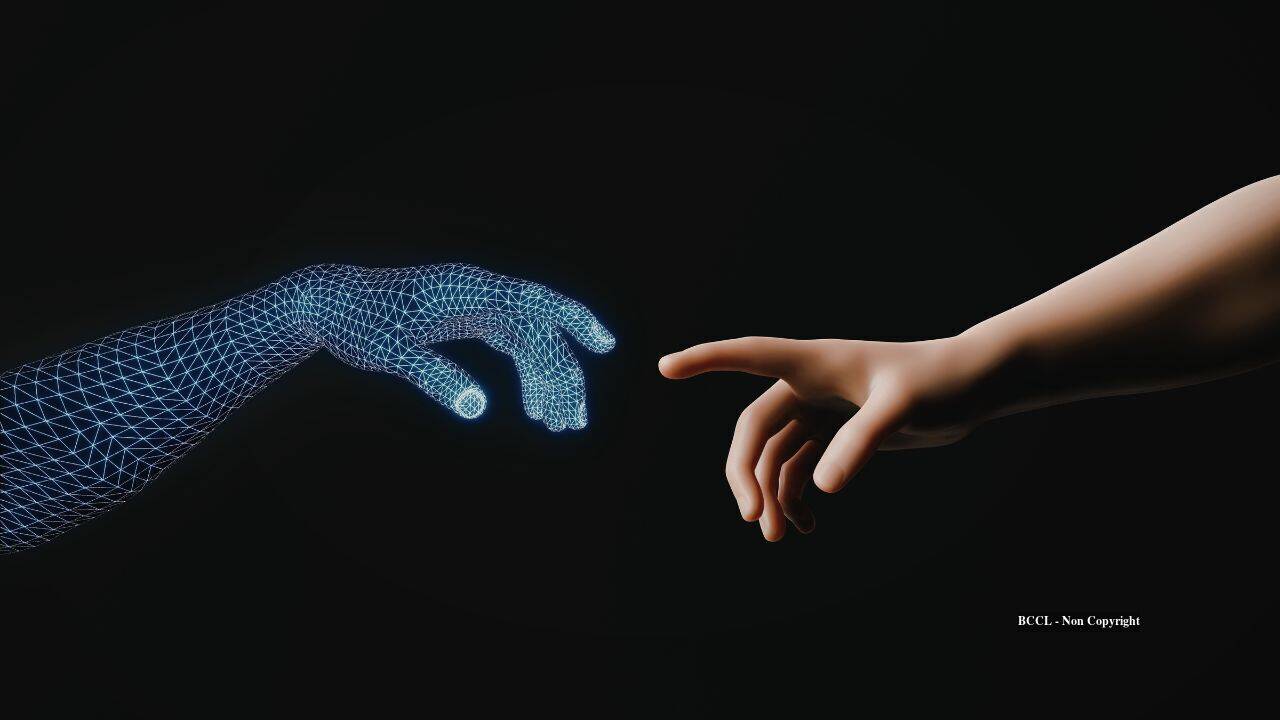
Photo via New York Post

Cambridge Dictionary chooses ‘human’ as word of the year in response to AI fears

Read the original at New York Post ↗
Cite

Associated Press. (2026, November 18). Cambridge Dictionary chooses ‘human’ as word of the year in response to AI fears. New York Post. https://nypost.com/2026/11/18/lifestyle/cambridge-dictionary-names-human-as-2026-word-of-the-year/

Dated from the outlet's own feed. Check the original for its byline.

New York Post · collected 2026-11-18 · by Associated Press

Quick Summary

Cambridge Dictionary selected “human” as its word of the year for 2026, reflecting growing concerns about artificial intelligence. According to lexicographer Colin McIntosh, the choice highlights how discussions about AI are prompting people to reconsider what it means to be human. The dictionary defines “human” as having qualities, faults, and feelings distinct from machines, emphasizing a cultural shift in response to AI’s increasing influence.
Written by AI on 2026-11-18, from this article's own text only (the story summary below draws on all the coverage).
See how they differ ↓

AI analysis

Story summary

The Cambridge Dictionary has named "human" its Word of the Year for 2026, defining it as having the "qualities, faults, and feelings that people have, as opposed to gods, animals, or machines." This choice reflects growing concerns about the impact of artificial intelligence on human identity and reliance on technology. The dictionary's chief editor, Colin McIntosh, stated that the increasing presence of AI makes it necessary to explicitly denote human qualities. The selection of "human" underscores a cultural shift where people are reconsidering the extent of their dependence on AI, with fears about losing human attributes in the process.

Written for “Cambridge Dictionary Chooses 'Human” on 2026-11-22, grounded in this article and the 10 other(s) covering the same event.

How they differ

11 outlets covered “Cambridge Dictionary Chooses 'Human”.

What each outlet says

One AI summary per outlet of its latest article on this story, written from that article alone and checked against it. Open the article for the outlet's own words.

New York PostThis outlet18 Nov

Cambridge Dictionary selected “human” as its word of the year for 2026, reflecting growing concerns about artificial intelligence. According to lexicographer Colin McIntosh, the choice highlights how discussions about AI are prompting people to reconsider what it means to be human. The dictionary defines “human” as having qualities, faults, and feelings distinct from machines, emphasizing a cultural shift in…

Cambridge Dictionary chooses ‘human’ as word of the year in response to AI fears (this article)
Evening Standard18 Nov

Cambridge Dictionary has named "human" as its Word of the Year, reflecting concerns about the impact of artificial intelligence on human life and the growing distinction people draw between human work and AI. The dictionary’s editor highlighted both the potential benefits and risks of AI, emphasizing the importance of careful integration to improve human lives. Other notable word contenders were "agent,"…

Cambridge Dictionary announces Word of the Year - and it’s link to AI →
The Straits Times18 Nov

Cambridge Dictionary named “human” as its Word of the Year for 2026, reflecting concerns about the impact of artificial intelligence on society. According to Francesca Woodward from Cambridge University Press, the choice highlights global discussions about human qualities and the changing understanding of what it means to be human in the age of AI. The selection was influenced by increased dictionary searches and…

‘Human’ is Cambridge Dictionary’s word of the year →
ABC News (AU)18 Nov

Cambridge Dictionary has named "human" as its Word of the Year, highlighting concerns about the influence of artificial intelligence and its impact on employment. Cambridge University Press board member Francesca Woodward notes that the word reflects people’s contemplation of what it means to be human in an era of rapid technological advancement. The dictionary also observed an increase in the use of "human" in…

Cambridge Dictionary names 'human' word of the year in rebuttal to AI →
CBC18 Nov

The Cambridge Dictionary selected "human" as its word of the year for 2026, responding to increasing concerns about artificial intelligence. This choice reflects how AI has prompted a renewed focus on human attributes and creations. The dictionary highlighted the word's use in phrases like "human-written" and "human-generated," emphasizing the value placed on uniquely human contributions in an AI-dominated world.

Would AI have come up with a better word of the year than the Cambridge Dictionary? →
Show 5 more outlets
Daily Mail18 Nov

Cambridge Dictionary has named 'human' as its Word of the Year for 2026, highlighting the renewed significance of the term as AI increasingly blurs the lines between people and machines. This choice reflects growing concerns and debates about uniquely human qualities in the age of advanced AI, with notable figures like Bill Gates and Geoffrey Hinton advocating for preserving human-centric roles and values.

Cambridge Dictionary names 'human' the Word of the Year 2026 - as AI 'blurs the boundaries between people and machines' →
The Guardian18 Nov

Cambridge Dictionary named "human" its word of the year for 2026, reflecting the growing importance of distinguishing natural human intelligence from artificial intelligence. The dictionary emphasized the word’s use to highlight human qualities, faults, and feelings in contrast to machines, amid debates about AI consciousness and its impact on human reliance and identity. Colin McIntosh, a dictionary editor, noted…

‘Human’ wins Cambridge dictionary’s word of the year →
Times of India18 Nov

Cambridge Dictionary named 'human' its Word of the Year for 2026, reflecting the growing importance of human qualities in a world dominated by artificial intelligence. The selection highlights how the rise of AI has led to a renewed appreciation of human creativity, emotion, and connection. Cambridge Dictionary’s chief editor, Colin McIntosh, noted that this year saw a significant re-evaluation of what it means to…

'Human': Cambridge’s 'word of the year' is a counterbalance to AI →
BBC18 Nov

Cambridge Dictionary named "Human" as its Word of the Year, defining it as having qualities, faults, and feelings that distinguish people from gods, animals, or machines. Chief editor Colin McIntosh explained that the rise of AI necessitates emphasizing human qualities. Examples include actors challenging AI's impact on creativity and tech leaders discussing the importance of AI improving human lives. The word's…

'Human' is Cambridge Dictionary Word of the Year →
NPR21 Nov

This article is a perspective piece discussing the Cambridge Dictionary's choice of "human" as the Word of the Year for 2026. The author contrasts human attributes, such as responsibility, the pursuit of joy, and emotional complexity, with the limitations of artificial intelligence. The piece emphasizes the importance of recognizing human qualities in an increasingly tech-driven world.

Perspective: Defining 'human' →

Where they agree and split

Framing

How the first headlines put it

Attributed to a source1
Stated as fact9
The headlines (10)

Cambridge Dictionary announces Word of the Year - and it’s link to AI Evening Standard · attributed to a source

‘Human’ is Cambridge Dictionary’s word of the year The Straits Times · stated as fact

Cambridge Dictionary chooses 'human' as word of the year in response to AI fears Toronto Star · stated as fact

Cambridge Dictionary names 'human' word of the year in rebuttal to AI ABC News (Australia) · stated as fact

Would AI have come up with a better word of the year than the Cambridge Dictionary? CBC · stated as fact

Cambridge Dictionary names 'human' the Word of the Year 2026 - as AI 'blurs the boundaries between people and machines' Daily Mail · stated as fact

‘Human’ wins Cambridge dictionary’s word of the year The Guardian · stated as fact

'Human': Cambridge’s 'word of the year' is a counterbalance to AI Times of India · stated as fact

Cambridge Dictionary chooses ‘human’ as word of the year in response to AI fears New York Post · stated as fact

'Human' is Cambridge Dictionary Word of the Year BBC · stated as fact

The full story: what happened, how it changed, and all 11 articles →

Compared with similar articles

This article reads unscored and hedges 9% of its claims. Each row says how that neighbour differs.
Toronto Star
Hedges 0 of 2 claims Outlet record 65/100
The Straits Times
Hedges 2 of 18 claims Outlet record 64/100
Daily Mail
Leans strongly left Hedges 4 of 35 claims Outlet record 69/100
ABC News (AU)
Hedges 2 of 24 claims Outlet record 67/100
Times of India
Leans left Hedges 1 of 14 claims Outlet record 59/100
CBC News
Hedges 0 of 10 claims Outlet record 60/100
The Guardian
Leans right Hedges 1 of 15 claims Outlet record 64/100
Evening Standard
Hedges 2 of 8 claims Outlet record 64/100
BBC News
Hedges 3 of 22 claims Outlet record 65/100
NPR
Leans strongly left Hedges 3 of 18 claims Outlet record 60/100

Story

Cambridge Dictionary Chooses 'Human
Technology · 11 article(s) covering the same event. Compare every outlet's account →
How this article was measured signals, leaning charts, publisher record, byline, topics and claims

Signals How these are calculated →

Claims extracted
11
sentences that state something as happening or true
Uncertain
9%
1 of 11 hedged ("reportedly", "may", "according to")
Leaning
not political
takes no side on a contested political question
Publisher signals
66/100
New York Post's corrections and hedging, across everything collected from it. Not a measure of accuracy.
Outlets on this story
11
Technology
Same framing elsewhere
1
articles that frame the event the way this one does
Analyzed 2026-11-18 · how these are computed

How this is being covered How these are calculated →

Article leaning vs. publisher reliability
Source leaning vs. consistency

Publisher

New York Post · 21951 article(s) · 42 correction(s) detected
Running correction rate · 42 correction(s)

Who wrote this

Associated Press
820 article(s) here · 1 carrying a prediction
Advertisement Before the meeting, seven countries proposed launching negotiations on a rulebook that could prevent or limit the ability of machines to kill without human control or accountability.
NATO Secretary-General Mark Rutte, speaking to reporters in Warsaw on Saturday, called the airspace violation “dangerous” and said all allies stood “in full solidarity with Poland.” “NATO will defend every inch of Polish territory,” Rutte said.
If they fail to comply, the White House warns, their contracts could be terminated and their future work with the federal government suspended.
The US district court judge Hector Gonzalez said in a written ruling that agents may have made a procedural error in serving an arrest warrant on Oscar Belgal before he was given a notice to appear in immigration court.
Peru’s Geophysical Institute and Abdel Vega, the mayor of Carhuamayo near the epicenter, said there were no reports of victims or material damage.
2026-11-21 · assertive framing · Magnitude 6.7 earthquake shakes Peru’s Andes
MLB’s five-year collective bargaining agreement expires at 11:59 p.m. EST on Dec. 1 and management is expected to immediately lock out players in the sport’s 10th work stoppage since 1972.
Agrochemical maker Bayer will pay up to $7.25 billion over two decades to resolve thousands of claims from U.S. cancer patients asserting the company should have warned people that its popular weed killer Roundup could cause lymphoma, according to a settlement approved Friday by a Missouri judge.
The fourth-round pick from Clemson would make his first NFL start if Smith can’t go, but that doesn't appear to be the case this week.
The legislation’s sweeping changes would shorten the timeline to start big energy projects and make sure data centers pay for the energy they use. Anger over data centers and rising electricity prices helped usher in a wave of Democrats pledging to clamp down on the energy-hungry behemoths. Advertisement The 62-33 vote is the first major action by Congress since midterm elections that soundly repudiated President Trump and congressional Republicans.
Advertisement Led by France and the United Kingdom, the multinational force is a non-NATO military initiative of the so-called Coalition of the Willing, a wider political group of 37 nations supporting Ukraine.
Wire or desk byline, not an individual reporter.
Also by Associated Press
Nothing else under this byline is closely related to this article, so these are simply their most recent.
All 820 articles by Associated Press →

Topics

Associated Press Cambridge Cambridge Dictionary Latin the Cambridge Dictionary

Subjects

Cambridge GPE · 2× Cambridge Dictionary ORG · 2× Associated Press ORG · 1× Colin McIntosh PERSON · 1× Collins PERSON · 1× Collins Dictionary ORG · 1× Latin NORP · 1× Merriam-Webster ORG · 1× Microsoft ORG · 1× the Cambridge Dictionary ORG · 1×

Narrative

Merriam-Webster last year named “slop” its word of the year for low quality content produced by AI while Collins went with “vibe coding” for the AI-assisted software development method. “AI is making us think harder about what it means to be human,” Microsoft co-founder Bill Gates, who has promoted the smart use of AI, said in a comment on the Cambridge Dictionary selection.
framing: assertive · carried by 1 article(s) · first seen 2026-11-18
“Fears about what humans may lose when we outsource our thinking have made us reconsider the extent to which we rely on AI: from top mathematicians to teachers of young children.”

Claims (11 extracted, 1 hedged)

Cambridge Dictionary chooses ‘human’ as word of the year in response to AI fears By asserted
Dictionary → choose → fears
Fears of artificial intelligence inspired the Cambridge Dictionary to flip back to the 15th century for the word that best captures the 2026 cultural zeitgeist. asserted
that → inspire → zeitgeist
“Human,” the dictionary’s word of the year, is not just a throwback but also a backlash of sorts that reflects the debate over how AI has blurred the lines between machines and people. asserted
AI → reflect → machines
“AI is changing how we talk about being human,” said Colin McIntosh, the dictionary’s lexicographer. asserted
McIntosh → change → ?
“Fears about what humans may lose when we outsource our thinking have made us reconsider the extent to which we rely on AI: from top mathematicians to teachers of young children.” uncertain
we → lose → children
Advertisement The adjective derived from the Latin “humanus” and in use since the 1450s is defined by Cambridge as “having the qualities, faults and feelings that people have, as opposed to gods, animals or machines.” asserted
people → derive → gods
Artificial intelligence has factored heavily in Word of the Year distinctions across several dictionaries in recent years. asserted
intelligence → factor → years
Advertisement “AI” itself was chosen by Collins Dictionary in 2023 — a year when Cambridge picked “hallucinate,” in reference to the tendency of AI to fabricate information. asserted
Cambridge → choose → information
Merriam-Webster last year named “slop” its word of the year for low quality content produced by AI while Collins went with “vibe coding” for the AI-assisted software development method. “AI is making us think harder about what it means to be human,” Microsoft co-founder Bill Gates, who has promoted the smart use of AI, said in a comment on the Cambridge Dictionary selection. asserted
who → name → selection
Advertisement “The measure of AI’s success should be how much it improves human lives.” asserted
it → improve → lives
Other word contenders for 2026 included “agent,” for an AI system that can make decisions and operate without human control and “analogue,” for experiences or objects not involving the internet or digital technology. asserted
that → include → internet
Give feedback · no sign-in needed

No sign-in needed for now. Your note is sent without a name, so it cannot be answered.

History Support