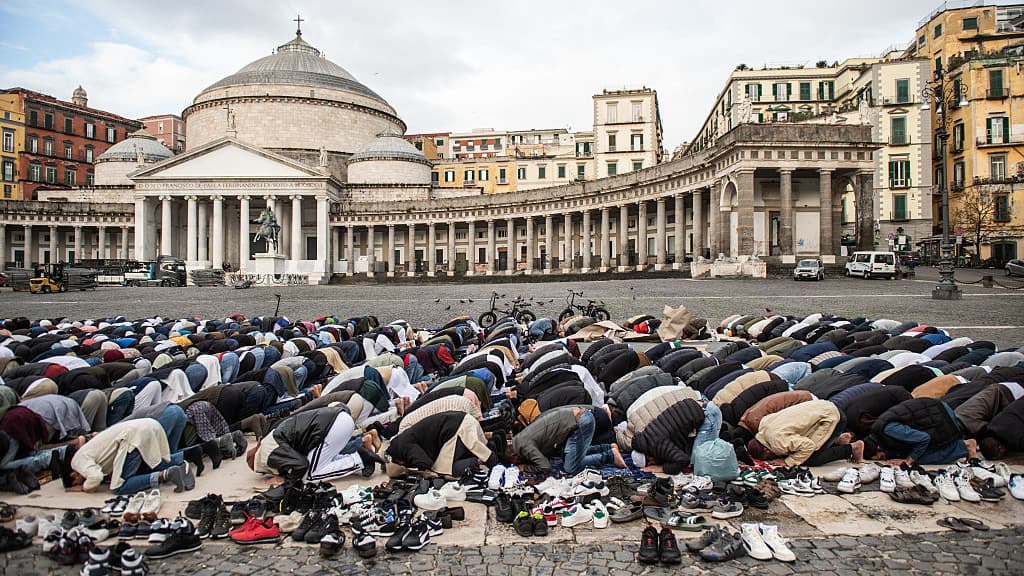
Photo via The Hindu

Muslims to outnumber Christians by 2035 worldwide: Pew research

Read the original at The Hindu ↗
Cite

Muslims to outnumber Christians by 2035 worldwide: Pew research. (2026, November 19). The Hindu. https://www.thehindu.com/news/international/muslims-to-outnumber-christians-by-2035-worldwide-pew-research/article71718507.ece

Dated from the outlet's own feed. Check the original for its byline.

The Hindu · collected 2026-11-19 · by PTI

Quick Summary

Pew Research Center projects that Islam will surpass Christianity as the world's largest religion by 2035, with Muslims expected to number over 3.6 billion and Christians just under three billion by 2070. The study attributes this shift to higher fertility rates among Muslims and Christians compared to other religious groups, with the Muslim fertility rate at 3.1 children per woman and Christians at 2.5, while other groups average 1.6. The projections also indicate that India's Hindu population will grow but shrink slightly as a percentage of the global population, while Muslims in India will increase from 15.2% to 19.6% by 2070.
Written by AI on 2026-11-20, from this article's own text only (the story summary below draws on all the coverage).
See how they differ ↓

AI analysis

Story summary

According to a new Pew Research Center study released on November 18, 2026, Islam is projected to become the world's largest religion by 2035, surpassing Christianity. The report predicts that Muslims will number over 3.6 billion by 2035, while Christians will number just under 3 billion. The shift is largely due to higher birth rates among Muslims and a combination of Christian disaffiliation and deaths exceeding births in older Christian populations. The United States, which had the largest Christian population in 2020, is expected to see a significant decline, with the number of Christians falling from about 217 million to 174 million by 2070. Other factors contributing to the change include migration patterns and religious switching.

Written for “Islam Projected To Overtake Christianity” on 2026-11-22, grounded in this article and the 11 other(s) covering the same event.

How they differ

11 outlets covered “Islam Projected To Overtake Christianity”.

What each outlet says

One AI summary per outlet of its latest article on this story, written from that article alone and checked against it. Open the article for the outlet's own words.

The HinduThis outlet19 Nov

Pew Research Center projects that Islam will surpass Christianity as the world's largest religion by 2035, with Muslims expected to number over 3.6 billion and Christians just under three billion by 2070. The study attributes this shift to higher fertility rates among Muslims and Christians compared to other religious groups, with the Muslim fertility rate at 3.1 children per woman and Christians at 2.5, while other…

Muslims to outnumber Christians by 2035 worldwide: Pew research (this article)
Dawn21 Nov

Pew Research Centre projects that by 2035, Muslims will outnumber Christians globally, with 3.6 billion Muslims and 3 billion Christians by 2070. Pakistan is expected to have the largest Muslim population by 2070, surpassing Indonesia. However, the report highlights challenges such as high youth unemployment and population growth in Pakistan, coupled with rising Islamophobia in Europe and the US, which could…

Muslim populations →2 articles from Dawn on this story
Times of India18 Nov

A new Pew Research Center study projects that the United States will lose its Christian majority by 2070, with Christians declining from about 217 million in 2020 to 174 million in 2070, while the number of religiously unaffiliated individuals is expected to rise to 41% of the population. The study attributes this shift primarily to demographic trends such as religious switching and differing age distributions, with…

US will not have a Christian majority by 2027: Pew study →
The Daily Wire18 Nov

Pew Research Center projects that by 2035, Islam will become the world’s largest religion, surpassing Christianity due to higher Muslim birth rates and lower rates of religious switching. Between 2020 and 2025, the Muslim fertility rate was 3.1 children per woman, compared to 2.5 for Christians. By 2070, Muslims are expected to gain 1.6 billion people through natural population change, while Christians will see an…

Islam Projected To Overtake Christianity As World’s Largest Religion →
Washington Free Beacon19 Nov

Pew Research Center predicts that Islam will surpass Christianity as the world's largest religion by 2035, with Muslims outnumbering Christians by over 600 million by 2070. In the United States, Christians are projected to decline to less than half of the population by 2070, while religiously unaffiliated individuals will rise to about 41%. The report attributes these changes to higher fertility rates among Muslims…

Islam Will Overtake Christianity by 2035 as World's Largest Religion, New Pew Survey Predicts →
NPR19 Nov

A new report by the Pew Research Center projects that Muslims will outnumber Christians globally by 2035. The report, released today, predicts the world's Muslim population to reach 3.6 billion by 2070, while Christians will number just under 3 billion. These projections are based on demographic trends, including fertility rates and religious switching patterns, using data from national censuses, United Nations…

Muslims will outnumber Christians worldwide by 2035, report says →
Show 5 more outlets
Reason19 Nov

Pew Research Center released a report predicting religious trends in the United States from 2020 to 2070. The study forecasts a decline in Christianity to less than half of the U.S. population by 2070, with religiously unaffiliated people increasing to about 41%, and Jews being outnumbered by Muslims and Hindus. Additionally, the report projects that Israel will house 62% of the global Jewish population by 2070, up…

The Pew Research Center Report on Future of World Religions →
Daily Mail19 Nov

Pew Research Center projects that Muslims will outnumber Christians globally by 2035, with 2.57 billion Muslims compared to 2.52 billion Christians. By 2070, the Muslim population is expected to reach 3.6 billion, while Christians will number just under three billion. The growth is primarily due to higher fertility rates among Muslims, with a rate of 3.1 children per woman from 2020 to 2025, compared to 2.5 for…

Muslims will outnumber Christians by 2035 and see an 80% surge in population by 2070 →
Euronews20 Nov

Pew Research Center projects that both Islam and Christianity will grow significantly by 2070, with Islam becoming the world’s largest religion by 2035. The number of Muslims is expected to rise by over 80% to 3.6 billion, surpassing Christians by around 50 million people. Christianity is projected to grow by 30% to nearly 3 billion, but its share of the global population will remain stable at around 29%. The study…

Islam to become world's largest religion by 2035 as Christianity also grows, study says →
Al Jazeera20 Nov

Pew Research Center projects that Muslims will outnumber Christians globally by 2035, with the Muslim population expected to rise from 2.02 billion to 3.64 billion by 2070, marking an 80% increase. This growth is primarily driven by higher birth rates among Muslim women, who had an average of 3.1 children between 2020 and 2025. By 2070, most of the growth will occur in Muslim-majority countries, with Pakistan…

Islam set to be the largest religion by 2035: Where will most Muslims live? →
Time20 Nov

Pew Research Center projects that Muslims will become the world’s largest religious group by 2035, surpassing Christians. By 2070, Muslims are expected to number 3.64 billion, compared to 2.96 billion Christians. This shift is driven primarily by higher fertility rates among Muslims, with Muslim women averaging 3.1 children versus 2.5 for Christians. The study attributes these demographic changes to factors…

Muslims Are Projected to Become the World’s Largest Religious Group by 2035, Surpassing Christians. Here’s Why →

Where they agree and split

Agreed

Reported by outlets on both sides of the middle

Although Hindus and Jews are growing in absolute numbers, they are projected to decline as a percentage of the global population, the think-tank said.

6 outlets
Show 3 more

One of the more surprising projections is that while the percentage of people who identify as having no religious affiliation will increase in many countries, the global population of "nones" is expected to drop.

5 outlets

Higher fertility and rising life expectancy in the region are expected to increase the numbers of both religious groups.

4 outlets

The average fertility rate for all other women was 1.6, below the level of 2.1 that’s considered necessary for each generation to replace itself.

4 outlets

Framing

How the first headlines put it

Stated as fact2
The headlines (2)

US will not have a Christian majority by 2027: Pew study Times of India · stated as fact

Islam Projected To Overtake Christianity As World’s Largest Religion The Daily Wire · stated as fact

The full story: what happened, how it changed, and all 12 articles →

Compared with similar articles

This article reads unscored and hedges 12% of its claims. Each row says how that neighbour differs.
Al Jazeera
Hedges 2 of 21 claims Outlet record 60/100
NPR
Hedges 4 of 31 claims Outlet record 60/100
Euronews
Hedges 2 of 34 claims Outlet record 60/100
Dawn
Hedges 2 of 17 claims Outlet record 65/100
freebeacon
Hedges 3 of 39 claims Outlet record 95/100
The Daily Wire
Hedges 4 of 21 claims Outlet record 60/100
Daily Mail
Hedges 7 of 47 claims Outlet record 69/100
Muslim populations Same event
Dawn
Leans right Hedges 4 of 35 claims Outlet record 65/100
Reason
Leans strongly right Hedges 0 of 15 claims Outlet record 67/100
“While both articles report on the Pew Research Center's religious trends, Article A focuses on the U.S. religious landscape, while Article B focuses on global religious trends, particularly the comparison between Muslims and Christians worldwide.”

Story

Islam Projected To Overtake Christianity
World · 12 article(s) covering the same event. Compare every outlet's account →
How this article was measured signals, leaning charts, publisher record, byline, topics and claims

Signals How these are calculated →

Claims extracted
25
sentences that state something as happening or true
Uncertain
12%
3 of 25 hedged ("reportedly", "may", "according to")
Leaning
not political
takes no side on a contested political question
Publisher signals
78/100
The Hindu's corrections and hedging, across everything collected from it. Not a measure of accuracy.
Outlets on this story
12
World
Same framing elsewhere
1
articles that frame the event the way this one does
Analyzed 2026-11-20 · how these are computed

How this is being covered How these are calculated →

Article leaning vs. publisher reliability
Source leaning vs. consistency

Publisher

The Hindu · 1470 article(s) · 2 correction(s) detected
Running correction rate · 2 correction(s)

Who wrote this

No reporter is named on this article, beyond the feed's “ PTI”.

Topics

Christians Hindus India Muslims Pew

Subjects

India GPE · 10× Pew ORG · 7× Hindus NORP · 6× Christians NORP · 5× Muslims NORP · 5× the United States GPE · 3× Hindu NORP · 2× Islam ORG · 2× Muslim NORP · 2× Pakistan GPE · 2×

Narrative

It forecasts that Buddhists will shrink both in number and as a share of the world's population, partly due to expected declines in the overall populations of China, South Korea, and Japan.
framing: assertive · carried by 1 article(s) · first seen 2026-11-20
Islam is projected to be the world's largest religion by 2035, surpassing Christianity, according to a new study released by the Pew Research Centre on Wednesday (November 18, 2026).
2026-11-20 · The Hindu
Muslims to outnumber Christians by 2035 worldwide: Pew research · assertive framing

Claims (25 extracted, 3 hedged)

Islam is projected to be the world's largest religion by 2035, surpassing Christianity, according to a new study released by the Pew Research Centre on Wednesday (November 18, 2026). uncertain
Islam → project → Wednesday
Pew said if current trends continue, there will be more than 3.6 billion Muslims and just under three billion Christians worldwide by 2070. asserted
trends → say → 2070
The absolute number of Hindus in India and worldwide will rise from 1.2 billion in 2020 to 1.4 billion by 2070. asserted
number → rise → 2070
But the rest of the world's population -- all non-Hindus -- will grow at an even faster rate. asserted
Hindus → grow → rate
As a result, Hindus will shrink slightly as a share of the global population, falling from 15% in 2020 to 14% in 2070. asserted
Hindus → shrink → 2070
The world's total population is projected to increase by 29% between 2020 and 2070, with Christians growing by 30% and Muslims by 80%. asserted
Christians → project → %
"The largest source of new members of major religions is not adults who convert to the faith, but babies who are born into the group," the Pew projections found. asserted
projections → convert → group
During 2020-2025, the fertility rate for Muslims was 3.1 children per woman, followed by the rate for Christians at 2.5, Pew said. asserted
Pew → follow → 2.5
The average fertility rate for all other women was 1.6, below the 2.1 level considered necessary for each generation to replace itself. asserted
generation → consider → itself
If current demographic trends continue, the number of Hindus in India will increase by 176 million between 2020 and 2070. asserted
number → continue → 2020
While India's overall fertility rate has fallen rapidly in recent decades, Muslims in India still have more children per woman than Hindus do, the Pew Research found. asserted
Research → fall → woman
As per the Pew projections, Hindus comprise 79.4% of India's religious composition in 2020 and the number is set to slide to 75.8% by 2070. asserted
number → comprise → 2070
Also read: In 2050, India’s Muslim population will be largest globally Muslims comprise 15.2% of India's religious composition in 2020, and that share is set to rise to 19.6% by 2070. asserted
share → read → 2070
Outside India, much of the projected growth among Hindus will come from Pakistan (over five million) and the United States (over four million). asserted
much → project → million
According to the Pew projections, the U.S. will have the world's fifth-largest Hindu population. uncertain
U.S. → accord → population
Nepal and India will remain the only two countries with a Hindu majority. asserted
Nepal → remain → majority
It forecasts that Buddhists will shrink both in number and as a share of the world's population, partly due to expected declines in the overall populations of China, South Korea, and Japan. asserted
Buddhists → forecast → China
If recent trends continue, by 2070 more than half of the world's Christians will live in sub-Saharan Africa. asserted
half → continue → Africa
The Democratic Republic of the Congo will surpass the United States as the country with the largest Christian population. asserted
Republic → surpass → population
The United States will no longer have a Christian majority, though Christians will remain the biggest religious group in the country. asserted
Christians → have → country
Pakistan will have the largest Muslim population, followed by India, Nigeria and Indonesia, which currently has the most adherents to Islam. asserted
which → have → Islam
Many countries have seen a steady proliferation of the "nones" -- people who are atheist, agnostic or religiously unaffiliated. asserted
who → see → nones
Excluding China, which has a high proportion of "nones" but faces a sharp population decline, Pew said the ranks of "nones" elsewhere will grow by more than 180 million by 2070. asserted
ranks → exclude → 2070
The "nones" already account for a majority of the population in 10 countries, including the Czech Republic, Japan, the Netherlands, New Zealand, Uruguay and Vietnam, according to Pew. uncertain
nones → account → Pew
South Korea, France and the United Kingdom are forecast to join this group by 2070. asserted
Korea → forecast → 2070
Give feedback · no sign-in needed

No sign-in needed for now. Your note is sent without a name, so it cannot be answered.

History Support