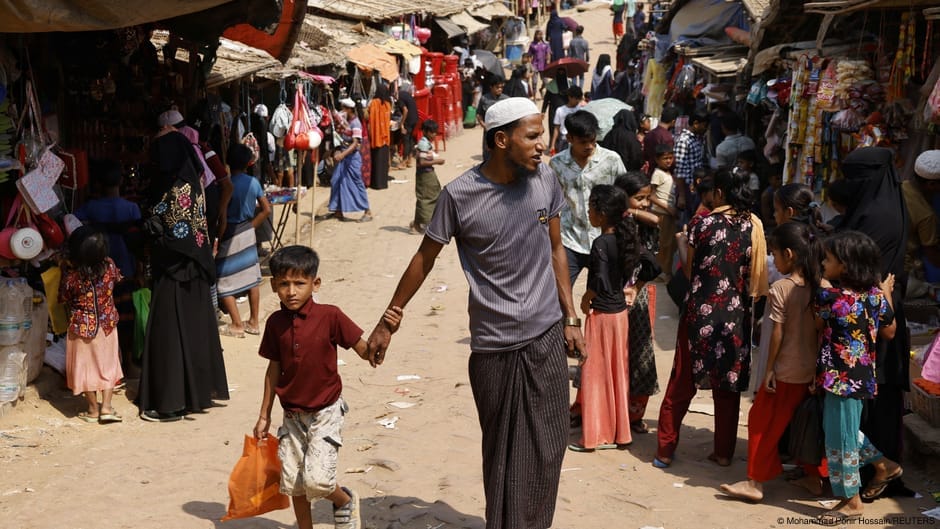
Photo via Al Jazeera

The Gambia stood up for the Rohingya, now the world must act

Read the original at Al Jazeera ↗
Cite

Njai, F., & Ceesay, A. (2026, November 20). The Gambia stood up for the Rohingya, now the world must act. Al Jazeera. https://www.aljazeera.com/opinions/2026/11/20/the-gambia-stood-up-for-the-rohingya-now-the-world-must-act?traffic_source=rss

Dated from the outlet's own feed. Check the original for its byline.

Al Jazeera · collected 2026-11-20 · by Fatoumatta Njai, Abdoulie Ceesay
Content note This article describes sexual violence.

Quick Summary

The Gambia, a small nation with limited resources, brought a case against Myanmar at the International Court of Justice in 2019, accusing it of genocide against the Rohingya people. The court recently ruled in favor of The Gambia, confirming that Myanmar committed genocide, a decision based on the systematic denial of basic human rights and the violence against the Rohingya that led to over 700,000 fleeing to Bangladesh. This legal action by The Gambia highlights the moral imperative to uphold human rights and prevent genocide, even in the absence of direct national interest or connection to the affected population.
Written by AI on 2026-11-20, from this article's own text only (the story summary below draws on all the coverage).
See how they differ ↓

AI analysis

Story summary

The International Court of Justice (ICJ) ruled on November 20, 2026, that Myanmar committed genocide against its Rohingya minority. This landmark judgment, seven years in the making, was brought by The Gambia in 2019. The ruling could intensify international pressure on Myanmar’s military leader, Min Aung Hlaing, who led the 2016-2017 attacks against the Rohingya and later overthrew the elected government of Aung San Suu Kyi in 2021, triggering a civil war that has left tens of thousands dead. The decision may also bolster other genocide cases, such as South Africa's case against Israel over the Gaza war.

Written for “Myanmar Genocide Ruling Implications” on 2026-11-21, grounded in this article and the 49 other(s) covering the same event.

How they differ

20 outlets covered “Myanmar Genocide Ruling Implications”.

What each outlet says

One AI summary per outlet of its latest article on this story, written from that article alone and checked against it. Open the article for the outlet's own words.

Al JazeeraThis outlet20 Nov

The Gambia, a small nation with limited resources, brought a case against Myanmar at the International Court of Justice in 2019, accusing it of genocide against the Rohingya people. The court recently ruled in favor of The Gambia, confirming that Myanmar committed genocide, a decision based on the systematic denial of basic human rights and the violence against the Rohingya that led to over 700,000 fleeing to…

The Gambia stood up for the Rohingya, now the world must act (this article)12 articles from Al Jazeera on this story
The Guardian20 Nov

The International Court of Justice (ICJ) ruled that Myanmar committed genocide against the Rohingya minority, a decision that has sparked mixed reactions from global powers. The EU praised the ruling as "landmark," while the US took a cautious stance, emphasizing the need to avoid politicizing the court. China, a supporter of Myanmar’s military regime, expressed concerns over judicial overreach and urged caution in…

US reacts cautiously to Myanmar genocide ruling as EU praises ‘critical’ role of UN’s top court →6 articles from The Guardian on this story
The Hindu20 Nov

On November 20, 2026, Myanmar's government spokesperson, Khaing Khaing Soe, dismissed a ruling by the International Court of Justice (ICJ) that Myanmar's security forces conducted State-sponsored genocide against the Rohingya Muslim minority as unfair. The ICJ ruling, which was the first of its kind, was based on a case filed by Gambia seven years earlier. Mr. Khaing Soe claimed that the decision was not unanimous…

Myanmar calls ICJ ruling on genocide 'unfair' →5 articles from The Hindu on this story
Deutsche Welle20 Nov

The International Court of Justice ruled that Myanmar committed genocide against the Rohingya community in 2016 and 2017, ordering Myanmar to prevent future crimes, provide legal protections, and offer reparations to victims. The ruling came after The Gambia filed a case with the ICJ in 2016, accusing Myanmar of a deliberate campaign of violence against the Rohingya. Rohingya activists like Lucky Karim and Wai Wai…

Myanmar genocide ruling: Rohingya say struggle for justice not over →3 articles from Deutsche Welle on this story
The Straits Times20 Nov

The International Court of Justice ruled that Myanmar committed genocide against the Rohingya, a decision that legal experts believe could strengthen South Africa’s genocide case against Israel over the Gaza conflict. The court’s judgment, which found Myanmar guilty of multiple violations of the 1948 Genocide Convention, establishes a legal precedent that genocidal intent can be established alongside military…

Myanmar genocide judgment may bolster Gaza case against Israel →3 articles from The Straits Times on this story
BBC19 Nov

The International Court of Justice (ICJ) ruled that Myanmar committed genocide against the Rohingya people, a verdict described as historic. The court found that Myanmar violated the 1948 Genocide Convention, with at least 10,000 Rohingya killed during attacks in 2017. The decision also impacts ongoing genocide cases, such as South Africa's case against Israel, by clarifying the standard of evidence needed to prove…

Bowen: Myanmar genocide verdict is historic and could have far-reaching implications →3 articles from BBC on this story
Show 14 more outlets
Zeteo19 Nov

This article is an opinion piece by Prem, discussing the perceived instability in the United States following recent system outages and breaches affecting major organizations and government bodies. The author argues that despite these crises, the U.S. society is barely held together not by competent leadership but in spite of it, due to the incompetence of the current cabinet. The piece critiques the responses given…

First Draft – Now We Know What Stands Between Trump’s U.S. and Total Collapse: A Cabinet of Idiots →2 articles from Zeteo on this story
CBC20 Nov

The International Court of Justice ruled that Myanmar committed genocide against the Rohingya Muslim minority, a decision celebrated as recognition of their suffering but criticized for its lack of practical impact due to Myanmar's disregard of international rulings. The ICJ ordered Myanmar to provide reparations and allow Rohingya refugees to return to their villages, but most Rohingya villages have been destroyed…

International court's ruling on Myanmar genocide means little for victims, but much for future cases →2 articles from CBC on this story
ABC News (AU)20 Nov

Myanmar has rejected the International Court of Justice's ruling that its security forces committed genocide against the Rohingya Muslim minority as "unfair." The court's decision, made yesterday, holds Myanmar responsible for the atrocities against the Rohingya. Meanwhile, Rohingya refugees in Bangladesh have welcomed the verdict, although it is uncertain when they will be able to return to their homes in Myanmar.

Myanmar calls international court ruling on Rohingya genocide 'unfair' →2 articles from ABC News (AU) on this story
Toronto Star20 Nov

Rights groups are pushing for military and economic sanctions against Myanmar following a decision by the International Court of Justice, which ruled that Myanmar committed genocide against the Rohingya minority in 2017. The court ordered Myanmar to allow Rohingya refugees to return safely, pay reparations, and prosecute those involved in genocide, but Myanmar’s government is unlikely to comply. The United Nations…

Rights groups urge sanctions after top UN court finds Myanmar committed genocide against Rohingya →2 articles from Toronto Star on this story
Daily Mail16 Nov

Legal and military experts warn that Britain could face genocide accusations under a looser definition of the term, which the International Court of Justice may endorse in its upcoming judgment on Myanmar. The Policy Exchange think tank report highlights potential risks for Britain regarding historical events like the Irish potato famine and the Mau Mau rebellion, and current concerns about Russia and Iran…

Britain at risk of Ireland or Kenya 'genocide' claims under looser definition, say experts - as they warn about Russia and Iran weaponising allegations →
NPR19 Nov

The International Court of Justice ruled that Myanmar committed genocide against the Rohingya minority, marking the first time a state has been held responsible for genocide by the U.N.'s top court. The decision, brought by Gambia under the 1948 Genocide Convention, found that Myanmar’s military campaign in 2017 was systematic and included the killing of around 10,000 Rohingya and the burning of 392 villages. The…

The U.N.'s top court rules Myanmar committed genocide against the Rohingya →
Dawn19 Nov

The International Court of Justice ruled that Myanmar’s security forces committed genocide against the Rohingya Muslim minority in 2017, marking only the fourth genocide ruling since World War II. The court found that Myanmar’s military killed thousands of Rohingya civilians, engaged in widespread sexual violence, and burned villages, meeting the legal threshold for genocide. The decision, brought by Gambia, is…

Top UN court finds Myanmar committed state-sponsored genocide against Muslim Rohingya →
Sydney Morning Herald19 Nov

The International Court of Justice (ICJ) has ruled that Myanmar is guilty of genocide against Rohingya Muslims, marking the first time the court has convicted a state under the 1948 Genocide Convention. The ICJ ordered Myanmar to cease all ongoing violations, prosecute those responsible, and provide reparations. The court’s decision, handed down in a 9-6 vote, is significant given Myanmar’s likely non-compliance due…

‘Intention to purge’: Myanmar found guilty of genocide against Rohingya in landmark ruling →
Semafor19 Nov

The International Court of Justice has ruled that Myanmar is guilty of genocidal intent against the Rohingya, following atrocities that led to the killing of about 10,000 Rohingya nearly a decade ago and the displacement of up to 700,000 more to Bangladesh. The court’s decision notes that Myanmar’s military committed widespread violence including sexual assaults and attacks on children. This ruling could set a…

ICJ finds Myanmar guilty of 'genocidal intent' against Rohingya →
The Independent19 Nov

The International Court of Justice ruled that Myanmar committed genocide against the Rohingya people, marking the first time a state has been found guilty of genocide. Gambia brought the case in 2019, alleging that Myanmar’s military offensive, which forced over 730,000 Rohingya to flee to Bangladesh, constituted genocide. The court found that Myanmar’s security forces conducted mass killings, rape, and destruction…

Myanmar committed genocide against Rohingya people, UN’s top court rules →
Euronews20 Nov

The International Court of Justice (ICJ) ruled that Myanmar is guilty of genocide against the Rohingya minority, marking the first such ruling in the ICJ’s 80-year history. The court found Myanmar’s security forces responsible for widespread violence, including killings and sexual assaults, and the systematic destruction of Rohingya villages. The ICJ ordered Myanmar to provide compensation for damages and facilitate…

Myanmar guilty of genocide against Rohingya UN court rules →
Time20 Nov

The International Court of Justice ruled that Myanmar committed genocide against the Rohingya Muslim minority, marking the first time a state has been found responsible for genocide in the court's history. The court’s decision, issued Thursday, cites the murder of at least 10,000 people, including up to 2,109 children under five, and the displacement of over 700,000 Rohingya in 2017. Myanmar’s government has denied…

What Comes Next After Historic Myanmar Genocide Ruling →
Global News20 Nov

The International Court of Justice ruled that Myanmar committed genocide against the Rohingya Muslim minority during the military’s 2017 “clearance operations” in Rakhine state, with nine out of fifteen judges agreeing on the verdict. Myanmar’s government, now led by former military leader Min Aung Hlaing, dismissed the ruling as unfair, while Rohingya activists and the militant group ARSA hailed it as a critical…

UN court finds Myanmar guilty of Rohingya genocide in landmark judgement →
The Free Press20 Nov

The International Court of Justice recently ruled that Myanmar is guilty of genocide in a case initiated by The Gambia. However, the article argues that this ruling, focusing on Myanmar’s treatment of the Rohingya Muslims, may undermine the court’s legitimacy and set a precedent that could be used arbitrarily against other nations, including Israel. The author suggests that the ruling was less about the Rohingya…

How the Campaign Against Israel Rewrote the Law of Genocide →

Where they agree and split

Agreed

Reported by outlets on both sides of the middle

Myanmar must also allow the “safe and dignified return to their place of residence and the reunification of families for the Rohingya displaced as a result of Myanmar’s wrongful acts,” it said.

7 outlets
Show 3 more

The Myanmar military, in response to the attack by ARSA, launched “clearance operations” that led to widespread arson, civilian deaths, and reports of Rohingya youths being picked up for interrogation.

6 outlets

Immediately after Thursday's ICJ judgment, the UK said it was expelling Myanmar's defense attache in London and would call for a UN Security Council session to discuss the court's decision.

6 outlets

The court’s rulings are final and legally binding, but it has no way to enforce them beyond reporting noncompliance to the U.N. Security Council.

5 outlets
The full story: what happened, how it changed, and all 50 articles →

Compared with similar articles

This article reads leans left and hedges 3% of its claims. Each row says how that neighbour differs.
Al Jazeera
Hedges 0 of 21 claims Outlet record 60/100
The Guardian
Leans left Hedges 0 of 29 claims Outlet record 64/100
Al Jazeera
Leans left Hedges 0 of 6 claims Outlet record 60/100
The Free Press
Leans strongly right further right than this Hedges 3 of 5 claims Outlet record 96/100
The Independent
Hedges 1 of 27 claims Outlet record 59/100
NPR
Hedges 2 of 50 claims Outlet record 60/100
Dawn
Leans left Hedges 0 of 19 claims Outlet record 66/100
Deutsche Welle
Leans strongly left further left than this Hedges 4 of 47 claims Outlet record 95/100
The Hindu
Hedges 1 of 33 claims Outlet record 78/100

Story

Myanmar Genocide Ruling Implications
World · 50 article(s) covering the same event. Compare every outlet's account →
How this article was measured signals, leaning charts, publisher record, byline, topics and claims

Signals How these are calculated →

Claims extracted
39
sentences that state something as happening or true
Uncertain
3%
1 of 39 hedged ("reportedly", "may", "according to")
Leaning
Leans left
of the writing, not the subject · beta estimate
Publisher signals
60/100
Al Jazeera's corrections and hedging, across everything collected from it. Not a measure of accuracy.
Outlets on this story
50
World
Same framing elsewhere
1
articles that frame the event the way this one does
Analyzed 2026-11-20 · how these are computed

How this is being covered How these are calculated →

Article leaning vs. publisher reliability
Source leaning vs. consistency

Publisher

Al Jazeera · 6251 article(s) · 4 correction(s) detected
Running correction rate · 4 correction(s)

Who wrote this

Fatoumatta Njai
1 article(s) here · 1 carrying a prediction
It was the first time in the court’s history that a state with no direct connection to the alleged crimes had filed a case under the 1948 Genocide Convention, which obliges all state parties to prevent and punish genocide wherever it may occur.
The only article under this byline in the corpus.
Abdoulie Ceesay
1 article(s) here · 1 carrying a prediction
It was the first time in the court’s history that a state with no direct connection to the alleged crimes had filed a case under the 1948 Genocide Convention, which obliges all state parties to prevent and punish genocide wherever it may occur.
The only article under this byline in the corpus.

Topics

Bangladesh Myanmar Rohingya The Gambia the International Court of Justice

Subjects

Myanmar GPE · 8× Rohingya NORP · 7× Bangladesh GPE · 3× The Gambia GPE · 3× Gambians NORP · 2× Rakhine State GPE · 2× the International Court of Justice ORG · 2× Abubacarr Tambadou PERSON · 1× Cox’s Bazar GPE · 1× Organisation of Islamic Cooperation ORG · 1×

Narrative

We must ensure that genocide, crimes against humanity and war crimes are fully incorporated into our domestic laws, and that our courts can try them wherever they are committed. In our National Assembly, we will ask our government about the next steps, monitor Myanmar’s compliance, and ensure that The Gambia continues to press for that compliance at the United Nations and within the OIC.
framing: assertive · carried by 1 article(s) · first seen 2026-11-20
It was the first time in the court’s history that a state with no direct connection to the alleged crimes had filed a case under the 1948 Genocide Convention, which obliges all state parties to prevent and punish genocide wherever it may occur.
2026-11-20 · Al Jazeera
The Gambia stood up for the Rohingya, now the world must act · assertive framing

Claims (39 extracted, 1 hedged)

There are moments in history when a nation is defined not by its size, wealth, military strength or political influence, but by the courage of its conscience. asserted
nation → be → conscience
On Thursday, the International Court of Justice found that Myanmar committed genocide against the Rohingya in northern Rakhine State, in breach of its obligations under the Genocide Convention. asserted
Myanmar → find → Convention
For The Gambia, it concludes a case our country brought to the Court seven years ago. asserted
country → conclude → Court
The Rohingya have lived in Myanmar’s Rakhine State for generations. asserted
Rohingya → live → generations
Their basic human rights have been systematically denied over time, leaving them stateless and subject to dehumanising rhetoric, hate speech and legal persecution. asserted
rights → deny → rhetoric
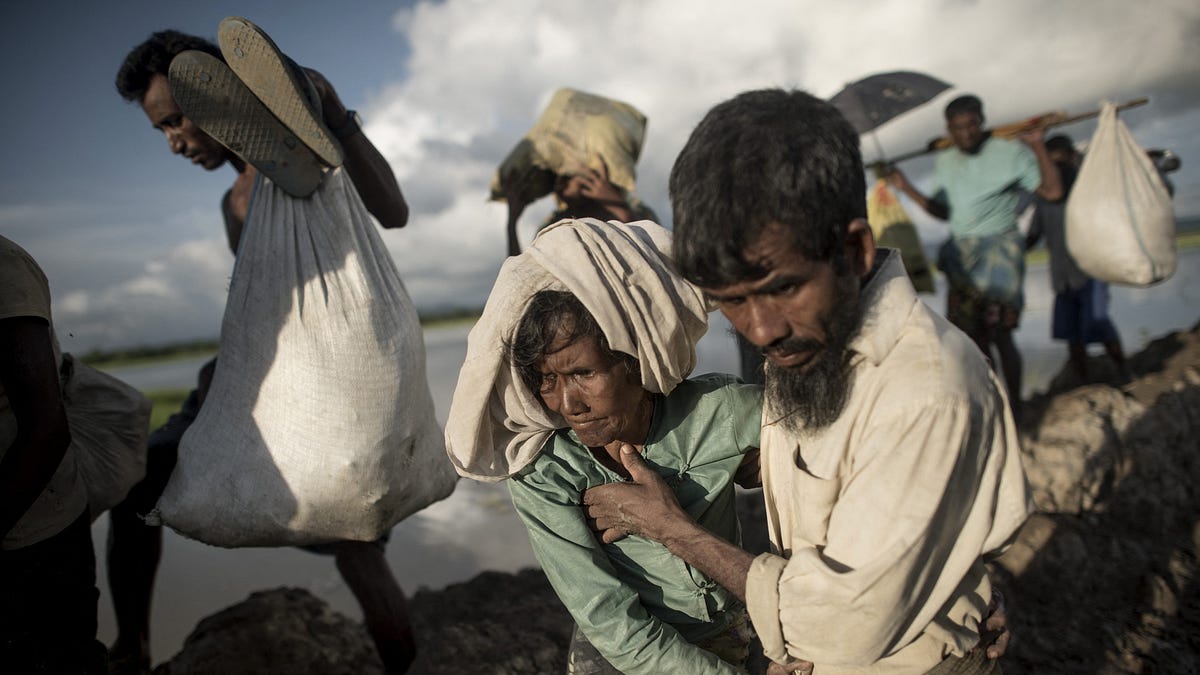
Following the Myanmar military’s “clearance operations” in 2016 and 2017, over 700,000 Rohingya fled to Bangladesh. asserted
Rohingya → follow → Bangladesh
The military killed an estimated 10,000 civilians, raped and sexually assaulted women and girls, and burned villages to the ground. asserted
military → kill → ground
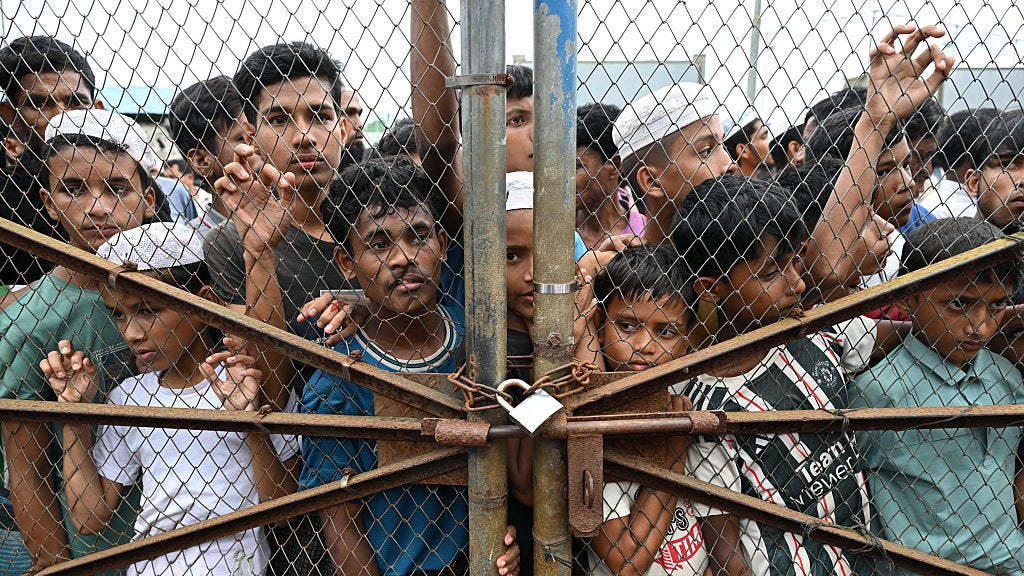
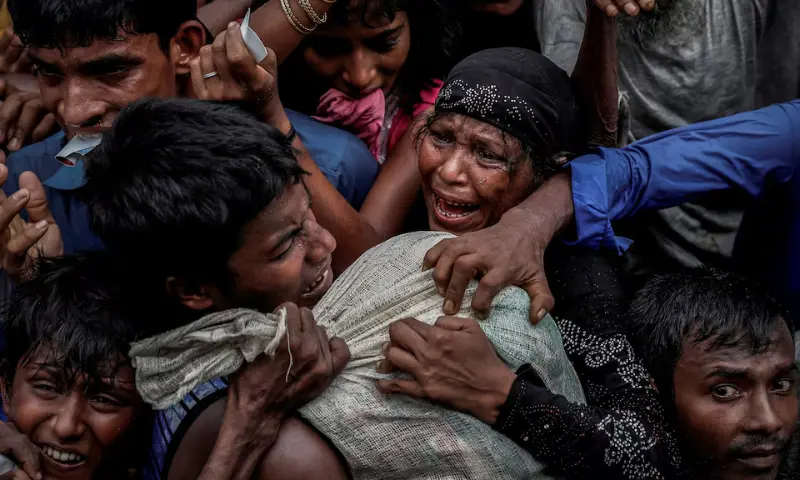
There are currently 1.2 million Rohingya refugees in Bangladesh, the majority in the camps of Cox’s Bazar, and 520,000 remain in Myanmar. asserted
520,000 → be → Myanmar
When confronted with reports of unimaginable suffering, persecution, displacement and the destruction of communities, The Gambia chose to act. asserted
Gambia → confront → communities
In 2018, our then Minister of Justice, Abubacarr Tambadou, visited the camps in Bangladesh as part of an Organisation of Islamic Cooperation delegation. asserted
Minister → visit → delegation
As a former prosecutor at the International Criminal Tribunal for Rwanda, he recognised the signs of genocide in the accounts of the survivors. asserted
he → recognise → survivors
With the support of the OIC’s 57 member States, The Gambia brought the case to the International Court of Justice in November 2019. asserted
Gambia → bring → November
It was the first time in the court’s history that a state with no direct connection to the alleged crimes had filed a case under the 1948 Genocide Convention, which obliges all state parties to prevent and punish genocide wherever it may occur. uncertain
it → allege → genocide
We asked ourselves one fundamental question: if we remain silent in the face of such suffering, what does our silence make us? asserted
silence → ask → us
As Gambians, we know the value of dignity. asserted
we → know → dignity
We understand what it means to yearn for justice. asserted
it → understand → justice
We know the pain that comes when our rights are denied, and voices are silenced. asserted
voices → know → pain
Our own history of political struggle taught us that freedom, accountability and human rights are lived realities that shape the lives of us all. asserted
that → teach → us
Perhaps that is why this case has resonated deeply with many Gambians: it speaks to our common humanity. asserted
it → resonate → humanity
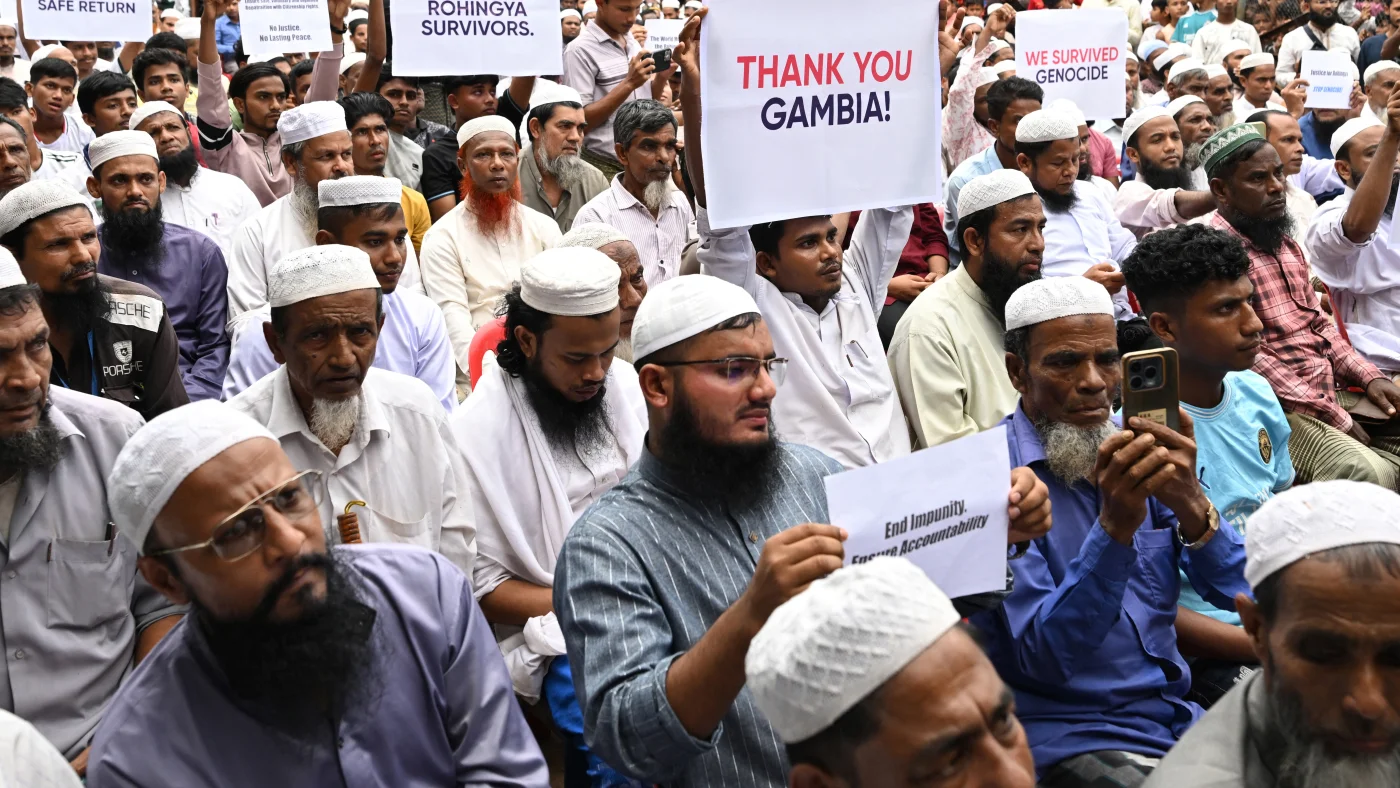
In January, Rohingya survivors of the violence testified before the court about what they had lived through. asserted
they → testify → what
We recognise that the fear of being driven from one’s home knows no nationality, and compassion does not stop at national boundaries. asserted
compassion → recognise → boundaries
The years since the case was filed have required patience and perseverance. asserted
case → file → patience
International justice can often move frustratingly slowly. asserted
justice → move → ?
However, the court’s order in January 2020, the rejection of Myanmar’s objections in 2022, and the interventions from 11 states (Canada, Denmark, France, Germany, the Netherlands, the UK, the Maldives, Slovenia, the DRC, Belgium, and Ireland) on how the Convention should be interpreted have reaffirmed our shared commitment. asserted
Convention → interpret → commitment
The judgement by the world’s highest court today is a reminder that the obligation to prevent genocide applies to every state, large or small, near or far. asserted
obligation → prevent → state
This is the first time in the history of the court that a state has been found responsible for committing genocide. asserted
state → find → genocide
The court concluded that the widespread rape and sexual violence committed by Myanmar’s security forces were part of the genocide, and that Myanmar failed to prevent genocide and to punish those responsible. asserted
Myanmar → conclude → those
Myanmar is now under a clear obligation to comply fully with the judgement. asserted
Myanmar → comply → judgement
It is required to investigate and prosecute those responsible, to facilitate the safe, voluntary and dignified return of displaced Rohingya and to protect them from discrimination and persecution. asserted
It → require → discrimination
Justice for the Rohingya will also require the restoration of their citizenship and the recognition of their right to be called Rohingya. asserted
Justice → require → right
Parliamentarians also have a role to play. asserted
Parliamentarians → have → role
As the court made clear today, punishing genocide requires laws that explicitly criminalise it. asserted
that → make → it
The court has held Myanmar to that standard, and we must hold ourselves to it, too. asserted
we → hold → it
We must ensure that genocide, crimes against humanity and war crimes are fully incorporated into our domestic laws, and that our courts can try them wherever they are committed. In our National Assembly, we will ask our government about the next steps, monitor Myanmar’s compliance, and ensure that The Gambia continues to press for that compliance at the United Nations and within the OIC. asserted
Gambia → ensure → OIC
must now step in by ensuring that Myanmar complies, supporting Rohingya refugees and ensuring they will not be sent back into danger. asserted
they → step → danger
As Gambians, we have chosen empathy over indifference, principle over convenience, and action over silence. asserted
we → choose → silence
The Rohingya have shown extraordinary courage and determination in their search for justice, and today international law has finally answered them. asserted
law → show → them
Our collective responsibility now is to call for compliance and prevent any future acts of genocide. asserted
responsibility → call → genocide
The views expressed in this article are the author’s own and do not necessarily reflect Al Jazeera’s editorial stance. asserted
views → express → stance
Give feedback · no sign-in needed

No sign-in needed for now. Your note is sent without a name, so it cannot be answered.

History Support