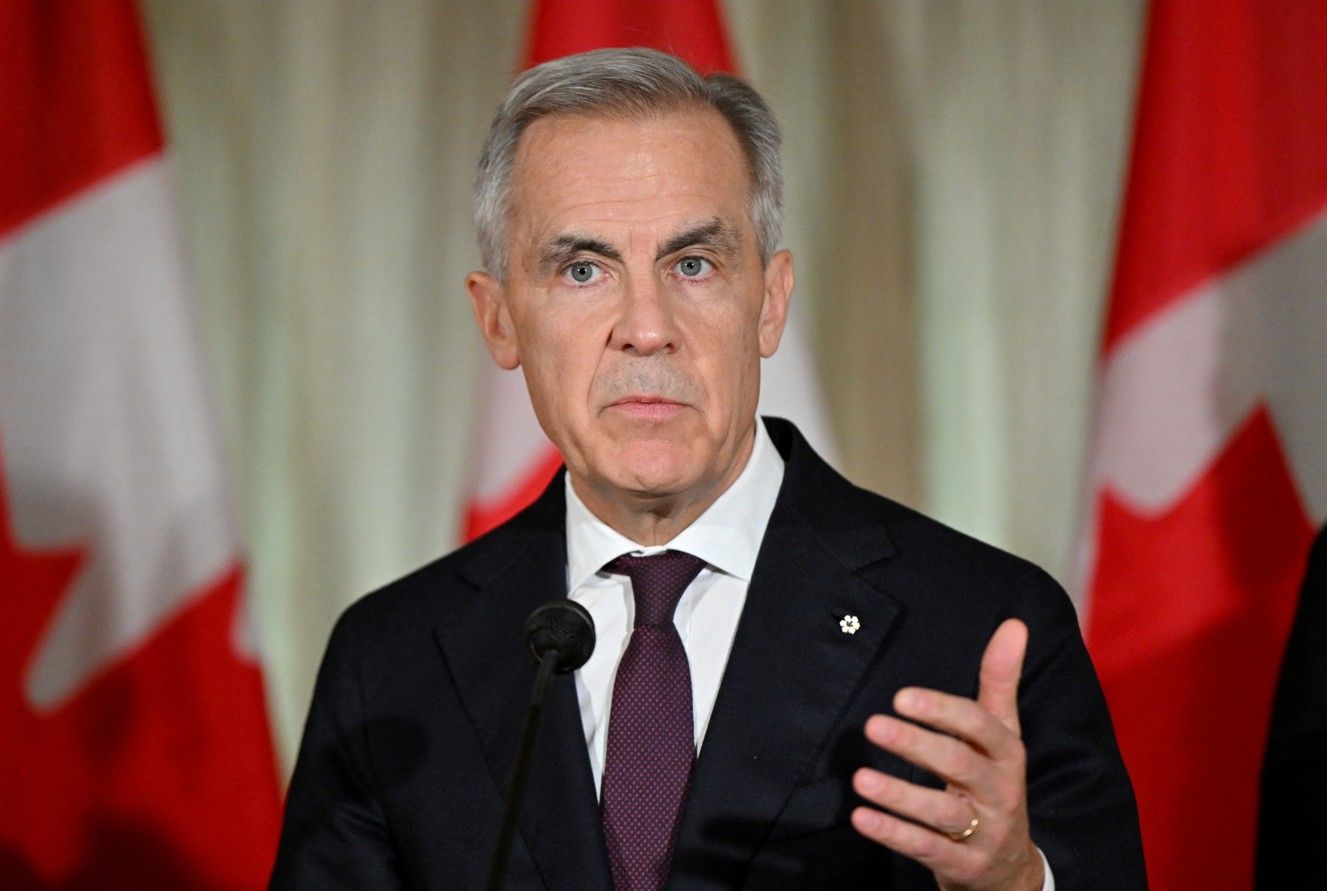
Photo via Toronto Sun

GOLDSTEIN: Carney oversold what Canada can realistically achieve on U.S. tariffs

Read the original at Toronto Sun ↗
Cite

Goldstein, L. (2026, November 21). GOLDSTEIN: Carney oversold what Canada can realistically achieve on U.S. tariffs. Toronto Sun. https://torontosun.com/opinion/columnists/mark-carney-oversold-what-canada-can-realistically-achieve-u-s-tariffs

Dated from the outlet's own feed. Check the original for its byline.

Toronto Sun · collected 2026-11-21 · by Lorrie Goldstein

Quick Summary

Columnist GOLDSTEIN argues that Canadian Prime Minister Mark Carney's recent statements about securing a favorable interim trade deal with the U.S. on sectoral tariffs do not align with his campaign promises. According to the article, Carney's goal of eliminating all U.S. tariffs is no longer viable, with current negotiations aiming to lower tariffs on specific sectors like steel, aluminum, autos, and lumber. A recent Nanos poll indicates that 55% of Canadians oppose any new trade deal with U.S. tariffs, compared to 34% who support it, raising questions about Carney's ability to sell this interim deal to the public.
Written by AI on 2026-11-21, from this article's own text only (the story summary below draws on all the coverage).

AI analysis

Story summary

Prime Minister Mark Carney's government is seeking an interim trade deal with U.S. President Donald Trump to lower and remove some tariffs, but it will fall short of the deal Carney promised during his 2025 election campaign. Former chief Canadian negotiator Kirsten Hillman had earlier stated that the goal was to remove all Trump tariffs, a target that Carney himself predicted in October 2025 would lead to a better agreement. However, current chief trade negotiator Janice Charette now aims for the lowest rate of tariff on a narrow basket of goods with preferential treatment, reflecting a more realistic approach to the complex negotiations. This shift highlights the challenge of meeting the ambitious trade goals set during the election.

Written for “Us Tariff Policy” on 2026-11-21, grounded in this article and the 0 other(s) covering the same event.

Compared with similar articles

This article reads unscored and hedges 18% of its claims. Each row says how that neighbour differs.
CBC News
Leans right Hedges 2 of 47 claims Outlet record 72/100
“The articles discuss different aspects of Canada's trade negotiations and deals, one focusing on a deal with China and the other on a deal with the U.S.”
CBC News
Leans right Hedges 0 of 13 claims Outlet record 72/100
“Article A reports on a specific statement made by Trump regarding a trade deal with Canada during a news conference, while Article B critiques Carney's promises regarding the deal and discusses what the actual deal might look like compared to previous expectations.”
Toronto Star
Hedges 0 of 2 claims Outlet record 65/100
“Article A reports on a news conference where Trump discusses Canada feeling emboldened and a fair trade deal, while Article B critiques Carney's expectations for the trade deal negotiations.”
TIME
Leans strongly left Hedges 12 of 69 claims Outlet record 60/100
“The articles discuss different aspects of Canada's trade negotiations with the U.S., with Article A focusing on Carney's approach to renewing relations with China as leverage, while Article B critiques Carney's promises about the potential outcomes of the trade talks.”
CBC News
Hedges 3 of 20 claims Outlet record 72/100
“The articles discuss different aspects of the Canada-U.S. trade negotiations, with Article A focusing on a U.S. senator's advice and Article B critiquing the Canadian government's ambitions for the negotiations.”
Toronto Sun
Leans left Hedges 4 of 15 claims Outlet record 96/100
“Article A reports on a statement made by Prime Minister Carney during a media briefing ahead of a meeting with Chinese President Xi Jinping, while Article B discusses a critique of Carney's promises regarding U.S. tariffs during the election campaign.”
CBC News
Hedges 0 of 9 claims Outlet record 72/100
“The articles discuss different statements made by Prime Minister Carney on trade with the U.S. at different times.”
Toronto Star
Hedges 0 of 2 claims Outlet record 65/100
“The articles discuss different aspects of trade negotiations between Canada and the U.S., with Article A focusing on questions LeBlanc faced about the collapse of talks, while Article B critiques Carney's promises regarding the achievable outcomes of those negotiations.”
Toronto Star
Hedges 3 of 37 claims Outlet record 65/100
“The articles describe different aspects of Mark Carney's interactions and statements regarding trade negotiations with the U.S., not the same specific event or incident.”

Story

Us Tariff Policy
Politics · 1 article(s) covering the same event.
How this article was measured signals, leaning charts, publisher record, byline, topics and claims

Signals How these are calculated →

Claims extracted
22
sentences that state something as happening or true
Uncertain
18%
4 of 22 hedged ("reportedly", "may", "according to")
Leaning
withheld
no quote in the article backed the model's score
Publisher signals
96/100
Toronto Sun's corrections and hedging, across everything collected from it. Not a measure of accuracy.
Outlets on this story
1
Politics
Same framing elsewhere
1
articles that frame the event the way this one does
Analyzed 2026-11-21 · how these are computed

How this is being covered How these are calculated →

Article leaning vs. publisher reliability
Source leaning vs. consistency

Publisher

Toronto Sun · 646 article(s) · 0 correction(s) detected
No corrections detected for this publisher. That may mean careful reporting, or simply that nothing has been checked.

Who wrote this

Lorrie Goldstein
3 article(s) here · 1 carrying a prediction
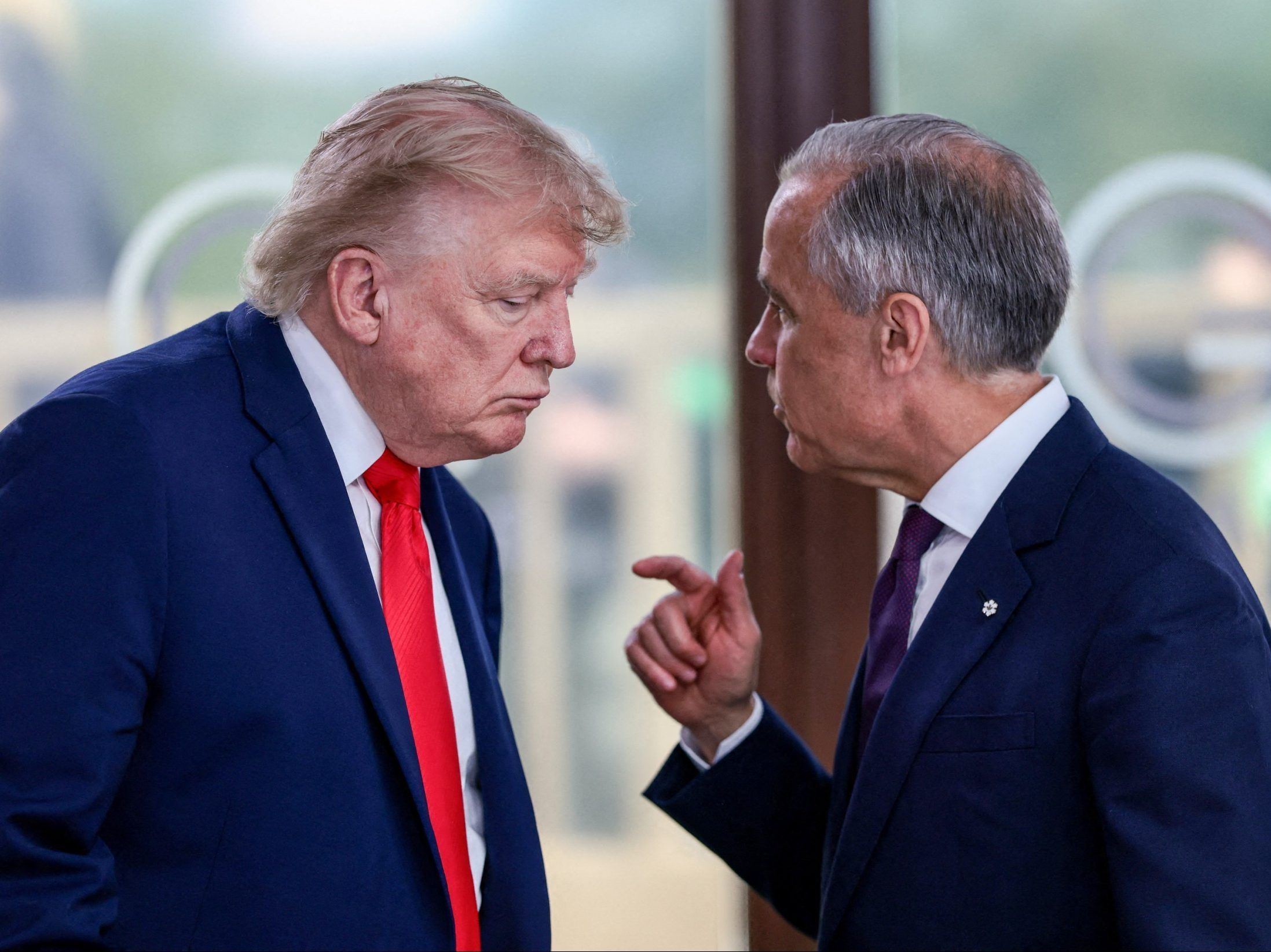
If Mark Carney’s government achieves the interim trade deal it is seeking with U.S. President Donald Trump on sectoral tariffs to lower some and remove others, it will not be the deal the Prime Minister told Canadians he was the best equipped to deliver during last year’s election campaign.
The ideal time for Canada to declare its independence – even though it won’t happen – would be at the annual UN global gabfest on climate change currently being held in Antalya, Turkiye from Nov. 9 to 20.
Prime Minister Mark Carney says he will privately raise Canada’s concerns about China’s interference in our democracy during his next meeting with Chinese President Xi Jinping, but Canadians have every right to be skeptical about what he will say.
Also by Lorrie Goldstein
Nothing else under this byline is closely related to this article, so these are simply their most recent.

Topics

Americans Canada Canadian Canadians U.S.

Subjects

Carney PERSON · 7× U.S. GPE · 7× Canadians NORP · 6× Canada GPE · 5× Canadian NORP · 5× Americans NORP · 3× Trump PERSON · 2× Donald Trump PERSON · 1× Kirsten Hillman PERSON · 1× Mark Carney’s PERSON · 1×

Narrative

On the issue of eliminating all tariffs, Canada’s current chief trade negotiator, Janice Charette, told a Commons committee last week that Canada’s goal is no longer a deal without any U.S. tariffs, but to “get to the lowest rate of tariff on the narrowest basket of goods with the most preferential access for Canadian businesses and Canadian workers” – something Carney himself was signalling as early as July, 2025.
framing: assertive · carried by 1 article(s) · first seen 2026-11-21
If Mark Carney’s government achieves the interim trade deal it is seeking with U.S. President Donald Trump on sectoral tariffs to lower some and remove others, it will not be the deal the Prime Minister told Canadians he was the best equipped to deliver during last year’s election campaign.

Claims (22 extracted, 4 hedged)

If Mark Carney’s government achieves the interim trade deal it is seeking with U.S. President Donald Trump on sectoral tariffs to lower some and remove others, it will not be the deal the Prime Minister told Canadians he was the best equipped to deliver during last year’s election campaign. asserted
he → achieve → campaign
It will not be the deal former chief Canadian negotiator Kirsten Hillman told the Globe and Mail in July 2025 was the government’s goal – the removal of all Trump tariffs. asserted
Hillman → tell → tariffs
It will certainly not be the deal Carney predicted in the House of Commons on Oct. 8, 2025, when he said, “We have the best deal with the Americans,” and “we will get an even better deal, because we are negotiating … asserted
we → predict → deal
We are going to have an agreement. asserted
We → go → agreement
“I am pleased that the U.S. President and I had a conversation on moving forward with an agreement for the steel, aluminum and energy sectors. asserted
President → have → sectors
That is why our teams are working on this issue at this very moment. asserted
teams → work → moment
Finally, it will not be the comprehensive deal Carney said Canada was pursuing, where the issue of sectoral tariffs would be part of the larger negotiation of the Canada-U.S.-Mexico Agreement (CUSMA) on trade. asserted
issue → say → trade
On the issue of eliminating all tariffs, Canada’s current chief trade negotiator, Janice Charette, told a Commons committee last week that Canada’s goal is no longer a deal without any U.S. tariffs, but to “get to the lowest rate of tariff on the narrowest basket of goods with the most preferential access for Canadian businesses and Canadian workers” – something Carney himself was signalling as early as July, 2025. asserted
Carney → eliminate → July
Canada-U.S. Trade Minister Dominic LeBlanc said last week that if Canada can negotiate lower sectoral tariffs on steel, aluminum, auto and lumber under Section 232 of the Trade Expansion Act of 1962 and the Section 338 tariffs under the U.S. Tariff Act of 1930, this could kickstart negotiations on CUSMA. uncertain
this → say → CUSMA
“The Americans have been clear that if we come to an arrangement to reduce the 232 and 338 tariffs, we could also begin a formal review process that’s prescribed in the CUSMA agreement,” LeBlanc told CBC‘s David Cochrane on Power & Politics. uncertain
LeBlanc → come → Power
Can Carney can sell interim deal to Canadians? asserted
Carney → sell → Canadians
Much of the current political debate is over whether Carney can sell an interim deal to Canadians that includes tariffs, given that a recent Nanos polls found a clear majority of those surveyed – 55% – oppose a new trade deal with any U.S. tariffs, compared to only 34% who would support such a deal. asserted
who → sell → deal
Canadians may simultaneously believe no one could have gotten a better deal with Trump, but more important is whether Canadians can live with the economic damage the absence of a deal on U.S. sectoral tariffs and Canadian counter tariffs is doing to our economy. uncertain
absence → believe → economy
International trade lawyer Mark Warner told CBC Morning with Lina Ward on Saturday the Carney government’s problem is that it “has been creating all sorts of irrational expectations on the part of Canadians and now they’re in a position of having to climb down and figure a way out of the corner they’ve boxed themselves into.” asserted
they → tell → themselves
He said the American position has always been that the sectoral tariffs would have to be dealt with before negotiations on CUSMA could begin, which the Carney government has now conceded. uncertain
government → say → which
“The Americans have said very clearly … you’ve got to get this stuff done, first. asserted
stuff → say → ?
And they’ve been saying that for a year. asserted
they → say → year
And we’ve been saying, ‘No, no, no we want a whole agreement,’ … none of that was ever realistic. asserted
none → say → that
My fear is that the government by saying that for a year, they’ve created an expectation on the part of the Canadian public that some of these things that were never on the cards, were on the cards, and now it’s going to be hard for the government to back down.” asserted
government → say → cards
Relying on the incoming Democratically-controlled U.S. Congress to cancel the tariffs isn’t realistic, Warner said, because Trump is using his executive authority to implement them and because Democrats did not obtain the necessary two-thirds majorities in the Senate and House of Representatives in the midterm elections needed to override a presidential veto. asserted
Democrats → rely → veto
“I think the playing to nationalism and stoking passions it’s just not productive and has not been a productive way and will not be a productive way for Canada, at least for the next two years,” Warner said. asserted
Warner → think → years
“By focusing all on Trump’s theatrics and pyrotechnics we kind of lose sight of the fact that Americans do have a lot of concerns with Canadian trade policy and that’s true of the incoming Democrats as well.” asserted
that → focus → Democrats

Give feedback · no sign-in needed

No sign-in needed for now. Your note is sent without a name, so it cannot be answered.

History Support