Photo via Toronto Star

Mark Carney said less competition might be good for Canadians. Here’s why he may live to regret that

Read the original at Toronto Star ↗
Cite

McQueen, M. (2026, November 24). Mark Carney said less competition might be good for Canadians. Here’s why he may live to regret that. Toronto Star. https://www.thestar.com/opinion/star-columnists/mark-carney-said-less-competition-might-be-good-for-canadians-here-s-why-he-may-live-to-regret-that/article_d9eceb4e-8cf0-4424-9e78-817cc5e7c2fb.html

Dated from the outlet's own feed. Check the original for its byline.

Toronto Star · collected 2026-11-24 · by Mark McQueen

Quick Summary

The article discusses a potential merger between Quebecor and Telus, with Telus currently facing a $31 billion bid from Quebecor. Mark Carney, the former Governor of the Bank of Canada, suggested that less competition might be beneficial for Canadians, an opinion the article suggests he may later regret given the current market dynamics. The piece highlights concerns about market concentration and the potential impact on Canadian digital sovereignty, referencing historical instances where government intervention influenced major mergers in the banking sector.
Written by AI on 2026-11-26, from this article's own text only (the story summary below draws on all the coverage).

AI analysis

Story summary

Mark Carney, the Prime Minister of Canada, has been approached by Quebecor CEO Pierre Karl Péladeau regarding a $31 billion bid for Vancouver-based Telus. Péladeau argues that the bid would "preserve Canadian control of strategic telecommunications assets and help protect Canada’s digital sovereignty," despite his ties to the Parti Québécois. If Quebecor's bid is successful, its wireless market share would increase to 39%, surpassing even the largest Canadian bank, RBC, which holds a 25% share of retail loans. BCE, the parent company of Bell Canada, is seen as a potential "white knight" to counter Quebecor's bid, but an analysis by CIBC Equity Research suggests a combined BCE-Telus would be even more dominant.

Written for “Quebecor's Bid for Telus” on 2026-11-28, grounded in this article and the 0 other(s) covering the same event.

Compared with similar articles

This article reads leans right and hedges 18% of its claims. Each row says how that neighbour differs.
The Globe and Mail
Leans right Hedges 3 of 29 claims Outlet record 52/100
“While both articles discuss the potential takeover of Telus by Quebecor, they describe different aspects and times of the same broader event.”
Toronto Star
Leans right Hedges 5 of 37 claims Outlet record 64/100
“The articles discuss related telecom industry developments but describe different aspects and outcomes involving the proposed merger between Quebecor and Telus.”
CBC News
Hedges 1 of 29 claims Outlet record 70/100
“The articles discuss related topics regarding Quebecor's bid for Telus, but Article A focuses on Quebecor CEO's defense of the bid, while Article B discusses broader implications and involves a different figure, Mark Carney.”
The Hub
Leans strongly right further right than this Hedges 4 of 18 claims
“The articles discuss related events concerning the proposed Quebecor-Telus takeover and Mark Carney's comments, but they describe different aspects and timing of the event.”
Toronto Star
Leans strongly left further left than this Hedges 4 of 24 claims Outlet record 64/100
“The articles discuss similar topics related to Mark Carney's views on telecom competition but describe different aspects and contexts, not the same specific incident.”
Toronto Star
Leans strongly left further left than this Hedges 5 of 44 claims Outlet record 64/100
“The articles discuss different aspects of the same topic (Quebecor's bid for Telus and the government's response), but describe distinct events and perspectives rather than the same specific incident.”
CBC News
Leans right Hedges 2 of 44 claims Outlet record 70/100
“The articles discuss the same general topic of Quebecor's bid for Telus but do not describe the same specific incident or occurrence.”
Toronto Star
Outlet record 64/100
“Article A discusses Mark Carney's opinion on competition in the context of a specific bidding war, while Article B is about Theo Moudakis commenting on Mark Carney's view of Canada's wireless market, which is not the same specific event.”

Story

Quebecor's Bid for Telus
Economy/Business · 1 article(s) covering the same event.
How this article was measured signals, leaning charts, publisher record, byline, topics and claims

Signals How these are calculated →

Claims extracted
28
sentences that state something as happening or true
Uncertain
18%
5 of 28 hedged ("reportedly", "may", "according to")
Leaning
Leans right
of the writing, not the subject · beta estimate
Publisher signals
64/100
Toronto Star's corrections and hedging, across everything collected from it. Not a measure of accuracy.
Outlets on this story
1
Economy/Business
Same framing elsewhere
1
articles that frame the event the way this one does
Analyzed 2026-11-26 · how these are computed

How this is being covered How these are calculated →

Article leaning vs. publisher reliability
Source leaning vs. consistency

Publisher

Toronto Star · 18753 article(s) · 35 correction(s) detected
Running correction rate · 35 correction(s)
2026-11-17
Correction
2026-10-26
Correction
2026-10-24
Correction
2026-10-07
Correction
2026-09-24
Correction

Who wrote this

Mark McQueen
4 article(s) here · 1 carrying a prediction
He argues that his $31 billion bid for Vancouver-based Telus will “preserve Canadian control of strategic telecommunications assets and help protect Canada’s digital sovereignty” — an ironic pitch coming from a former leader of the Parti Québécois.
RBC Economics says next year’s target will represent “the highest annual intake on record,” despite overall low wage growth and persistently high unemployment among young Canadians.
If Mayor Olivia Chow loses on Oct. 26, she can’t blame her campaign team.
Huang says that any predictions that artificial intelligence (AI) could lead to humanity’s extinction are “not grounded in science.”
Also by Mark McQueen
Nothing else under this byline is closely related to this article, so these are simply their most recent.

Topics

BCE Canada Montreal Quebecor Telus

Subjects

Quebecor ORG · 5× Telus ORG · 5× Canada GPE · 3× BCE ORG · 2× Canadian NORP · 2× Carney PERSON · 2× Montreal GPE · 2× TD Bank ORG · 2× Pierre Karl Péladeau PERSON · 1× Vancouver GPE · 1×

Narrative

In 2018, Former TD Bank CEO Charles Baillie admitted to journalist James Bradshaw that “we weren’t that optimistic that we’d be able to pull it off, but we thought defensively, we can’t afford to have the Royal and the Montreal combine and be that much larger.”
framing: assertive · carried by 1 article(s) · first seen 2026-11-26
He argues that his $31 billion bid for Vancouver-based Telus will “preserve Canadian control of strategic telecommunications assets and help protect Canada’s digital sovereignty” — an ironic pitch coming from a former leader of the Parti Québécois.

Claims (28 extracted, 5 hedged)

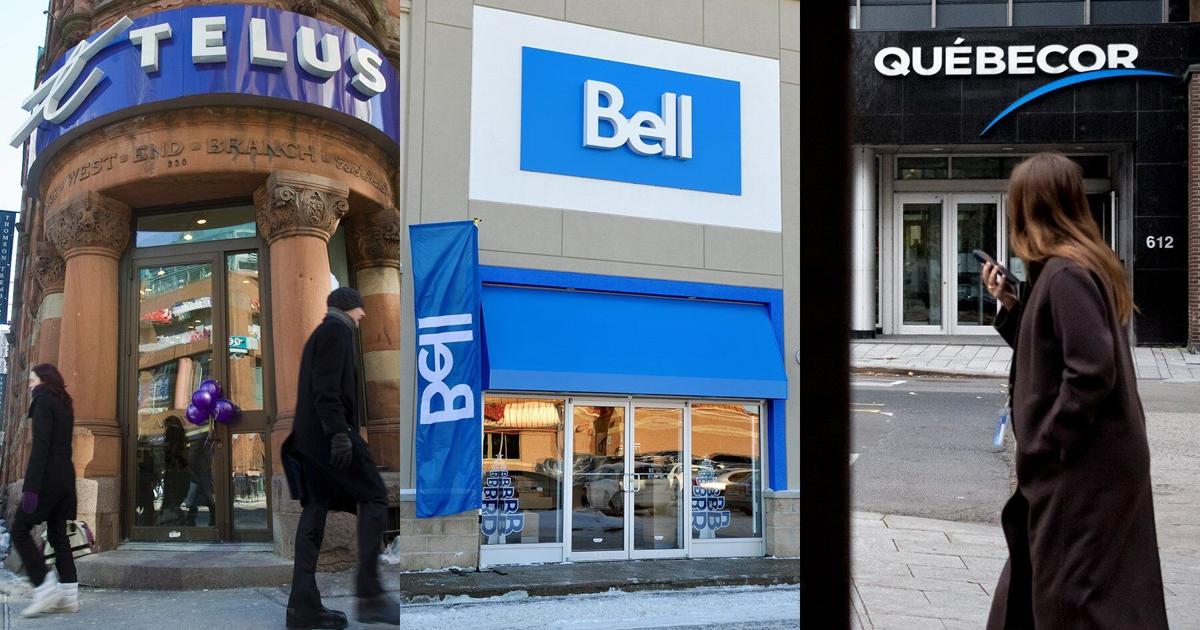
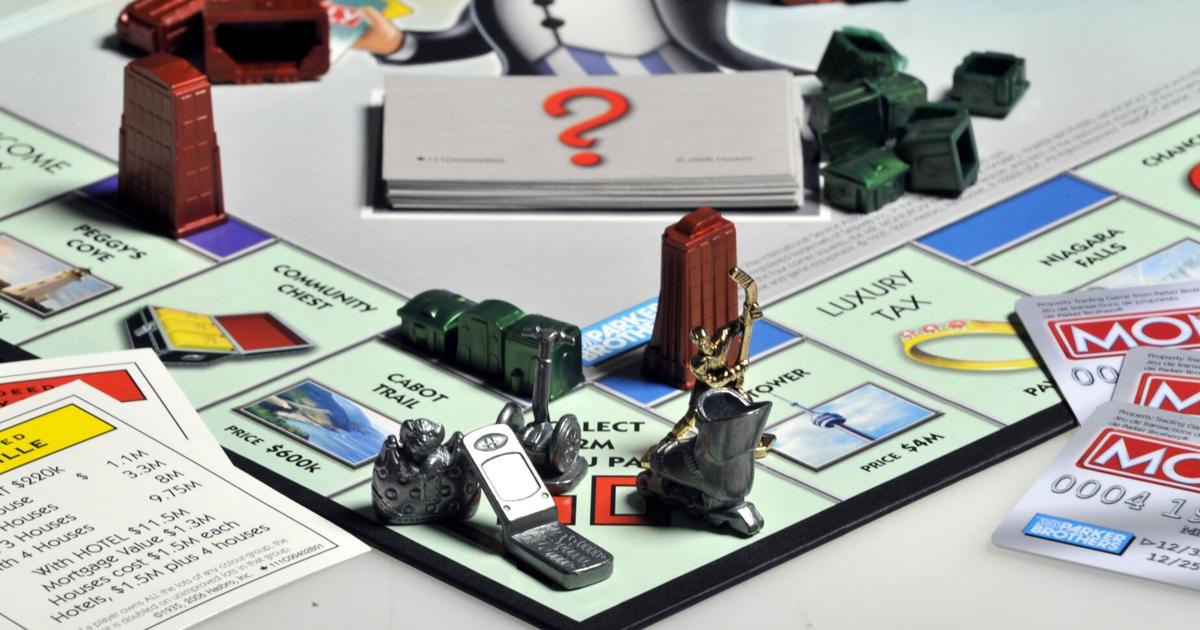
As corporate donnybrooks go, the coming Telus bidding war is going to be one for the ages. asserted
war → go → ages
In one corner of the boxing ring, you’ve got Quebecor CEO Pierre Karl Péladeau. asserted
you → get → Péladeau
He argues that his $31 billion bid for Vancouver-based Telus will “preserve Canadian control of strategic telecommunications assets and help protect Canada’s digital sovereignty” — an ironic pitch coming from a former leader of the Parti Québécois. asserted
bid → argue → Québécois
Péladeau is believed to have already plead his case directly to Prime Minister Mark Carney. asserted
Péladeau → believe → Carney
Fortunately for Telus, Board Chair John Manley (former Deputy PM under Jean Chrétien) and CEO Victor Dodig need no introduction to Ottawa Liberals. asserted
Manley → need → Liberals
Should Telus wind up acquiescing to this “hostile bid,” Quebecor’s wireless market share would hit 39 per cent. asserted
share → wind → cent
That’s a market concentration head and shoulders above Canada’s largest bank (RBC), for example, with its 25 per cent share of retail loans. asserted
That → ’ → loans
Squaring-off against Quebecor is BCE, parent of Bell Canada. asserted
BCE → square → Canada
As the third player in the ring, the Montreal-based firm can portray itself as the putative “white knight.” asserted
firm → base → knight
But according to an analysis by CIBC Equity Research, a combined BCE-Telus would be even more dominant than the Quebecor proposal, with about 44 per cent of the national wireline market and a massive 54 per cent in wireless. uncertain
Telus → accord → wireless
While silent to date, Rogers Communications may be compelled to become the fourth player in the ring — if only for defensive purposes. uncertain
Communications → compel → purposes
Rogers management may not want to bulk-up further in the wake of its recent $20 billion acquisition of Shaw Communications, but there may be tactical wisdom in bidding for BCE themselves. uncertain
management → want → BCE
That’s how things went following the RBC-BMO merger proposal in January 1998 when then-Finance Minister Paul Martin initially chose to defer any decision — despite the public outcry. asserted
Martin → ’ → outcry
For the CEOs at CIBC and TD Bank, the prospect of a goliath competitor essentially forced them to announce their own merger proposal a few months later. asserted
prospect → force → proposal
In 2018, Former TD Bank CEO Charles Baillie admitted to journalist James Bradshaw that “we weren’t that optimistic that we’d be able to pull it off, but we thought defensively, we can’t afford to have the Royal and the Montreal combine and be that much larger.” asserted
Royal → admit → it
Martin turned down both bank merger proposals in November 1998, relying on a “damning” report from the Competition Bureau which warned that reduced competition would harm small business and credit card customers. asserted
competition → turn → customers
That may seem so last century, but consumers and entrepreneurs alike have never stopped whining since about Canada’s banking and Telco oligopolies. uncertain
consumers → seem → oligopolies
A constructive regulatory environment set the stage for startup Wind Mobile to launch in late 2009. asserted
Mobile → set → 2009
Yet it took just 24 months for the firm’s main financial backer to complain that “it was a bad idea.” asserted
it → take → months
As Orascom’s Naguib Sawiris put it at the time, “there’s no real political will here to introduce competition into this closed market. asserted
Sawiris → put → market
The entry of a new player did push prices lower, but that didn’t stop Stephen Harper from pledging in 2013 to lower wireless rates and increase competition. asserted
that → push → competition
Not to be outdone, Justin Trudeau promised to cut wireless prices by 25 per cent during the 2019 federal campaign. asserted
Trudeau → outdo → campaign
While we now enjoy pricing that’s in line with AT&T’s U.S. wireless customers, I can’t believe that consumers — already suffering a cost-of-living crisis — will stomach further concentration within a sector that touches the daily life of every adult Canadian. asserted
that → enjoy → adult
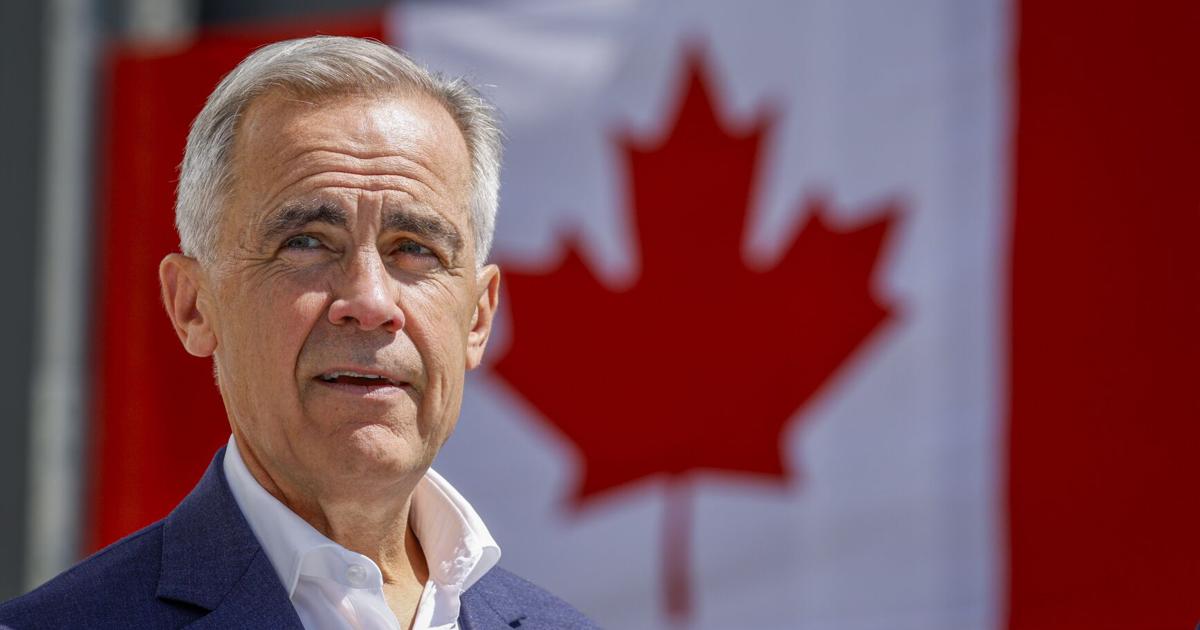
When asked about Quebecor’s proposal during his recent trip to Shenzen, China, Carney said the right thing, at first: outlining that it was the responsibility of the CRTC and Competition Bureau to size up any specific deal. asserted
it → ask → deal
Things got dangerous when Carney added that “depending on the market structure, the form of oligopoly can lead to more competition with fewer players under certain circumstances.” asserted
form → get → circumstances
If his cabinet eventually approves a Telus takeover, and the market concentration that follows, how would Ottawa justify preventing Bank of Montreal from acquiring the Bank of Nova Scotia, for example? asserted
Ottawa → approve → example
The PM’s well-aware that the UK has just four large banks, despite a population of 70 million people. asserted
UK → ’ → people
The Pandora’s box is now open, and Professor Carney may live to regret turning that press conference into a business class lecture hall. uncertain
Carney → live → hall

Give feedback · no sign-in needed

No sign-in needed for now. Your note is sent without a name, so it cannot be answered.

History Support