Photo via Toronto Star

Dear Mr. Carney, how does an oligopoly lead to more competition? Do tell

Read the original at Toronto Star ↗
Cite

Dear Mr. Carney, how does an oligopoly lead to more competition? Do tell. (2026, November 25). Toronto Star. https://www.thestar.com/opinion/letters-to-the-editor/dear-mr-carney-how-does-an-oligopoly-lead-to-more-competition-do-tell/article_8c54e2f7-264e-4329-8400-68d77df6f446.html

Dated from the outlet's own feed. Check the original for its byline.

Toronto Star · collected 2026-11-25 · by Unknown

Quick Summary

In a letter to the editor, Catharina Summers criticizes Prime Minister Mark Carney and Minister of Industry Melanie Joly for their stance on telecommunications mergers. Carney claims that fewer players in the market could lead to more competition, despite high consumer prices. Summers argues that such mergers would likely increase costs for Canadian consumers and does not address the issue of affordability. Meanwhile, David Olive suggests that the government should approve a merger between BCE and Telus to promote competition, though this would also likely be at the expense of the consumer.
Written by AI on 2026-11-26, from this article's own text only (the story summary below draws on all the coverage).
See how they differ ↓

AI analysis

Story summary

Prime Minister Mark Carney of Canada drew criticism for suggesting that a merger between Quebecor and Telus could lead to more competition, despite there being fewer providers. Carney’s comment, made in response to Quebecor’s proposed takeover of Telus, has sparked debate over the government's role in regulating the telecommunications sector. Critics argue that reducing the number of companies could stifle competition rather than foster it. Meanwhile, Star business columnist David Olive proposes merging BCE (Bell) and Telus to finance the development of a Low Earth Orbit satellite network to compete with Elon Musk’s Starlink, advocating for “sovereign connectivity” that would likely increase costs for Canadian consumers. The government’s stance on the Quebecor-Telus merger and its broader telecommunications policies continues to be a point of contention, with some arguing for less government intervention in the market.

Written for “Quebecor-Telus Takeover Proposal” on 2026-11-28, grounded in this article and the 1 other(s) covering the same event.

How they differ

2 outlets covered “Quebecor-Telus Takeover Proposal”.

What each outlet says

One AI summary per outlet of its latest article on this story, written from that article alone and checked against it. Open the article for the outlet's own words.

Toronto StarThis outlet25 Nov

In a letter to the editor, Catharina Summers criticizes Prime Minister Mark Carney and Minister of Industry Melanie Joly for their stance on telecommunications mergers. Carney claims that fewer players in the market could lead to more competition, despite high consumer prices. Summers argues that such mergers would likely increase costs for Canadian consumers and does not address the issue of affordability…

Dear Mr. Carney, how does an oligopoly lead to more competition? Do tell (this article)
The Hub25 Nov

The proposed takeover of Telus by Quebecor has sparked a debate about Canada’s telecommunications policy, particularly the government’s “fourth-player policy” aimed at fostering competition. Prime Minister Mark Carney’s suggestion that fewer companies might enhance competition challenges the long-held belief that more players always lead to better outcomes. Sean Speer argues for reevaluating government…

Let the market work: The biggest lesson from the proposed Quebecor-Telus takeover →

Compared with similar articles

This article reads leans strongly left and hedges 11% of its claims. Each row says how that neighbour differs.
Toronto Star
Outlet record 64/100
“The articles discuss different aspects of Mark Carney's view on Canada's wireless market and do not describe the same specific incident or event.”
The Hub
Leans strongly right further right than this Hedges 4 of 18 claims
Toronto Star
Leans strongly left Hedges 4 of 24 claims Outlet record 64/100
“The articles discuss similar topics related to Mark Carney's comments on telecom mergers but describe different aspects and sources, indicating they are not reporting on the same specific incident.”
Toronto Star
Leans right further right than this Hedges 5 of 37 claims Outlet record 64/100
“The articles discuss related topics concerning telecom mergers and government policy, but they do not describe the same specific event or incident.”
Toronto Star
Leans right further right than this Hedges 5 of 28 claims Outlet record 64/100
“The articles discuss different aspects of the same topic (Quebecor's bid for Telus and the government's response), but describe distinct events and perspectives rather than the same specific incident.”

Story

Quebecor-Telus Takeover Proposal
Politics · 2 article(s) covering the same event. See how they differ ↑
How this article was measured signals, leaning charts, publisher record, byline, topics and claims

Signals How these are calculated →

Claims extracted
44
sentences that state something as happening or true
Uncertain
11%
5 of 44 hedged ("reportedly", "may", "according to")
Leaning
Leans strongly left
of the writing, not the subject · beta estimate
Publisher signals
64/100
Toronto Star's corrections and hedging, across everything collected from it. Not a measure of accuracy.
Outlets on this story
2
Politics
Same framing elsewhere
1
articles that frame the event the way this one does
Analyzed 2026-11-26 · how these are computed

How this is being covered How these are calculated →

Article leaning vs. publisher reliability
Source leaning vs. consistency

Publisher

Toronto Star · 18753 article(s) · 35 correction(s) detected
Running correction rate · 35 correction(s)
2026-11-17
Correction
2026-10-26
Correction
2026-10-24
Correction
2026-10-07
Correction
2026-09-24
Correction

Who wrote this

No reporter is named on this article, beyond the feed's “Unknown”.

Topics

Canada Canadian Ford Ontario Telus

Subjects

Ford PERSON · 5× Ontario GPE · 5× Stellantis PERSON · 4× Telus ORG · 4× Canada GPE · 3× Canadian NORP · 3× BCE ORG · 2× Fedeli PERSON · 2× Quebecor ORG · 2× Toronto GPE · 2×

Narrative

First, that global warming, which the carbon price is designed to mitigate, does not negatively impact other economic sectors (really, the overall economy), as well as health, communities and the environment. Second, that critical trade partners courted by Canada, such as the EU, are relaxing their climate commitments.
framing: assertive · carried by 1 article(s) · first seen 2026-11-26
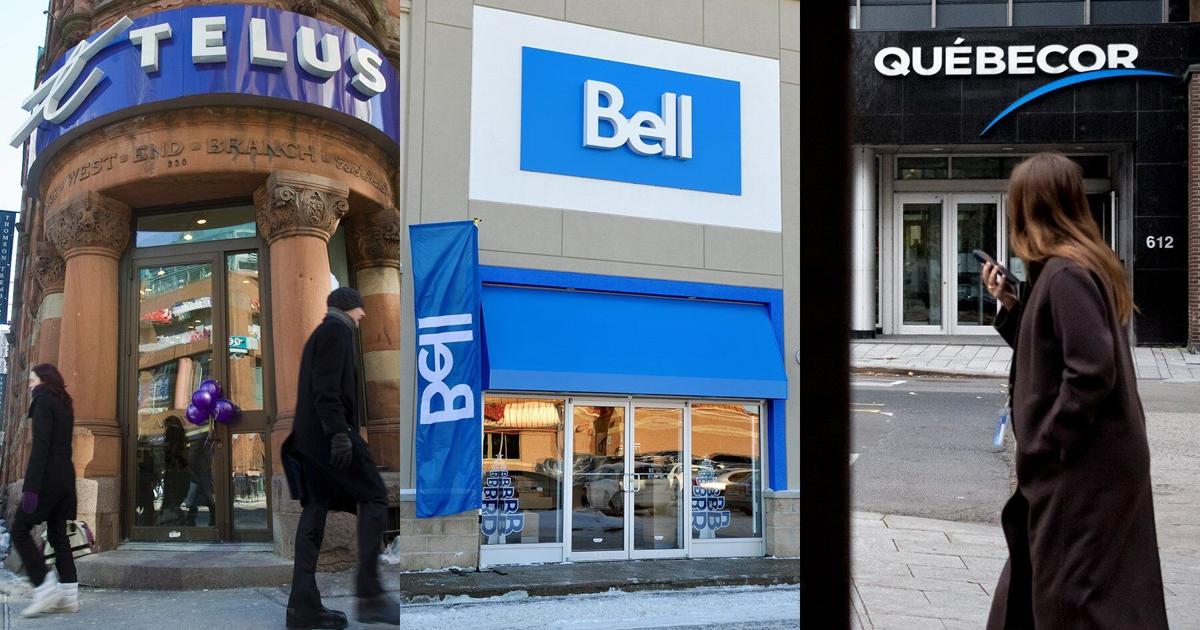
Prime Minister Mark Carney said, when commenting on Quebecor’s move to merge with Telus, “An oligopoly can lead to more competition with fewer players.” How fewer providers will result in more competition is absolutely baffling.
2026-11-26 · Toronto Star
Dear Mr. Carney, how does an oligopoly lead to more competition? Do tell · assertive framing

Claims (44 extracted, 5 hedged)

“Let them eat cake” continues to be the approach of our federal government. asserted
them → let → government
Prime Minister Mark Carney said, when commenting on Quebecor’s move to merge with Telus, “An oligopoly can lead to more competition with fewer players.” How fewer providers will result in more competition is absolutely baffling. asserted
result → say → competition
Then we have Minister of Industry Melanie Joly making clear the government is “updating its policies and frameworks to reflect the need for sovereign connectivity.” asserted
updating → have → connectivity
Little talk of affordability for the Canadian taxpayer, even though it is a well-known fact Canadian consumers pay one of the highest rates around the globe for our telecommunications services. asserted
consumers → know → services
Star business columnist David Olive suggests the government approve a merger between BCE (Bell) and Telus and not Quebecor and Telus, as BCE and Telus together have the financial resources to “to build a network of Low Earth Orbit satellites to compete with Elon Musk’s Starlink.” uncertain
BCE → suggest → Starlink
There you have it: a path towards Canada’s “sovereign connectivity,” paid for by the Canadian consumer. asserted
you → have → consumer
Perhaps this is the sacrifice Carney was touting during his election campaign in 2025. asserted
Carney → tout → 2025
Ford’s idea to end industrial carbon pricing gets it all wrong Premier Doug Ford’s plea to the federal government to end industrial carbon pricing to save an auto plant assumes two things. asserted
plea → end → things
First, that global warming, which the carbon price is designed to mitigate, does not negatively impact other economic sectors (really, the overall economy), as well as health, communities and the environment. Second, that critical trade partners courted by Canada, such as the EU, are relaxing their climate commitments. asserted
partners → design → commitments
The EU is taking climate change seriously, is pricing carbon and has put in place carbon border adjustment mechanisms (CBAMs) to protect its high carbon and trade exposed industries, such as steel, from traders whose carbon price is lower than theirs. asserted
price → take → theirs
If Canada wants avoid billions of dollars due to CBAM-linked charges, according to an internal government document, it will need to increase its industrial carbon price, not abandon it. uncertain
it → want → it
Cheryl McNamara, Toronto When it comes to carbon pricing, Ontario’s numbers don’t add up Never waste a good crisis. asserted
numbers → come → crisis
Premier Ford is “urging the federal government to help Stellantis by walking back climate policies such as the industrial carbon price.” asserted
Ford → urge → price
Ontario has a home-made industrial carbon price, the Emissions Performance Standards program, created by Ford after he got rid of the previous cap-and-trade regime and found out the federal government’s policy would then have to be implemented. asserted
policy → have → regime
It creates Ontario revenue, and Ford can forgo or refund the revenue as he likes. asserted
he → create → revenue
If the feds got involved to give Stellantis relief, the entire industrial carbon pricing policy across the country would have to be revised or scrapped. asserted
policy → involve → country
Ford said it costs Stellantis $135 million a year to keep the Brampton plant in idle mode. asserted
it → say → mode
Of course, the easy fix for that would be to build cars there, preferably an EV, and make a profit or at least reduce the annual idling costs. asserted
fix → build → costs
Ontario Economic Development Minister Vic Fedeli said expenses associated with emissions cost Stellantis about $330 million a year. asserted
expenses → say → million
Fedeli did not expand on these expenses; they are not due solely to Ontario’s carbon emission pricing. asserted
they → expand → pricing
According to a CBC story in 2023, Ontario projected it would collect fees in 2026 totalling about $236 million for the entirety of the Emissions Performance Standard (EPS) program. uncertain
it → accord → program
This is much less for the entire province than Fedeli claims for this one company. uncertain
Fedeli → claim → company
So what else does this figure include? asserted
figure → include → what
Graeme Elliott, Toronto When it comes to AI, big tech companies are devouring free content. asserted
companies → come → content
That has to stop Should one ask an artificial intelligence platform the source of its information, its answer centres around licenced and proprietary sources. asserted
answer → have → sources
Other sources include less-reliable public web and synthetic data. asserted
sources → include → web
The big tech companies behind AI argue the exploitation of such proprietary data should be free and fair game, even though not using it would affect AI’s capability. asserted
using → argue → capability
Content creators, such as newspapers, book publishers, academic publications and so on, simply ask for proper compensation for their work. asserted
creators → ask → work
Meanwhile, A.I. company Anthropic’s recent IPO raised $107.3 billion (U.S.), putting its overall valuation at approximately $1.5 trillion. asserted
IPO → raise → trillion
Competitor OpenAI has a valuation not far from that, as do others. asserted
others → have → that
These are not financially strapped firms. asserted
These → strap → ?
One wonders if these big tech companies even have a subscription to newspapers and other sources. asserted
companies → wonder → newspapers
When the Canadian federal government finally gets around to properly regulating AI, such freeloading needs to end. Mike Brown, Burlington, Ont. asserted
freeloading → get → AI
Saying goodbye to Rogers felt like a burden lifted asserted
Saying → say → burden
In 1967, I watched the Maple Leafs win the Stanley Cup on a black-and-white television with my father and brother. asserted
Leafs → watch → father
This past Saturday night, I watched the team lose its ninth straight. asserted
team → watch → straight
By Sunday morning, I’d made a decision I’d been putting off: after nearly 30 years, I took my cellphone business away from Rogers. asserted
I → make → Rogers
I’ve stuck with the Leafs through plenty of losing seasons. asserted
I → stick → seasons
I kept paying more for cellphone service than I would have paid elsewhere because whenever I wanted to upgrade my phone, I could get someone on the line, right away. uncertain
I → keep → line
However, when I needed technical help, I was forced to wait on hold. asserted
I → need → hold
…and 4 more, not listed.
Give feedback · no sign-in needed

No sign-in needed for now. Your note is sent without a name, so it cannot be answered.

History Support