Photo via Times of India

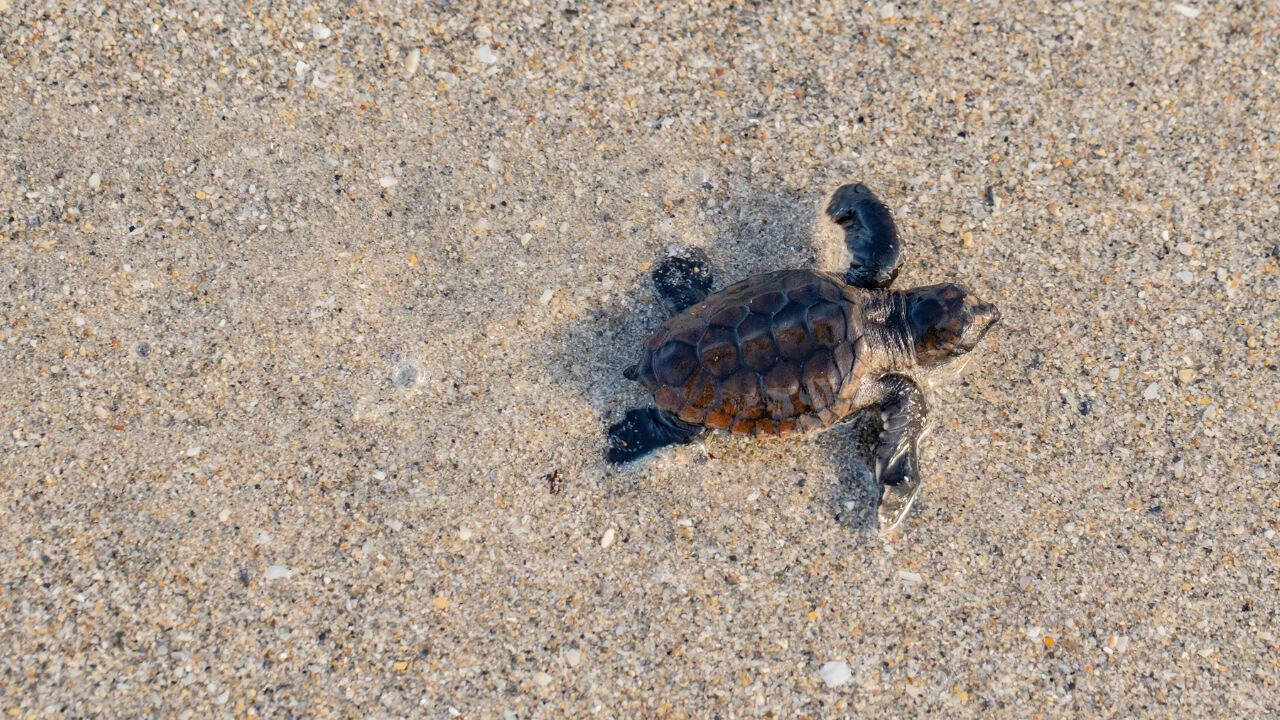
In September, the first confirmed natural sea turtle nests on the US West Coast were found

Read the original at Times of India ↗
Cite

TOI Science Desk. (2026, November 27). In September, the first confirmed natural sea turtle nests on the US West Coast were found. Times of India. https://timesofindia.indiatimes.com/science/nature/in-september-the-first-confirmed-natural-sea-turtle-nests-on-the-us-west-coast-were-found-on-california-beaches-on-november-14-54-rescued-olive-ridley-hatchlings-were-released-into-the-pacific-after-aquarium-care/articleshow/136044595.cms

Dated from the outlet's own feed. Check the original for its byline.

Times of India · collected 2026-11-27 · by TOI Science Desk

Quick Summary

In September 2026, two olive ridley sea turtle nests were discovered on Southern California beaches, marking the first confirmed natural nesting on the US West Coast. After weeks of monitoring and incubation at the Aquarium of the Pacific, 54 hatchlings successfully returned to the ocean near Seal Beach. The nests, found on September 16 and 19 in Seal Beach and Huntington Beach respectively, were relocated due to approaching tropical storm conditions to ensure their safety until hatching. Warmer ocean temperatures from a marine heatwave and El Niño conditions are being considered as potential factors for this rare occurrence, though the long-term impact on the turtles' nesting habits remains unclear.
Written by AI on 2026-11-27, from this article's own text only (the story summary below draws on all the coverage).

AI analysis

Story summary

In September 2026, two olive ridley sea turtle nests were discovered on beaches in Southern California, marking the first confirmed natural sea turtle nesting on the US West Coast. The first nest was found on September 16 at Seal Beach, followed by a second nest on September 19 at Huntington Beach, about eight miles away. The US Fish and Wildlife Service confirmed that the two nests were laid by two different turtles. After careful monitoring and incubation, 54 hatchlings from the first nest were released near Seal Beach on November 14, 2026. Another 21 hatchlings from the second nest were released at Huntington Beach on November 15, bringing the total number of successfully released hatchlings to 75. This significant event highlights the northward shift in the nesting range of olive ridley turtles, previously known to nest as far north as Baja California Sur, Mexico.

Written for “First Confirmed Sea Turtle Nests US West Coast” on 2026-11-27, grounded in this article and the 0 other(s) covering the same event.

Compared with similar articles

This article reads unscored and hedges 9% of its claims. Each row says how that neighbour differs.
The Independent
Hedges 4 of 19 claims Outlet record 59/100
“The articles describe different events: one about venomous sea snakes washing ashore and the other about olive ridley sea turtle nests and hatchlings.”

Story

First Confirmed Sea Turtle Nests US West Coast
Environment · 1 article(s) covering the same event.
How this article was measured signals, leaning charts, publisher record, byline, topics and claims

Signals How these are calculated →

Claims extracted
32
sentences that state something as happening or true
Uncertain
9%
3 of 32 hedged ("reportedly", "may", "according to")
Leaning
not political
takes no side on a contested political question
Publisher signals
58/100
Times of India's corrections and hedging, across everything collected from it. Not a measure of accuracy.
Outlets on this story
1
Environment
Same framing elsewhere
1
articles that frame the event the way this one does
Analyzed 2026-11-27 · how these are computed

How this is being covered How these are calculated →

Article leaning vs. publisher reliability
Source leaning vs. consistency

Publisher

Times of India · 5979 article(s) · 10 correction(s) detected
Running correction rate · 10 correction(s)

Who wrote this

TOI Science Desk
350 article(s) here · 1 carrying a prediction
The discovery could offer new clues about the soldiers and military equipment carried aboard the vessel before it exploded and sank off Sweden in 1495.
With a tropical storm approaching the region, wildlife officials became concerned that high tides, hazardous surf and beach erosion could wash away the eggs before they had an opportunity to hatch.
Archaeologists working in northeastern France have uncovered 28 ancient Gallic coins in a small pit beside fragments of a human skull and a miniature bronze wagon wheel, a combination that suggests the site may have been a Late Iron Age sanctuary.
Before departure, Kutryk told CBS News that missing the birth would be hard, but that he would try to take the positive things out of it.
Mayor Jack Bawden told ABC News that there was always a reason the fish weren't spawning.
They found that temperature may have influenced when the snakes arrived, entered their shelters, and left in warmer weather.
Initially thinking it might be a kingbird, Jones stopped his car and reached for his binoculars, hoping to get a closer look.
It is a snake so distinct that it differs from any that you may have typically come across.
A string of amber flashes gives it away The first sighting was recorded on May 15, 2026, when an observer named Aljoscha Nern spotted male similar fireflies flashing over a meadow in Virginia.
What might look like a particularly crowded beach day is, in fact, a matter of survival for one of the Arctic's largest marine mammals.
Wire or desk byline, not an individual reporter.
Also by TOI Science Desk
Nothing else under this byline is closely related to this article, so these are simply their most recent.
All 350 articles by TOI Science Desk →

Topics

California Long Beach Mexico Seal Beach the US Fish and Wildlife Service

Subjects

Seal Beach GPE · 4× California GPE · 2× Huntington Beach GPE · 2× Long Beach GPE · 2× Mexico GPE · 2× Baja California Sur GPE · 1× Costa Rica GPE · 1× Nicaragua GPE · 1× Panama GPE · 1× the US Fish and Wildlife Service ORG · 1×

Narrative

In a subsequent development, another 21 olive ridley hatchlings from that nest were released at Huntington Beach on November 15, bringing the number of successfully released hatchlings from the two original nests to 75.
framing: assertive · carried by 1 article(s) · first seen 2026-11-27
With a tropical storm approaching the region, wildlife officials became concerned that high tides, hazardous surf and beach erosion could wash away the eggs before they had an opportunity to hatch.

Claims (32 extracted, 3 hedged)

In September 2026, two olive ridley sea turtle nests were found on beaches in Southern California, marking the first confirmed instance of natural sea turtle nesting on the US West Coast. asserted
turtle → find → Coast
Now, after weeks of careful monitoring and incubation, some of the eggs have successfully hatched, allowing 54 hatchlings to return to the ocean. asserted
hatchlings → hatch → ocean
, in its October 13, 2026, account of the discovery, the two nests were determined to have been laid by two different turtles. asserted
nests → determine → turtles
The young turtles were released near Seal Beach in the early hours of November 14, following their emergence at the Aquarium of the Pacific in Long Beach. asserted
turtles → release → Beach
The first of the two nests was discovered on September 16 at Seal Beach, followed by another on September 19 at Huntington Beach, around eight miles away. asserted
first → discover → Beach
Olive ridley turtles are among the smallest species of sea turtles and are widely distributed across the Pacific, Indian and Atlantic Oceans. asserted
turtles → distribute → Oceans
Their nesting populations are particularly prominent in countries such as Mexico, Nicaragua, Costa Rica and Panama. asserted
populations → nest → Mexico
Before the California discovery, the northernmost known nesting location was in Baja California Sur, Mexico, approximately 700 miles south of Orange County. asserted
location → know → County
However, the reason for the turtles' reappearance in Southern California is yet to be understood. asserted
reason → understand → California
Warmer ocean conditions have attracted attention, with an extreme marine heatwave and El Niño conditions being considered possible contributing factors in rising water temperatures. asserted
heatwave → attract → temperatures
However, whether this represents a temporary occurrence or a more lasting change in their nesting range remains uncertain. asserted
represents → represent → range
Why the eggs had to be moved Although the discovery was encouraging, the nests were soon exposed to another challenge. asserted
nests → move → challenge
With a tropical storm approaching the region, wildlife officials became concerned that high tides, hazardous surf and beach erosion could wash away the eggs before they had an opportunity to hatch. uncertain
they → approach → opportunity
Following discussions between federal wildlife authorities and local conservation partners, a decision was made to relocate the eggs to a protected environment. asserted
decision → follow → environment
On September 25, biologists carefully collected approximately 200 eggs from the two beaches and transferred them to the Aquarium of the Pacific in Long Beach, California. asserted
biologists → collect → Beach
The Aquarium of the Pacific was entrusted with their care, given its long experience in looking after marine life and its rehabilitation efforts. asserted
Aquarium → entrust → life
Under its care, the eggs were placed in sand-filled containers in a secure, temperature- and humidity-controlled room at the aquarium's Molina Animal Care Center. asserted
eggs → place → Center
The staff closely monitored their environment. asserted
staff → monitor → environment
According to the Aquarium of the Pacific's September 25, 2026, announcement, olive ridley eggs generally require somewhere between 45 and 60 days to incubate. uncertain
eggs → accord → days
The plan was to return any hatchlings to the beaches where their eggs had originally been laid, allowing them to undertake their first journey towards the ocean. asserted
them → return → ocean
Fifty-four hatchlings finally make their way into the Pacific After weeks of waiting, the first successful hatching brought some encouraging news. asserted
hatching → make → news
The eggs collected from Seal Beach began producing hatchlings on the evening of November 13, with the first tiny turtle emerging at approximately 7:15 p.m. asserted
turtle → collect → p.m.
By the end of the hatching process, 54 olive ridley turtles had successfully emerged. asserted
turtles → emerge → process
Aquarium staff and wildlife officials then carefully transferred them for their journey back to Seal Beach, where they were released close to the location of their original nest in the early hours of November 14. asserted
they → transfer → November
In its November 14, 2026, update, the Aquarium of the Pacific confirmed that the hatchlings had successfully reached the ocean. asserted
hatchlings → confirm → ocean
The release was coordinated with federal wildlife authorities and other conservation partners, with efforts made to minimise artificial lighting and human disturbance during the process. asserted
efforts → coordinate → process
However, the 54 hatchlings were not the only eggs being monitored. asserted
hatchlings → monitor → ?
The second clutch, collected from Huntington Beach, was also being cared for at the aquarium. asserted
clutch → collect → aquarium
In a subsequent development, another 21 olive ridley hatchlings from that nest were released at Huntington Beach on November 15, bringing the number of successfully released hatchlings from the two original nests to 75. asserted
hatchlings → release → 75
While the successful release is an important conservation achievement, the hatchlings now face the difficult realities of surviving in the wild. asserted
hatchlings → face → wild
According to the Aquarium of the Pacific's November 14 update, the survival rate of olive ridley hatchlings is extremely low, with an estimated one in every thousand reaching adulthood. uncertain
one → accord → adulthood
But for now, the appearance of the nests in California remains an unusual development whose longer-term significance is still being studied. asserted
significance → remain → California

Give feedback · no sign-in needed

No sign-in needed for now. Your note is sent without a name, so it cannot be answered.

History Support