Photo via Times of India

Danish king’s 1495 flagship wreck yields medieval chain mail, raising questions about its soldiers

Read the original at Times of India ↗
Cite

TOI Science Desk. (2026, November 27). Danish king’s 1495 flagship wreck yields medieval chain mail, raising questions about its soldiers. Times of India. https://timesofindia.indiatimes.com/science/archaeology/more-than-500-years-after-a-danish-kings-flagship-exploded-and-sank-off-sweden-in-1495-divers-found-fine-medieval-chain-mail-armour-near-a-weapons-chest-reopening-questions-about-soldiers-aboard-the-ship/articleshow/136183455.cms

Dated from the outlet's own feed. Check the original for its byline.

Times of India · collected 2026-11-27 · by TOI Science Desk

Quick Summary

Underwater archaeologists investigating the wreck of the Danish royal warship Griffin, which sank in the Baltic Sea in 1495, have discovered fragments of medieval chain mail near an ammunition-tool chest. The discovery was announced by the University of Southampton on November 24, 2026. The international team, including researchers from the University of Southampton, Södertörn University, and Stockholm University, believes the chain mail may have belonged to German mercenaries known as Landsknechts who were aboard the ship. The exact purpose of the storage area where the armour was found remains unclear, but the quality of the chain mail has raised questions about its origins and the soldiers who used it.
Written by AI on 2026-11-27, from this article's own text only (the story summary below draws on all the coverage).
See how they differ ↓

AI analysis

Story summary

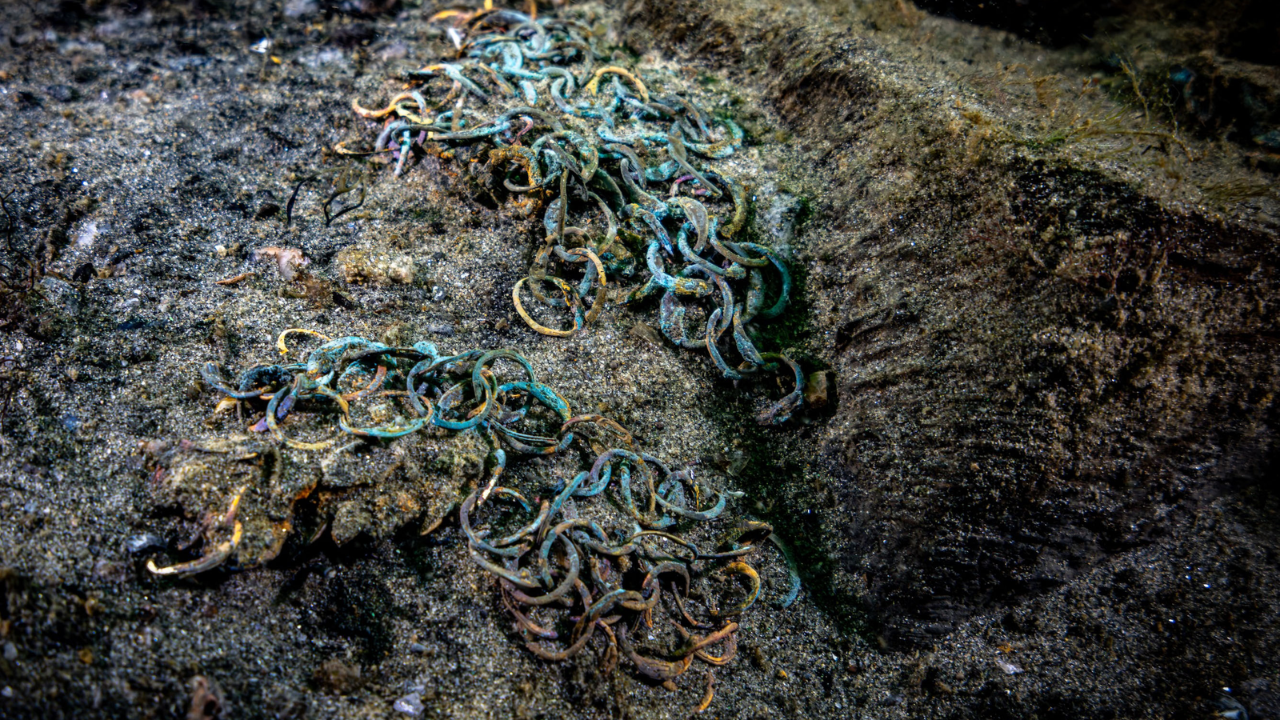
Maritime archaeologists have discovered fragments of high-quality medieval chain mail armor in the wreckage of the Gribshunden, a Danish warship that sank in 1495 off the coast of Sweden. The ship, which was once the flagship of King Hans of Denmark, was used for both military and diplomatic expeditions. The discovery was made by an international team from the University of Southampton and Swedish institutions including Stockholm University, who have been studying the wreck since 2019. The armor fragments were found near an ammunition-tool chest in the ship’s forecastle, an elevated fighting platform at the front of the vessel, suggesting that the area may have been a storage space for military equipment. This find could provide new insights into the soldiers and military gear carried aboard the ship before it exploded and sank.

Written for “Danish King's 1495 Shipwreck Finds” on 2026-11-27, grounded in this article and the 1 other(s) covering the same event.

How they differ

2 outlets covered “Danish King's 1495 Shipwreck Finds”.

What each outlet says

One AI summary per outlet of its latest article on this story, written from that article alone and checked against it. Open the article for the outlet's own words.

Times of IndiaThis outlet27 Nov

Underwater archaeologists investigating the wreck of the Danish royal warship Griffin, which sank in the Baltic Sea in 1495, have discovered fragments of medieval chain mail near an ammunition-tool chest. The discovery was announced by the University of Southampton on November 24, 2026. The international team, including researchers from the University of Southampton, Södertörn University, and Stockholm University…

Danish king’s 1495 flagship wreck yields medieval chain mail, raising questions about its soldiers (this article)
CBS News25 Nov

Maritime archaeologists recently discovered high-quality medieval armor in the wreckage of the Danish warship Gribshunden, which sank off the coast of Sweden in 1495 after an explosion. The ship, owned by King Hans of Denmark, was involved in both warfare and diplomatic missions. The newly found chain mail armor, made of copper-alloy, was located during a 2019 joint expedition by researchers from the University of…

High-quality medieval armor discovered in shipwreck that sank in 1495 →

Compared with similar articles

This article reads unscored and hedges 31% of its claims. Each row says how that neighbour differs.
CBS News
Hedges 6 of 21 claims Outlet record 68/100

Story

Danish King's 1495 Shipwreck Finds
Science · 2 article(s) covering the same event. See how they differ ↑
How this article was measured signals, leaning charts, publisher record, byline, topics and claims

Signals How these are calculated →

Claims extracted
32
sentences that state something as happening or true
Uncertain
31%
10 of 32 hedged ("reportedly", "may", "according to")
Leaning
not political
takes no side on a contested political question
Publisher signals
58/100
Times of India's corrections and hedging, across everything collected from it. Not a measure of accuracy.
Outlets on this story
2
Science
Same framing elsewhere
1
articles that frame the event the way this one does
Analyzed 2026-11-27 · how these are computed

How this is being covered How these are calculated →

Article leaning vs. publisher reliability
Source leaning vs. consistency

Publisher

Times of India · 5979 article(s) · 10 correction(s) detected
Running correction rate · 10 correction(s)

Who wrote this

TOI Science Desk
350 article(s) here · 1 carrying a prediction
The discovery could offer new clues about the soldiers and military equipment carried aboard the vessel before it exploded and sank off Sweden in 1495.
With a tropical storm approaching the region, wildlife officials became concerned that high tides, hazardous surf and beach erosion could wash away the eggs before they had an opportunity to hatch.
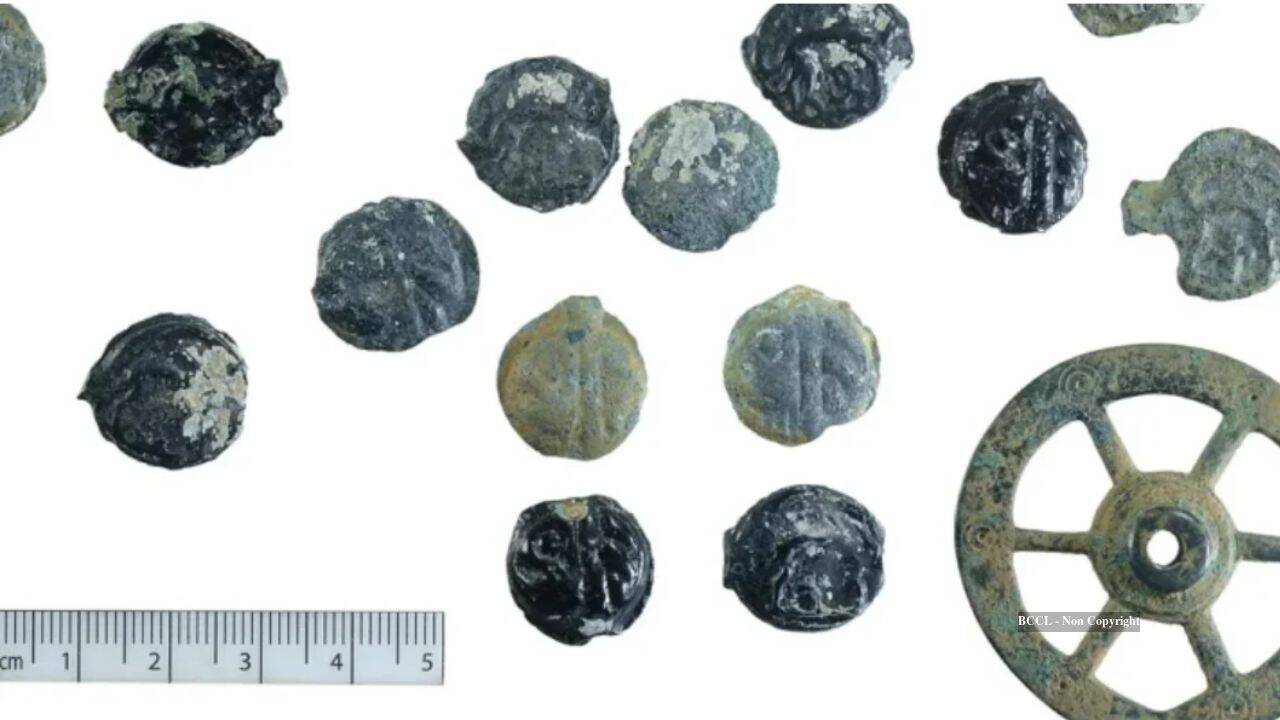
Archaeologists working in northeastern France have uncovered 28 ancient Gallic coins in a small pit beside fragments of a human skull and a miniature bronze wagon wheel, a combination that suggests the site may have been a Late Iron Age sanctuary.
Before departure, Kutryk told CBS News that missing the birth would be hard, but that he would try to take the positive things out of it.
Mayor Jack Bawden told ABC News that there was always a reason the fish weren't spawning.
They found that temperature may have influenced when the snakes arrived, entered their shelters, and left in warmer weather.
Initially thinking it might be a kingbird, Jones stopped his car and reached for his binoculars, hoping to get a closer look.
It is a snake so distinct that it differs from any that you may have typically come across.
A string of amber flashes gives it away The first sighting was recorded on May 15, 2026, when an observer named Aljoscha Nern spotted male similar fireflies flashing over a meadow in Virginia.
What might look like a particularly crowded beach day is, in fact, a matter of survival for one of the Arctic's largest marine mammals.
Wire or desk byline, not an individual reporter.
Also by TOI Science Desk
Nothing else under this byline is closely related to this article, so these are simply their most recent.
All 350 articles by TOI Science Desk →

Topics

Danish Griffin Stockholm University Södertörn University the University of Southampton

Subjects

Danish NORP · 3× Hans PERSON · 3× the University of Southampton ORG · 3× Stockholm University ORG · 2× Södertörn University ORG · 2× Centre for Maritime Archaeology ORG · 1× German NORP · 1× Rodrigo Pacheco-Ruiz PERSON · 1× Sweden GPE · 1× the University of Southampton's ORG · 1×

Narrative

Dr Rodrigo Pacheco-Ruiz, a visiting fellow at the University of Southampton's Centre for Maritime Archaeology and co-investigator on the Griffin project, said historical records indicated that German mercenaries, known as Landsknechts, were aboard the ship when it sank.
framing: mixed · carried by 1 article(s) · first seen 2026-11-27
The discovery could offer new clues about the soldiers and military equipment carried aboard the vessel before it exploded and sank off Sweden in 1495.

Claims (32 extracted, 10 hedged)

More than five centuries after a Danish royal warship sank in the Baltic Sea, underwater archaeologists have discovered exceptionally well-preserved fragments of medieval chain-mail armour near an ammunition-tool chest. asserted
archaeologists → sink → chest
The discovery could offer new clues about the soldiers and military equipment carried aboard the vessel before it exploded and sank off Sweden in 1495. uncertain
it → offer → 1495
The discovery was announced by the University of Southampton in a November 24, 2026, research update. asserted
discovery → announce → update
An international team from the University of Southampton, Södertörn University and Stockholm University found the armour while investigating the wreck of Griffin, also known as Gribshunden, the 15th-century flagship of Danish King Hans. asserted
team → find → Hans
Researchers believe the area may have served as a storage space for military equipment, although its exact purpose remains uncertain. uncertain
purpose → believe → equipment
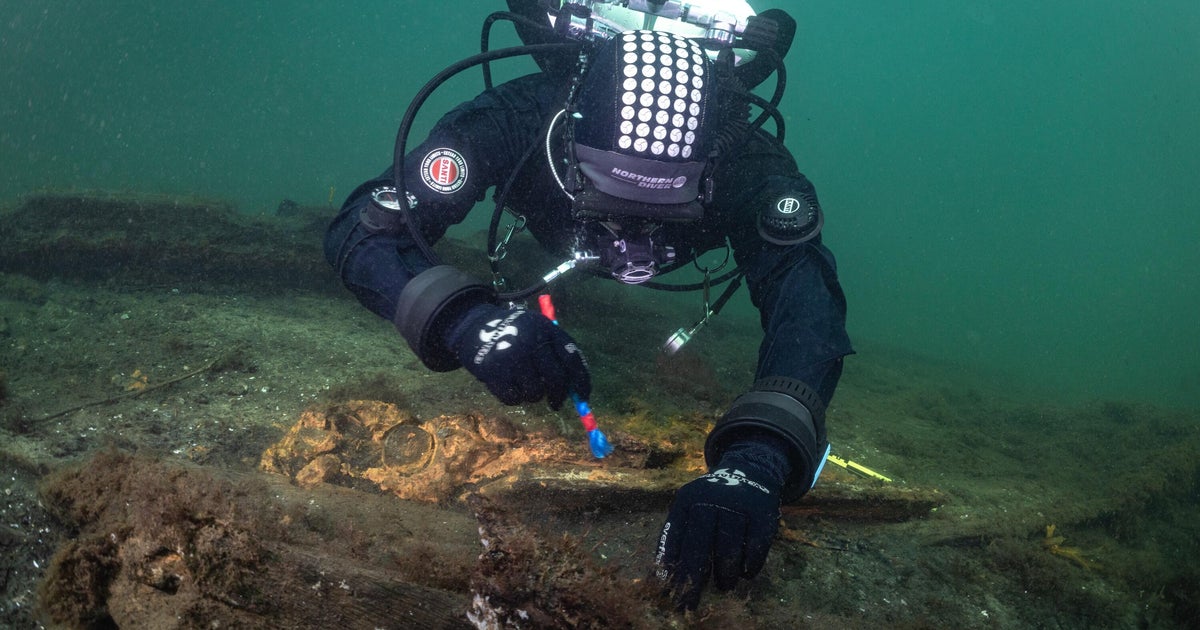
Armour discovered near an ammunition chest According to the University of Southampton, the researchers were examining the ship's superstructure, particularly its forecastle, an elevated fighting platform at the front of the vessel. uncertain
researchers → discover → vessel
While documenting an ammunition-tool chest, they discovered exposed fragments of fine copper-alloy chain mail nearby. asserted
they → document → mail
The location is significant because the area beneath the forecastle may have been used to store military equipment. uncertain
area → use → equipment
Researchers also collected samples of lead and other materials from the chest for further examination. asserted
Researchers → collect → examination
Dr Rodrigo Pacheco-Ruiz, a visiting fellow at the University of Southampton's Centre for Maritime Archaeology and co-investigator on the Griffin project, said historical records indicated that German mercenaries, known as Landsknechts, were aboard the ship when it sank. asserted
it → visit → ship
The newly discovered armour may therefore have been associated with these soldiers and their equipment. uncertain
armour → discover → soldiers
However, researchers have not yet established the precise function of the storage area or identified who owned the chain mail. asserted
who → establish → mail
What the chain mail reveals about medieval soldiers The quality of the armour has attracted particular attention, but researchers caution against assuming that it belonged to a wealthy knight or high-ranking individual. asserted
it → reveal → knight
Rolf Fabricius Warming, a Southampton alumnus and doctoral researcher at Stockholm University who leads the project alongside Professor Johan Rönnby of Södertörn University, explained that high-quality chain mail could remain in use for extended periods. uncertain
mail → lead → periods
Soldiers often repaired and reused their armour rather than replacing it. asserted
Soldiers → repair → it
The fragments could therefore represent older military equipment that remained in service when Griffin sank. uncertain
Griffin → represent → service
Specialist analysis of the armour's manufacturing techniques and material composition could help researchers establish where it originated. uncertain
it → help → techniques
Earlier expeditions had identified lead objects that might have been connected to ammunition moulds, although their precise purpose remains uncertain. uncertain
purpose → identify → moulds
By analysing the newly collected samples, researchers hope to understand how weapons and ammunition were manufactured, stored and supplied aboard the vessel. asserted
weapons → analyse → vessel
Danish king's flagship sank in 1495 Griffin was the royal warship of King Hans of Denmark. asserted
Griffin → sink → Denmark
The vessel also served diplomatic purposes, travelling to England in 1493 as part of an expedition carrying representatives of the monarch. asserted
vessel → serve → monarch
In 1495, the ship was anchored north of Stora Ekö Island off the Swedish coast when an explosion caused it to catch fire and sink. asserted
it → anchor → fire
King Hans was not aboard when the disaster occurred. asserted
disaster → occur → ?
The wreck was rediscovered by divers in the 1970s and has since become an important archaeological site. asserted
wreck → rediscover → 1970s
Its remarkably preserved condition offers researchers an opportunity to investigate late medieval shipbuilding, naval warfare and maritime technology. asserted
condition → preserve → shipbuilding
The Baltic Sea's low salinity has helped protect the wooden wreck from shipworms, which damage submerged timber in many other marine environments. asserted
which → help → environments
Advanced technology helps researchers examine the wreck The latest investigation combines traditional underwater archaeology with robotic seabed mapping and high-resolution three-dimensional imaging. asserted
investigation → help → mapping
Researchers used an uncrewed surface vehicle to survey the seabed while divers documented the ship's structure and archaeological remains. asserted
divers → use → structure
Photogrammetry, which creates detailed three-dimensional images from photographs, helped record the wreck and place the discoveries in their wider context. asserted
which → create → context
The international team hopes that examining the forecastle and its surrounding features will reveal how weapons, armour and military personnel were accommodated aboard the warship. asserted
weapons → hop → warship
In an interview with Live Science, Rolf Fabricius Warming said the researchers also hope to establish whether German mercenaries brought their own ammunition and tools aboard or received them from the Danish royal fleet. asserted
mercenaries → say → fleet
Further analysis of the chain mail and ammunition-tool chest may provide clues about the equipment, its origins and the organisation of military forces aboard one of Europe's important late medieval royal ships. uncertain
analysis → provide → ships
Give feedback · no sign-in needed

No sign-in needed for now. Your note is sent without a name, so it cannot be answered.

History Support