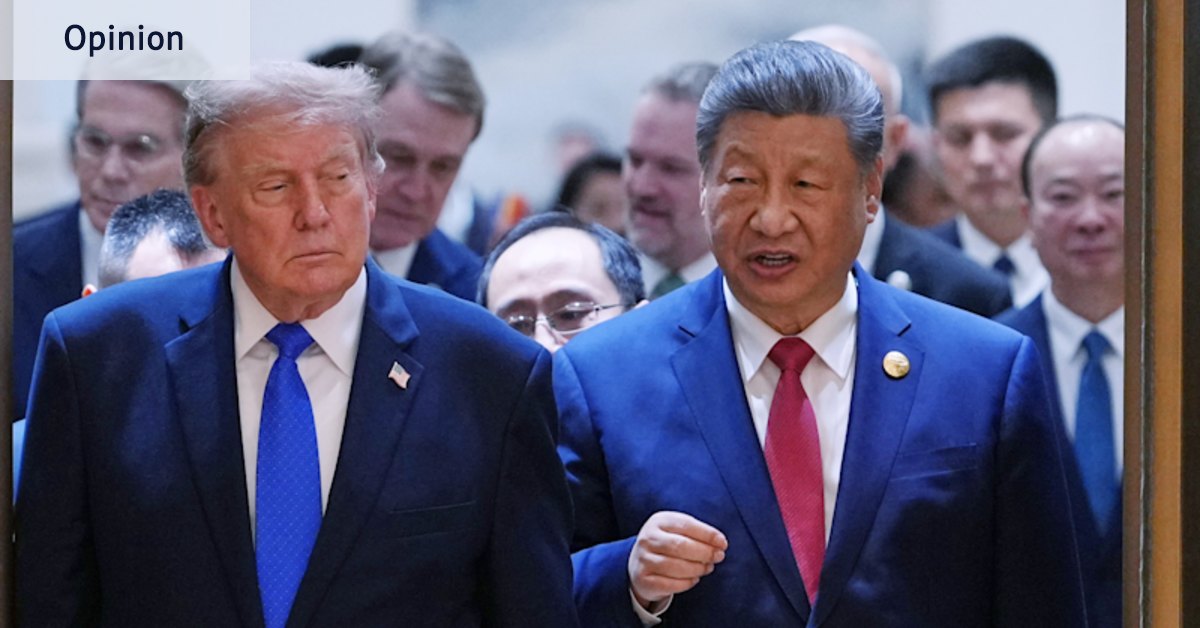
Photo via Al Jazeera

Trump’s tariffs have become America’s new normal

Read the original at Al Jazeera ↗
Cite

Hess, M. (2026, November 28). Trump’s tariffs have become America’s new normal. Al Jazeera. https://www.aljazeera.com/opinions/2026/11/28/trumps-tariffs-have-become-americas-new-normal?traffic_source=rss

Dated from the outlet's own feed. Check the original for its byline.

Al Jazeera · collected 2026-11-28 · by Maximilian Hess

Quick Summary

US President Donald Trump’s recent announcement of new tariff schedules on November 25 met with a muted market response, contrasting sharply with the significant volatility that followed previous tariff announcements in 2025. Despite the proposed tariffs affecting economies accounting for over 53% of US goods trade, financial markets remained relatively stable, with the S&P 500 and 10-year Treasury bond showing little change. This reaction reflects the normalization of tariffs under the Trump administration, as both markets and the USTR have adapted to a more nuanced approach to trade policy, using less controversial legal mechanisms like Section 301 of the Trade Act of 1974.
Written by AI on 2026-11-28, from this article's own text only (the story summary below draws on all the coverage).
See how they differ ↓

AI analysis

Story summary

Despite the Republican Party's significant losses in the midterm elections, President Donald Trump plans to proceed with a new round of tariffs on goods from China, the European Union, Japan, and Mexico, among other countries. The tariffs are part of a broader investigation into market-distorting production levels in 16 major trading partners, led by the U.S. Trade Representative Jamieson Greer. The investigation, which began in March, aims to counter alleged excess industrial capacity in these countries, with findings expected to be released imminently. The move comes after the Supreme Court ruled in February that Trump could not impose unilateral tariffs by declaring an economic emergency, leading to a loss of tariff revenue. Republicans are now reconsidering their support for Trump's tariff policies, potentially giving Democrats an opening to challenge these measures when they take control of Congress. Markets have shown little reaction to the proposed tariffs, indicating that they have become a new normal in U.S. trade policy.

Written for “Trump's Tariffs Face Backlash” on 2026-11-28, grounded in this article and the 57 other(s) covering the same event.

How they differ

21 outlets covered “Trump's Tariffs Face Backlash”.

What each outlet says

One AI summary per outlet of its latest article on this story, written from that article alone and checked against it. Open the article for the outlet's own words.

Al JazeeraThis outlet28 Nov

US President Donald Trump’s recent announcement of new tariff schedules on November 25 met with a muted market response, contrasting sharply with the significant volatility that followed previous tariff announcements in 2025. Despite the proposed tariffs affecting economies accounting for over 53% of US goods trade, financial markets remained relatively stable, with the S&P 500 and 10-year Treasury bond showing…

Trump’s tariffs have become America’s new normal (this article)5 articles from Al Jazeera on this story
The Straits Times27 Nov

Democrats are finding support among Republicans for reconsidering President Trump's tariffs, which could challenge the president's trade agenda. Following significant midterm election losses, some Republican lawmakers are expressing openness to reviewing tariffs on a case-by-case basis, citing rising costs and a desire for predictability. This shift could provide Democrats with an opportunity to collaborate on…

Republicans rethink tariffs, giving Democrats an opening to challenge Trump →6 articles from The Straits Times on this story
Semafor27 Nov

The proposed new US tariffs have drawn criticism from both allies and rivals, potentially exacerbating trade tensions with China before an upcoming leaders’ summit. These tariffs aim to address overproduction by various countries, but critics argue they could undermine Washington’s efforts to encourage businesses to move supply chains away from China, as the tariffs make alternative locations less appealing…

Backlash against proposed US tariffs grows →5 articles from Semafor on this story
Toronto Star28 Nov

President Donald Trump is continuing his agenda despite the Democratic gains in the House and Senate during the midterms. He has pushed for the reinstatement of Nvidia CEO Jensen Huang, who was ousted due to an extramarital affair, and has imposed new tariffs on China and other countries, despite voter concerns about economic impacts. Trump also defended his relationship with Russian President Vladimir Putin and did…

Voters delivered a rebuke. But Trump is sticking to his agenda →5 articles from Toronto Star on this story
The Independent27 Nov

After recent election losses linked to rising costs, several Republican senators are reconsidering their support for President Donald Trump’s tariffs, which have raised prices for consumers. Senators like Todd Young are open to reviewing tariffs on a case-by-case basis, aiming for more consumer-friendly approaches. This shift could allow Democrats to find bipartisan support for challenging some of Trump’s tariff…

Several GOP senators say they are open to challenging Donald Trump’s tariffs as voter anger over prices grows →5 articles from The Independent on this story
The Hindu26 Nov

The U.S. has proposed new 25% tariffs on goods imported from India, with a potential reduction to 17% if a trade deal is signed. This move is seen by exporters and trade experts as not posing a significant threat to Indian exports, given that the tariff levels are similar to those discussed earlier in trade negotiations. The proposed tariffs, which are not final, will be subject to public comment and hearings…

Experts say new U.S. tariffs do not pose substantial threat, India should not rush into trade deal →4 articles from The Hindu on this story
Show 14 more outlets
BBC26 Nov

Faisal Islam discusses President Trump's recent tariff announcements, noting they lack the dramatic presentation of previous rounds. The tariffs, due to be implemented in January or February, are seen as an effort to solidify legal grounds rather than a major shift in policy. While the tariffs on China remain at 20%, the leverage over China has diminished due to a drop in US share of Chinese exports. Additionally…

Faisal Islam: Why Trump's new tariffs are less of a threat →3 articles from BBC on this story
CBS News25 Nov

President Trump announced new tariffs on Wednesday targeting China, the European Union, and twelve other trading partners. The move escalates trade tensions and is part of the administration's ongoing trade war. CBS News provided coverage of the developments.

Trump introduces new tariffs on China, EU and major trading partners →3 articles from CBS News on this story
Dawn26 Nov

The United States has proposed new tariffs ranging up to 20% on several major trading partners including China, the EU, India, and others, following a months-long investigation into alleged unfair trade practices related to excess production. The tariffs, which could take effect as early as January after a public comment period, aim to address what the US claims is market distortion by these countries. Countries…

Major economies balk at new US tariffs over 'unfair' trade →3 articles from Dawn on this story
ABC News (US)27 Nov

Democrats are seeking opportunities to challenge President Trump's tariffs as they prepare to take control of Congress. Some Republicans, facing election losses tied to rising costs, are reconsidering their support for Trump’s tariff policies. This shift could allow for bipartisan cooperation on reviewing specific tariffs, though many Republicans are hesitant to broadly restrict the president's tariff powers…

Republicans rethink tariffs, giving Democrats an opening to challenge Trump →3 articles from ABC News (US) on this story
New York Post25 Nov

The Trump administration has proposed new tariffs on 14 trading partners, including China, Japan, India, and the European Union. The proposed tariffs, which would be implemented under Section 301 of the Trade Act of 1974, aim to address what the administration sees as excessive manufacturing capacity abroad harming American businesses. For China, the tariffs could start at 20% and potentially increase to 40% if…

US proposes new tariffs on 14 trading partners — including China, Japan, EU and India →2 articles from New York Post on this story
Just the News25 Nov

President Trump plans to raise tariffs on goods from China, the EU, and several other countries to address what the administration claims are unfair trade practices and to recoup tariff revenues lost due to a Supreme Court ruling. The proposed tariffs include increasing taxes on Chinese goods by an additional 20% and raising import taxes on products from the EU, Japan, South Korea, Taiwan, and nine other trading…

Trump plans to hike tariffs on goods from China, EU and others →2 articles from Just the News on this story
Washington Examiner26 Nov

President Donald Trump proposed new tariffs on 14 major trading partners shortly after the midterm elections where his party lost control of both houses of Congress. Democrats won at least 228 House seats, with voters attributing losses to issues like tariffs and high prices. Despite these setbacks, Trump moved forward with his tariff plan, demonstrating a steadfast commitment to what he sees as long-term national…

Trump is following his conviction on tariffs, not politics →2 articles from Washington Examiner on this story
Time26 Nov

China and several other countries are pushing back against the Trump Administration’s proposed tariffs, with China specifically warning it will take “necessary measures” to retaliate. The U.S. announced tariffs targeting 14 trading partners, including a 20% tariff on China, which could potentially double to 40% if China fails to comply with existing trade agreements. The tariffs are set to take effect early next…

China and Brazil Lead Pushback Against Trump’s ‘Unacceptable’ Tariff Threats →2 articles from Time on this story
ABC News (AU)25 Nov

President Donald Trump has announced new tariffs on 14 major trading partners, including China, Japan, and the European Union, citing an investigation into excess industrial capacity. The tariffs range from 10 to 20 percent, with some Chinese goods facing a total rate of 45 percent when combined with existing tariffs. Brazil faces specific tariffs on aircraft and sugar. The move comes despite a Supreme Court ruling…

Trump unveils suite of new tariffs on major trading partners →
Daily Caller25 Nov

President Trump announced new tariff hikes targeting China and 13 other trading partners, citing unfair trade practices such as overproduction and trade deficits. The proposed tariffs include a 20 percent tariff on certain Chinese imports, potentially rising to 40 percent if China fails to comply with trade agreements. The U.S. is also considering high tariffs on imports from the EU and other countries, aiming to…

Trump Unveils New Tariff Hikes Targeting China And 13 Other Trade Partners →
The Daily Wire25 Nov

President Trump’s administration proposed new tariffs on imports from 14 major trading partners, including China, Japan, and the European Union, after a Supreme Court ruling struck down previous tariff programs. The proposed tariffs, varying by country and product, aim to address what the administration deems unfair foreign manufacturing practices. For instance, China could face up to 20% tariffs, Vietnam up to 35%…

Trump Takes Another Swing At Tariffs After Supreme Court Setback →
Sydney Morning Herald26 Nov

Donald Trump announced new tariffs on major trading partners including China, the EU, Japan, and others, despite ongoing legal challenges to earlier tariffs. US inflation data released on the same day showed a 3.8% headline inflation rate for October, the highest in years, reflecting the economic impact of existing tariffs. The article argues that these tariffs ultimately hurt US companies and consumers by…

Trump strikes again even as America feels the pain →
CBC26 Nov

China and several U.S. trading partners, including Japan, have protested against new tariffs announced by the Trump administration, which are set to take effect in February or March. The tariffs aim to address what the U.S. deems as excess manufacturing capacity in these economies. Despite initial concerns, stock markets in Europe and Asia showed gains, with analysts suggesting the impact will be modest due to…

China, U.S. allies push back on latest round of White House tariffs →

Where they agree and split

Agreed

AI · cited, from two or more outlets

  • The tariffs are being imposed on 14 major trading partners, including China, the European Union, Japan, and Taiwan.14
  • The tariffs are being imposed under Section 301 of a 1974 US trade law.15
Quoted from the coverage (4)

Chinese imports will face a 20% levy, but it could rise to 40% if a trade truce between the United States and China doesn’t yield a favorable deal.

8 outlets

“Imposing an additional, specific tariff on sugar imports from Brazil and an additional 10% tariff on finished aircraft exports from Brazil is intended to help bring Brazil to the table,” said the office of the USTR (U.S. Trade Representative).

7 outlets

The announcement also comes weeks before the US-China trade truce, agreed between President Donald Trump and China’s President Xi Jingping last year, runs out, while trade talks with India remain unfinished.

6 outlets

“The so-called overcapacity is a false narrative, and China opposes using it as a pretext for political manipulation.”

5 outlets

Framing

How the first headlines put it

  • Al Jazeera focuses on the countries targeted by the tariffs, while Time highlights the broader impact on global trade tensions.15
  • The Toronto Star and ABC News emphasize the political implications of the tariffs, highlighting the potential for Republicans to reconsider their support.23
Attributed to a source3
Stated as fact10
The headlines (13)

US ready to slap tariffs on China, EU and others over subsidized production, AP sources say Toronto Star · attributed to a source

US ready to slap tariffs on China, EU and others over subsidised production: Sources The Straits Times · attributed to a source

Trump administration set to unveil new tariffs after probe on excess factory capacity: sources The Hindu · attributed to a source

Trump to double down on tariffs after midterms defeat Semafor · stated as fact

Trump eyes tariff blitz on China, EU, Mexico and Japan New York Post · stated as fact

US preparing to unveil new tariffs on global trading partners BBC · stated as fact

Trump readies fresh wave of tariffs on China, the European Union and 14 other trading partners The Independent · stated as fact

Trump administration to issue new tariffs on 14 trading partners CBS News · stated as fact

US unveils proposed tariffs on major partners, including EU, China and India Dawn · stated as fact

US plans to hike tariffs on China, EU, Brazil and others over subsidized production ABC News · stated as fact

Trump unveils suite of new tariffs on major trading partners ABC News (Australia) · stated as fact

Trump proposes a new wave of tariffs on China, E.U. and other trade partners NBC News · stated as fact

Trump plans to hike tariffs on goods from China, EU and others Just the News · stated as fact

The full story: what happened, how it changed, and all 58 articles →

Compared with similar articles

This article reads leans left and hedges 5% of its claims. Each row says how that neighbour differs.
The Straits Times
Leans right further right than this Hedges 4 of 30 claims Outlet record 64/100
Washington Examiner
Leans strongly right further right than this Hedges 0 of 6 claims Outlet record 66/100
Semafor
Leans left Hedges 1 of 5 claims Outlet record 70/100
BBC News
Centre further right than this Hedges 0 of 15 claims Outlet record 70/100
The Independent
Leans right further right than this Hedges 5 of 21 claims Outlet record 59/100
The Hindu
Leans right further right than this Hedges 2 of 25 claims Outlet record 72/100
Daily Mail
Leans right further right than this Hedges 0 of 4 claims Outlet record 68/100
BBC News
Hedges 1 of 3 claims Outlet record 70/100
The Sydney Morning Herald
Leans left Hedges 3 of 41 claims Outlet record 61/100
Dawn
Leans right further right than this Hedges 4 of 29 claims Outlet record 64/100

Story

Trump's Tariffs Face Backlash
Politics · 58 article(s) covering the same event. Compare every outlet's account →
How this article was measured signals, leaning charts, publisher record, byline, topics and claims

Signals How these are calculated →

Claims extracted
55
sentences that state something as happening or true
Uncertain
5%
3 of 55 hedged ("reportedly", "may", "according to")
Leaning
Leans left
of the writing, not the subject · beta estimate
Publisher signals
60/100
Al Jazeera's corrections and hedging, across everything collected from it. Not a measure of accuracy.
Outlets on this story
58
Politics
Same framing elsewhere
1
articles that frame the event the way this one does
Analyzed 2026-11-28 · how these are computed

How this is being covered How these are calculated →

Article leaning vs. publisher reliability
Source leaning vs. consistency

Publisher

Al Jazeera · 6858 article(s) · 5 correction(s) detected
Running correction rate · 5 correction(s)

Who wrote this

Maximilian Hess
2 article(s) here · 1 carrying a prediction
US markets may face volatility driven by artificial intelligence (AI) and its geoeconomics, but they no longer treat tariffs as so frightful.
2026-11-28 · assertive framing · Trump’s tariffs have become America’s new normal
Even if the latest crisis is averted, Europe can no longer assume that Washington will guarantee its security.
2026-10-23 · assertive framing · Europe needs a war economy
Also by Maximilian Hess
Europe needs a war economy
2026-10-23 · Al Jazeera
Nothing else under this byline is closely related to this article, so these are simply their most recent.

Topics

Japan Section 301 USTR United States the European Union

Subjects

Trump PERSON · 8× Japan GPE · 5× USTR ORG · 3× China GPE · 2× European NORP · 2× Taiwan GPE · 2× Vietnam GPE · 2× Donald Trump PERSON · 1× United States GPE · 1× the European Union ORG · 1×

Narrative

In the 2026 fiscal year, which ended in September, it widened to 6.2 percent, or $2 trillion – about $140bn more than the CBO had projected in February, largely because the Supreme Court’s ruling slashed customs revenue and forced refunds of most of the $166bn collected under IEEPA.
framing: assertive · carried by 1 article(s) · first seen 2026-11-28
US markets may face volatility driven by artificial intelligence (AI) and its geoeconomics, but they no longer treat tariffs as so frightful.
2026-11-28 · Al Jazeera
Trump’s tariffs have become America’s new normal · assertive framing

Claims (55 extracted, 3 hedged)

Markets hardly blinked at the announcement of a new series of proposed tariff schedules from United States President Donald Trump’s administration on November 25. asserted
Markets → blink → November
Although the affected economies – including the European Union, China, Japan, Indonesia and Taiwan – account for more than 53 percent of US goods trade, the announcement was met with something of a whimper. asserted
announcement → affect → whimper
On November 25, the S&P 500 and the benchmark 10-year Treasury bond hardly moved. asserted
S&P → move → November
Compare that with the turmoil that followed Trump’s April 2, 2025, “Liberation Day” announcements. asserted
that → compare → announcements
The S&P 500 fell 10.5 percent over the next two trading days, wiping some $5 trillion off its value – a record two-day loss. asserted
S&P → fall → loss
US Treasuries, normally a haven in times of stress, sold off alongside them as the yield on 10-year Treasuries posted its biggest weekly jump since 2001. asserted
yield → sell → 2001
US markets may face volatility driven by artificial intelligence (AI) and its geoeconomics, but they no longer treat tariffs as so frightful. uncertain
they → face → tariffs
That is because Trump’s tariffs have become normalised – in two senses of the word. asserted
tariffs → become → word
The first is that the markets have accepted that tariffs will be a fact of life under the Trump administration. asserted
tariffs → accept → administration
He told ABC: “I believe very strongly in tariffs. asserted
I → tell → tariffs
I believe that Japan … should pay a major tax, like a 15 or a 20 percent tax on any product they sell in the United States” – in 1989. asserted
they → believe → 1989
Fifteen percent is indeed Japan’s proposed tariff rate. asserted
percent → propose → ?
You can’t teach an old dog new tricks. asserted
You → teach → tricks
True, Trump suffered a landslide rebuke to his economic policies and geopolitical agenda in the November 3 midterms. asserted
Trump → suffer → midterms
Democrats took both houses of Congress and flipped at least seven Senate seats – including Kansas, which had not elected a Democratic senator in nearly a century. asserted
which → take → century
But with his almost gleeful vow to become “Mr Veto”, there should be no expectation that tariffs will be swiftly overturned. asserted
tariffs → become → vow
The second normalisation is in the sense that Trump and the Office of the US Trade Representative (USTR) are now pursuing the tariffs using far less controversial and less blunt instruments. asserted
Trump → pursue → instruments
That follows a string of defeats at the US Court of International Trade and the US Supreme Court for his broader approach of using justifications under the International Emergency Economic Powers Act (IEEPA). asserted
That → follow → Act
Instead, the latest tariffs were proposed under Section 301 of the Trade Act of 1974, at the end of an eight-month investigation into what USTR calls “structural excess capacity” in manufacturing. asserted
USTR → propose → manufacturing
Ronald Reagan used them in 1987 to impose 100 percent duties on $300 million worth of Japanese electronics in a dispute over semiconductors. asserted
Reagan → use → semiconductors
Bill Clinton used them in 1999 to slap 100 percent tariffs on $308 million of European goods. asserted
Clinton → use → goods
The prospect of them being overturned by the courts is far more remote. asserted
them → overturn → courts
Because Section 301 tariffs require an investigation into alleged unfair trade practices, complete with hearings and public comment periods, these announcements were largely priced in by the markets. asserted
announcements → require → markets
Although there is much quibbling about some of the justifications USTR cited, the US courts – particularly this Supreme Court – are likely to defer to the White House even where its reasoning seems prima facie questionable. asserted
reasoning → be → House
A parallel Section 301 action, which has imposed tariffs on the EU since July, rests on the claim that the bloc has failed to implement an effective ban on imports made with forced labour, even though European rules on prison labour are considerably stricter than those in the US. uncertain
rules → impose → US
Helping ease digestion of the latest move, Trump has at least honoured the terms of agreements he made with countries such as Japan, Vietnam and the EU on capping tariff levels after his initial IEEPA tariff efforts. asserted
he → help → efforts
The proposed rates top out at 15 percent for the EU, Japan, South Korea, Taiwan and Switzerland, and at 20 percent for Vietnam, in line with their deals. asserted
rates → propose → deals
Outside China, the new rates would not stack on top of the forced labour duties or on the Section 232 tariffs on steel, aluminium, cars and other specific industries. asserted
rates → stack → steel
They are set to lift the average US statutory tariff rate from 11.4 percent to 13.9 percent – and the rate for Mexico, the largest US trading partner after the EU, is yet to be announced. asserted
rate → set → EU
That compares with a weighted average tariff rate of just 2.3 percent when Trump returned to office in January 2025. asserted
Trump → compare → January
And Trump is clearly still willing to use tariffs as a weapon in trade disputes. asserted
Trump → use → disputes
USTR has floated fallback rates should talks falter: 20 percent for the EU and Japan, 25 percent for South Korea and Taiwan, and 35 percent for Vietnam. asserted
talks → float → Vietnam
The Section 301 investigation for China found that tariffs of up to 40 percent were “warranted”, though USTR proposed only a 20 percent tariff, albeit one that stacks on top of the Section 301 tariffs Trump imposed on China in his first term. asserted
Trump → find → term
That would give many Chinese goods a combined tariff rate of about 45 percent. asserted
That → give → percent
This is in line with the cap agreed in the trade truce Trump negotiated with Xi Jinping in Busan, South Korea, in October 2025, and extended in September until January 10, 2027. asserted
Trump → agree → January
However, Trump is clearly signalling that if the truce is not extended again, the combined China tariff rate will go up, to as much as 65 percent. asserted
rate → signal → percent
This is set to be at the heart of negotiations with Xi at the G20 summit at Trump’s Doral resort outside Miami on December 14-15. asserted
This → set → December
The question is not whether tariffs, and the threat of more, will continue to be among the most frequently used tools in the Trump administration’s geoeconomic arsenal. asserted
tariffs → continue → arsenal
Instead, the question is how long tariffs can outlast their proponents. asserted
tariffs → outlast → proponents
Tariffs are hugely unpopular: In NBC News’s exit poll, 66 percent of voters said Trump’s tariff policies had hurt the national economy. asserted
policies → say → economy
…and 15 more, not listed.
Give feedback · no sign-in needed

No sign-in needed for now. Your note is sent without a name, so it cannot be answered.

History Support