That is 0 articles you have read today.
The Aporia is free and carries no advertising, so readers are the only
thing paying for it. If you are getting this much out of it, a small
donation is what keeps it independent.
You have read 0 articles today.
That is more than the 15 a day The Aporia gives away,
and well past what it can carry on nothing. Your allowance resets at
midnight.
There is no advertising here and nothing about you is sold, so readers
are the only thing paying for it. If the site is worth this much of
your day, it is worth a few dollars.
Everything else stays open: the front page, the
directory and search do
not count against this, and neither does re-opening something you have
already read today.
Photo via Toronto Star
South Africa makes a last-ditch effort to save centuries-old baobab trees dug up for export
Imray, G., & Nqunjana, A. (2026, November 29). South Africa makes a last-ditch effort to save centuries-old baobab trees dug up for export. Toronto Star. https://www.thestar.com/news/world/africa/south-africa-makes-a-last-ditch-effort-to-save-centuries-old-baobab-trees-dug-up-for-export/article_d65fe606-c4ab-5cf5-a839-03007c41f686.html
Imray, Gerald, and Alfonso Nqunjana. “South Africa makes a last-ditch effort to save centuries-old baobab trees dug up for export.” Toronto Star, 29 Nov. 2026, https://www.thestar.com/news/world/africa/south-africa-makes-a-last-ditch-effort-to-save-centuries-old-baobab-trees-dug-up-for-export/article_d65fe606-c4ab-5cf5-a839-03007c41f686.html.
Imray, Gerald, and Alfonso Nqunjana. “South Africa makes a last-ditch effort to save centuries-old baobab trees dug up for export.” Toronto Star, November 29, 2026. https://www.thestar.com/news/world/africa/south-africa-makes-a-last-ditch-effort-to-save-centuries-old-baobab-trees-dug-up-for-export/article_d65fe606-c4ab-5cf5-a839-03007c41f686.html.
Dated from the outlet's own feed. Check the original for its byline.
Toronto Star
· collected 2026-11-29 · by Gerald Imray, Alfonso Nqunjana
Quick Summary
South African officials have relocated five ancient baobab trees, some centuries old, from a port in Durban back to their natural habitat in the Timbavati Nature Reserve near Kruger National Park. The trees were illegally uprooted and transported nearly 1,000 kilometers before being discovered by the Environment Ministry in July. This move is part of an effort to preserve the culturally and ecologically significant baobabs, which are protected species in South Africa.
Written by AI on 2026-11-29,
from this article's own text only (the story summary below draws on all the coverage).
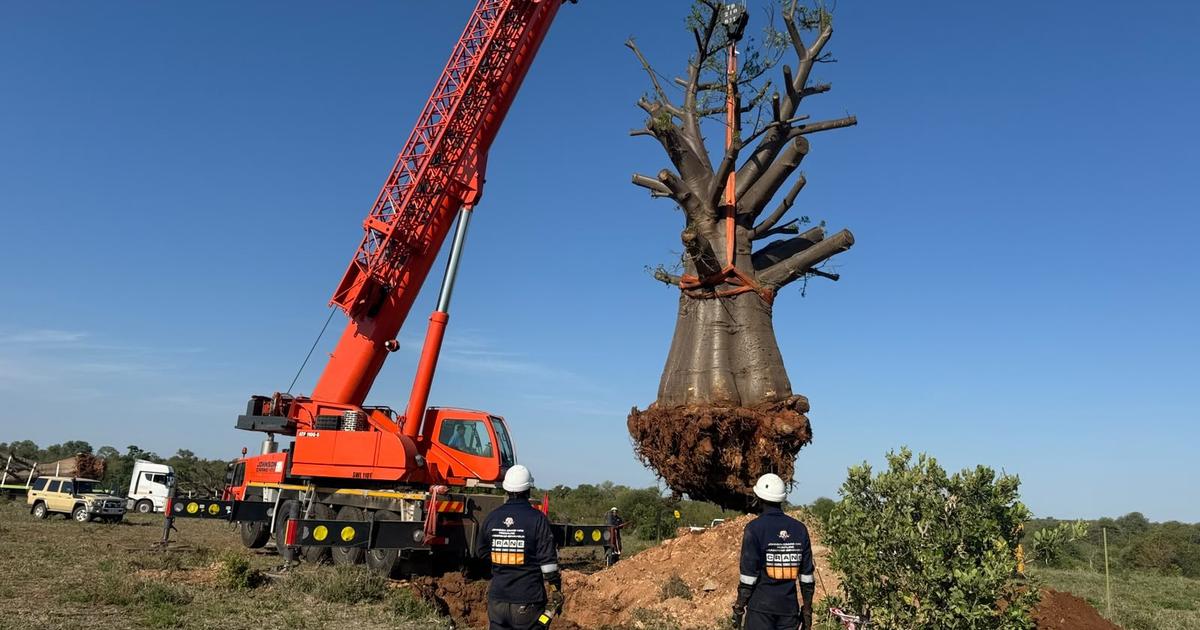
Five centuries-old baobab trees have been replanted in a South African nature reserve after being illegally uprooted and transported over 900 kilometers to Durban’s port for export to Georgia. Environment Ministry officials found the protected trees lying on their sides in a freight company’s parking lot in Durban in July. The Baobab Foundation, a South African conservation charity, played a crucial role in saving the trees. The operation involved oversized trucks and cranes and has raised concerns about the survival of the baobabs, as they spent at least four months out of the ground before being replanted. Despite the stress, the trees have begun to sprout leaves, offering hope for their survival.
Written for “South Africa Baobab Trees Replanted After Smuggling Attempt” on 2026-11-29,
grounded in this article and the 2 other(s) covering the same event.
Why this leaning score
This article does not take a side on a contested political
question, so it has no leaning score. That is an
answer rather than a gap: a match report or a rescue can be warmly
or critically written without being left or right, and scoring it
anyway is how approval of a subject gets recorded as a political
position.
No political leaning scored for article 188221 · logged 2026-11-29
How they differ
3 outlets covered “South Africa Baobab Trees Replanted After Smuggling Attempt”.
What each outlet says
One AI summary per outlet of its latest article on this story, written from that article alone and checked against it. Open the article for the outlet's own words.
Toronto StarThis outlet29 Nov
South African officials have relocated five ancient baobab trees, some centuries old, from a port in Durban back to their natural habitat in the Timbavati Nature Reserve near Kruger National Park. The trees were illegally uprooted and transported nearly 1,000 kilometers before being discovered by the Environment Ministry in July. This move is part of an effort to preserve the culturally and ecologically significant…
South Africa makes a last-ditch effort to save centuries-old baobab trees dug up for export (this article)Semafor25 Nov
Baobab trees, some over two centuries old, were replanted in a South African nature reserve after being illegally uprooted and transported to Durban’s port for export to Georgia. The trees, which are culturally significant in Africa, were moved over 900 kilometers in three days on flatbed trucks. The Baobab Foundation, which helped save the trees, noted that similar incidents of baobab smuggling occur across the…
South Africa’s Environment Ministry and the Baobab Foundation have made efforts to replant five illegally uprooted baobab trees, which are between 200 and 300 years old, back into their natural habitat in the Timbavati Nature Reserve. The trees, each weighing between 20 and 30 tonnes, were found lying on their sides in a Durban carpark and were destined for export to Georgia in the Caucasus. Despite the stress of…
Police said that the shooting on Sunday at the home in a township just outside Pretoria may have been a revenge attack for a mass shooting nearby last year when gunmen opened fire in a hostel and killed 12 people, including children.
A Kenyan pastor has been convicted on 191 murder charges after he forced followers to starve their children and themselves so they would die and have an opportunity to enter heaven and be with Jesus.
Log in
Zambia will sign a revised health agreement with the United States that will not include contentious clauses committing the African nation to share patient health data and specimens with the U.S. government.
The Trump administration has defended the policy as a way to quickly remove immigrants who have final deportation orders from the U.S. when their home countries might not immediately take them back.
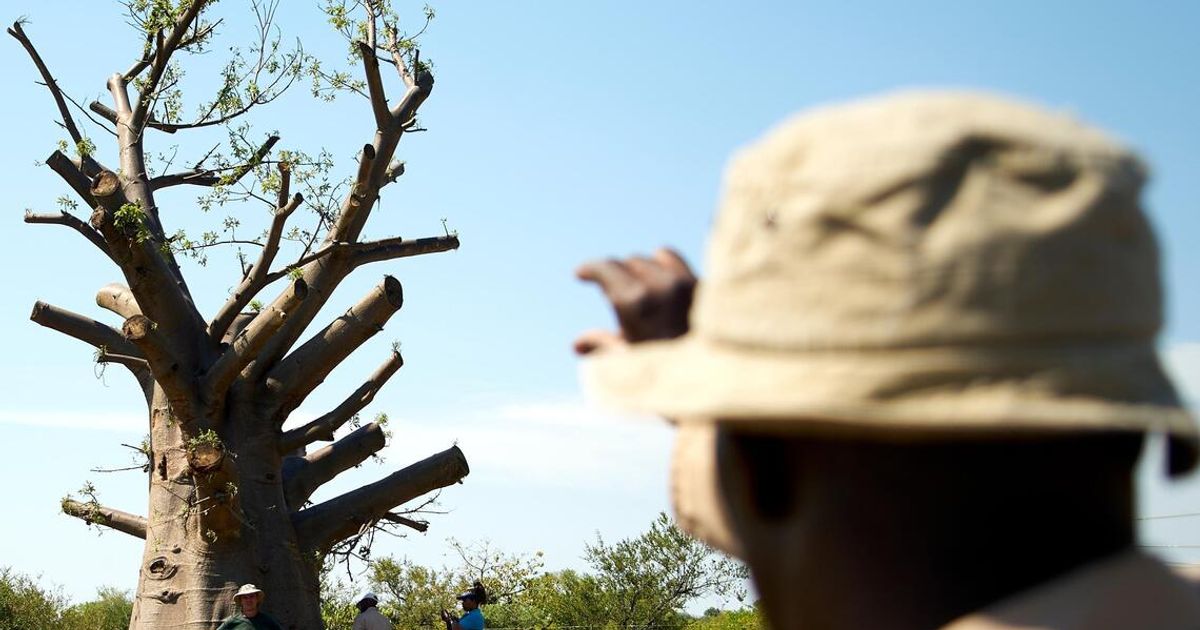
Five large baobab trees have been transported nearly 1,000 kilometers (621 miles) and replanted in their natural habitat in northern South Africa in a last-ditch effort to save them.
asserted
trees → transport → them
The centuries-old trees had been uprooted without authorization and taken to a port for export.
asserted
trees → uproot → export
Environment Ministry officials found the protected baobabs — one of Africa’s iconic species — in July, lying on their sides in a freight company’s parking lot in the port city of Durban in eastern South Africa.
asserted
officials → find → Africa
They were replanted earlier this month in the privately owned Timbavati Nature Reserve near South Africa’s famous Kruger National Park.
asserted
They → replant → Park
Give feedback · no sign-in needed
No sign-in needed for now. Your note is sent without a name, so it cannot be answered.

 The Aporia