

What happened
The outlets' own sentences, most widely reported first. Hover or tap one to see who reported it.
What each outlet says
One AI summary per outlet of its latest article on this story, written from that article alone and checked against it. Open the article for the outlet's own words.
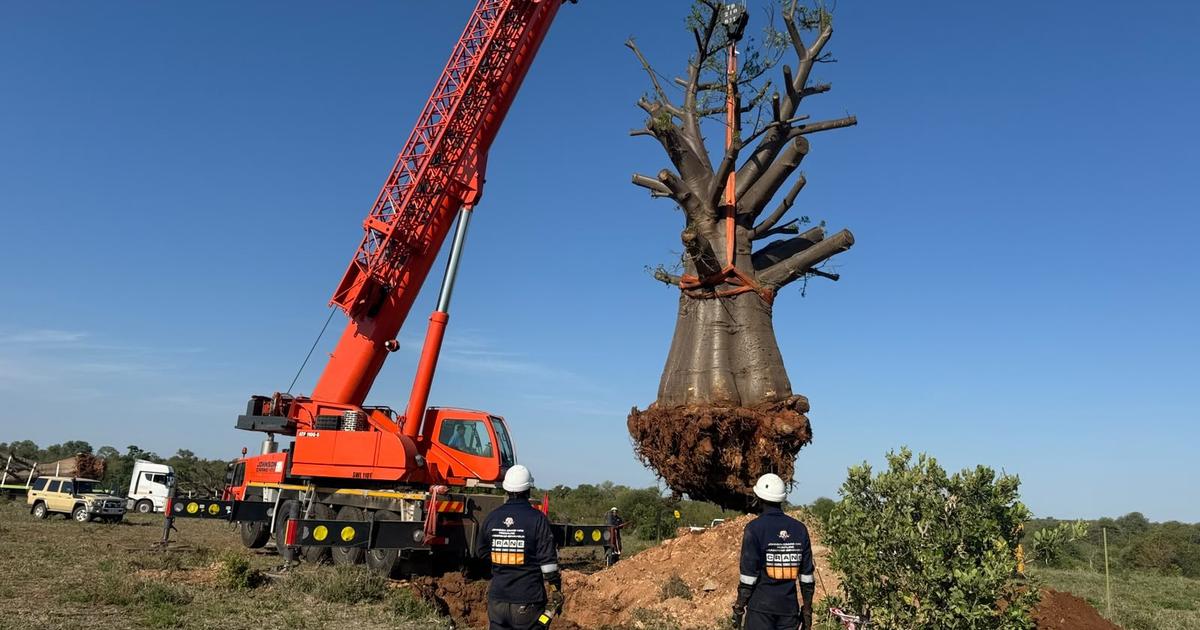
Baobab trees, some over two centuries old, were replanted in a South African nature reserve after being illegally uprooted and transported to Durban’s port for export to Georgia. The trees, which are culturally significant in Africa, were moved over 900 kilometers in three days on flatbed trucks. The Baobab Foundation, which helped save the trees, noted that similar incidents of baobab smuggling occur across the…
South Africa baobab trees replanted after smuggling attempt →South African officials have relocated five ancient baobab trees, some centuries old, from a port in Durban back to their natural habitat in the Timbavati Nature Reserve near Kruger National Park. The trees were illegally uprooted and transported nearly 1,000 kilometers before being discovered by the Environment Ministry in July. This move is part of an effort to preserve the culturally and ecologically significant…
South Africa makes a last-ditch effort to save centuries-old baobab trees dug up for export →South Africa’s Environment Ministry and the Baobab Foundation have made efforts to replant five illegally uprooted baobab trees, which are between 200 and 300 years old, back into their natural habitat in the Timbavati Nature Reserve. The trees, each weighing between 20 and 30 tonnes, were found lying on their sides in a Durban carpark and were destined for export to Georgia in the Caucasus. Despite the stress of…
South Africa makes a last-ditch effort to save centuries-old baobab trees dug up for export →How it changed
- 25 Nov
Five baobabs have been replanted in a South African nature reserve after being uprooted and trucked to Durban’s port, where they were going to be illegally exported.
- 29 Nov
The centuries-old trees had been uprooted without authorization and taken to a port for export.
Coverage 3 articles
29 Nov South Africa makes a last-ditch effort to save centuries-old baobab trees dug up for exportSouth Africa’s Environment Ministry and the Baobab Foundation have made efforts to replant five illegally uprooted baobab trees, which are between 200 and 300 years old, back into their natural habitat in the Timbavati Nature Reserve. The trees, each weighing between 20 and 30 tonnes, were found lying on their sides in a Durban carpark and were destined for export to Georgia in the Caucasus. Despite the stress of…The Straits Times
 29 Nov South Africa makes a last-ditch effort to save centuries-old baobab trees dug up for exportSouth African officials have relocated five ancient baobab trees, some centuries old, from a port in Durban back to their natural habitat in the Timbavati Nature Reserve near Kruger National Park. The trees were illegally uprooted and transported nearly 1,000 kilometers before being discovered by the Environment Ministry in July. This move is part of an effort to preserve the culturally and ecologically significant…Toronto Star
 25 Nov South Africa baobab trees replanted after smuggling attemptBaobab trees, some over two centuries old, were replanted in a South African nature reserve after being illegally uprooted and transported to Durban’s port for export to Georgia. The trees, which are culturally significant in Africa, were moved over 900 kilometers in three days on flatbed trucks. The Baobab Foundation, which helped save the trees, noted that similar incidents of baobab smuggling occur across the…Semafor
Keep exploring
 Recent · 29 NovMike Love, Beach Boys Co-founder, Dies At 85
 Recent · 26–29 NovArsenal Vs Man City Premier League Match
 Recent · 21–29 NovNetanyahu Offers Rotational Premiership To Eisenkot
 Recent · 24–29 NovWoman Evicted After AI Rent Promise
 Recent · 28–29 NovMyanmar Military Airstrikes Kill Dozens
 Recent · 27–29 NovTaiwan Votes on Nuclear Power
 Recent · 28–29 NovMagnitude 5 Earthquake Rattles Los Angeles
 Recent · 27–29 NovLandslide Strikes Mornington Peninsula
 Recent · 28–29 NovTrump-backed World Liberty Crypto Token Falls
 Recent · 24–29 NovVictorian Election Results 2026
Built 2026-11-29 from 3 articles. Every sentence on this page is quoted from the linked article; nothing was written by a model except the Summary and the items marked AI, which cite their sources, and the questions and labels under "Disputed". Photos are from the outlets that covered the story, never from articles our check marks sensitive.