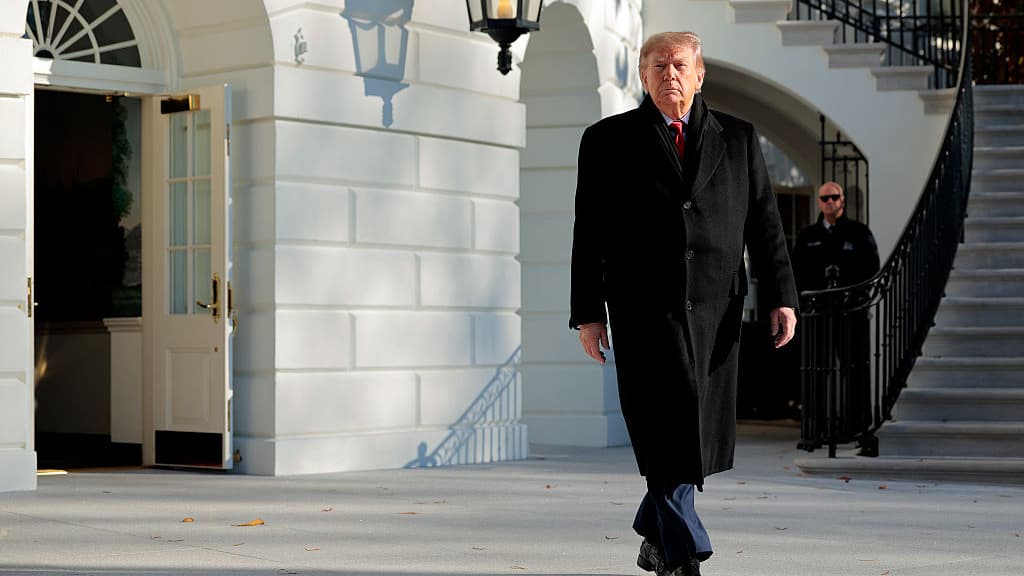
Photo via TIME

What to Know About the USPS’s Rule for Mail-In Ballots

Read the original at TIME ↗
Cite

Schneid, R. (2026, August 24). What to Know About the USPS’s Rule for Mail-In Ballots. TIME. https://time.com/article/2026/08/23/what-to-know-about-the-usps-s-rule-for-mail-in-ballots/

Dated when The Aporia collected the article, usually within hours of publication. Check the original for its exact date and byline.

TIME · collected 2026-08-24 · by Rebecca Schneid

Quick Summary

The United States Postal Service (USPS) has issued a 95-page final rule that requires employees to verify federal ballot mailings comply with new requirements before accepting them from election officials. The rule was designed to comply with President Donald Trump's executive order from March 31 and would take effect immediately if the government obtains relief from two existing injunctions. Two court orders, one issued by Massachusetts U.S. District Court Judge Indira Talwani on June 25 and another on August 11, block the implementation of this rule before midterm elections in November. Critics argue that Trump's executive order is an attempt to federalize oversight of elections, which is a duty reserved for states and Congress under the Constitution.
Written by AI on 2026-08-24, from this article's own text only (the story summary below draws on all the coverage).
See how they differ ↓

AI analysis

Story summary

The Trump Administration's Efforts to Restrict Mail-In Voting

President Donald Trump's executive order, issued on March 31, aimed to create a federal list of eligible voters and restrict mail-in voting by requiring states to use specific envelopes and barcodes. The US Postal Service (USPS) was instructed to deliver ballots only to those on the approved list.

However, this move was blocked by two court orders in Massachusetts, issued by Judge Indira Talwani on June 25 and August 11. These injunctions prevented the USPS from implementing the new rule before the midterm elections in November.

In response, the Trump administration appealed to the Supreme Court, which initially decided to allow the restriction of mail-in voting to proceed while the case was ongoing. This decision was seen as a preliminary victory for President Trump.

However, the Supreme Court's unsigned opinion did not declare the executive order lawful, and Democratic-led states argued that permitting the administration to push ahead with changes would contribute to pre-election chaos.

In response, California Governor Gavin Newsom announced that his state would sue again to block federal changes to mail voting. The California legislature also proposed two new laws that would make it a crime to interfere with the delivery of mail ballots, punishable by up to four years in prison.

The USPS has submitted a motion to dissolve one of the court injunctions blocking the implementation of the Trump administration's plan, and published new guidelines that could take effect if legal barriers are removed.

Written for “Trump's Mail Voting Restrictions” on 2026-11-20, grounded in this article and the 15 other(s) covering the same event.

How they differ

9 outlets covered “Trump's Mail Voting Restrictions”.

What each outlet says

One AI summary per outlet of its latest article on this story, written from that article alone and checked against it. Open the article for the outlet's own words.

TimeThis outlet24 Aug

The United States Postal Service (USPS) has issued a 95-page final rule that requires employees to verify federal ballot mailings comply with new requirements before accepting them from election officials. The rule was designed to comply with President Donald Trump's executive order from March 31 and would take effect immediately if the government obtains relief from two existing injunctions. Two court orders, one…

What to Know About the USPS’s Rule for Mail-In Ballots (this article)
NBC News28 Aug

Federal Judge Indira Talwani has blocked a US Postal Service regulation that would have added bureaucracy to mail-in ballot process, citing it as likely unlawful and potentially disenfranchising voters. The measure was part of President Donald Trump's executive order on mail-in ballots, which aimed to track ballots and reject those submitted by people not on a federal list of eligible voters. Talwani's decision…

Judge blocks Trump’s Postal Service regulation on mail-in ballots →3 articles from NBC News on this story
The Guardian28 Aug

Federal Judge Indira Talwani has temporarily blocked Donald Trump's executive order limiting mail voting in midterms for 14 days. The ruling came a week before mail ballots are set to be sent out and follows a recent Supreme Court decision that overturned a previous injunction against the order, but did not rule on its legality. Nearly one-third of Americans vote by mail, and election officials say there is not…

Federal judge again halts Trump’s executive order limiting mail voting in midterms →3 articles from The Guardian on this story
Los Angeles Times27 Aug

California and other Democratic-led states have filed a lawsuit against the U.S. Postal Service's new rules for mail ballots, which were issued in response to an executive order from President Trump in March. The rules require states to submit voter lists to the Postal Service and reject ballots that don't match those lists, and 24 state attorneys general are asking a federal court to halt implementation of these…

California, other states sue again to block new Postal Service rules for mail ballots →2 articles from Los Angeles Times on this story
The Independent28 Aug

US District Judge Indira Talwani issued a temporary restraining order on Thursday blocking key elements of a new US Postal Service policy directed by President Donald Trump that restricts mail-in voting ahead of the November congressional elections. The policy, which took effect on Wednesday, required states to submit lists of mail-in voters to an electronic database and obtain USPS approval for ballot envelopes…

Judge blocks Trump mail ballot rules over ‘overwhelming risk’ to voters →2 articles from The Independent on this story
The Bulwark26 Aug

The article reports on President Trump's efforts to potentially subvert the 2022 midterm elections through various means. Despite a recent Supreme Court decision staying a lower court injunction related to mail-in ballots, the author argues this is not a definitive win for Trump and notes he remains determined to prevent a free and fair election if possible. The article also mentions other attempts by the…

Prepare for Trump to Try to Steal the Midterms →2 articles from The Bulwark on this story
Show 3 more outlets
Mother Jones25 Aug

The US Supreme Court has temporarily blocked federal court rulings that had blocked President Trump's executive order severely restricting mail-in voting. The unsigned opinion, with dissents from Justices Jackson, Sotomayor, and Kagan, stated that states have not shown how they would be harmed by the order. This decision does not rule on the merits of the executive order but overrules lower court rulings…

SCOTUS Hands Trump a Temporary Win In His Crusade to Restrict Mail Voting →
Fox News28 Aug

A former White House deputy counsel, Gene Hamilton, is saying that following a Supreme Court ruling, federal agencies can now move forward with parts of President Trump's election-integrity order, which includes new ballot-mail standards and efforts involving state citizenship lists. The court's majority rejected a challenge from opposing states who claimed harm could come from the order. Hamilton notes that the…

Mail-voting crackdown moves ahead as Trump court win opens door to federal action →
UPI28 Aug

A federal judge has blocked the Trump administration from enforcing mail-in voting restrictions ahead of November's midterm elections. U.S. District Judge Indira Talwani issued a 14-day temporary restraining order, citing "substantial confusion" and potential disenfranchisement due to time constraints. The rule in question requires the US Postal Service to screen mail-in ballots for compliance with envelope…

Federal judge blocks Trump administration mail-in voting restrictions →

Where they agree and split

The full story: what happened, how it changed, and all 16 articles →

Compared with similar articles

This article reads leans strongly left and hedges 6% of its claims. Each row says how that neighbour differs.
NBC News
Leans right further right than this Hedges 1 of 26 claims Outlet record 78/100
The Bulwark
Leans right further right than this Hedges 0 of 4 claims
“Article A reports on a rule issued by the USPS, while Article B reports on a Supreme Court decision allowing Trump to restrict mail-in voting, which is related but not the same event”
The Guardian
Leans strongly left Hedges 23 of 175 claims Outlet record 64/100
“Article A reports on the USPS issuing a rule, while Article B mentions states suing to block it, indicating they are related but not the same specific event”
UPI
Leans strongly left Hedges 1 of 16 claims Outlet record 56/100
“Article B describes a court's decision to block enforcement of mail-in voting restrictions, while Article A reports on a new USPS rule; although they are related, they describe distinct events in the timeline”
The Independent
Leans left further right than this Hedges 4 of 41 claims Outlet record 59/100
“Article A reports a USPS rule change implemented immediately if certain conditions are met, while Article B discusses a Supreme Court decision that reopens the legal battle around President Trump's directive”
NBC News
Leans left further right than this Hedges 3 of 18 claims Outlet record 78/100
“Article A reports that the USPS issued a final rule to implement new requirements for mail-in ballots, while Article B reports that a judge blocked this regulation before it could take effect”
The Guardian
Leans left further right than this Hedges 2 of 23 claims Outlet record 64/100
“Article A describes a USPS rule being implemented, while Article B reports on a federal judge halting Trump's executive order, which is related but distinct”
The Independent
Leans strongly left Hedges 2 of 18 claims Outlet record 59/100
“Article A describes a rule being issued, while Article B describes a judge blocking key elements of that rule”

Story

Trump's Mail Voting Restrictions
Politics · 16 article(s) covering the same event. Compare every outlet's account →
How this article was measured signals, leaning charts, publisher record, byline, topics and claims

Signals How these are calculated →

Claims extracted
31
sentences that state something as happening or true
Uncertain
6%
2 of 31 hedged ("reportedly", "may", "according to")
Leaning
Leans strongly left
of the writing, not the subject · beta estimate
Publisher signals
60/100
TIME's corrections and hedging, across everything collected from it. Not a measure of accuracy.
Outlets on this story
16
Politics
Same framing elsewhere
1
articles that frame the event the way this one does
Analyzed 2026-08-24 · how these are computed

How this is being covered How these are calculated →

Article leaning vs. publisher reliability
Source leaning vs. consistency

Publisher

TIME · 1077 article(s) · 2 correction(s) detected
Running correction rate · 2 correction(s)

Who wrote this

Rebecca Schneid
38 article(s) here · 1 carrying a prediction
The President also expressed confidence that the bill would create jobs and help drive the economy, writing: “Importantly, hundreds of thousands of Blue Collar Workers will be positively affected, BIG TIME, by the passage of this Bill.”
He went on to say that the course would close on Nov. 15 to undergo renovations, which would take 15 months to complete.
The incident raised questions about what might have led to the historic event—only the second nationwide ground stop since 9/11—and what authorities were doing to prevent it from happening again.
It’s the first of several steps necessary to determine the next Prime Minister—but a potentially months-long process could leave Benjamin Netanyahu in power for the foreseeable future.
Trump’s unsubstantiated fraud claims come nearly two weeks after he told reporters on Oct. 27 that he would respect the election results “if they’re honest elections.” As results came in throughout Nov. 3 and into Nov. 4, Trump seemed to accept the outcome.
2026-11-09 · mixed framing · Trump Casts Doubt on Midterm Election Results
Experts tell TIME that the threats themselves might be the point—launching a fear campaign meant to disrupt systems and put millions of people on edge.
2026-11-08 · assertive framing · Europe’s Bomb Threats Raise Fears of Hybrid Warfare
Experts weigh in on what may have prompted the shifts.
But in recent weeks the election forecaster twice shifted the race toward Democrats as polls showed Hamilton narrowing the gap with Marshall, moving it first to “Lean Republican” on September 23 and then to a true “Toss Up” on Oct. 6. Republicans took notice in the past two months, diverting resources from swing-state Senate battles like that in North Carolina to defend Marshall’s seat.
The Trump Administration has said that construction could begin as early as next week.
A more coordinated reporting system could help researchers and advocates better assess the scale of the problem.
Also by Rebecca Schneid
Nothing else under this byline is closely related to this article, so these are simply their most recent.
All 38 articles by Rebecca Schneid →

Topics

The United States Postal Service USPS the Department of Homeland Security the Social Security Administration the Trump Administration

Subjects

USPS ORG · 12× Trump PERSON · 3× the Trump Administration ORG · 2× Donald Trump PERSON · 1× Indira Talwani PERSON · 1× Massachusetts GPE · 1× The United States Postal Service ORG · 1× U.S. District Court ORG · 1× the Department of Homeland Security ORG · 1× the Social Security Administration ORG · 1×

Narrative

Critics of the executive order have echoed that concern, saying that the Trump Administration is looking to force federal oversight on elections even though the duty is enshrined to states and Congress in the Constitution. “Yesterday’s new mail-in voting rule is an attempt to weaponize USPS as part of the Trump administration’s efforts to take over elections,” Michael McNulty, the senior policy director for government-reform nonprofit Issue One, said in a statement Saturday.
framing: assertive · carried by 1 article(s) · first seen 2026-08-24
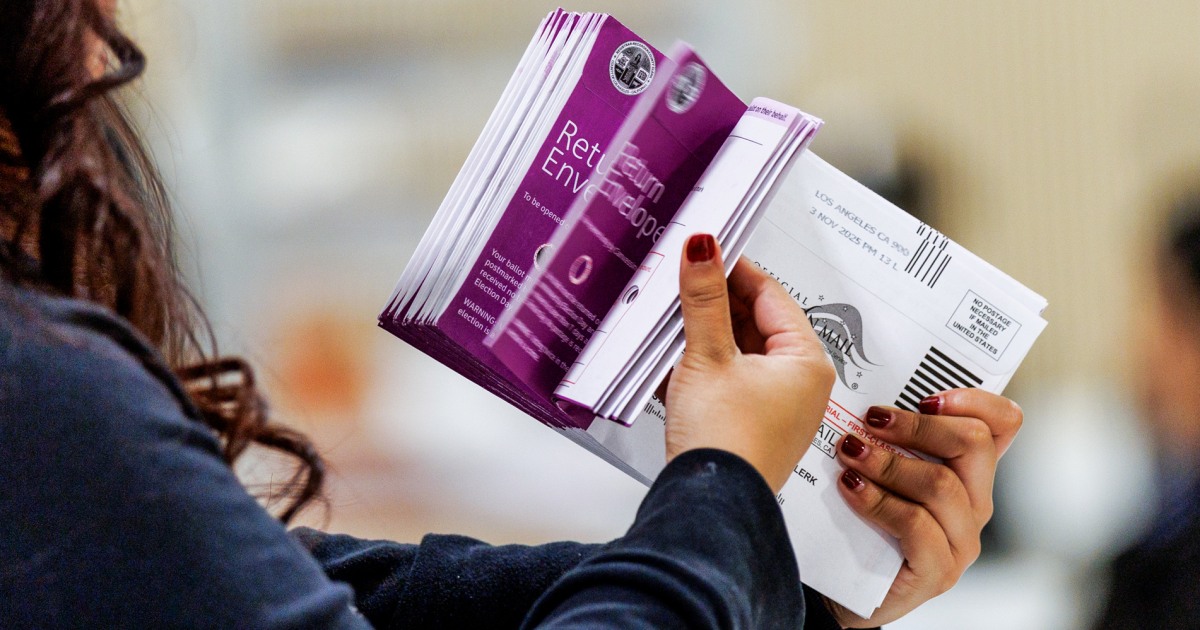
It would require USPS employees to verify that outbound federal ballot mailings comply with new envelope, barcode, and data-reporting requirements before accepting them from election officials.
2026-08-24 · TIME
What to Know About the USPS’s Rule for Mail-In Ballots · assertive framing

Claims (31 extracted, 2 hedged)

The United States Postal Service (USPS) on Friday issued a 95-page final rule that it plans to implement immediately if the government obtains relief from two existing injunctions. asserted
government → issue → injunctions
It would require USPS employees to verify that outbound federal ballot mailings comply with new envelope, barcode, and data-reporting requirements before accepting them from election officials. asserted
mailings → require → officials
The rule was designed to comply with President Donald Trump’s executive order from March 31. asserted
rule → design → March
It directs the Department of Homeland Security, in coordination with the Social Security Administration, to compile and send lists of adult citizens in each state. asserted
It → direct → state
Separately, it directs USPS to establish state-specific lists of people to whom election officials intend to send mail-in or absentee ballots, along with unique ballot-envelope identifiers. asserted
officials → direct → identifiers
A pair of court orders blocks the rule from implementing the rule before midterm elections in November. asserted
pair → block → November
About the two injunctions blocking Trump’s mail-in voting order Two injunctions bar USPS from implementing its new rule. asserted
injunctions → block → rule
They were issued by Massachusetts U.S. District Court Judge Indira Talwani on June 25 and Aug. 11. asserted
They → issue → June
What the June Injunction Covers A coalition of 23 states, along with the District of Columbia, filed a lawsuit on April 3 seeking to block Trump’s executive order, arguing that the President does not have the authority to dictate state voting practices. asserted
President → file → practices
In June, the presiding judge granted summary judgment to the plaintiffs, finding two sections of the order unlawful and constitutionally invalid. asserted
sections → preside → order
It barred federal agencies from implementing those sections against plaintiff states and D.C. for elections held on or before Nov. 3. asserted
It → bar → Nov.
It also blocked USPS from refusing to transmit ballots based on whether voters appeared on the new state-specific lists. asserted
voters → block → lists
What the August Injunction Covers Voting-rights groups brought a separate lawsuit against the Trump Administration on April 2, claiming the executive order was unconstitutional, “dangerous,” and could disenfranchise eligible voters. uncertain
order → cover → voters
It resulted in the August injunction, which bars USPS from implementing, enforcing, or giving effect to the executive order’s mail-voting provisions for any elections ahead of or on Nov. 3. asserted
which → result → Nov.
It also prohibits USPS from completing the specified rulemaking for those elections. asserted
It → prohibit → elections
Talwani wrote that the executive order was “causing confusion and threatening both increasing chaos and an erosion of trust in our democracy.” asserted
order → write → democracy
She also concluded that “the executive branch has no authority to regulate elections.” asserted
branch → conclude → elections
Critics of the executive order have echoed that concern, saying that the Trump Administration is looking to force federal oversight on elections even though the duty is enshrined to states and Congress in the Constitution. “Yesterday’s new mail-in voting rule is an attempt to weaponize USPS as part of the Trump administration’s efforts to take over elections,” Michael McNulty, the senior policy director for government-reform nonprofit Issue One, said in a statement Saturday. asserted
McNulty → echo → statement
McNulty argues that the rule would shift postal workers “from neutral transporters of a state-led process to a federal gatekeeper of states’ outbound mail ballots.” However, the USPS has asserted in the final rule that the requirements “do not amount to election administration, nor do they usurp state resources.” “Rather, they regulate the use of the mail to improve operational efficiency and support the faithful execution of federal law,” it says within the rule. asserted
it → argue → rule
Voting-rights groups challenge the USPS mail-in ballot rule asserted
groups → challenge → rule
A coalition of voting-rights organizations has filed an emergency motion asking the federal district court to enforce its Aug. 11 injunction against USPS. asserted
coalition → file → USPS
The plaintiffs argue that issuing an immediately effective final rule, intended for possible use in November, violated the injunction. asserted
issuing → argue → injunction
USPS acknowledged that it would not implement the final rule for the 2026 election unless the government obtains relief from both injunctions. asserted
government → acknowledge → injunctions
However, the coalition argued that USPS issued the rule in violation of the Aug. 11 injunction, without seeking a stay or filing an appeal. asserted
USPS → argue → appeal
It also said that USPS could have given the rule an effective date that falls after the 2026 midterms without violating the injunction, while the “immediate” effective date could sow “chaos” and “confusion” ahead of November. uncertain
date → say → November
“Enforcement of the court’s preliminary injunction is necessary to hold this administration accountable for its unlawful action and make clear that voters can confidently cast their mail ballot free from federal interference this November,” said a statement on behalf of the plaintiffs, which includes the League of Women Voters, Association of Americans Resident Overseas, and the U.S. Vote Foundation. asserted
which → hold → Overseas
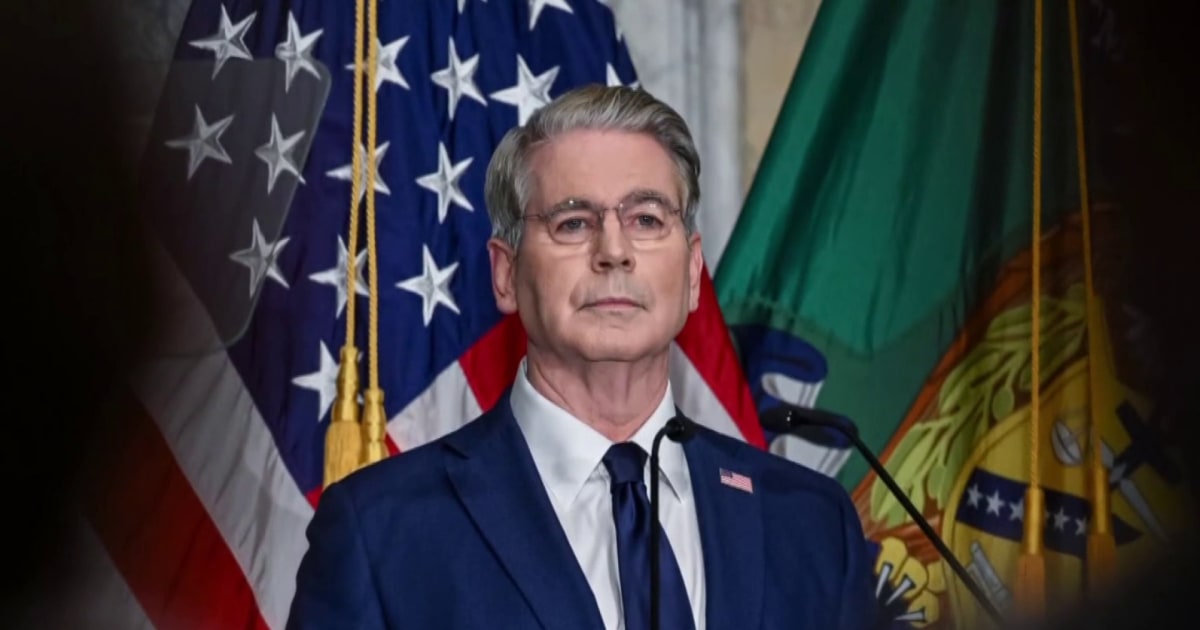
Postmaster General David Steiner defended the rule when it was proposed in June, saying at a Senate hearing that he “would think that states would want the information to ensure that the ballots that they think they’re sending out are the ballots that are actually getting sent out.” asserted
that → defend → that
TIME has reached out to USPS for comment. asserted
TIME → reach → comment
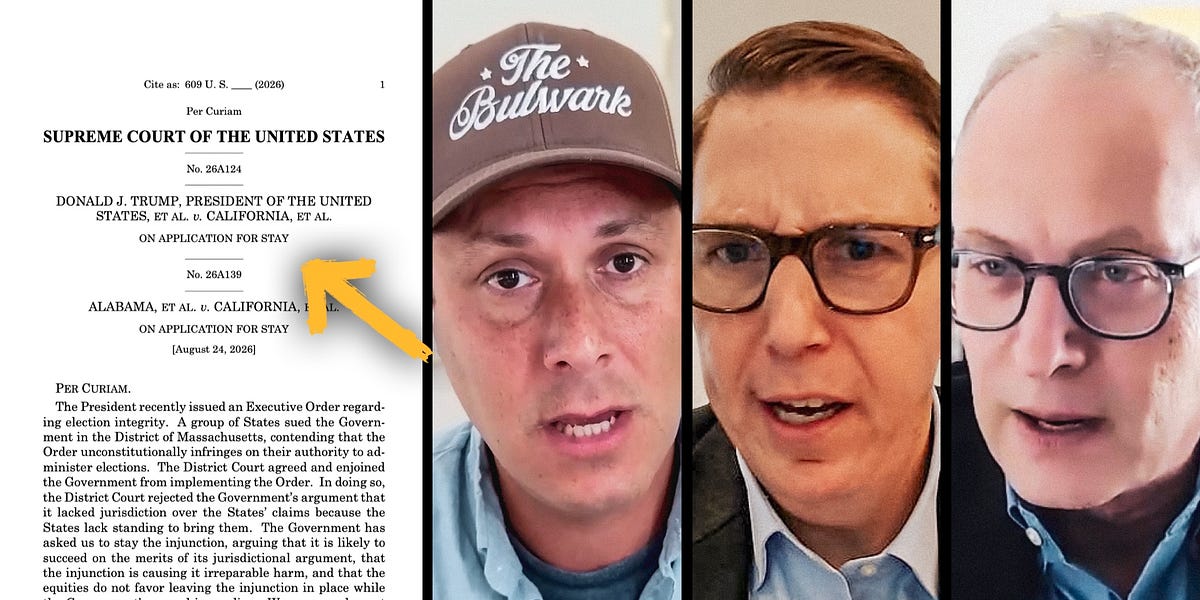
In late July, the Trump Administration asked the Supreme Court to stay the June 25 injunction while its appeal proceeds. asserted
appeal → ask → injunction
After Talwani issued the Aug. 11 injunction, the Administration urged the justices to address that second order as well through the pending proceeding—an approach the plaintiff states opposed. asserted
states → issue → proceeding
But unless the Aug. 11 injunction is separately stayed or lifted, or the Supreme Court expressly addresses it, it continues to bar USPS from implementing its new rule for the midterm elections. asserted
it → stay → elections
Give feedback · no sign-in needed

No sign-in needed for now. Your note is sent without a name, so it cannot be answered.

History Support