Photo via Semafor

China, Iran shrug off US threats of economic war

Read the original at Semafor ↗
Cite

Rao, P. (2026, August 25). China, Iran shrug off US threats of economic war. Semafor. https://www.semafor.com/article/08/25/2026/beijing-tehran-shrug-off-us-new-economic-war-with-iran

Dated when The Aporia collected the article, usually within hours of publication. Check the original for its exact date and byline.

Semafor · collected 2026-08-25 · by Prashant Rao

Quick Summary

The US Treasury Secretary threatened secondary sanctions against countries doing business with Iran as part of an effort to end the war in Iran. The main targets of this effort, China and Iran, both downplayed the threat, with China stating it will "safeguard its own rights and interests" and Iran's foreign minister calling American leaders "desperate". Chinese banks were not specifically targeted by the sanctions, which is seen as a significant omission. Oil prices remained steady after the announcement.
Written by AI on 2026-08-25, from this article's own text only (the story summary below draws on all the coverage).
See how they differ ↓

AI analysis

Story summary

President Trump announced on August 18, 2026, what he described as "the most crushing economic operation ever taken against any country" targeting Iran, aiming to escalate pressure beyond existing sanctions. This move came after a 60-day ceasefire expired without diplomatic resolution to the war initiated by the US and Israel in February. Iran's military has signaled a shift towards more aggressive offensive operations, threatening retaliation against Gulf states like the United Arab Emirates (UAE) that assist the U.S. In response, the UAE halted all trade and financial dealings with Iran following accusations of missile attacks on August 18. Treasury Secretary Scott Bessent later detailed new sanctions targeting five key economic areas: digital assets, technology, gold, aviation, and shipping, aiming to cut off Iran's remaining economic lifelines globally, while China remains a major concern due to its significant trade ties with Iran.

Written for “US Sanctions on Iran Economy” on 2026-11-20, grounded in this article and the 40 other(s) covering the same event.

How they differ

18 outlets covered “US Sanctions on Iran Economy”.

What each outlet says

One AI summary per outlet of its latest article on this story, written from that article alone and checked against it. Open the article for the outlet's own words.

SemaforThis outlet25 Aug

The US Treasury Secretary threatened secondary sanctions against countries doing business with Iran as part of an effort to end the war in Iran. The main targets of this effort, China and Iran, both downplayed the threat, with China stating it will "safeguard its own rights and interests" and Iran's foreign minister calling American leaders "desperate". Chinese banks were not specifically targeted by the sanctions…

China, Iran shrug off US threats of economic war (this article)
The Straits Times24 Aug

Iran's Deputy Foreign Minister Kazem Gharibabadi mocked the US threat of an "economic D-day" against the country, calling it an admission of defeat. This comes after US Treasury Secretary Scott Bessent declared a massive economic pressure campaign on Iran, claiming the US had already dismantled its military capabilities and nuclear program. Bessent is scheduled to explain new US sanctions on Iran on August 24. The…

Iran mocks US threat of ‘economic D-day’, says it’s an admission of defeat →5 articles from The Straits Times on this story
CBC26 Aug

The US Trump administration has declared "economic D-Day" against Iran, warning global trade partners to cut all financial ties with Tehran or face severe economic consequences. This move is aimed at isolating Iran's economy. No specific numbers are mentioned in the article to quantify the severity of these consequences. The article appears to be an analysis piece from the About That outlet, breaking down this…

The U.S. threatens Iran with ‘economic D-Day’ | About That →5 articles from CBC on this story
CBS News24 Aug

Iranian Economy Minister Ali Madanizadeh said on Monday that Iran is prepared to face new US sanctions, which were announced by U.S. Treasury Secretary Scott Bessent and include measures targeting digital assets, gold, aviation, and shipping. The State Department has also offered a $10 million reward for information on key leaders of the Iranian Islamic Revolutionary Guard Corps (IRGC), which it accuses of targeting…

Iran says it's ready for new U.S. sanctions, has 2-year plan →4 articles from CBS News on this story
Al Jazeera26 Aug

The Iranian rial has reached a new all-time low against the US dollar, with one dollar now costing over 2 million rials on the free market. According to Al Jazeera's reporting, prices of everyday items such as food and medicine have skyrocketed since the US-Israel war began on February 28, with the price of insulin increasing by 642% and baby formula by 95%. The article highlights the struggles of Iranian families…

One US dollar now costs 2 million rials in Iran, and here’s what it can buy →4 articles from Al Jazeera on this story
The Independent21 Aug

Iran's Foreign Minister Abbas Araghchi has accused President Donald Trump of threatening "economic terrorism" after the US announced its intention to impose the "toughest sanctions in history" on Tehran. The US treasury secretary Scott Bessent warned allies that they would face economic consequences if they continued to help mediate peace talks with Iran. Over 750 members of the US military have been injured since…

Iran-US war latest: Tehran accuses Trump of ‘economic terrorism’ after he vows to crush it with sanctions →3 articles from The Independent on this story
Show 12 more outlets
BBC25 Aug

Iranian Economy Minister Ali Madanizadeh claims that Iran is "fully prepared" to counter US economic sanctions, which were announced by US Treasury Secretary Scott Bessent as part of what Bessent described as an "economic D-Day" against Iran. The new measures aim to isolate countries and businesses dealing with Iran from the global economy, but some economists have questioned their effectiveness. According to…

Iran says it is 'fully prepared' to counter widened US economic sanctions →3 articles from BBC on this story
NPR24 Aug

US Treasury Secretary is set to announce a new economic measure against Iran, which Tehran has warned will lead to "seismic" repercussions if carried out. No specific details are provided about the measure or its timeline. Canada's response to potential US trade actions is also outlined, with Ottawa pledging to impose retaliatory tariffs on American goods.

Morning news brief →3 articles from NPR on this story
ABC News (US)24 Aug

The US is preparing to announce new sanctions against Iran, which has caused its currency, the rial, to hit a record low of 2.02 million to the dollar. The informal rate in unofficial markets is significantly lower than the official Central Bank rate of around 1.5 million rials to the dollar. This marks the latest blow to an Iranian economy already battered by previous sanctions and a US naval blockade, with…

Iran's rial currency hits new record low as US prepares to announce more sanctions →2 articles from ABC News (US) on this story
Washington Examiner24 Aug

The US is expected to announce new sanctions against Iran, which has already caused its currency, the rial, to hit a record low at 2.02 million to the US dollar in informal markets. The previous sanctions and US naval blockade have severely impacted Iran's economy, with double-digit inflation and negative growth. Iranian officials are responding to the impending sanctions by warning that any country supporting them…

Iran’s rial currency hits new record low as US prepares to announce more sanctions →2 articles from Washington Examiner on this story
Toronto Star20 Aug

Iran has dismissed US President Donald Trump's economic threats, with no specific response or details provided on what was said by Iranian officials. This article appears to be a factual report of current events in the Middle East without taking a particular stance or analysis. No key numbers are mentioned in the brief text. The main development reported is Iran's rejection of US economic threats while Syria's…

Iran dismisses US economic threats and other developments in the Middle East →
National Post21 Aug

US Treasury Secretary Scott Bessent will hold a press conference on Monday to discuss the US plan to economically isolate Iran. The US is seeking to impose economic pressure on countries that trade with Iran, with Secretary Bessent saying "you are either with us or against us." China, which buys 50% of its energy from the Gulf, is likely to be targeted by the US efforts. This comes after President Trump threatened…

U.S. Treasury Secretary to detail plans to isolate Iran’s economy on Monday →
The Hindu24 Aug

US Treasury Secretary Scott Bessent has warned Iran that new economic sanctions are imminent, calling it "economic D-Day". The US aims to sever Iran's economic lifelines by targeting its trade partners. Iran's President Masoud Pezeshkian has defended a memorandum of understanding with the US as a way out of the conflict, while Iran's Supreme National Security Council secretary Mohsen Rezaei has threatened to shut…

‘Economic D-Day’: U.S. threatens Iran with new sanctions, Tehran fires back →
Mother Jones25 Aug

US Treasury Secretary Scott Bessent announced on Monday that the US will impose new sanctions on countries and institutions doing business with Iran as part of "Operation Economic Outcast", aiming to end the war in the region. The plan involves cutting off all economic lifelines, including digital assets and shipping, but details on how this will be achieved were not provided. According to Bessent, the US has…

Maybe Trump’s Iran Sanctions Will Work This Time →
Los Angeles Times25 Aug

The US Treasury Secretary Scott Bessent announced new sanctions against Iran on Monday, calling it "economic D-Day" in an effort to sever Tehran from the global financial system. The sanctions aim to target not only Iran but also its trade partners, including China and India, with secondary measures expected to take effect quickly if these countries do not comply. The Trump administration has imposed a total of $50…

To further isolate Iran's economy, U.S. rolls out 'D-Day' sanctions →
Time25 Aug

Iran's currency, the rial, hit a record low on Monday with an exchange rate of 2.02 million rials per dollar. The US Treasury announced new sanctions on more than 60 targets and expanded sanctionable sectors to include digital assets, technology, gold, aviation, and shipping. Treasury Secretary Scott Bessent warned that countries which continue to support Iran's economy may face secondary sanctions within weeks. The…

Iranian Rial Hits Record Low as the U.S. Unveils New Sanctions →
Fox News26 Aug

The article is an opinion piece by someone who has studied World War II and notes similarities between President Donald Trump's "Economic D-Day" campaign against Iran and the Allied invasion of Nazi Germany in 1944. The author questions whether economic pressure will lead to Iranian surrender, pointing out that it took eleven months for Germany to surrender after D-Day. The article reports that the US Treasury has…

Trump’s Economic D-Day can hammer Iran, but will Tehran ever surrender? →
Deutsche Welle26 Aug

US Treasury Secretary Scott Bessent has announced a new phase of economic sanctions against Iran, targeting its international networks used for illicit money movement and five key sectors: digital assets, technology, gold, aviation, and shipping. The US is warning foreign entities that help facilitate money laundering for Iran that they will be removed from the US dollar-based financial system. Around 60…

Can new US sanctions cripple Iran's shadow economy? →

Compared with similar articles

This article reads leans left and hedges 0% of its claims. Each row says how that neighbour differs.
BBC News
Hedges 2 of 45 claims Outlet record 65/100
Mother Jones
Leans strongly left further left than this Hedges 1 of 17 claims Outlet record 60/100
Los Angeles Times
Hedges 9 of 50 claims Outlet record 95/100
TIME
Leans strongly right further right than this Hedges 15 of 61 claims Outlet record 60/100
Al Jazeera
Leans strongly right further right than this Hedges 3 of 23 claims Outlet record 60/100
CBC News
Leans left Hedges 3 of 37 claims Outlet record 60/100
The Straits Times
Leans left Hedges 0 of 4 claims Outlet record 64/100
“Article A describes a speech by US President Donald Trump on Aug 20, while Article B reports on a response from China and Iran to the announced economic plan on Aug 25”
BBC News
Hedges 2 of 25 claims Outlet record 65/100
“Article A describes a threat made by Trump on August 20th, while Article B reports on reactions to US threats from China and Iran days later”
Toronto Star
Leans left Hedges 0 of 2 claims Outlet record 64/100
“Article A mentions a visit by Syria's foreign minister to Pakistan, while Article B does not mention this detail and focuses on US threats of economic war”

Story

US Sanctions on Iran Economy
Politics · 41 article(s) covering the same event. See how they differ ↑
How this article was measured signals, leaning charts, publisher record, byline, topics and claims

Signals How these are calculated →

Claims extracted
5
sentences that state something as happening or true
Uncertain
0%
0 of 5 hedged ("reportedly", "may", "according to")
Leaning
Leans left
of the writing, not the subject · beta estimate
Publisher signals
64/100
Semafor's corrections and hedging, across everything collected from it. Not a measure of accuracy.
Outlets on this story
41
Politics
Same framing elsewhere
1
articles that frame the event the way this one does
Analyzed 2026-08-25 · how these are computed

How this is being covered How these are calculated →

Article leaning vs. publisher reliability
Source leaning vs. consistency

Publisher

Semafor · 1924 article(s) · 7 correction(s) detected
Running correction rate · 7 correction(s)

Who wrote this

Prashant Rao
148 article(s) here · 1 carrying a prediction
Further restrictions could also be afoot: Washington should pull contracts with any defense firms with investments in China’s aerospace sector, one Congressional committee argued.
2026-11-20 · speculative framing · Washington takes aim at China after Trump-Xi talks
The limited agreement would allow increased food and drinks trade, a re-linking of their carbon markets, and closer migration cooperation.
2026-11-20 · assertive framing · UK and EU to sign deal aimed at resetting relations
As the COP31 climate summit in Türkiye neared its close, negotiators haggled over a narrow draft deal that activists said was limited even by the standards of recent meetings; the representative for co-host Australia acknowledged that officials were “finding the most ambitious outcome that consensus will allow.”
2026-11-20 · assertive framing · High energy prices reshape global climate debate
Asian stocks tumbled and US markets looked set to follow on worsening tech-sector sentiment, although experts said the selloff was likely overdone.
2026-11-20 · assertive framing · Tech rout drags down global bourses
The trio argued their 80 minute meeting would help undergird global stability, but few tangible steps were taken and the talks were hampered by the leaders’ domestic constraints and geopolitical disputes. On AI, US President Donald Trump voiced opposition to “globalist regulation,” whereas Chinese leader Xi Jinping had previously advocated strong rules; on nuclear nonproliferation, Beijing has opposed controls pushed by Washington; China and Russia have maintained ties with Iran throughout the US war on the Middle East nation; and Moscow has long struggled to get Beijing to agree a gas-purchase deal.
2026-11-19 · assertive framing · Trump, Xi and Putin hold landmark talks in Shenzhen
In particular, it has huge financial commitments to buy chips and build data centers, and must assuage customers who fear it will compete with them in sectors far beyond tech and AI.
2026-11-19 · assertive framing · Anthropic raises record sums in IPO
The forecast-beating figures from Japan came days after official Chinese data pointed to a deepening slowdown, with one notable exception: AI-related production “is not only leading manufacturing output, but is the only part of China’s vast manufacturing machine experiencing [investment] growth,” Trivium analysts noted.
2026-11-18 · assertive framing · AI hardware demand lifts Asian exports to record highs
Beijing wants to build up its nuclear arsenal, while a longrunning treaty between Washington and Moscow limiting their weapons stockpiles expired this year, The Wall Street Journal noted, setting up a “three-body problem” that could result in “an unprecedented era of instability around the world’s most dangerous weapons.”
Nvidia’s chair declared the chip giant would look elsewhere for a new CEO, though some members of its board favor a return of former leader Jensen Huang, throwing into doubt the future of a company at the center of the AI boom.
Former UK Prime Minister Rishi Sunak largely concurred with Paulson, adding that while regulatory efforts thus far — such as the EU’s AI Act — were “not the right approach … that doesn’t mean we do nothing.” “The worst thing would be if we had some type of catastrophic accident … then we will have, as we all know, an overreaction on the other side.”
Also by Prashant Rao
Nothing else under this byline is closely related to this article, so these are simply their most recent.
All 148 articles by Prashant Rao →

Topics

Beijing Chinese Iran US Treasury Washington

Subjects

Iran GPE · 4× Beijing GPE · 2× American NORP · 1× China GPE · 1× Chinese NORP · 1× ING ORG · 1× Semafor ORG · 1× US Treasury ORG · 1× Washington GPE · 1×

Narrative

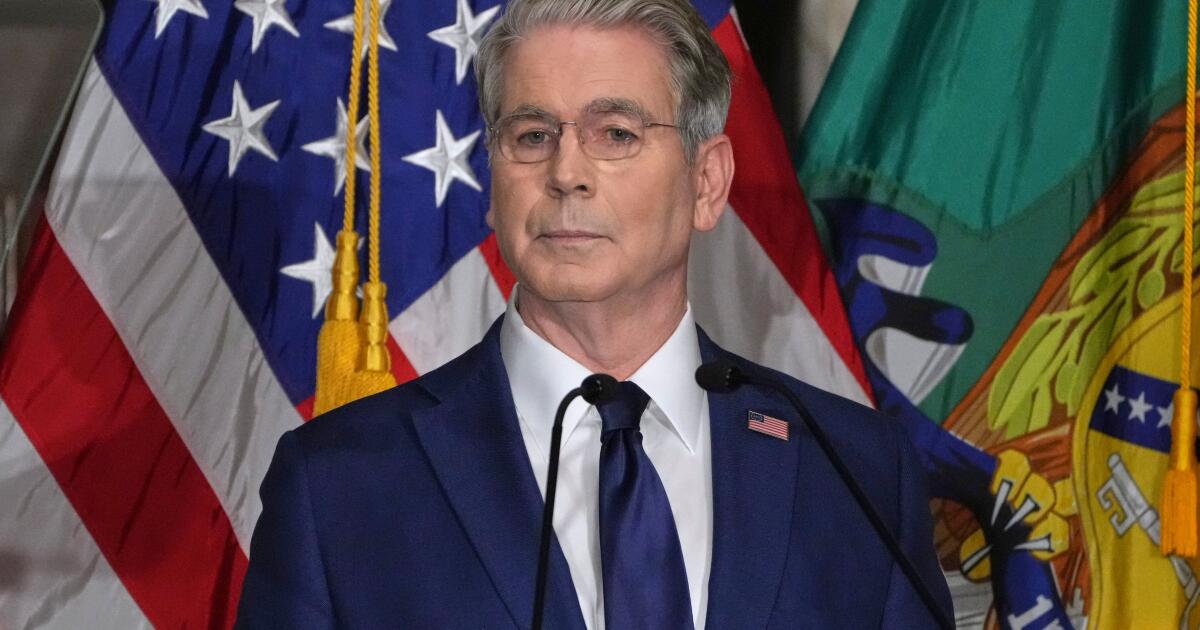
The US Treasury secretary yesterday threatened wide-ranging secondary sanctions against countries doing business with Iran, but he didn’t outline any specific sanctions against Chinese banks: Beijing is the main buyer of Iran’s oil, and the economic plan consequently had a “China-sized hole,” Semafor’s climate and energy editor noted.
framing: assertive · carried by 1 article(s) · first seen 2026-08-25
Beijing largely downplayed Washington’s threats, saying it would “safeguard its own rights and interests.”
2026-08-25 · Semafor
China, Iran shrug off US threats of economic war · assertive framing

Claims (5 extracted, 0 hedged)

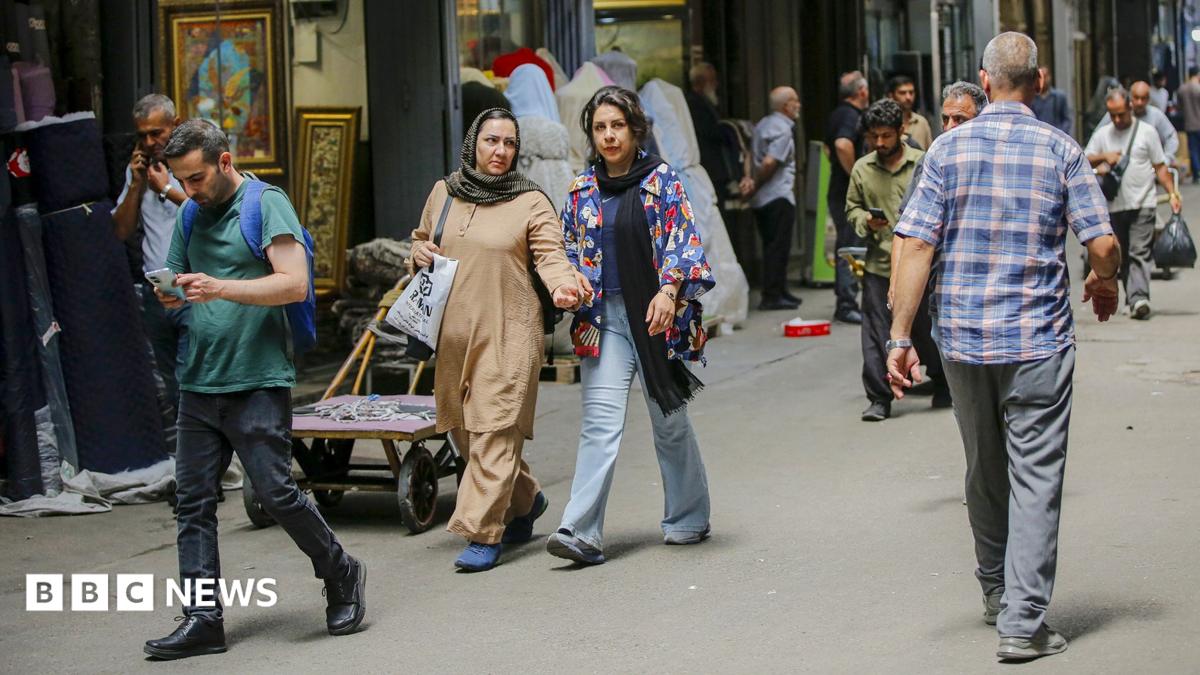
The principal targets of a US effort to use economic leverage to end the Iran war largely shrugged off Washington’s announcement. asserted
targets → use → announcement
The US Treasury secretary yesterday threatened wide-ranging secondary sanctions against countries doing business with Iran, but he didn’t outline any specific sanctions against Chinese banks: Beijing is the main buyer of Iran’s oil, and the economic plan consequently had a “China-sized hole,” Semafor’s climate and energy editor noted. asserted
editor → threaten → hole
Beijing largely downplayed Washington’s threats, saying it would “safeguard its own rights and interests.” asserted
it → downplay → rights
Iran, too, dismissed the US measures, with its foreign minister saying American leaders “are desperate.” asserted
leaders → dismiss → measures
Markets, meanwhile, appeared “largely unfazed” by the announcement, ING said, with oil prices steady. asserted
prices → appear → announcement
Give feedback · no sign-in needed

No sign-in needed for now. Your note is sent without a name, so it cannot be answered.

History Support