Photo via Al Jazeera

One US dollar now costs 2 million rials in Iran, and here’s what it can buy

Read the original at Al Jazeera ↗
Cite

Chughtai, A., & Motamedi, M. (2026, August 26). One US dollar now costs 2 million rials in Iran, and here’s what it can buy. Al Jazeera. https://www.aljazeera.com/economy/2026/8/26/one-us-dollar-now-costs-2-million-rials-in-iran-and-heres-what-it-can-buy?traffic_source=rss

Dated when The Aporia collected the article, usually within hours of publication. Check the original for its exact date and byline.

Al Jazeera · collected 2026-08-26 · by Alia Chughtai, Maziar Motamedi

Quick Summary

The Iranian rial has reached a new all-time low against the US dollar, with one dollar now costing over 2 million rials on the free market. According to Al Jazeera's reporting, prices of everyday items such as food and medicine have skyrocketed since the US-Israel war began on February 28, with the price of insulin increasing by 642% and baby formula by 95%. The article highlights the struggles of Iranian families, including a mother who says her family's weekly grocery bill has increased by 20-30% due to rising prices. Al Jazeera tracked prices on the streets of Tehran to illustrate the impact of the economic woes on everyday life in Iran.
Written by AI on 2026-08-26, from this article's own text only (the story summary below draws on all the coverage).
See how they differ ↓

AI analysis

Story summary

President Trump announced on August 18, 2026, what he described as "the most crushing economic operation ever taken against any country" targeting Iran, aiming to escalate pressure beyond existing sanctions. This move came after a 60-day ceasefire expired without diplomatic resolution to the war initiated by the US and Israel in February. Iran's military has signaled a shift towards more aggressive offensive operations, threatening retaliation against Gulf states like the United Arab Emirates (UAE) that assist the U.S. In response, the UAE halted all trade and financial dealings with Iran following accusations of missile attacks on August 18. Treasury Secretary Scott Bessent later detailed new sanctions targeting five key economic areas: digital assets, technology, gold, aviation, and shipping, aiming to cut off Iran's remaining economic lifelines globally, while China remains a major concern due to its significant trade ties with Iran.

Written for “US Sanctions on Iran Economy” on 2026-11-20, grounded in this article and the 40 other(s) covering the same event.

How they differ

18 outlets covered “US Sanctions on Iran Economy”.

What each outlet says

One AI summary per outlet of its latest article on this story, written from that article alone and checked against it. Open the article for the outlet's own words.

Al JazeeraThis outlet26 Aug

The Iranian rial has reached a new all-time low against the US dollar, with one dollar now costing over 2 million rials on the free market. According to Al Jazeera's reporting, prices of everyday items such as food and medicine have skyrocketed since the US-Israel war began on February 28, with the price of insulin increasing by 642% and baby formula by 95%. The article highlights the struggles of Iranian families…

One US dollar now costs 2 million rials in Iran, and here’s what it can buy (this article)4 articles from Al Jazeera on this story
The Straits Times24 Aug

Iran's Deputy Foreign Minister Kazem Gharibabadi mocked the US threat of an "economic D-day" against the country, calling it an admission of defeat. This comes after US Treasury Secretary Scott Bessent declared a massive economic pressure campaign on Iran, claiming the US had already dismantled its military capabilities and nuclear program. Bessent is scheduled to explain new US sanctions on Iran on August 24. The…

Iran mocks US threat of ‘economic D-day’, says it’s an admission of defeat →5 articles from The Straits Times on this story
CBC26 Aug

The US Trump administration has declared "economic D-Day" against Iran, warning global trade partners to cut all financial ties with Tehran or face severe economic consequences. This move is aimed at isolating Iran's economy. No specific numbers are mentioned in the article to quantify the severity of these consequences. The article appears to be an analysis piece from the About That outlet, breaking down this…

The U.S. threatens Iran with ‘economic D-Day’ | About That →5 articles from CBC on this story
CBS News24 Aug

Iranian Economy Minister Ali Madanizadeh said on Monday that Iran is prepared to face new US sanctions, which were announced by U.S. Treasury Secretary Scott Bessent and include measures targeting digital assets, gold, aviation, and shipping. The State Department has also offered a $10 million reward for information on key leaders of the Iranian Islamic Revolutionary Guard Corps (IRGC), which it accuses of targeting…

Iran says it's ready for new U.S. sanctions, has 2-year plan →4 articles from CBS News on this story
The Independent21 Aug

Iran's Foreign Minister Abbas Araghchi has accused President Donald Trump of threatening "economic terrorism" after the US announced its intention to impose the "toughest sanctions in history" on Tehran. The US treasury secretary Scott Bessent warned allies that they would face economic consequences if they continued to help mediate peace talks with Iran. Over 750 members of the US military have been injured since…

Iran-US war latest: Tehran accuses Trump of ‘economic terrorism’ after he vows to crush it with sanctions →3 articles from The Independent on this story
BBC25 Aug

Iranian Economy Minister Ali Madanizadeh claims that Iran is "fully prepared" to counter US economic sanctions, which were announced by US Treasury Secretary Scott Bessent as part of what Bessent described as an "economic D-Day" against Iran. The new measures aim to isolate countries and businesses dealing with Iran from the global economy, but some economists have questioned their effectiveness. According to…

Iran says it is 'fully prepared' to counter widened US economic sanctions →3 articles from BBC on this story
Show 12 more outlets
NPR24 Aug

US Treasury Secretary is set to announce a new economic measure against Iran, which Tehran has warned will lead to "seismic" repercussions if carried out. No specific details are provided about the measure or its timeline. Canada's response to potential US trade actions is also outlined, with Ottawa pledging to impose retaliatory tariffs on American goods.

Morning news brief →3 articles from NPR on this story
ABC News (US)24 Aug

The US is preparing to announce new sanctions against Iran, which has caused its currency, the rial, to hit a record low of 2.02 million to the dollar. The informal rate in unofficial markets is significantly lower than the official Central Bank rate of around 1.5 million rials to the dollar. This marks the latest blow to an Iranian economy already battered by previous sanctions and a US naval blockade, with…

Iran's rial currency hits new record low as US prepares to announce more sanctions →2 articles from ABC News (US) on this story
Washington Examiner24 Aug

The US is expected to announce new sanctions against Iran, which has already caused its currency, the rial, to hit a record low at 2.02 million to the US dollar in informal markets. The previous sanctions and US naval blockade have severely impacted Iran's economy, with double-digit inflation and negative growth. Iranian officials are responding to the impending sanctions by warning that any country supporting them…

Iran’s rial currency hits new record low as US prepares to announce more sanctions →2 articles from Washington Examiner on this story
Toronto Star20 Aug

Iran has dismissed US President Donald Trump's economic threats, with no specific response or details provided on what was said by Iranian officials. This article appears to be a factual report of current events in the Middle East without taking a particular stance or analysis. No key numbers are mentioned in the brief text. The main development reported is Iran's rejection of US economic threats while Syria's…

Iran dismisses US economic threats and other developments in the Middle East →
National Post21 Aug

US Treasury Secretary Scott Bessent will hold a press conference on Monday to discuss the US plan to economically isolate Iran. The US is seeking to impose economic pressure on countries that trade with Iran, with Secretary Bessent saying "you are either with us or against us." China, which buys 50% of its energy from the Gulf, is likely to be targeted by the US efforts. This comes after President Trump threatened…

U.S. Treasury Secretary to detail plans to isolate Iran’s economy on Monday →
The Hindu24 Aug

US Treasury Secretary Scott Bessent has warned Iran that new economic sanctions are imminent, calling it "economic D-Day". The US aims to sever Iran's economic lifelines by targeting its trade partners. Iran's President Masoud Pezeshkian has defended a memorandum of understanding with the US as a way out of the conflict, while Iran's Supreme National Security Council secretary Mohsen Rezaei has threatened to shut…

‘Economic D-Day’: U.S. threatens Iran with new sanctions, Tehran fires back →
Semafor25 Aug

The US Treasury Secretary threatened secondary sanctions against countries doing business with Iran as part of an effort to end the war in Iran. The main targets of this effort, China and Iran, both downplayed the threat, with China stating it will "safeguard its own rights and interests" and Iran's foreign minister calling American leaders "desperate". Chinese banks were not specifically targeted by the sanctions…

China, Iran shrug off US threats of economic war →
Mother Jones25 Aug

US Treasury Secretary Scott Bessent announced on Monday that the US will impose new sanctions on countries and institutions doing business with Iran as part of "Operation Economic Outcast", aiming to end the war in the region. The plan involves cutting off all economic lifelines, including digital assets and shipping, but details on how this will be achieved were not provided. According to Bessent, the US has…

Maybe Trump’s Iran Sanctions Will Work This Time →
Los Angeles Times25 Aug

The US Treasury Secretary Scott Bessent announced new sanctions against Iran on Monday, calling it "economic D-Day" in an effort to sever Tehran from the global financial system. The sanctions aim to target not only Iran but also its trade partners, including China and India, with secondary measures expected to take effect quickly if these countries do not comply. The Trump administration has imposed a total of $50…

To further isolate Iran's economy, U.S. rolls out 'D-Day' sanctions →
Time25 Aug

Iran's currency, the rial, hit a record low on Monday with an exchange rate of 2.02 million rials per dollar. The US Treasury announced new sanctions on more than 60 targets and expanded sanctionable sectors to include digital assets, technology, gold, aviation, and shipping. Treasury Secretary Scott Bessent warned that countries which continue to support Iran's economy may face secondary sanctions within weeks. The…

Iranian Rial Hits Record Low as the U.S. Unveils New Sanctions →
Fox News26 Aug

The article is an opinion piece by someone who has studied World War II and notes similarities between President Donald Trump's "Economic D-Day" campaign against Iran and the Allied invasion of Nazi Germany in 1944. The author questions whether economic pressure will lead to Iranian surrender, pointing out that it took eleven months for Germany to surrender after D-Day. The article reports that the US Treasury has…

Trump’s Economic D-Day can hammer Iran, but will Tehran ever surrender? →
Deutsche Welle26 Aug

US Treasury Secretary Scott Bessent has announced a new phase of economic sanctions against Iran, targeting its international networks used for illicit money movement and five key sectors: digital assets, technology, gold, aviation, and shipping. The US is warning foreign entities that help facilitate money laundering for Iran that they will be removed from the US dollar-based financial system. Around 60…

Can new US sanctions cripple Iran's shadow economy? →

Compared with similar articles

This article reads leans right and hedges 4% of its claims. Each row says how that neighbour differs.
The Hindu
Centre further left than this Hedges 2 of 33 claims Outlet record 60/100
“Article B mentions the economic sanctions being 'the toughest yet' and refers to a longer-term situation with 'decades of US and international sanctions', indicating it describes a separate phase or update, rather than the same specific event as Article A.”
Al Jazeera
Hedges 6 of 35 claims Outlet record 60/100
“Article A mentions a threat to impose 'economic D-Day' for Iran, while Article B reports on the consequence of this policy, specifically the devaluation of the Iranian rial”
BBC News
Hedges 2 of 45 claims Outlet record 65/100
“Article A reports on Iran's response to new US economic sanctions, while Article B reports on the effects of those sanctions on the Iranian economy”
CBC News
Hedges 1 of 20 claims Outlet record 60/100
“Article A describes a press conference announcing sanctions expansion, while Article B mentions the result (Iranian rial falling to a new low) of those sanctions”
Los Angeles Times
Hedges 9 of 50 claims Outlet record 95/100
TIME
Leans strongly right further right than this Hedges 15 of 61 claims Outlet record 60/100
“The articles report on the Iranian rial hitting a record low, but Article B mentions 'Washington launched its toughest sanctions yet in efforts to strangle Tehran’s economy', implying previous events, whereas Article A describes the current launch of 'Operation Economic Outcast'”
Deutsche Welle
Leans right Hedges 12 of 46 claims Outlet record 95/100
“Article A discusses a new low in the value of the Iranian rial against the US dollar, while Article B mentions a new phase of economic sanctions by Washington but without mentioning any impact on the exchange rate.”
CBS News
Leans left further left than this Hedges 5 of 41 claims Outlet record 67/100
“Article A discusses a preferential trade agreement between Iran and Oman, while Article B reports on the exchange rate between the US dollar and Iranian rial, mentioning sanctions and economic woes”
The Straits Times
Hedges 3 of 4 claims Outlet record 64/100
“Article A describes the announcement of new sanctions by U.S. Treasury Secretary Scott Bessent, while Article B mentions the impact of those sanctions on the Iranian rial's value and the economy, indicating they cover a related but not identical event”
The Independent
Leans strongly right further right than this Hedges 4 of 56 claims Outlet record 59/100
“Article A reports on Trump's sanctions vow, while Article B mentions the effects of already implemented sanctions and a worsening economy”

Story

US Sanctions on Iran Economy
Politics · 41 article(s) covering the same event. See how they differ ↑
How this article was measured signals, leaning charts, publisher record, byline, topics and claims

Signals How these are calculated →

Claims extracted
46
sentences that state something as happening or true
Uncertain
4%
2 of 46 hedged ("reportedly", "may", "according to")
Leaning
Leans right
of the writing, not the subject · beta estimate
Publisher signals
60/100
Al Jazeera's corrections and hedging, across everything collected from it. Not a measure of accuracy.
Outlets on this story
41
Politics
Same framing elsewhere
1
articles that frame the event the way this one does
Analyzed 2026-08-26 · how these are computed

How this is being covered How these are calculated →

Article leaning vs. publisher reliability
Source leaning vs. consistency

Publisher

Al Jazeera · 6183 article(s) · 4 correction(s) detected
Running correction rate · 4 correction(s)

Who wrote this

Alia Chughtai
11 article(s) here · 1 carrying a prediction
Recommended Stories list of 3 items- list 1 of 3Board of Peace warns Gaza ceasefire faces imminent collapse without action - list 2 of 3Piecemeal wars: A new kind of world war is already under way - list 3 of 3Palestinians find refuge in ancient caves after Israel demolishes homes In its latest report, submitted on Tuesday, the board warned that the truce between Israel and Hamas could collapse unless immediate steps are taken to carry out the ceasefire deal, according to The Associated Press.
Medication that has been a lifeline for patients with uncontrollable diabetes is now slowly shifting from injections to pills, a move that could fundamentally alter treatment for the disease – and who can access it.
Voters will choose all 435 members of the US House of Representatives and 35 of the Senate’s 100 seats.
“We barely live day-to-day, waiting to see how the next day will pass,” she said.
On November 3, about 210 million registered voters will decide how much power Donald Trump has for the rest of his US presidency.
2026-10-26 · assertive framing · US midterm elections 2026 in maps and charts
At Karachi Zoo, Jude Allen sang, You Are My Sunshine, to an elephant he could not save.
That includes people who are seeking asylum in the US, who are supposed to be given a chance to explain dangers they might face in their home country.
The mission demonstrated that humans could survive launch, weightlessness and re-entry, giving the Soviet Union a major early victory in the Cold War Space Race. Six years later, on October 10, 1967, the Outer Space Treaty entered into force.
Even before the latest fighting, more than 2.2 million children under five were projected to be acutely malnourished this year, more than half a million of them with severe acute malnutrition, the deadliest form, UNICEF’s Louise Wateridge told Al Jazeera.
She works long hours in an affluent neighbourhood, has a husband who can no longer work due to health issues and she has three children in middle and high school. Jibran says her rent has gone up from 15,000 Pakistani rupees ($54) at the end of last year to 25,000 rupees ( 90) this past month. “Before the war, everyone could eat and drink.
Also by Alia Chughtai
Nothing else under this byline is closely related to this article, so these are simply their most recent.
All 11 articles by Alia Chughtai →
Maziar Motamedi
29 article(s) here · 1 carrying a prediction
Iranians say they are concerned about United States media reports that civilian infrastructure could be hit if the US launches a new war on Iran.
Iran holds the second-largest proven natural gas reserves in the world, only behind Russia, but its government last week forecast a peak-demand deficit of about 430 million cubic metres per day for winter that could impact both households and industries.
Decision-makers in Iran are now considering the implications of Vice President JD Vance’s removal from the Iran file to focus on domestic issues, which analysts say could increase the chances of conflict between the two sides.
US Secretary of State Marco Rubio told his Group of Seven (G7) counterparts in Paris on Tuesday that a naval blockade, stringent sanctions and overland border disruptions could continue without a clear endpoint in sight, according to US media.
Recommended Stories list of 3 items- list 1 of 3‘Another round of war less likely’: Momentum builds for peace in Iran - list 2 of 3Hegseth impeachment: What is he accused of, and could he be removed? - list 3 of 3What is Shahid Kaveh, the Iran cyberunit tied to France’s fridge hacking?
The Iranian government has reported more strikes by the United States but insists this pressure will not impact its demands to end the war.
“If the US [government] betrays their public will to serve international paymasters and blackmailers, it will learn our NO comes with a Nightmare,” read a post on his X account on Wednesday.
Ministry of Foreign Affairs spokesman Esmaeil Baghaei said Rezaei, not Ghalibaf, would respond to the letter if he chooses.
Iran’s military is warning that if all-out war breaks out again with the United States and Israel, it will be longer and more costly than their rivals expect.
At the same time, they have doubled down on a willingness to expand attacks or even launch preemptive strikes if they deem war is inevitable.
Also by Maziar Motamedi
Nothing else under this byline is closely related to this article, so these are simply their most recent.
All 29 articles by Maziar Motamedi →

Topics

4Iran Al Jazeera Iran Iranian Tehran

Subjects

Iran GPE · 6× Afsaneh PERSON · 4× Iranian NORP · 4× Tehran GPE · 4× Al Jazeera ORG · 3× 4Iran ORG · 2× Trump PERSON · 2× Hormuz GPE · 1× Oman GPE · 1× Washington GPE · 1×

Narrative

The price of insulin, the baseline survival for diabetics, has shot up by 642 percent, while essential medicine like paracetamol has become dearer by 93 percent, and baby formula, largely subsidised by the government, has become costlier by 95 percent.
framing: assertive · carried by 1 article(s) · first seen 2026-08-26
- list 2 of 4Iran bets economic pain will pressure Trump in game of ‘chicken’ - list 3 of 4Iran, Oman agree on new temporary route in Hormuz - list 4 of 4Trump threatens Iran’s partners: How do secondary sanctions work?

Claims (46 extracted, 2 hedged)

The Iranian rial has fallen to a new all-time low against the US dollar, dropping past 2 million rials to $1 on the free market after Washington launched its toughest sanctions yet in efforts to strangle Tehran’s economy. asserted
Washington → fall → economy
Iran’s economy has been crippled by decades of US and international sanctions, especially over its nuclear programme – the Iranian rial has crashed and inflation woes are piling up misery for people. asserted
woes → cripple → people
The US-Israel war on Iran, launched on February 28, worsened the economic woes for the country of some 92 million people. asserted
war → launch → people
US sanctions signal Trump desperation on Iran, experts say asserted
experts → signal → Iran
- list 2 of 4Iran bets economic pain will pressure Trump in game of ‘chicken’ - list 3 of 4Iran, Oman agree on new temporary route in Hormuz - list 4 of 4Trump threatens Iran’s partners: How do secondary sanctions work? asserted
sanctions → pressure → partners
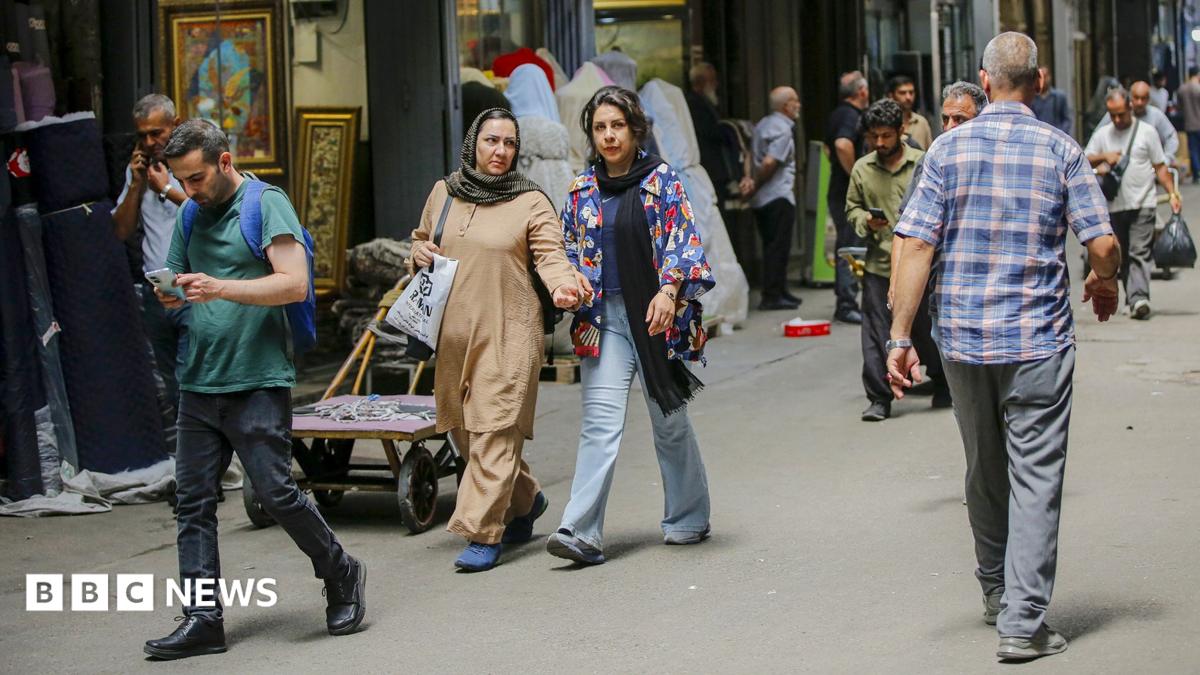
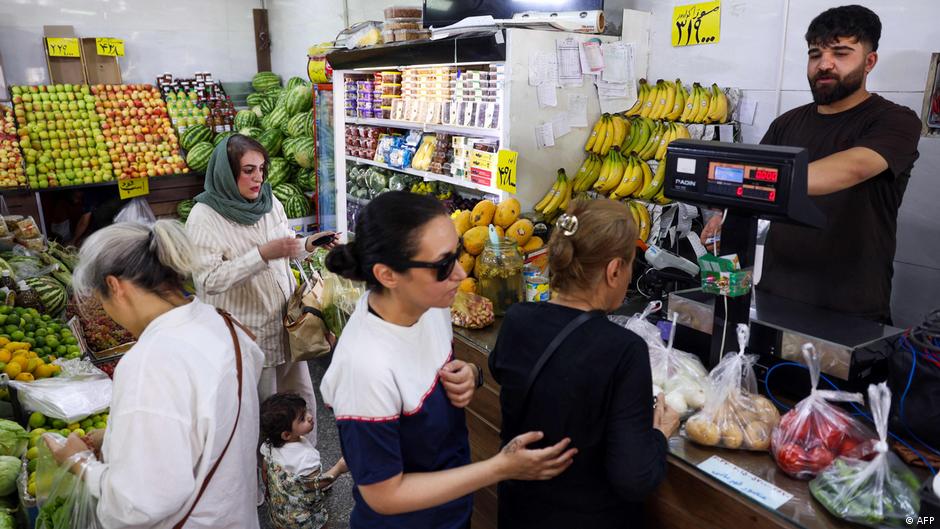
To understand how much everyday items now cost, Al Jazeera tracked the prices of food, clothing and medicines on the streets of Tehran, comparing them with what the same goods cost in the days before the war. asserted
goods → understand → war
How much do basic necessities cost in Iran? asserted
necessities → cost → Iran
Before the war, 2 million rials could buy about 4kg of tomatoes, half a kilo of chicken and a little less than a litre of cooking oil. uncertain
rials → buy → oil
Today, the same amount buys about half as much, with the average price of tomatoes increasing by 71 percent, chicken by 74 percent and cooking oil by 177 percent. asserted
price → buy → percent
The price of insulin, the baseline survival for diabetics, has shot up by 642 percent, while essential medicine like paracetamol has become dearer by 93 percent, and baby formula, largely subsidised by the government, has become costlier by 95 percent. asserted
formula → shoot → percent
The graphic below breaks down the average costs of food, clothing and medicine before the war and on Wednesday. asserted
graphic → break → Wednesday
Prices remain highly volatile, and the figures reflect average values. asserted
figures → remain → values
‘Our only concern is making it to the end of the month with the income we have’ asserted
we → make → income
For Iranian families, this has meant changing not only how much they buy, but also what they eat. asserted
they → mean → what
Afsaneh*, a 35-year-old mother of a one-year-old who lives with her husband in Tehran, says her family’s weekly grocery bill has increased by 20 to 30 percent. asserted
bill → live → percent
“Before the war, we could think about what we wanted to do three or six months down the road, but now our only concern is making it to the end of the month with the income we have,” Afsaneh told Al Jazeera. uncertain
Afsaneh → think → Jazeera
“My husband and I both work, and we have a one-year-old child. asserted
we → work → child
The daily cost of childcare at daycare centres has now reached around 500,000 tomans [5 million rials or $2.5], which is difficult for us to afford. asserted
us → reach → tomans
Toman is the term Iranians use for the rial as an unofficial unit equal to 10 Iranian rials, widely used because it makes the country’s large currency figures easier to manage. asserted
figures → use → rials
The government subsidy on baby formula helps families like Afsaneh’s, but their monthly wellness checkups and nutritional supplements are not covered by insurance, making it difficult to afford quality care for their infant. asserted
it → help → infant
For Afsaneh, their small family is limited to survival and covering food and other necessities. asserted
family → limit → food
“Many purchases, such as new clothes or upgrading our car, have been cut from our plans. asserted
purchases → upgrade → plans
And I don’t think things are going to get better anytime soon,” she said. asserted
she → think → ?
‘Everything has become more expensive’ asserted
Everything → become → ?
War damage has disrupted production, while a US naval blockade of Iranian ports has complicated imports and exports. asserted
blockade → disrupt → imports
While the falling rial has pushed up the cost of goods, sanctions have restricted Iran’s access to international markets. asserted
sanctions → fall → markets
At the same time, wages have failed to keep pace. asserted
wages → fail → pace
The government-approved minimum wage for the current Iranian calendar year ending in March 2027 is 166 million rials ($82). asserted
wage → approve → March
With government assistance and benefits, the figure comes to less than 220 million rials ($108). asserted
figure → come → rials
Zamir*, a 35-year-old man from Tehran who works in men’s retail fashion, told Al Jazeera that sales have dropped by 40 percent compared with last year, and he is struggling to keep his business running. asserted
he → work → business
“I can say that it is completely predictable that many of the people working in this market will go bankrupt before the end of winter and will have no choice but to shut down their businesses,” he says. asserted
he → say → businesses
“Everything has become more expensive,” Zamir explains. asserted
Zamir → become → ?
“Workers’ wages, the cost of raw materials, and just about anything else you can think of have gone up.” asserted
you → think → materials
He says many retailers are selling their summer stock below cost, and in the autumn this new wave of price increases will be reflected in retail stores. asserted
wave → say → stores
“From the moment you leave your house until you get back home, you spend at least 2 million tomans [$10] on things like coffee, cigarettes, water, and transport. asserted
you → leave → coffee
Even if you are extremely careful with your spending, you still have to spend at least 700,000 to 800,000 tomans [$3.5-4] a day, and that doesn’t include regular groceries and household necessities,” Zamir said. asserted
Zamir → have → groceries
Widening gap between income and expenditure For those living on salaries, inflation creates another problem: the value of today’s pay can fall before the next payday. asserted
value → widen → payday
Salama*, 28, is a mother of one who works as a fisher in Hormozgan, Iran’s southern coastal province, overseeing the strategically vital Strait of Hormuz. asserted
who → work → Hormuz
For her, the rising cost of groceries has had a big impact. asserted
cost → rise → impact
“We used to do our weekly grocery shopping for around 500,000 tomans [$2.5], but now we have to spend at least 5 million tomans [$25] for the same groceries, and we’ve had to cut back on things like meat and chicken or eliminate them altogether.” asserted
we → use → them
…and 6 more, not listed.
Give feedback · no sign-in needed

No sign-in needed for now. Your note is sent without a name, so it cannot be answered.

History Support