Photo via Mother Jones

Flock Is Canceled—And Its Competitors Are Profiting

Read the original at Mother Jones ↗
Cite

Hurwitz, S. (2026, September 4). Flock Is Canceled—And Its Competitors Are Profiting. Mother Jones. https://www.motherjones.com/politics/2026/09/flock-contracts-cancelled-cameras-alpr-rekor-axon-florida-texas/

Dated when The Aporia collected the article, usually within hours of publication. Check the original for its exact date and byline.

Mother Jones · collected 2026-09-04 · by Sophie Hurwitz

Quick Summary

Florida Gov. Ron DeSantis announced at a news conference that Florida will revoke permits for law enforcement license-plate-recognition camera permits on state highways by September. This move is part of a growing trend, as Texas has also ordered state agencies to stop funding Flock cameras and 90 cities cancelled their Flock contracts in August, up from the previous record of 214 cities since 2021. Flock's ALPRs have been criticized for enabling police to track "patterns of life" through data sharing between departments, with some officers facing consequences for abusing this surveillance ability. DeSantis and advocacy groups like Secure Justice are pushing for stricter regulations on data retention to curb the potential for abuse.
Written by AI on 2026-09-04, from this article's own text only (the story summary below draws on all the coverage).
See how they differ ↓

AI analysis

Story summary

Flock cameras, AI-powered license plate readers used by law enforcement, have sparked widespread opposition across the political spectrum in several U.S. states ahead of midterm elections. Both Pennsylvania Democratic Governor and Florida Republican Governor Ron DeSantis have voiced concerns about privacy invasions, with DeSantis announcing that Florida will revoke all permits for such cameras on state highways by September 2026.

Critics argue the technology treats civilians like suspects and can be misused, as evidenced by a case in Texas where police used Flock to track a woman who had an abortion. Advocacy groups report a surge in municipalities canceling contracts with Flock, with 90 cities dropping Flock in August 2026 alone.

Supporters claim the cameras enhance public safety and solve crimes more effectively, but concerns over privacy abuses persist. Vandalism against Flock cameras has also increased, indicating public unease with their deployment. The controversy underscores growing tensions between technological advancements and civil liberties protections.

Written for “Flock Surveillance Controversy” on 2026-11-20, grounded in this article and the 8 other(s) covering the same event.

How they differ

7 outlets covered “Flock Surveillance Controversy”.

What each outlet says

One AI summary per outlet of its latest article on this story, written from that article alone and checked against it. Open the article for the outlet's own words.

Mother JonesThis outlet4 Sep

Florida Gov. Ron DeSantis announced at a news conference that Florida will revoke permits for law enforcement license-plate-recognition camera permits on state highways by September. This move is part of a growing trend, as Texas has also ordered state agencies to stop funding Flock cameras and 90 cities cancelled their Flock contracts in August, up from the previous record of 214 cities since 2021. Flock's ALPRs…

Flock Is Canceled—And Its Competitors Are Profiting (this article)
404 Media10 Sep

A smear campaign against opponents of the surveillance technology company Flock has been launched, with over a dozen local TV news stations airing a video report claiming they are funded by China and billionaires. The report's claims contradict evidence that those defending Flock have deep pockets and connections to powerful people. Consumer Action for a Strong Economy published a report last week called "The…

Smear Campaign Says Anti-Flock Movement Is Chinese Propaganda →3 articles from 404 Media on this story
NPR5 Sep

Pennsylvania Democratic Gov. Josh Shapiro and Florida Republican Gov. Ron DeSantis are among those calling for a ban on Flock surveillance cameras, which use AI to track license plates and other vehicle data, with Shapiro stating they're "not in the public interest". DeSantis plans to revoke permits for the cameras on state highways. The technology has been criticized by both parties due to concerns over government…

Flock cameras draw opposition from across the political spectrum →
Fox News5 Sep

Mark Beall, former Pentagon AI Policy Director, warned that expanding Flock cameras, which are automated license plate readers used by law enforcement, could create a "China-like surveillance state" in the US if not properly regulated. Beall argued that while the technology has benefits for law enforcement, it also raises significant privacy concerns and must be subject to strict rules and court oversight. A number…

Former Pentagon AI chief warns Flock cameras could create 'China-like surveillance state' in the US →
BBC6 Sep

A company called Flock Safety has installed over 100,000 AI-powered surveillance cameras across the US, claiming they increase safety and help solve crimes, but recent vandalism incidents have raised concerns about their use. The cameras, which take pictures of every car that passes by, are being seen as overly broad investigative tools that treat civilians like suspects. Similar sabotage has occurred in multiple…

Flock says its cameras make US safer - so why are they being sabotaged? →
Reason6 Sep

Reps. Thomas Massie and Eric Burlison have introduced the Flock-Off Act, a bill to ban federal funding for automated license plate readers (ALPRs) except at borders or for toll enforcement. The bill has bipartisan support, with Democratic Rep. Ro Khanna cosponsoring alongside four Republicans. According to a recent YouGov survey, 46% of respondents oppose the use of ALPRs in their communities, while only 38% favor…

A New Bill Reflects the Bipartisan Backlash Against Flock-Enabled Mass Surveillance →
Show 1 more outlets
The Guardian6 Sep

A growing bipartisan backlash is developing against Flock Safety cameras, which are automated license plate readers that take pictures of vehicle license plates and log car movements. About 120,000 Flock cameras across the US conduct roughly 2 billion scans per month, but have been linked to abuses by police officers in multiple states who used them for stalking and tracking people seeking abortions. Data shows that…

Cut the cameras: Flock surveillance cameras spur rare bipartisan backlash →

Where they agree and split

The full story: what happened, how it changed, and all 9 articles →

Compared with similar articles

This article reads leans left and hedges 10% of its claims. Each row says how that neighbour differs.
The Guardian
Leans left Hedges 4 of 33 claims Outlet record 64/100
404 Media
Leans right further right than this Hedges 1 of 23 claims Outlet record 95/100
“Article A mentions law enforcement switching from Flock to Axon cameras due to backlash, while Article B reports on Florida revoking permits for all license-plate-recognition cameras, including those of Flock and its competitors.”
NPR
Leans left Hedges 1 of 26 claims Outlet record 60/100
“Article A reports on Florida Gov. Ron DeSantis' announcement to revoke permits for license-plate-recognition cameras, while Article B discusses opposition from politicians across the political spectrum, including a mention of Pennsylvania's Gov. Josh Shapiro but not DeSantis”
BBC News
Leans left Hedges 8 of 83 claims Outlet record 65/100
“Article A reports on an announcement made by Governor DeSantis to revoke permits for law enforcement cameras in Florida, while Article B describes an act of vandalism against Flock Safety cameras in a specific neighborhood, which is likely related but not the same event”
Reason
Leans left Hedges 1 of 28 claims Outlet record 67/100
“Article A reports on Florida's decision to revoke ALPR permits and remove cameras, while Article B mentions Texas' freezing of state funding for ALPRs in response to a fellow Republican governor's declaration that ALPRs are 'out of control'”

Story

Flock Surveillance Controversy
Politics · 9 article(s) covering the same event. Compare every outlet's account →
How this article was measured signals, leaning charts, publisher record, byline, topics and claims

Signals How these are calculated →

Claims extracted
30
sentences that state something as happening or true
Uncertain
10%
3 of 30 hedged ("reportedly", "may", "according to")
Leaning
Leans left
of the writing, not the subject · beta estimate
Publisher signals
60/100
Mother Jones's corrections and hedging, across everything collected from it. Not a measure of accuracy.
Outlets on this story
9
Politics
Same framing elsewhere
1
articles that frame the event the way this one does
Analyzed 2026-09-04 · source text last changed 2026-09-04 · how these are computed

How this is being covered How these are calculated →

Article leaning vs. publisher reliability
Source leaning vs. consistency

Publisher

Mother Jones · 595 article(s) · 1 correction(s) detected
Running correction rate · 1 correction(s)

Who wrote this

Sophie Hurwitz
67 article(s) here · 1 carrying a prediction
The explosion will send a plume of lead-contaminated dust across a hundred-mile swath of the Midwest.
Times Square was blanketed in advertisements for the AI company Anthropic November 19, bearing images of bright, lush landscapes and the (Claude-inflected) slogan “What we make of this moment [sic], will make this moment.”
It would be understandable to wonder whether these things are all connected as part of some grand conspiracy.
2026-11-17 · assertive framing · Trump On All Those Outages: “It’s Fine”
States will not be forced to implement new Medicaid work requirements until mid-2027, the administration announced Friday.
The National Security Agency can continue operating under the law until March 2027, but a renewal would extend that timeline.
Van Hollen, at 67, is only eight years younger than Schumer—but his backers see him as a candidate that will, as Van Hollen put it in a speech in Denver on Friday, “shake things up.”
When Coloradans voted last week to reject an amendment that would have enshrined a right to natural gas in their state constitution, they also rebuffed a legal maneuver by a dark money group to keep Colorado reliant on deceptively dirty natural gas.
Ahmed Moor, a Philadelphia foreign policy analyst and writer, is the first candidate to announce his entry into what will likely be a crowded primary field.
With Democrats set to take control of the House and Senate, Himes is suggesting that his Republican colleagues “get this thing done in the lame-duck because it’s, you know, it’s going to be a very different 702 that gets reauthorized in the first quarter of next year,” as The Hill reported.
The $1.5 trillion defense budget proposed by Pete Hegseth may be cut down in the 120th Congress.
2026-11-12 · assertive framing · Alex Karp Wants to Be Friends With Democrats Again
Also by Sophie Hurwitz
Nothing else under this byline is closely related to this article, so these are simply their most recent.
All 67 articles by Sophie Hurwitz →

Topics

Flock Florida Oakland St. Augustine Texas

Subjects

Flock ORG · 11× Florida GPE · 4× Rekor ORG · 3× Worthington PERSON · 3× DeSantis PERSON · 1× Oakland GPE · 1× Ron DeSantis PERSON · 1× Secure Justice ORG · 1× St. Augustine GPE · 1× Texas ORG · 1×

Narrative

The Oakland-based advocacy group Secure Justice, which tracks automated license plate reader use on the municipal level, says that in the month of August more towns and cities cancelled their Flock contracts than ever before: of the 214 cities that have dropped Flock since 2021, 90 did so in August 2026.
framing: assertive · carried by 1 article(s) · first seen 2026-09-04
He announced that Florida will revoke all law enforcement license-plate-recognition camera permits on state highways, with all such cameras to be removed by the end of September.
2026-09-04 · Mother Jones
Flock Is Canceled—And Its Competitors Are Profiting · assertive framing

Claims (30 extracted, 3 hedged)

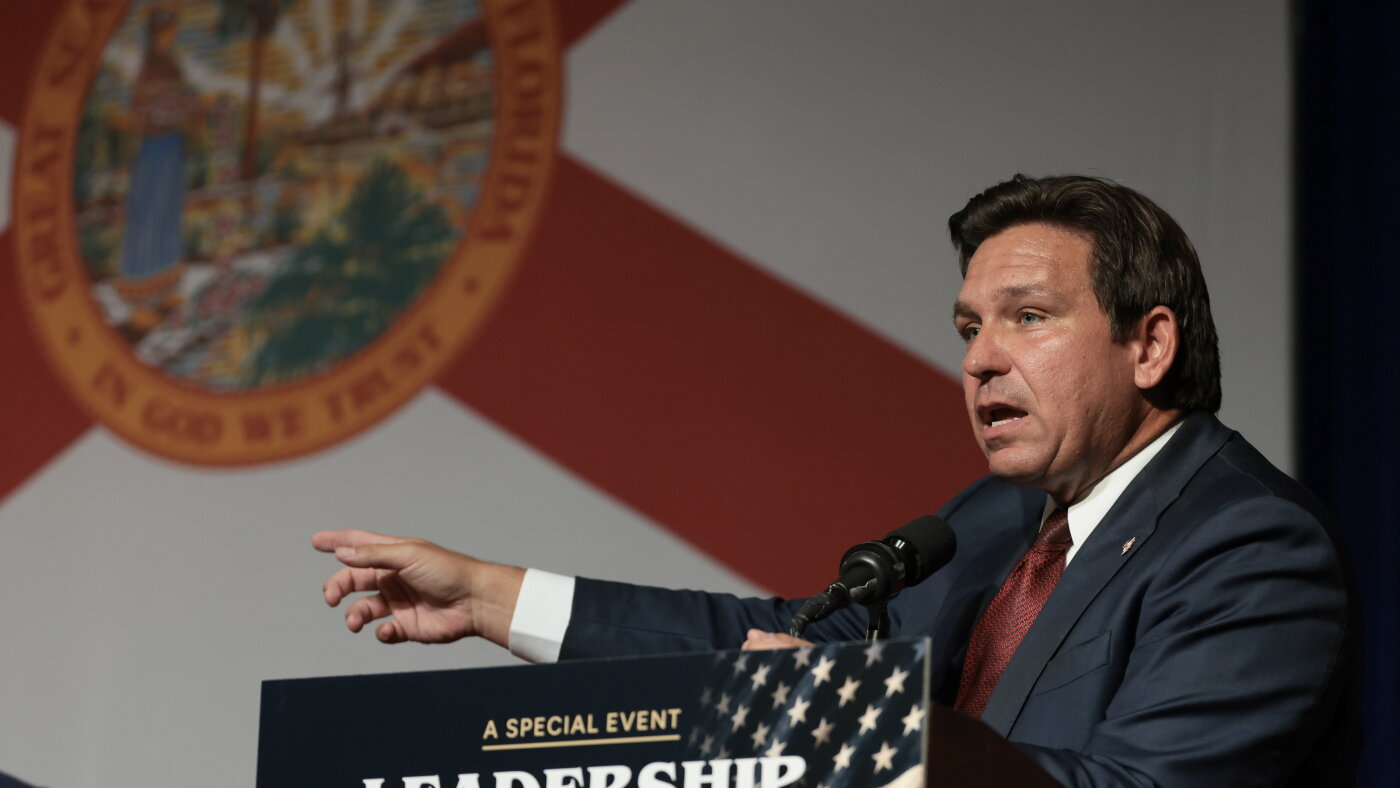
“If you want to get in your car and you want to go down to Buc-ee’s in St. Augustine, it’s really none of the government’s damn business if you’re doing that, right?” Florida Gov. Ron DeSantis said Monday at a news conference. asserted
DeSantis → want → conference
He announced that Florida will revoke all law enforcement license-plate-recognition camera permits on state highways, with all such cameras to be removed by the end of September. asserted
cameras → announce → September
“What we don’t want in the state of Florida is to have a digital AI surveillance state where everything we’re doing is being tracked at all times,” DeSantis added, referring to the recent expansion of ALPRs—automated license plate reader cameras—across the country. asserted
DeSantis → want → country
The cameras are supposed to catch people committing crimes, and sometimes they do. asserted
they → suppose → crimes
But they’re also ripe for abuse. asserted
they → ’re → abuse
Each camera forms part of a nationwide network, and by sharing vehicle information between and within police departments, ALPRs can enable officers to track what are called “patterns of life”: where a person is likely to be, who they spend time with, and what they’re doing in a given moment. asserted
they → form → moment
Police officers nationwide are taking advantage of that surveillance ability. asserted
officers → take → ability
In dozens of cases, officers have lost their jobs or faced criminal charges for doing things like searching an ex-girlfriend’s license plate information 2,000 times, searching an estranged wife’s license plates 700 times, or tracking an abortion-seeker across state lines. asserted
officers → lose → lines
Florida is not alone in cancelling Flock contracts. asserted
Florida → cancel → contracts
Texas, last week, ordered state agencies to stop funding Flock cameras. asserted
Texas → order → cameras
The Oakland-based advocacy group Secure Justice, which tracks automated license plate reader use on the municipal level, says that in the month of August more towns and cities cancelled their Flock contracts than ever before: of the 214 cities that have dropped Flock since 2021, 90 did so in August 2026. asserted
90 → base → August
(At least three towns have reported that Flock reinstalled or reactivated their cameras after local officials ended their contracts.) asserted
officials → report → contracts
Strictly regulating data retention might be one solution. uncertain
regulating → regulate → retention
A police department can’t do as much to share data with ICE, for example, if state laws mandate that the data be deleted quickly. asserted
data → do → example
In New Hampshire, ALPRs must delete all data after three minutes; Flock’s current default retention period is seven days. asserted
period → delete → minutes
Corinne Worthington works as the advocacy manager with the Surveillance Technology Oversight Project, a nonprofit focused on litigation and research on discriminatory surveillance technology. asserted
Worthington → work → technology
To Worthington, Flock is “putting a name to people’s fears.” asserted
Flock → put → fears
“I think that because of how public Flock has been, people have woken up to the harms of ALPRs in a way that maybe, previously, they weren’t aware of,” Worthington said. asserted
Worthington → think → that
While Flock has over 120,000 license plate readers across the country, it is far from the only ALPR company. asserted
it → have → company
Motorola, the AI roadway safety firm Rekor, and Axon, the police tech firm behind Tasers, all sell similar cameras to police. asserted
Motorola → sell → police
“That’s the problem with targeting specifically the vendor, not the technology as a whole,” Worthington said. asserted
Worthington → ’ → whole
When states and cities cancel their contracts with Flock, they’re likely to end up replacing those cameras with ones made by one of the other ALPR companies. asserted
they → cancel → companies
Rekor, another company that sells ALPRs, is calling for national regulations on the cameras to “preserve ALPR’s public safety value.” asserted
that → sell → value
Those regulations would include “anonymizing non-hotlist plate data” which could then be re-identified with a valid warrant or court order. uncertain
which → include → warrant
“The fight over whether ALPR should exist has stopped being useful to anyone,” Rekor vice president Charlie Degliomini told me. asserted
Degliomini → exist → me
As far as he is aware, Degliomini added, his company is the only ALPR vendor calling for a warrant requirement on at least some plate searches. asserted
company → add → searches
But Rekor’s cameras can be abused, too: activists in New York are suing the Westchester County Police Department for allegedly using Rekor’s tools to log their locations thousands of times. uncertain
activists → abuse → times
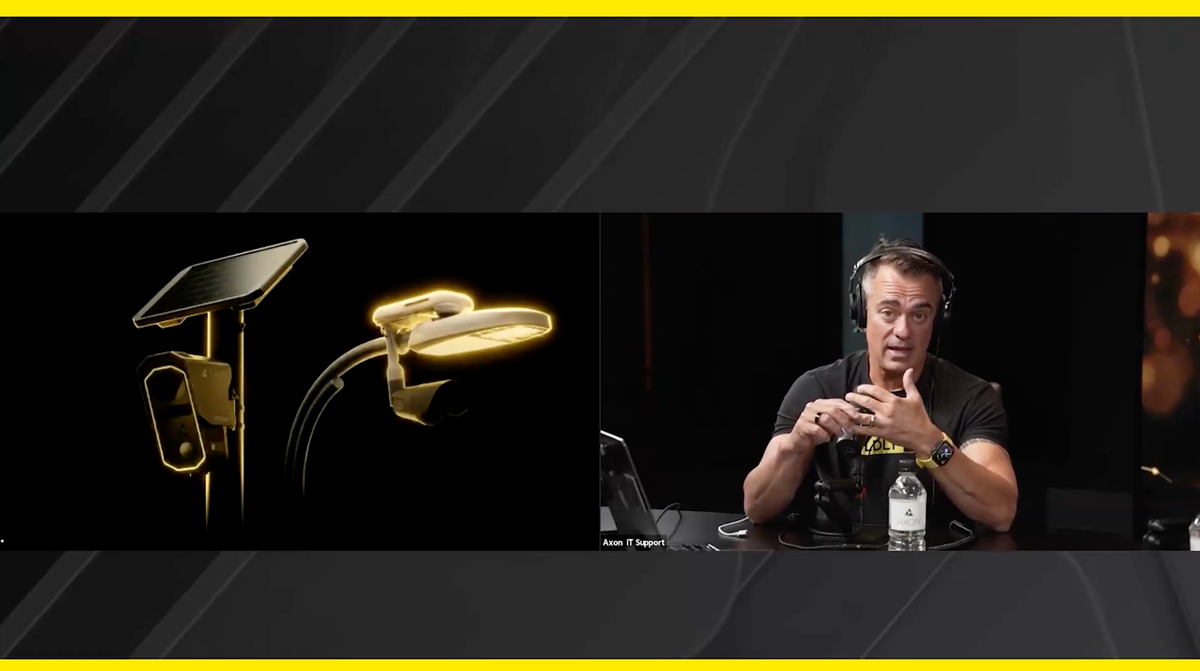
And the CEO of Axon, another camera manufacturer, floated the possibility of changing the shape of Axon cameras so they look less similar to the Flock cameras Americans are lately so fond of destroying. asserted
Americans → float → cameras
“We’ve had some people say they’d like to see us make just a different camera, because our ALPR camera looks like an ALPR camera,” Axon CEO Rick Smith said in a now-deleted webinar, as 404 Media first reported. asserted
Media → have → webinar
Whether cameras that look different, but perform the same surveillance function, will eventually inspire the same pushback remains to be seen. asserted
inspire → look → pushback
Give feedback · no sign-in needed

No sign-in needed for now. Your note is sent without a name, so it cannot be answered.

History Support