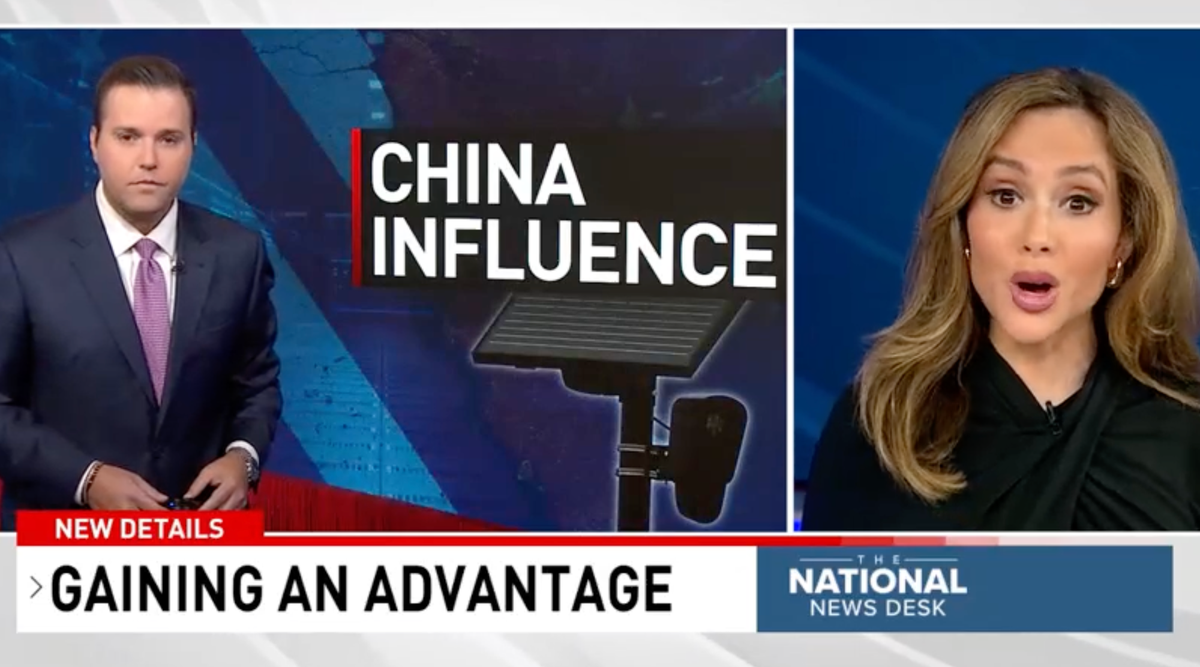
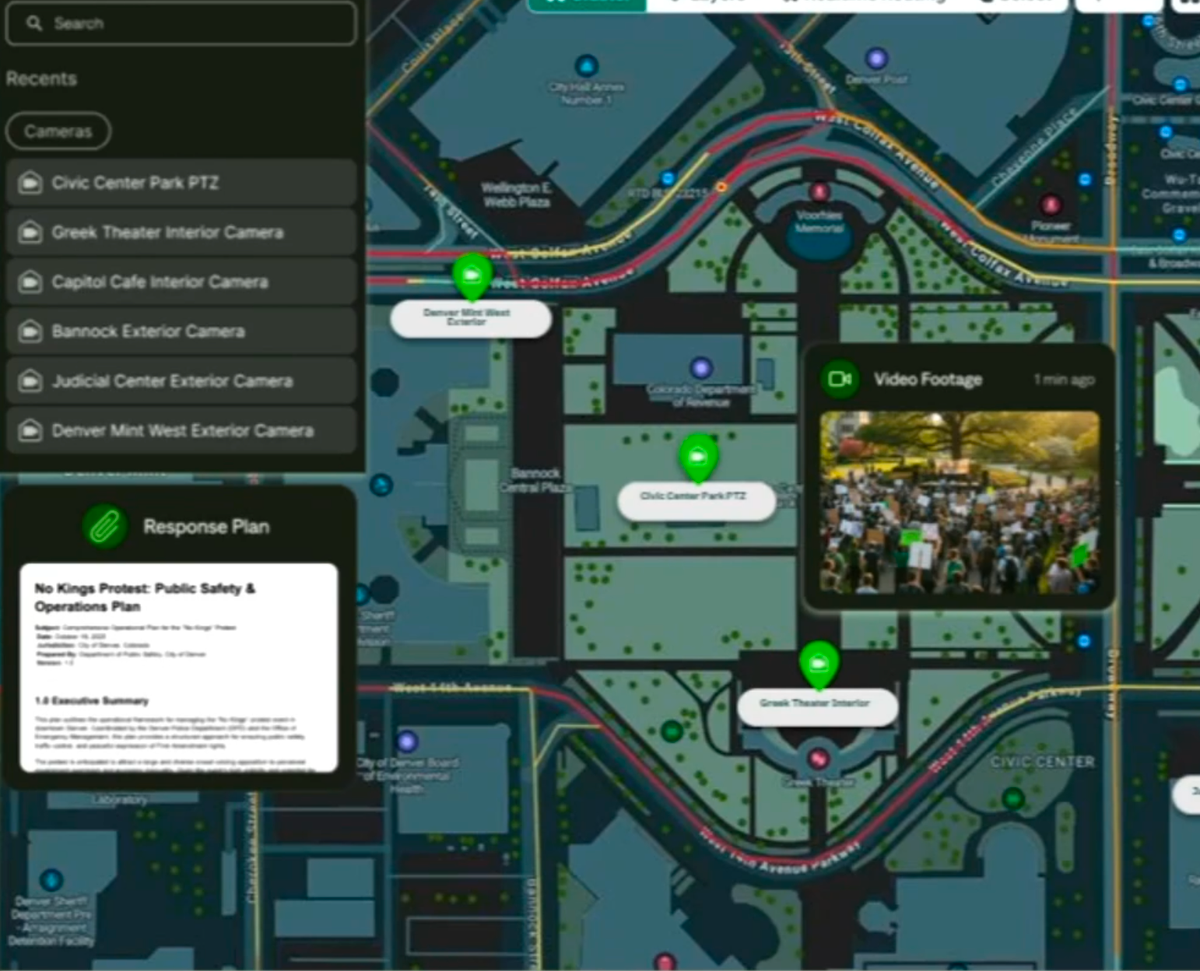
Photo via The Guardian

Cut the cameras: Flock surveillance cameras spur rare bipartisan backlash

Read the original at The Guardian ↗
Cite

Benson, T. (2026, September 6). Cut the cameras: Flock surveillance cameras spur rare bipartisan backlash. The Guardian. https://www.theguardian.com/technology/2026/sep/05/flock-cameras-political-backlash

Dated when The Aporia collected the article, usually within hours of publication. Check the original for its exact date and byline.

The Guardian · collected 2026-09-06 · by Thor Benson

Quick Summary

A growing bipartisan backlash is developing against Flock Safety cameras, which are automated license plate readers that take pictures of vehicle license plates and log car movements. About 120,000 Flock cameras across the US conduct roughly 2 billion scans per month, but have been linked to abuses by police officers in multiple states who used them for stalking and tracking people seeking abortions. Data shows that about 46% of Americans now oppose ALPRs being used in their community, up from 33 points from the previous year. Both liberal and conservative politicians are pushing back against Flock cameras, with some promising legislation to restrict their use and others launching investigations into potential privacy abuses.
Written by AI on 2026-09-06, from this article's own text only (the story summary below draws on all the coverage).
See how they differ ↓

AI analysis

Story summary

Flock cameras, AI-powered license plate readers used by law enforcement, have sparked widespread opposition across the political spectrum in several U.S. states ahead of midterm elections. Both Pennsylvania Democratic Governor and Florida Republican Governor Ron DeSantis have voiced concerns about privacy invasions, with DeSantis announcing that Florida will revoke all permits for such cameras on state highways by September 2026.

Critics argue the technology treats civilians like suspects and can be misused, as evidenced by a case in Texas where police used Flock to track a woman who had an abortion. Advocacy groups report a surge in municipalities canceling contracts with Flock, with 90 cities dropping Flock in August 2026 alone.

Supporters claim the cameras enhance public safety and solve crimes more effectively, but concerns over privacy abuses persist. Vandalism against Flock cameras has also increased, indicating public unease with their deployment. The controversy underscores growing tensions between technological advancements and civil liberties protections.

Written for “Flock Surveillance Controversy” on 2026-11-20, grounded in this article and the 8 other(s) covering the same event.

How they differ

7 outlets covered “Flock Surveillance Controversy”.

What each outlet says

One AI summary per outlet of its latest article on this story, written from that article alone and checked against it. Open the article for the outlet's own words.

The GuardianThis outlet6 Sep

A growing bipartisan backlash is developing against Flock Safety cameras, which are automated license plate readers that take pictures of vehicle license plates and log car movements. About 120,000 Flock cameras across the US conduct roughly 2 billion scans per month, but have been linked to abuses by police officers in multiple states who used them for stalking and tracking people seeking abortions. Data shows that…

Cut the cameras: Flock surveillance cameras spur rare bipartisan backlash (this article)
404 Media10 Sep

A smear campaign against opponents of the surveillance technology company Flock has been launched, with over a dozen local TV news stations airing a video report claiming they are funded by China and billionaires. The report's claims contradict evidence that those defending Flock have deep pockets and connections to powerful people. Consumer Action for a Strong Economy published a report last week called "The…

Smear Campaign Says Anti-Flock Movement Is Chinese Propaganda →3 articles from 404 Media on this story
Mother Jones4 Sep

Florida Gov. Ron DeSantis announced at a news conference that Florida will revoke permits for law enforcement license-plate-recognition camera permits on state highways by September. This move is part of a growing trend, as Texas has also ordered state agencies to stop funding Flock cameras and 90 cities cancelled their Flock contracts in August, up from the previous record of 214 cities since 2021. Flock's ALPRs…

Flock Is Canceled—And Its Competitors Are Profiting →
NPR5 Sep

Pennsylvania Democratic Gov. Josh Shapiro and Florida Republican Gov. Ron DeSantis are among those calling for a ban on Flock surveillance cameras, which use AI to track license plates and other vehicle data, with Shapiro stating they're "not in the public interest". DeSantis plans to revoke permits for the cameras on state highways. The technology has been criticized by both parties due to concerns over government…

Flock cameras draw opposition from across the political spectrum →
Fox News5 Sep

Mark Beall, former Pentagon AI Policy Director, warned that expanding Flock cameras, which are automated license plate readers used by law enforcement, could create a "China-like surveillance state" in the US if not properly regulated. Beall argued that while the technology has benefits for law enforcement, it also raises significant privacy concerns and must be subject to strict rules and court oversight. A number…

Former Pentagon AI chief warns Flock cameras could create 'China-like surveillance state' in the US →
BBC6 Sep

A company called Flock Safety has installed over 100,000 AI-powered surveillance cameras across the US, claiming they increase safety and help solve crimes, but recent vandalism incidents have raised concerns about their use. The cameras, which take pictures of every car that passes by, are being seen as overly broad investigative tools that treat civilians like suspects. Similar sabotage has occurred in multiple…

Flock says its cameras make US safer - so why are they being sabotaged? →
Show 1 more outlets
Reason6 Sep

Reps. Thomas Massie and Eric Burlison have introduced the Flock-Off Act, a bill to ban federal funding for automated license plate readers (ALPRs) except at borders or for toll enforcement. The bill has bipartisan support, with Democratic Rep. Ro Khanna cosponsoring alongside four Republicans. According to a recent YouGov survey, 46% of respondents oppose the use of ALPRs in their communities, while only 38% favor…

A New Bill Reflects the Bipartisan Backlash Against Flock-Enabled Mass Surveillance →

Where they agree and split

The full story: what happened, how it changed, and all 9 articles →

Compared with similar articles

This article reads leans left and hedges 12% of its claims. Each row says how that neighbour differs.
404 Media
Leans left Hedges 10 of 39 claims Outlet record 95/100
Fox News
Hedges 3 of 21 claims Outlet record 66/100
NPR
Leans left Hedges 1 of 26 claims Outlet record 60/100
Fox News
Leans right further right than this Hedges 2 of 28 claims Outlet record 66/100
BBC News
Leans left Hedges 8 of 83 claims Outlet record 65/100
Reason
Hedges 4 of 51 claims Outlet record 67/100
404 Media
Leans left Hedges 11 of 84 claims Outlet record 95/100
404 Media
Leans strongly right further right than this Hedges 2 of 43 claims Outlet record 95/100
Mother Jones
Leans left Hedges 3 of 30 claims Outlet record 60/100
The Intercept
Leans left Hedges 5 of 80 claims Outlet record 96/100
“While both articles mention Flock and its surveillance cameras, they discuss different aspects of the backlash against the company: one article focuses on donations to local politicians' groups, while the other discusses a bipartisan backlash against the cameras themselves.”

Story

Flock Surveillance Controversy
Politics · 9 article(s) covering the same event. Compare every outlet's account →
How this article was measured signals, leaning charts, publisher record, byline, topics and claims

Signals How these are calculated →

Claims extracted
33
sentences that state something as happening or true
Uncertain
12%
4 of 33 hedged ("reportedly", "may", "according to")
Leaning
Leans left
of the writing, not the subject · beta estimate
Publisher signals
64/100
The Guardian's corrections and hedging, across everything collected from it. Not a measure of accuracy.
Outlets on this story
9
Politics
Same framing elsewhere
1
articles that frame the event the way this one does
Analyzed 2026-09-06 · how these are computed

How this is being covered How these are calculated →

Article leaning vs. publisher reliability
Source leaning vs. consistency

Publisher

The Guardian · 3728 article(s) · 8 correction(s) detected
Running correction rate · 8 correction(s)

Who wrote this

Thor Benson
1 article(s) here · 1 carrying a prediction
You might trust the people in power now who put them up – but are you going to trust the next people who get access to that equipment?”
The only article under this byline in the corpus.

Topics

ACLU Americans Flock Flock Safety Republican

Subjects

Americans NORP · 3× Flock ORG · 3× Republican NORP · 3× ACLU ORG · 2× Greg Abbott PERSON · 1× ICE ORG · 1× Immigration and Customs Enforcement ORG · 1× Jay Stanley PERSON · 1× the American Civil Liberties Union ORG · 1× the Washington Post ORG · 1×

Narrative

Republican senator Josh Hawley has launched an investigation into potential Flock privacy abuses, and Democratic congressman Ro Khanna is cosponsoring a bill with Republican congressman Thomas Massie to prevent federal funds from being used to purchase Flock cameras.
framing: assertive · carried by 1 article(s) · first seen 2026-09-06
You might trust the people in power now who put them up – but are you going to trust the next people who get access to that equipment?”
2026-09-06 · The Guardian
Cut the cameras: Flock surveillance cameras spur rare bipartisan backlash · assertive framing

Claims (33 extracted, 4 hedged)

Growing factions from both sides of the political aisle in the US are pushing back against surveillance cameras made by a single company, a rare response in a sharply divided country with a president pushing an unwaveringly pro-tech agenda. asserted
factions → grow → agenda
The bipartisan backlash against Flock Safety cameras resembles nationwide rage toward the construction of large datacenters that power artificial intelligence. asserted
that → resemble → intelligence
Polling shows roughly 75% of Americans oppose new datacenter construction in their areas. asserted
% → show → areas
Flock’s cameras are automated license plate readers (ALPRs), which take pictures of vehicle license plates so police and security companies can log the movement of cars in a given area. asserted
police → automate → area
There are about 120,000 Flock cameras across the US, which conduct roughly 2bn scans per month. asserted
which → be → month
The company is staring down controversy after reports of abuses of its cameras by police officers in multiple states, who have used them to stalk ex-lovers and track people seeking abortions. asserted
who → star → abortions
The network the cameras feed into is also frequently utilized by US Immigration and Customs Enforcement (ICE). asserted
cameras → feed → Immigration
Data and polling from the Washington Post show that social media posts about Flock have increased since July, and about 46% of Americans oppose ALPRs being used in their community – up 13 points from the previous year. asserted
ALPRs → show → community
Vigilantes are posting videos of themselves destroying the cameras to digital applause. asserted
themselves → post → applause
According to privacy and surveillance experts, hatred of Flock cameras has become bipartisan. uncertain
hatred → accord → cameras
“In my 20-plus years at the ACLU, I’ve never really seen such a grassroots uprising against surveillance technology like this,” said Jay Stanley, a senior policy analyst at the American Civil Liberties Union (ACLU). asserted
Stanley → see → Union
“On the left, there’s a historical memory of law enforcement spying on and interfering with advocates for social change … asserted
enforcement → ’ → change
Both liberal and conservative politicians are pushing back against Flock cameras. asserted
politicians → push → cameras
Greg Abbott, Texas’s Republican governor, blocked state agencies from procuring Flock products. asserted
Abbott → block → products
On the other side of the political spectrum, Bernie Sanders, the progressive US senator, is promising to introduce legislation to restrict the use of Flock cameras. asserted
Sanders → promise → cameras
Republican senator Josh Hawley has launched an investigation into potential Flock privacy abuses, and Democratic congressman Ro Khanna is cosponsoring a bill with Republican congressman Thomas Massie to prevent federal funds from being used to purchase Flock cameras. asserted
Khanna → launch → cameras
Municipal leaders of all political stripes are dropping contracts with Flock, though sometimes they replace the license plate readers with another brand of camera and continue the surveillance. asserted
they → drop → surveillance
We reached out to Flock Safety for a statement and did not receive a response before publishing. asserted
We → reach → publishing
This appears to be an unusual case where politicians are getting on the same side of a hot-button issue. asserted
politicians → appear → issue
“Privacy, to some extent, is bipartisan,” said Matthew Guariglia, a senior policy analyst at the Electronic Frontier Foundation. asserted
Guariglia → say → Foundation
“When you put up these cameras, they last longer than the current administration. asserted
they → put → administration
You might trust the people in power now who put them up – but are you going to trust the next people who get access to that equipment?” uncertain
who → trust → equipment
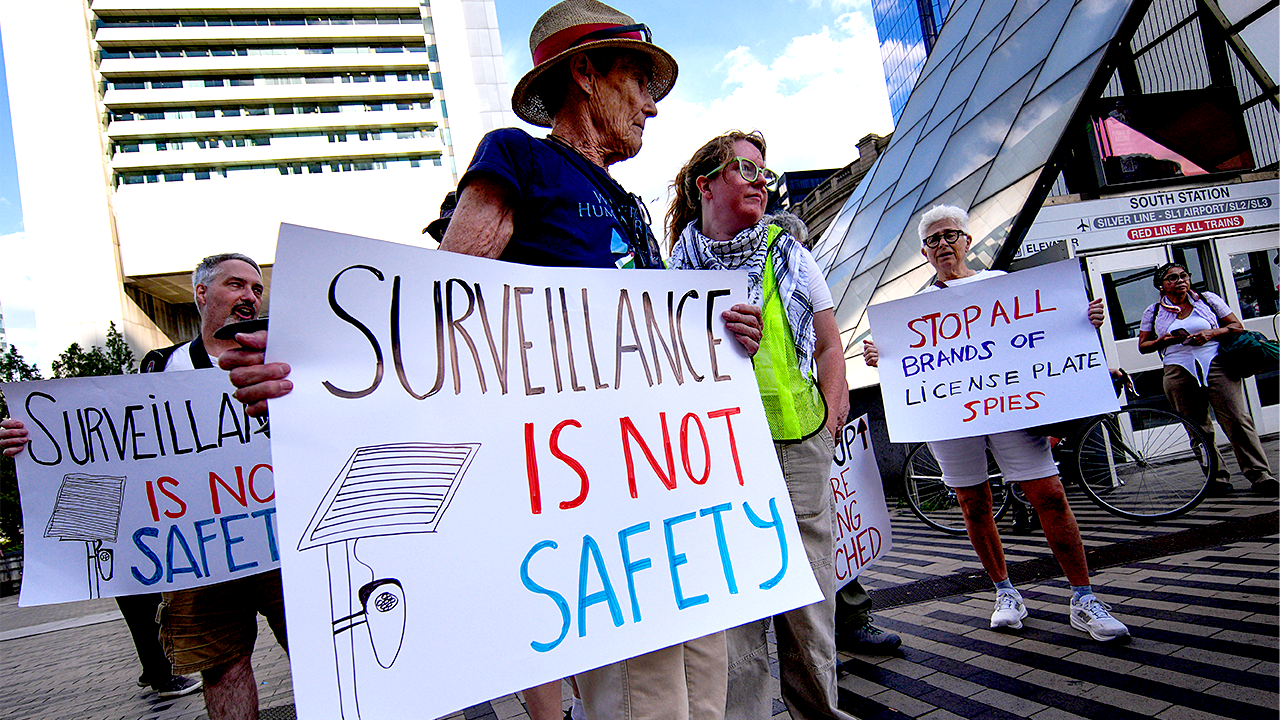
Americans have been showing up at town hall meetings by the dozen over the past six months or so, and there have been numerous protests asserted
Americans → show → months
More than 100 jurisdictions have canceled their contracts so far, according to data from the non-profit Institute for Justice. uncertain
jurisdictions → cancel → Justice
An organization called DeFlock, founded in 2024, hopes to increase the numbers by compiling a map of the cameras’ locations. asserted
organization → call → locations
While ALPRs aren’t new, Flock, founded in 2017, has made them far more prevalent than they used to be. asserted
they → found → 2017
The company’s software allows disparate law enforcement agencies to share data with one another, meaning a license plate scan by a police department in one state could easily and quickly be used in another. uncertain
scan → allow → another
“Flock represents tech companies in bed with governments, doing the exact stuff people have become distrustful of and resentful about for the past few decades. asserted
people → represent → decades
It feels like it’s finally hit the boiling-over point,” said Woodrow Hartzog, a professor of law and computer science at Boston University. asserted
Hartzog → feel → University
Hartzog predicts the actions against Flock Safety will continue at the state and local level amid this growing popular outrage. asserted
actions → predict → outrage
He expects people are going to stay angry about the issue, and politicians will have to respond. asserted
politicians → expect → issue
“The pushback we’re seeing against Flock cameras is one of the most vivid illustrations I can think of that surveillance is not inevitable – that these tools aren’t inevitable,” Hartzog says. asserted
Hartzog → see → illustrations
“It’s up to all of us to stop them.” asserted
It → ’ → them
Give feedback · no sign-in needed

No sign-in needed for now. Your note is sent without a name, so it cannot be answered.

History Support