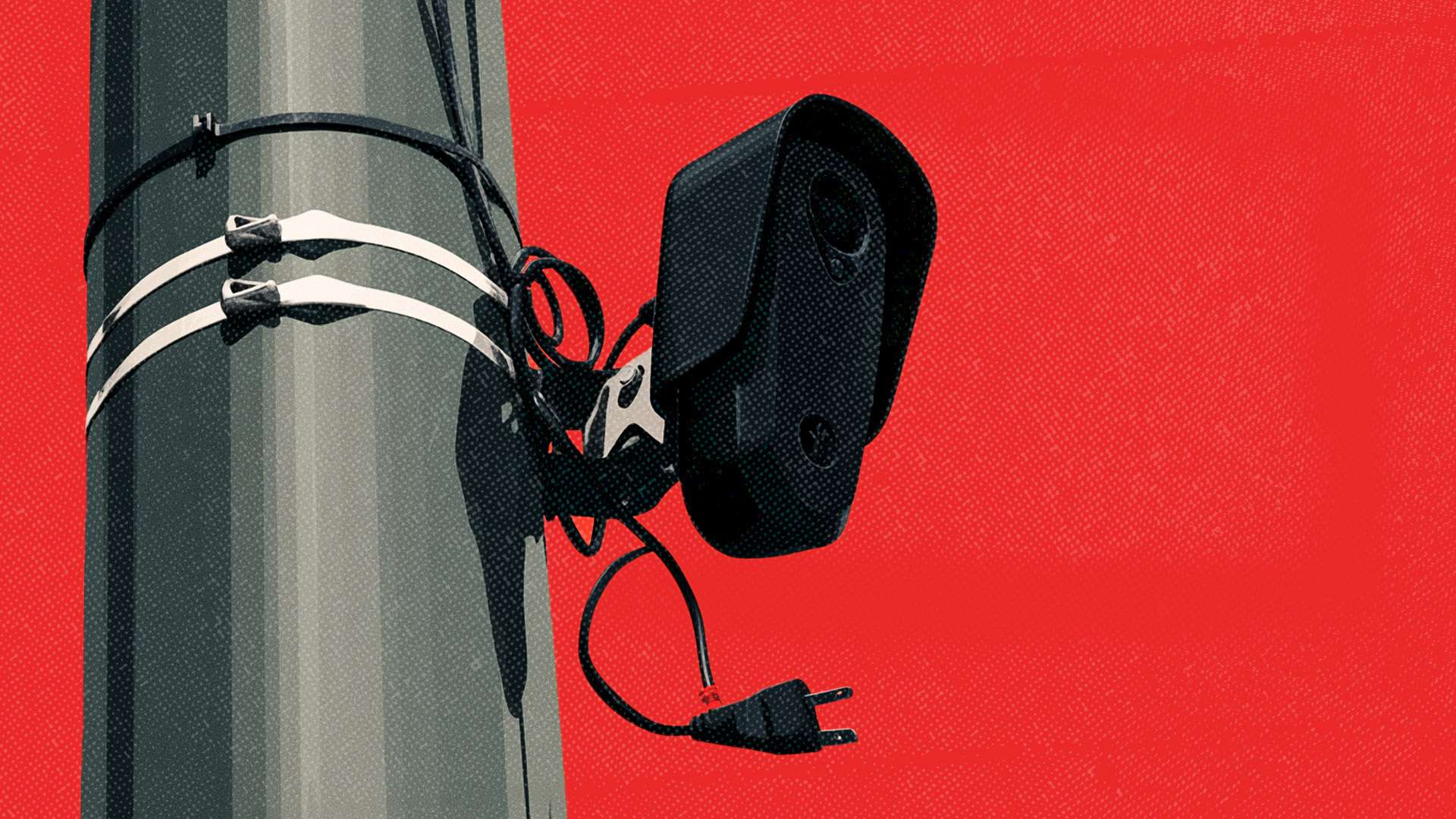
Photo via Reason

A New Bill Reflects the Bipartisan Backlash Against Flock-Enabled Mass Surveillance

Read the original at Reason ↗
Cite

Sullum, J. (2026, September 6). A New Bill Reflects the Bipartisan Backlash Against Flock-Enabled Mass Surveillance. Reason. https://reason.com/2026/09/03/a-new-bill-reflects-the-bipartisan-backlash-against-flock-enabled-mass-surveillance/

Dated when The Aporia collected the article, usually within hours of publication. Check the original for its exact date and byline.

Reason · collected 2026-09-06 · by Jacob Sullum

Quick Summary

Reps. Thomas Massie and Eric Burlison have introduced the Flock-Off Act, a bill to ban federal funding for automated license plate readers (ALPRs) except at borders or for toll enforcement. The bill has bipartisan support, with Democratic Rep. Ro Khanna cosponsoring alongside four Republicans. According to a recent YouGov survey, 46% of respondents oppose the use of ALPRs in their communities, while only 38% favor them, marking a shift from last year's results where 45% supported and 33% opposed them. The growing backlash against ALPRs reflects concerns over mass surveillance and potential abuse by police.
Written by AI on 2026-09-06, from this article's own text only (the story summary below draws on all the coverage).
See how they differ ↓

AI analysis

Story summary

Flock cameras, AI-powered license plate readers used by law enforcement, have sparked widespread opposition across the political spectrum in several U.S. states ahead of midterm elections. Both Pennsylvania Democratic Governor and Florida Republican Governor Ron DeSantis have voiced concerns about privacy invasions, with DeSantis announcing that Florida will revoke all permits for such cameras on state highways by September 2026.

Critics argue the technology treats civilians like suspects and can be misused, as evidenced by a case in Texas where police used Flock to track a woman who had an abortion. Advocacy groups report a surge in municipalities canceling contracts with Flock, with 90 cities dropping Flock in August 2026 alone.

Supporters claim the cameras enhance public safety and solve crimes more effectively, but concerns over privacy abuses persist. Vandalism against Flock cameras has also increased, indicating public unease with their deployment. The controversy underscores growing tensions between technological advancements and civil liberties protections.

Written for “Flock Surveillance Controversy” on 2026-11-20, grounded in this article and the 8 other(s) covering the same event.

How they differ

7 outlets covered “Flock Surveillance Controversy”.

What each outlet says

One AI summary per outlet of its latest article on this story, written from that article alone and checked against it. Open the article for the outlet's own words.

ReasonThis outlet6 Sep

Reps. Thomas Massie and Eric Burlison have introduced the Flock-Off Act, a bill to ban federal funding for automated license plate readers (ALPRs) except at borders or for toll enforcement. The bill has bipartisan support, with Democratic Rep. Ro Khanna cosponsoring alongside four Republicans. According to a recent YouGov survey, 46% of respondents oppose the use of ALPRs in their communities, while only 38% favor…

A New Bill Reflects the Bipartisan Backlash Against Flock-Enabled Mass Surveillance (this article)
404 Media10 Sep

A smear campaign against opponents of the surveillance technology company Flock has been launched, with over a dozen local TV news stations airing a video report claiming they are funded by China and billionaires. The report's claims contradict evidence that those defending Flock have deep pockets and connections to powerful people. Consumer Action for a Strong Economy published a report last week called "The…

Smear Campaign Says Anti-Flock Movement Is Chinese Propaganda →3 articles from 404 Media on this story
Mother Jones4 Sep

Florida Gov. Ron DeSantis announced at a news conference that Florida will revoke permits for law enforcement license-plate-recognition camera permits on state highways by September. This move is part of a growing trend, as Texas has also ordered state agencies to stop funding Flock cameras and 90 cities cancelled their Flock contracts in August, up from the previous record of 214 cities since 2021. Flock's ALPRs…

Flock Is Canceled—And Its Competitors Are Profiting →
NPR5 Sep

Pennsylvania Democratic Gov. Josh Shapiro and Florida Republican Gov. Ron DeSantis are among those calling for a ban on Flock surveillance cameras, which use AI to track license plates and other vehicle data, with Shapiro stating they're "not in the public interest". DeSantis plans to revoke permits for the cameras on state highways. The technology has been criticized by both parties due to concerns over government…

Flock cameras draw opposition from across the political spectrum →
Fox News5 Sep

Mark Beall, former Pentagon AI Policy Director, warned that expanding Flock cameras, which are automated license plate readers used by law enforcement, could create a "China-like surveillance state" in the US if not properly regulated. Beall argued that while the technology has benefits for law enforcement, it also raises significant privacy concerns and must be subject to strict rules and court oversight. A number…

Former Pentagon AI chief warns Flock cameras could create 'China-like surveillance state' in the US →
BBC6 Sep

A company called Flock Safety has installed over 100,000 AI-powered surveillance cameras across the US, claiming they increase safety and help solve crimes, but recent vandalism incidents have raised concerns about their use. The cameras, which take pictures of every car that passes by, are being seen as overly broad investigative tools that treat civilians like suspects. Similar sabotage has occurred in multiple…

Flock says its cameras make US safer - so why are they being sabotaged? →
Show 1 more outlets
The Guardian6 Sep

A growing bipartisan backlash is developing against Flock Safety cameras, which are automated license plate readers that take pictures of vehicle license plates and log car movements. About 120,000 Flock cameras across the US conduct roughly 2 billion scans per month, but have been linked to abuses by police officers in multiple states who used them for stalking and tracking people seeking abortions. Data shows that…

Cut the cameras: Flock surveillance cameras spur rare bipartisan backlash →

Where they agree and split

The full story: what happened, how it changed, and all 9 articles →

Compared with similar articles

This article reads unscored and hedges 8% of its claims. Each row says how that neighbour differs.
The Guardian
Leans left Hedges 4 of 33 claims Outlet record 64/100
NPR
Leans left Hedges 1 of 26 claims Outlet record 60/100
“Article A mentions a 'widespread backlash' and references various states and a press conference, while Article B introduces a new bill called the Flock-Off Act as a response to the issue”
404 Media
Leans right Hedges 1 of 23 claims Outlet record 95/100
“Article A reports on Axon's response to Flock vandalism and switching from one camera brand, while Article B discusses a new bill introduced by lawmakers in opposition to Flock-Enabled Mass Surveillance”
404 Media
Leans left Hedges 11 of 84 claims Outlet record 95/100
“Article A discusses a bill introduction by Reps. Massie and Burlison, while Article B mentions a smear campaign against the anti-Flock movement”
The Intercept
Leans left Hedges 5 of 80 claims Outlet record 96/100
“Article B describes a new bill being introduced, while Article A discusses an increase in donations to local politicians' groups from Flock”
Fox News
Leans right Hedges 2 of 28 claims Outlet record 66/100
“Article A discusses a warning from Mark Beall about potential surveillance state creation, while Article B reports on a new bill (Flock-Off Act) introduced in response to that concern”
CBC News
Leans left Hedges 0 of 2 claims Outlet record 72/100
“Article A discusses the spread of AI-powered surveillance cameras in Canada, while Article B introduces a bill to bar federal funding for ALPRs and criticizes Flock Safety, indicating two related but distinct topics”
404 Media
Leans left Hedges 1 of 3 claims Outlet record 95/100
“Article A mentions a bill called the Flock-Off Act aimed at regulating ALPRs, while Article B reports on secretive DHS units analyzing financial habits and pulling people over”
The Intercept
Leans left Hedges 0 of 70 claims Outlet record 96/100
“Article A describes the introduction of the Flock-Off Act, while Article B discusses Flock Security's use of license plate scanners for surveillance and its benefits claimed by investors and executives.”
Reason
Leans left Hedges 1 of 28 claims Outlet record 67/100
“Article A mentions two representatives introducing a bill, while Article B refers to governors taking actions in Texas and Florida”

Story

Flock Surveillance Controversy
Politics · 9 article(s) covering the same event. Compare every outlet's account →
How this article was measured signals, leaning charts, publisher record, byline, topics and claims

Signals How these are calculated →

Claims extracted
51
sentences that state something as happening or true
Uncertain
8%
4 of 51 hedged ("reportedly", "may", "according to")
Leaning
withheld
no quote in the article backed the model's score
Publisher signals
67/100
Reason's corrections and hedging, across everything collected from it. Not a measure of accuracy.
Outlets on this story
9
Politics
Same framing elsewhere
1
articles that frame the event the way this one does
Analyzed 2026-09-06 · how these are computed

How this is being covered How these are calculated →

Article leaning vs. publisher reliability
Source leaning vs. consistency

Publisher

Reason · 1449 article(s) · 4 correction(s) detected
Running correction rate · 4 correction(s)

Who wrote this

Jacob Sullum
45 article(s) here · 1 carrying a prediction
Contrary to the implication of that label, the initiative affected many people who had no criminal convictions that would justify revoking their visas.
Trump also averred that his projects do not involve much money, although the ballroom alone is expected to cost around $600 million, half of which will be covered by taxpayers.
Last week, the city of Delray Beach, Florida, announced that it will not organize or sponsor next year's St. Patrick's Day parade, citing a state law that takes effect on January 1.
That means SSJC members cannot even legally transport their guns to the vicinity of the synagogue on those occasions, since they would pass within 300 feet of parks, schools, and other houses of worship while walking there.
In a 60 Minutes interview that aired on Sunday night, President Donald Trump conceded that his mass deportation campaign may have contributed to the Republican rout in last week's midterm elections because "a lot of people think it's too tough."
2026-11-11 · assertive framing · Trump Debates Mass Deportation With Himself
They say Hegseth is flouting the law, undermining basic principles of justice, and perverting the mission of the U.S. military by treating civilians as combatants who can be killed at will, from a distance and in cold blood, without any semblance of due process.
Attorney General Todd Blanche nevertheless seemed to reinforce Trump's threat during an interview on CNN's State of the Union yesterday, saying members of the House Oversight Committee, which will be chaired by Rep. Robert Garcia (D–Calif.) in the next congressional session, should "be very worried."
President Donald Trump today announced that Stephen Miller will replace Susie Wiles as White House chief of staff.
Like many other police officers in New Mexico, Paul Jessen Jr., a Bernalillo County sheriff's deputy, was willing to accept bribes from Albuquerque defense attorney Thomas J. Clear III in exchange for compromising DWI cases against Clear's clients.
These results might be dismissed as anomalous, the product of anger at the party of an unpopular president whose war, tariff, and deportation policies, combined with his constant self-aggrandizement and presidential profiteering, alienated Americans who otherwise might have voted for Republicans.
Also by Jacob Sullum
Nothing else under this byline is closely related to this article, so these are simply their most recent.
All 45 articles by Jacob Sullum →

Topics

Americans Ky. Mo. Republicans YouGov

Subjects

Republicans NORP · 4× Americans NORP · 2× YouGov ORG · 2× Eric Burlison PERSON · 1× Flock Safety ORG · 1× Ky. GPE · 1× Massie PERSON · 1× Mo. GPE · 1× Ro Khanna PERSON · 1× Thomas Massie PERSON · 1×

Narrative

While that represents a tiny share of the 7,000 or so U.S. law enforcement agencies that use Flock cameras, the trend is not positive for a company whose CEO until recently dismissed privacy concerns about his equipment and software, condemning "terroristic organizations like DeFlock," which has used crowdsourcing to map more than 138,000 ALPR cameras in the United States.
framing: assertive · carried by 1 article(s) · first seen 2026-09-06
Reps. Thomas Massie (R–Ky.) and Eric Burlison (R–Mo.) this week introduced the Flock-Off Act, a bill that would bar federal funding of automated license plate readers (ALPRs) except at the border or for toll enforcement.

Claims (51 extracted, 4 hedged)

Reps. Thomas Massie (R–Ky.) and Eric Burlison (R–Mo.) this week introduced the Flock-Off Act, a bill that would bar federal funding of automated license plate readers (ALPRs) except at the border or for toll enforcement. asserted
that → introduce → enforcement
"The federal government shouldn't provide 'security' grants to cities and police departments that have gone beyond the pale and turned their communities into a version of 1984," Massie said on Wednesday. asserted
Massie → provide → Wednesday
"Federal taxpayers should not be forced to fund the surveillance state. asserted
taxpayers → force → state
The bill—the name of which calls out Flock Safety, the leading ALPR vendor—is cosponsored by Rep. Ro Khanna (D–Calif.) along with four Republicans: Reps. Lauren Boebert (Colo.), Paul Gosar (Ariz.), Chip Roy (Texas), and Victoria Spartz (Ind.). asserted
name → call → Republicans
It illustrates the bipartisan, trans-ideological nature of the backlash against AI-assisted ALPRs, which cities across the country installed without giving much thought to privacy concerns or the potential for abuse. asserted
cities → illustrate → abuse
During the last year or so, Americans across the political spectrum, including national politicians, local legislators, and police officials, have belatedly recognized the implications of a nationwide surveillance network that operates without judicial oversight and often without meaningful supervision of any sort. asserted
that → include → sort
"On the right, critics typically attack the cameras as government overreach," Vox writer Caitlin Dewey noted last week. asserted
Dewey → attack → overreach
"On the left, critics frequently link the cameras to corporate surveillance, racist policing, the erosion of abortion rights, and immigration enforcement. asserted
critics → link → rights
Civil liberties groups such as the Institute for Justice, the American Civil Liberties Union, and the Electronic Frontier Foundation have been sounding the alarm about ALPR surveillance for years. asserted
groups → sound → years
But thanks partly to revelations about blatant police abuse of ALPR databases, including cops who have used them to stalk ex-girlfriends, possibly unfaithful spouses, objects of romantic interest, or personal nemeses, public opinion is starting to reflect those organizations' concerns. uncertain
opinion → include → concerns
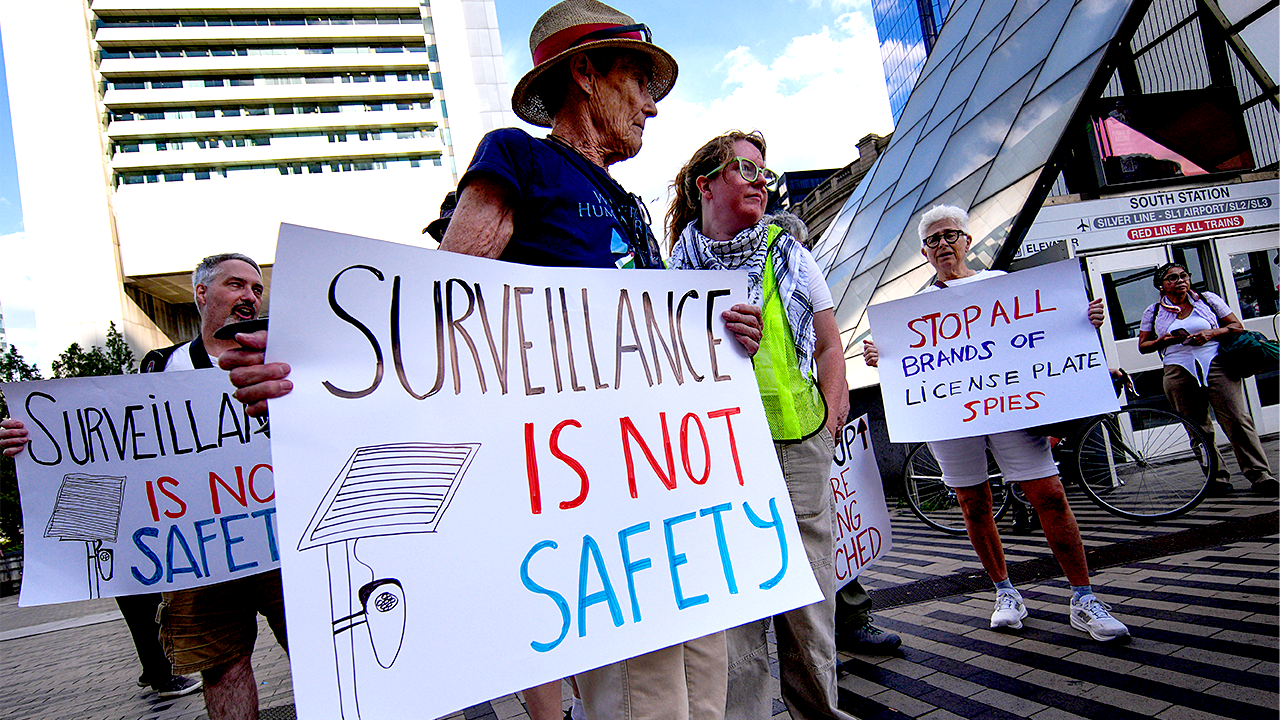
In a national YouGov survey conducted last week, 46 percent of respondents said they would oppose the use of ALPRs "for law enforcement purposes" in their communities, including 31 percent who were "strongly" opposed. asserted
who → conduct → percent
Just 38 percent favored ALPRs, while 17 percent were unsure. asserted
percent → favor → ALPRs
A year ago, by contrast, YouGov found that 45 percent of Americans supported ALPRs, while 33 percent opposed them, including 20 percent who were "strongly" opposed, and the rest were undecided. asserted
rest → find → percent
In both surveys, Democrats and independents were more likely than Republicans to oppose ALPRs. asserted
Democrats → oppose → ALPRs
But last week's survey suggested growing qualms among Republicans, 33 percent of whom were against police use of the technology, up from 29 percent last year, including 20 percent who had strong views on the subject, up from 18 percent in 2025. uncertain
who → suggest → 2025
A few weeks ago, a NextGen survey in Arizona, a state that President Donald Trump won in 2016 and 2024, found even stronger opposition to Flock cameras: 63 percent of registered voters opposed police use of ALPRs, while 82 percent were "concerned" about "misuse." asserted
percent → win → misuse
Even more striking: Around the same time, a Spry Strategies survey of likely voters in decidedly Republican and conservative Knox County, Tennessee, found that 58 percent opposed Flock cameras, including 42 percent who were "strongly" opposed. asserted
who → find → percent
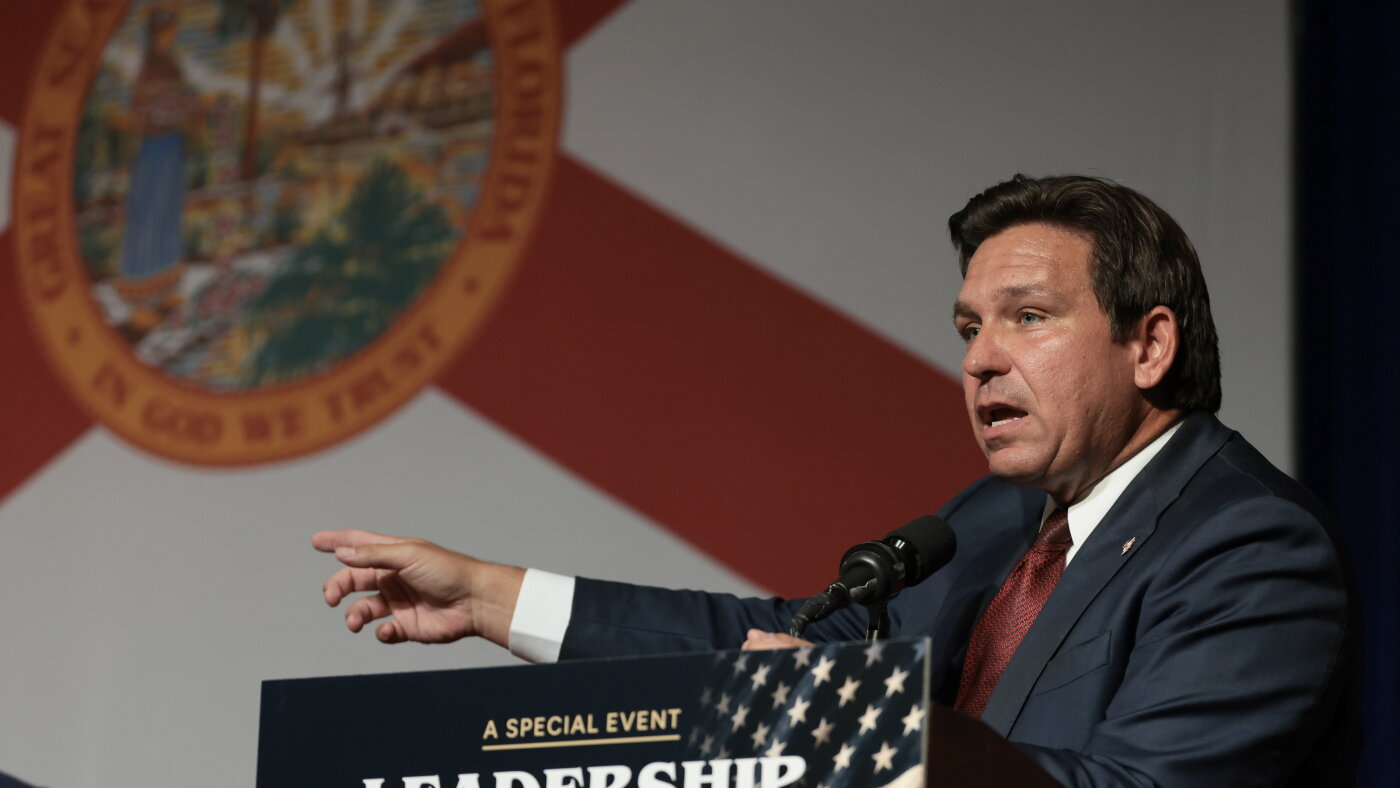
Florida Gov. Ron DeSantis, one of the most prominent Republicans to express sympathy for that view, seems to know which way the wind is blowing. asserted
wind → express → view
ALPR cameras are "out of control," he told reporters last week. asserted
he → tell → reporters
"I'm all about law enforcement having tools to hold criminals accountable… asserted
criminals → have → tools
But I don't want to have this become a surveillance state." asserted
this → want → ?
Notably, DeSantis alluded to outrageous examples of what can happen when police officers across the country have easy, essentially unsupervised access to ALPR databases they can use to track drivers, predict their itineraries, identify other vehicles near them, and, with the help of other records, assemble detailed information about their lives. asserted
they → allude → lives
The Institute for Justice has identified "well over 100 incidents of ALPR abuse," which it notes "may be just the tip of the iceberg" given the reality of lax oversight and widespread, often informal sharing of ALPR data. uncertain
it → identify → data
"When I see, like, a police officer using this to track, like, an ex-girlfriend," DeSantis said, "I'm like, you know, what the hell's going on?" asserted
you → see → girlfriend
Local officials are beginning to ask the same question. asserted
officials → begin → question
The Institute for Justice counts "157 local governments" that have canceled or declined to renew ALPR contracts since the beginning of 2025. asserted
that → count → 2025
While that represents a tiny share of the 7,000 or so U.S. law enforcement agencies that use Flock cameras, the trend is not positive for a company whose CEO until recently dismissed privacy concerns about his equipment and software, condemning "terroristic organizations like DeFlock," which has used crowdsourcing to map more than 138,000 ALPR cameras in the United States. asserted
which → represent → States
In contrast with the political breakdown in the YouGov surveys, the congressional reaction to those cameras has been driven almost entirely by Republicans. asserted
reaction → drive → Republicans
The Surveillance Accountability Act, which Massie introduced in April, would generally require that police obtain a warrant to search ALPR data, which is similar to the policy that the Institute for Justice favors. asserted
Institute → introduce → Justice
That medicine evidently is too strong for Massie's colleagues, only one of whom, Boebert, has cosponsored the bill so far. asserted
one → cosponsor → bill
The PRIVACY Act, which Rep. Keith Self (R–Texas) introduced on July 15, has attracted a bit more support. asserted
Self → introduce → support
That bill would bar federal law enforcement agencies from using state or local ALPR information to "circumvent warrant requirements." asserted
bill → bar → requirements
It has attracted half a dozen cosponsors, all Republicans, including Burlison. asserted
It → attract → Burlison
The Protection Against Mass Surveillance Act, which Rep. Tim Burchett (R–Tenn.) introduced on July 21, would prohibit federal agencies from "purchasing or accessing automated surveillance systems that identify, track, or record individuals." asserted
that → introduce → individuals
It has seven cosponsors, including Burlison and six other Republicans. asserted
It → have → Burlison
Although that is not exactly a groundswell of congressional concern, the reaction from conservative Republicans shows that objections to ALPRs are not limited to libertarian or left-leaning critics. asserted
objections → show → critics
The right-wing, Trump-supporting Epoch Times, for instance, recently gave sympathetic coverage to the anti-Flock backlash, noting concerns about misuse of ALPR data for personal purposes, mistaken identification of suspects, and violation of the Fourth Amendment's ban on unreasonable searches. asserted
Times → we → searches
Last week, Sen. Josh Hawley (R–Mo.), no one's idea of a libertarian, announced that he was launching an investigation of Flock's "collection, retention, and dissemination of the data generated by its artificial intelligence surveillance cameras." asserted
he → announce → cameras
He noted that "the overwhelming majority of the Americans captured in those records did nothing wrong," adding that "Americans do not surrender their privacy rights when they drive to work, drop their kids off at school, or go to church." asserted
they → note → church
The Supreme Court, he emphasized, has recognized that "a comprehensive, retrospective record of a person's movements is different in kind from ordinary observation in public." asserted
record → emphasize → public
…and 11 more, not listed.
Give feedback · no sign-in needed

No sign-in needed for now. Your note is sent without a name, so it cannot be answered.

History Support