Photo via CBS News

Supreme Court wrestles with energy companies' bid to block major climate suit

Read the original at CBS News ↗
Cite

Quinn, M. (2026, October 5). Supreme Court wrestles with energy companies' bid to block major climate suit. CBS News. https://www.cbsnews.com/news/supreme-court-climate-change-energy-companies-boulder-colorado-arguments/

Dated when The Aporia collected the article, usually within hours of publication. Check the original for its exact date and byline.

CBS News · collected 2026-10-05 · by Melissa Quinn

Quick Summary

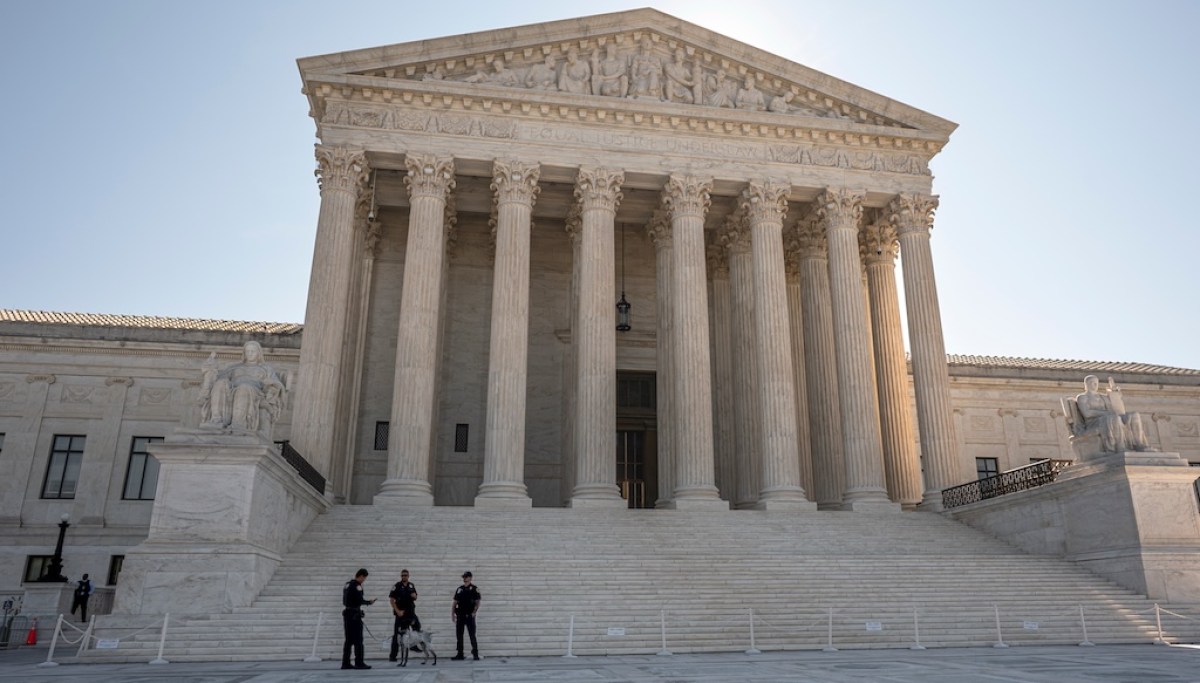
The Supreme Court heard oral arguments in a case involving Boulder, Colorado’s attempt to hold energy companies accountable for the effects of climate change. Eight justices participated, with Justice Samuel Alito recusing himself due to potential conflicts of interest, potentially leading to a 4-4 deadlock that would uphold lower court decisions. The central question is whether federal law preempts state lawsuits regarding interstate air pollution caused by greenhouse gases emitted by companies like Exxon and Suncor.
Written by AI on 2026-10-05, from this article's own text only (the story summary below draws on all the coverage).
See how they differ ↓

AI analysis

Story summary

The Supreme Court opened its new term on Monday by hearing arguments in Suncor Energy v. Boulder County, a landmark case that could determine whether states and local governments can sue oil and gas companies for climate change damages. The case, which began in 2018 when Boulder County sued Exxon Mobil and Suncor Energy, accuses these companies of contributing to climate-related harms through their fossil fuel operations. The lawsuit aims to hold the companies financially responsible for local climate impacts using state tort laws.

If the Supreme Court allows such lawsuits, it could set a precedent for similar cases across the nation, potentially affecting industries that emit carbon and leading to increased costs for consumers due to higher legal liabilities. Conversely, if the court rules against Boulder County, it would limit states' ability to use their courts for addressing national policy issues like climate change through tort law, thereby protecting manufacturers from an expanding patchwork of lawsuits based on complex environmental problems.

Written for “Supreme Court Climate Case” on 2026-11-21, grounded in this article and the 35 other(s) covering the same event.

How they differ

12 outlets covered “Supreme Court Climate Case”.

What each outlet says

One AI summary per outlet of its latest article on this story, written from that article alone and checked against it. Open the article for the outlet's own words.

CBS NewsThis outlet5 Oct

The Supreme Court heard oral arguments in a case involving Boulder, Colorado’s attempt to hold energy companies accountable for the effects of climate change. Eight justices participated, with Justice Samuel Alito recusing himself due to potential conflicts of interest, potentially leading to a 4-4 deadlock that would uphold lower court decisions. The central question is whether federal law preempts state lawsuits…

Supreme Court wrestles with energy companies' bid to block major climate suit (this article)7 articles from CBS News on this story
Washington Examiner5 Oct

During a Supreme Court hearing on Suncor Energy v. County Commissioners of Boulder County, Justice Elena Kagan compared Boulder’s climate lawsuit against oil companies to the lawsuits filed against tobacco companies in the 1990s. The case focuses on whether Boulder’s lawsuit can proceed under state law or is preempted by federal regulations regarding air pollution and greenhouse gas emissions. Shanmugam…

Justice Kagan compares Boulder’s climate lawsuit to ‘big tobacco’ lawsuits →9 articles from Washington Examiner on this story
Fox News10 Oct

Energy policy experts warn that a Supreme Court decision in favor of climate change lawsuits against oil companies could lead to the bankruptcy of these firms and significant increases in gas prices. The case, Suncor v. Boulder, centers on whether federal law preempts state legal claims seeking damages from fossil fuel producers for alleged climate-related harms. During oral arguments, Justice Clarence Thomas…

Supreme Court climate case could bankrupt oil companies, send gas prices soaring, experts warn →5 articles from Fox News on this story
NPR5 Oct

Today marks the start of a significant Supreme Court term with arguments in a major climate change case where Boulder, Colorado is suing Suncor and Exxon Mobil for misleading the public about fossil fuel harms. Meanwhile, Brazil's presidential race will head to a runoff between Luiz Inácio Lula da Silva and Flávio Bolsonaro after neither candidate secured enough votes in the first round.

SCOTUS hears major climate change case. And, Brazil's presidential race goes to runoff →3 articles from NPR on this story
NBC News5 Oct

The Supreme Court's new term starts with a case where oil companies seek to dismiss lawsuits filed by cities like Boulder, Colorado, claiming the companies should pay damages for climate change impacts. The lawsuit against Exxon Mobil and Suncor Energy alleges these firms misled consumers about greenhouse gas effects, while the defendants deny wrongdoing and argue that federal jurisdiction, not states, is…

New Supreme Court term begins with a climate change case seeking to hold energy companies liable →3 articles from NBC News on this story
Reason5 Oct

The Supreme Court is set to hear oral arguments in the case of Suncor Energy v. Boulder County on October 9th, where fossil fuel companies are arguing that all state-law-based tort lawsuits regarding climate change damages should be preempted by federal law. This could have significant implications for environmental and climate policy in the United States. The author will discuss this case at two events: one at Penn…

Unpacking the Suncor Oral Argument →2 articles from Reason on this story
Show 6 more outlets
Los Angeles Times5 Oct

During a Supreme Court hearing, justices expressed skepticism about allowing state-based lawsuits against oil producers over climate change damages. Justices Brett Kavanaugh and Elena Kagan suggested that such claims might be preempted by federal law under the Clean Air Act. The case involves Colorado’s ruling that Boulder County can sue for damages in local court, which could impact similar pending litigation in…

Supreme Court sounds wary of state-based climate change suits against oil producers →2 articles from Los Angeles Times on this story
The Straits Times5 Oct

The US Supreme Court is set to hear arguments in Suncor v Boulder on October 5, where plaintiffs from Colorado are suing oil companies for damages related to climate change. The case involves claims that ExxonMobil and Suncor knowingly caused and concealed the dangers of fossil fuels, resulting in significant financial losses due to extreme weather events. At stake is whether federal law pre-empts these state-level…

US Supreme Court hears bid to shut the door on climate suits →
ABC News (US)5 Oct

The Supreme Court's new term starts with significant cases involving climate change, gun rights, and immigration policies. In the climate change case, energy companies Suncor and ExxonMobil seek to block lawsuits in Boulder, Colorado, where local officials claim these companies should contribute financially to damages caused by climate change. The court will also examine challenges to state laws banning certain…

Supreme Court term begins with cases on climate change, immigration and gun rights →
Toronto Star5 Oct

The Supreme Court's new term begins with significant cases addressing climate change, gun control, and immigration policies. Energy companies like Suncor and ExxonMobil are challenging lawsuits in Boulder, Colorado, which seek to hold them financially responsible for damages caused by climate change. Additionally, the court will consider challenges to state laws banning assault-style weapons and Trump's deportation…

A new Supreme Court term begins with cases on climate change, immigration and gun rights →
The Guardian5 Oct

The US Supreme Court will hear arguments on Monday concerning Suncor Energy’s and ExxonMobil’s bid to block climate damage lawsuits brought by Boulder County. Local officials argue that these oil companies should cover some of the costs associated with climate impacts, while the companies assert federal law prevents state courts from handling such cases. If the court rules in favor of the fossil fuel industry, it…

US supreme court to hear big oil’s bid to block climate damage lawsuits →
CBC6 Oct

The U.S. Supreme Court heard arguments on whether local governments can sue oil and gas companies for climate damages in state courts. Boulder, Colorado, is suing Suncor and ExxonMobil to recover costs from climate-related disasters like the Marshall Fire, which caused $2 billion in damage. Chief Justice John Roberts expressed concern about a potential flood of similar lawsuits across the country, while Justice…

What U.S. Supreme Court judges said at a hearing on climate damages from oil and gas →

Where they agree and split

Agreed

AI · cited, from two or more outlets

  • The case involves whether state courts can hear lawsuits against energy companies for damages related to climate change.13
Quoted from the coverage (2)

About a dozen states have banned semiautomatic rifles like AR-15s, which are often called assault weapons.

4 outlets

Justice Elena Kagan compared the climate change lawsuits to previous claims against tobacco and opioid companies brought by states on behalf of their citizens.

4 outlets

Disputed

Picked by our model, which is sometimes wrong

  • CBS News and The Guardian present different perspectives on the potential impact of the Supreme Court's decision, with CBS focusing on the procedural aspects while The Guardian emphasizes the broader implications for climate accountability.13

Framing

How the first headlines put it

  • CBS News and The Straits Times both frame the case as a bid to shut down climate change lawsuits, but CBS focuses more on the procedural aspects while The Straits Times highlights the broader implications.12
  • ABC News frames the Supreme Court's new term with multiple high-profile cases including climate change, immigration, and gun rights, whereas Fox News emphasizes the potential financial impact on oil companies if the court rules in favor of local governments.45
The full story: what happened, how it changed, and all 36 articles →

Compared with similar articles

This article reads unscored and hedges 13% of its claims. Each row says how that neighbour differs.
Washington Examiner
Leans left Hedges 12 of 56 claims Outlet record 67/100
Los Angeles Times
Hedges 19 of 57 claims Outlet record 95/100
CBS News
Leans left Hedges 13 of 57 claims Outlet record 66/100
The Straits Times
Leans left Hedges 6 of 19 claims Outlet record 64/100
Washington Examiner
Leans strongly right Hedges 2 of 34 claims Outlet record 67/100
NPR
Hedges 8 of 52 claims Outlet record 60/100
NBC News
Leans left Hedges 7 of 33 claims Outlet record 78/100
Washington Examiner
Hedges 7 of 40 claims Outlet record 67/100
Reason
Hedges 2 of 10 claims Outlet record 67/100
The Guardian
Leans left Hedges 5 of 36 claims Outlet record 64/100

Story

Supreme Court Climate Case
Environment · 36 article(s) covering the same event. Compare every outlet's account →
How this article was measured signals, leaning charts, publisher record, byline, topics and claims

Signals How these are calculated →

Claims extracted
46
sentences that state something as happening or true
Uncertain
13%
6 of 46 hedged ("reportedly", "may", "according to")
Leaning
withheld
no quote in the article backed the model's score
Publisher signals
66/100
CBS News's corrections and hedging, across everything collected from it. Not a measure of accuracy.
Outlets on this story
36
Environment
Same framing elsewhere
1
articles that frame the event the way this one does
Analyzed 2026-10-05 · how these are computed

How this is being covered How these are calculated →

Article leaning vs. publisher reliability
Source leaning vs. consistency

Publisher

CBS News · 5941 article(s) · 11 correction(s) detected
Running correction rate · 11 correction(s)

Who wrote this

Melissa Quinn
47 article(s) here · 1 carrying a prediction
"Critical to Kirkland's willingness to enter into the Truth Social agreement was that it retain absolute discretion in deciding which matters to take and could decline to take matters suggested by the Administration," Wilkinson wrote.
Federal Reserve Governor Lisa Cook will not participate in an upcoming White House hearing to examine allegations she made false statements on mortgage documents unless concerns about the process are first addressed, her lawyer said in a letter to the White House obtained by CBS News.
The Justice Department had warned that if the high court allowed the decision from the U.S. Court of Appeals for the 9th Circuit to stand, as it now has done, it would clear the way for taxpayer dollars to go to research projects promoting DEI initiatives.
This is a breaking story and will be updated.
The Supreme Court on Friday said it will take up a legal fight over President Trump's directive suspending access to the asylum system and other legal protections for migrants illegally crossing the southern border.
said congressional subpoenas could prompt probes from the executive branch.
After seeing success in reshaping the federal judiciary in his first term and the initial two years of his second administration, President Trump and Republicans' campaign to shift the courts to the right could be coming to an end with Democrats poised to take control of the Senate next year.
Justice Ketanji Brown Jackson said she would have denied the Justice Department's request for emergency relief.
, Democrats may be poised to push forward with their court-focused plans after winning control of the House and Senate in theDemocrats are expected to in the Senate and at least , giving them the opportunity to take up legislation that stood no chance of advancing in the GOP-led Congress.
The National Capital Planning Commission voted Thursday to approve plans for President Trump's 250-foot triumphal arch, giving the final go-ahead for the monument that's set to be constructed between the Lincoln Memorial and Arlington National Cemetery.
Also by Melissa Quinn
Nothing else under this byline is closely related to this article, so these are simply their most recent.
All 47 articles by Melissa Quinn →

Topics

Boulder Congress Exxon Suncor The Supreme Court

Subjects

Boulder GPE · 9× Exxon ORG · 8× Suncor ORG · 8× The Supreme Court ORG · 4× Alito PERSON · 3× Congress ORG · 3× the Supreme Court's ORG · 3× Colorado GPE · 2× Harris PERSON · 2× the Colorado Supreme Court ORG · 2×

Narrative

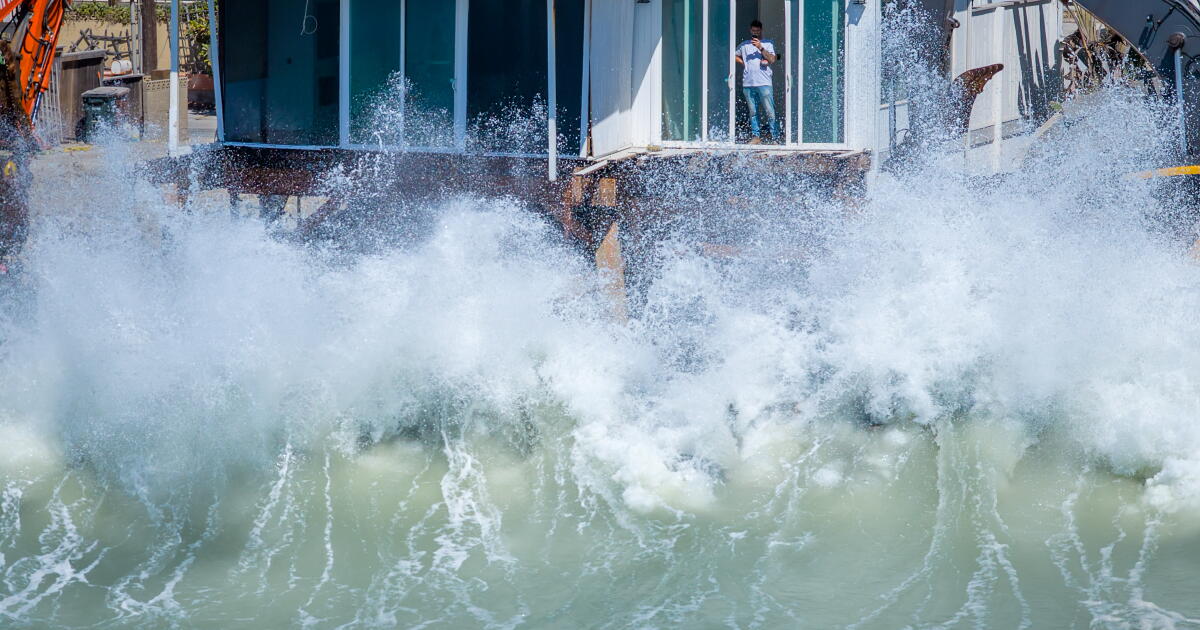
Boulder's lawsuit against Suncor and Exxon The lawsuit from the city and county of Boulder is one of dozens filed by states and local governments against energy companies in state courts that seek money damages for past and future harms that they allege are caused by the buildup of greenhouse gases in the atmosphere, which has led to global warming.
framing: assertive · carried by 1 article(s) · first seen 2026-10-05
That outcome would mean the decision of the Colorado Supreme Court would stand, allowing Boulder's case to proceed.

Claims (46 extracted, 6 hedged)

involving an effort by the city and county of Boulder, Colorado, to hold energy companies accountable for the effects of global climate change. asserted
companies → involve → change
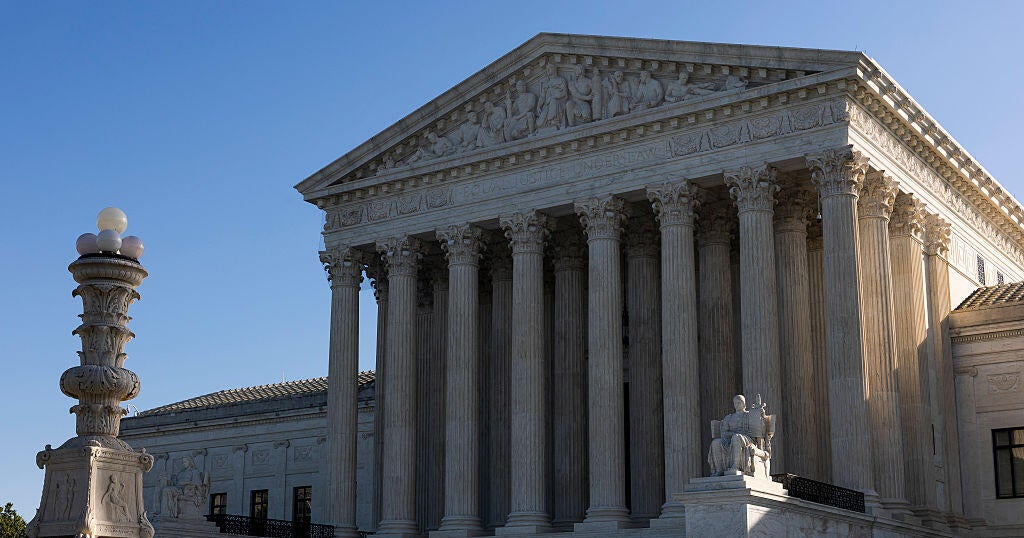
Eight of the court's nine justices heard nearly two hours of oral arguments in the case Suncor Energy v. Commissioners of Boulder County. asserted
Eight → hear → County
Justice Samuel Alito , the Supreme Court said last week. asserted
Court → say → ?
No reason was given for Alito's decision to sit out the case. asserted
reason → give → case
His financial disclosure for 2025 shows that he had individual holdings in two energy companies, ConocoPhillips and Phillips 66. asserted
he → show → companies
Alito did not report holding individual stocks in either Exxon Mobil or Suncor Energy, the two companies that Boulder filed its lawsuit against in 2018. asserted
Boulder → report → 2018
Alito's recusal leaves open the possibility that the Supreme Court deadlocks 4-4 in the case. asserted
Court → leave → case
That outcome would mean the decision of the Colorado Supreme Court would stand, allowing Boulder's case to proceed. asserted
case → mean → Court
Boulder's dispute against Exxon and Suncor remains in its early stages. asserted
dispute → remain → stages
At issue before the Supreme Court is whether the lawsuit can proceed or is barred by federal law. asserted
proceed → proceed → law
The high court also asked lawyers for both sides to address whether it has jurisdiction to review the Colorado Supreme Court's decision. asserted
it → ask → decision
In questions to both Kannon Shanmugam, who argued on behalf of Exxon and Suncor, and Sarah Harris, the principal deputy solicitor general, Justice Brett Kavanaugh repeatedly said that four of the Supreme Court's decisions dating back to 1972 make clear that interstate air and water pollution are matters of federal law. asserted
are → argue → law
"We don't have to reinvent the wheel, because we've said this multiple times and Congress, presumably when doing the Clean Air Act and doing the Clean Air Act amendments, has relied on this court's precedents establishing that this kind of pollution is a federal-law matter, unless Congress speaks otherwise asserted
Congress → reinvent → pollution
," he said. asserted
he → say → ?
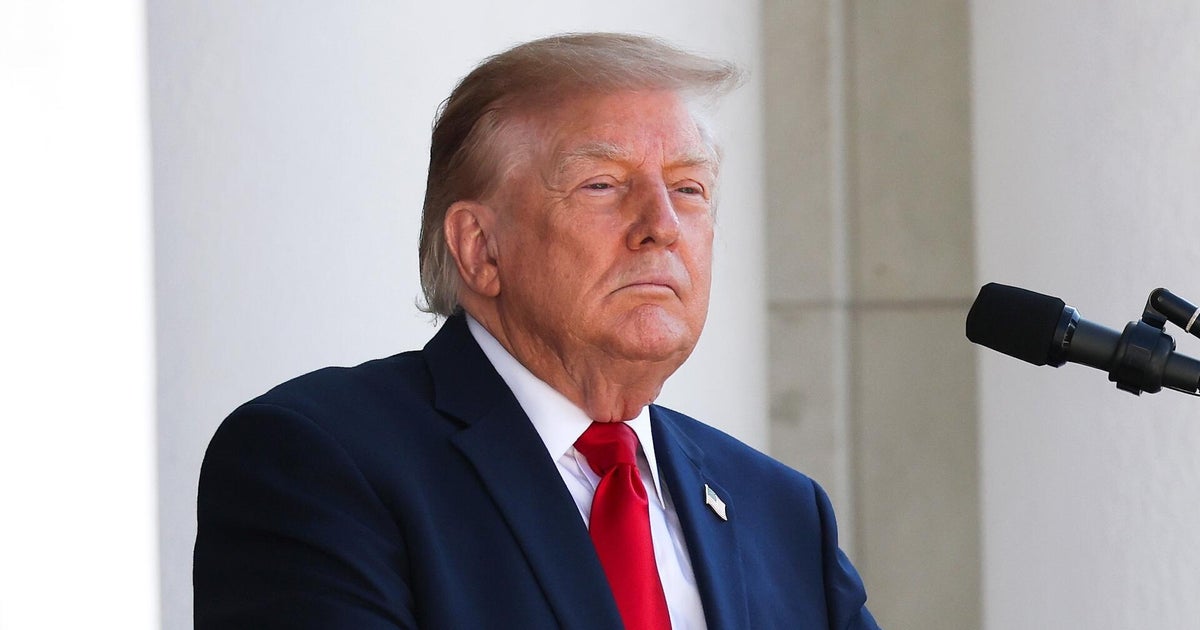
The Trump administration is backing Exxon, the nation's largest oil company, and Suncor, which operates two oil refineries in Colorado, in the case. asserted
which → back → case
Boulder's lawsuit, Harris said, "egregiously exceeds" constitutional limits of state authority. asserted
Harris → say → authority
"Interstate air pollution is an inherently federal area, and Congress hasn't authorized this suit in the Clean Air Act," she said. asserted
she → authorize → Act
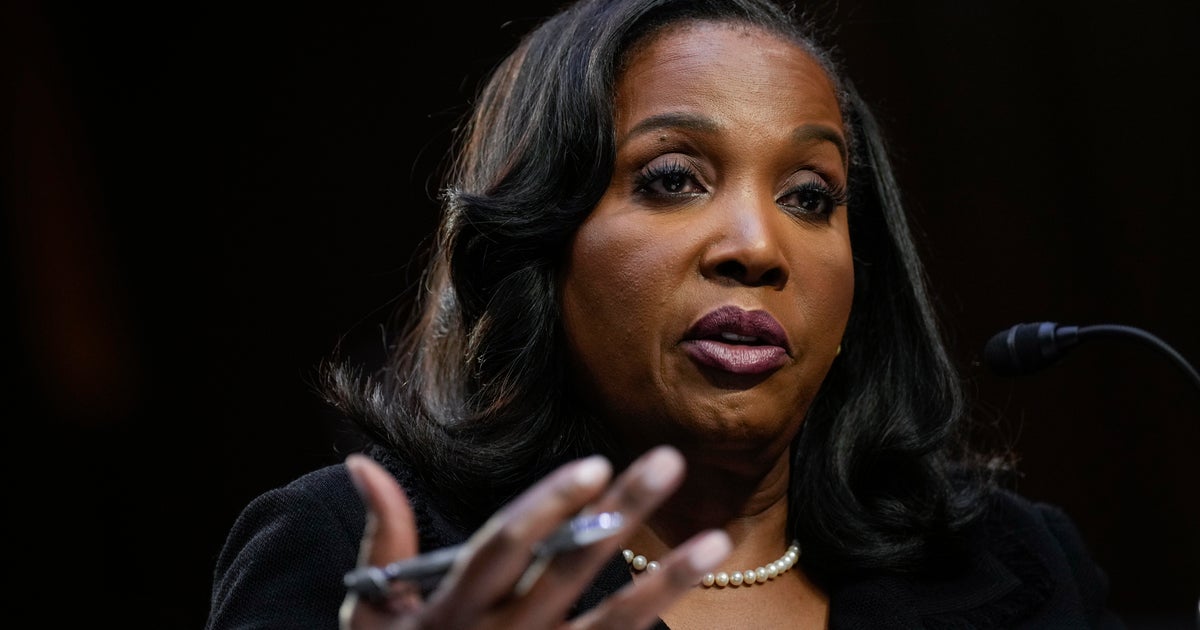
But Justice Ketanji Brown Jackson stressed that the Supreme Court's review is "premature." "It feels like we don't really know enough to be confident that the theories that you are proposing are actually applicable here," she told Harris. asserted
she → stress → Harris
Boulder's lawsuit against Suncor and Exxon The lawsuit from the city and county of Boulder is one of dozens filed by states and local governments against energy companies in state courts that seek money damages for past and future harms that they allege are caused by the buildup of greenhouse gases in the atmosphere, which has led to global warming. asserted
which → file → warming
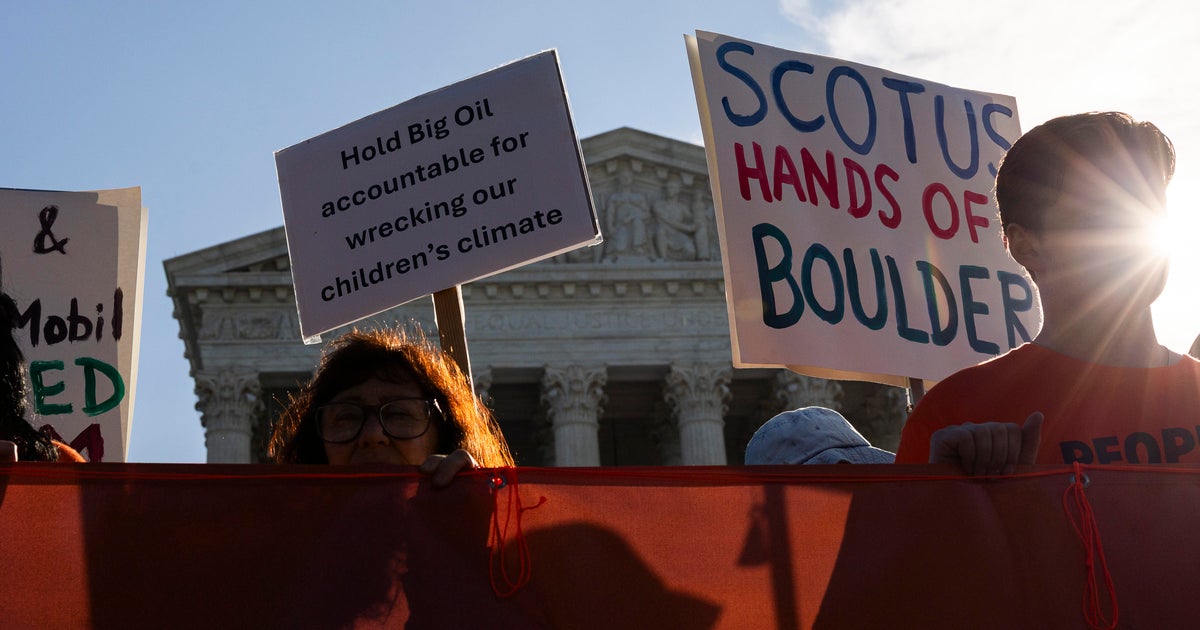
Boulder alleges in its suit that Exxon and Suncor's conduct has caused or contributed to climate change, which has in turn forced the city and county to confront extreme heat, larger and more frequent wildfires and damage to the ecosystem, among other issues. asserted
which → allege → issues
The city and county raised several claims under state law and argued that the energy companies' production and allegedly deceptive marketing of fossil fuels has led to "unchecked" use of their products that has caused a rapid rise in the concentration of greenhouse gases in the atmosphere. uncertain
that → raise → atmosphere
Exxon and Suncor attempted to move the case to federal court, but that effort was unsuccessful. asserted
effort → attempt → court
The companies also asked the Boulder County District Court to dismiss the case on the grounds that federal law foreclosed the claims against them. uncertain
law → ask → them
When the state court denied that request, the companies asked the Colorado Supreme Court to step in. asserted
companies → deny → Court
The state's high court sided with the city and county of Boulder, and Suncor and Exxon appealed to the U.S. Supreme Court. asserted
Suncor → side → Court
The Supreme Court's arguments Shanmugam, who argued on behalf of Exxon and Suncor, told the justices during arguments that the Constitution and the Clean Air Act preclude claims that seek to address the harms caused by interstate greenhouse-gas emissions. uncertain
that → argue → emissions
He also warned that efforts like Boulder's to secure relief from the effects of air pollution undermine the government's control over foreign affairs. asserted
efforts → warn → affairs
Shanmugam called Boulder's lawsuit an "unprecedented effort" to use state law to regulate global conduct, which is not allowed under the nation's constitutional system. "A state does not have the power to regulate out-of-state conduct based solely on attenuated effects on the state," he said. asserted
he → call → state
Shanmugam warned that if Boulder's lawsuit is allowed to go forward, 90,000 municipalities could file similar challenges and "have the ability to make national and international energy policy by asking juries to impose catastrophic damages on selected fossil-fuel producers." uncertain
municipalities → warn → producers
Chief Justice John Roberts, too, noted that if Boulder prevails before the Supreme Court, local governments in every state will file their own lawsuits similar to Boulder's. asserted
governments → note → Boulder
"How would you think that will work out on the ground?" he asked Kevin Russell, who argued on behalf of Boulder. asserted
who → think → Boulder
Russell stressed that even if Boulder's case can move forward, more litigation over the specifics of the suit will follow. asserted
litigation → stress → suit
But Roberts also said there are other instances where the Supreme Court has allowed state-court lawsuits involving issues with wide impacts to go ahead. asserted
lawsuits → say → impacts
"There are a lot of familiar situations where conduct outside of a state has broad effects from other states and all that, and yet we allow state courts in a particular state to bring litigation that affects that, whether it's a mass tort sort of thing or maybe complaints about operations of the internet," the chief justice said. asserted
justice → be → internet
"I guess I'm not quite sure what makes this situation different from all those other ones where we've allowed them to proceed in state court." asserted
them → guess → court
Justice Elena Kagan, meanwhile, said the case against the energy companies appears similar to lawsuits brought against tobacco companies in the 1990s and pharmaceutical companies in response to the opioid epidemic. asserted
case → say → epidemic
"This is chapter three," she said, noting that state claims against those companies could proceed. uncertain
claims → say → companies
But Kavanaugh said later that "this court has consistently said that air and water pollution are different in our federal enclaves." Lawyers for Boulder city and county are urging the Supreme Court to dismiss the appeal on the grounds that it does not have jurisdiction. asserted
it → say → jurisdiction
If the justices opt not to, they say the Colorado Supreme Court decision should be upheld. asserted
decision → opt → ?
"Since the founding, states have had the power to provide tort remedies for injuries occurring within their borders, even when the conduct causing those injuries occurred elsewhere," Russell told the justices. asserted
Russell → have → justices
…and 6 more, not listed.
Give feedback · no sign-in needed

No sign-in needed for now. Your note is sent without a name, so it cannot be answered.

History Support