Photo via The Straits Times

Key points in Italy's new electoral law

Read the original at The Straits Times ↗
Cite

The Straits Times. (2026, October 8). Key points in Italy's new electoral law. The Straits Times. https://www.straitstimes.com/world/europe/key-points-in-italys-new-electoral-law

Dated when The Aporia collected the article, usually within hours of publication. Check the original for its exact date and byline.

The Straits Times · collected 2026-10-08 · by The Straits Times

Quick Summary

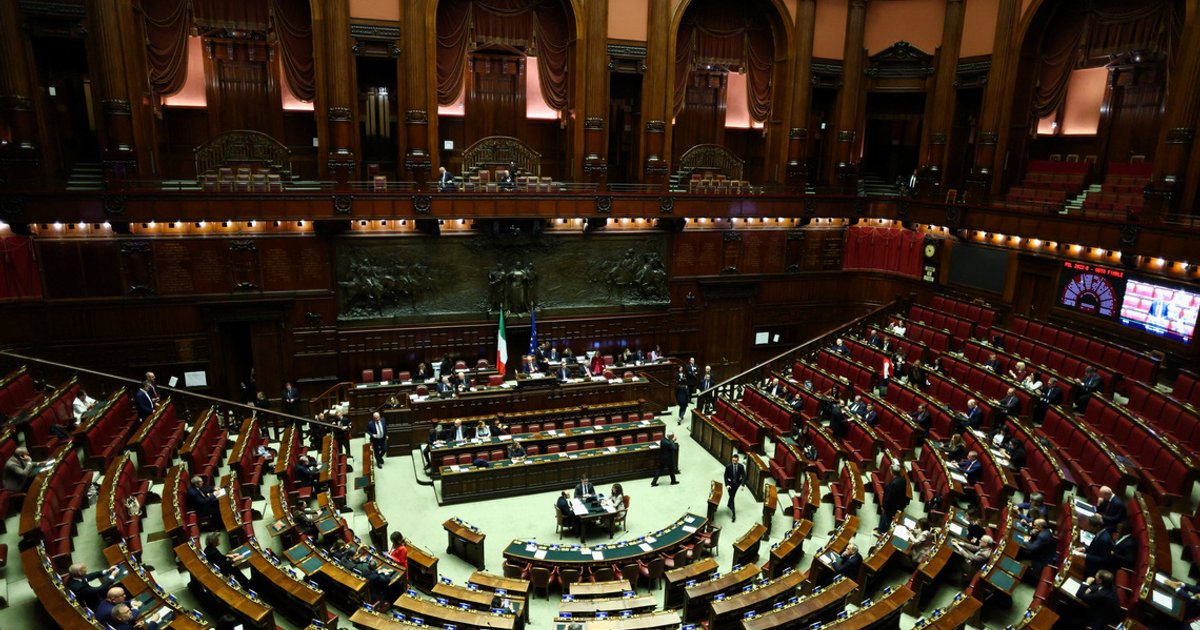
Italy's lower house of parliament approved a new electoral law on October 8, designed primarily by Prime Minister Giorgia Meloni to ensure more stable government through a purely proportional voting system. The reform includes a majority bonus: coalitions that win over 42% of the vote will receive extra seats in both houses of parliament, capped at 220 for the Chamber of Deputies and 113 for the Senate. Critics argue that this change could unfairly benefit Meloni's ruling coalition while making it harder for smaller parties to gain representation due to increased signature requirements.
Written by AI on 2026-10-08, from this article's own text only (the story summary below draws on all the coverage).
See how they differ ↓

AI analysis

Story summary

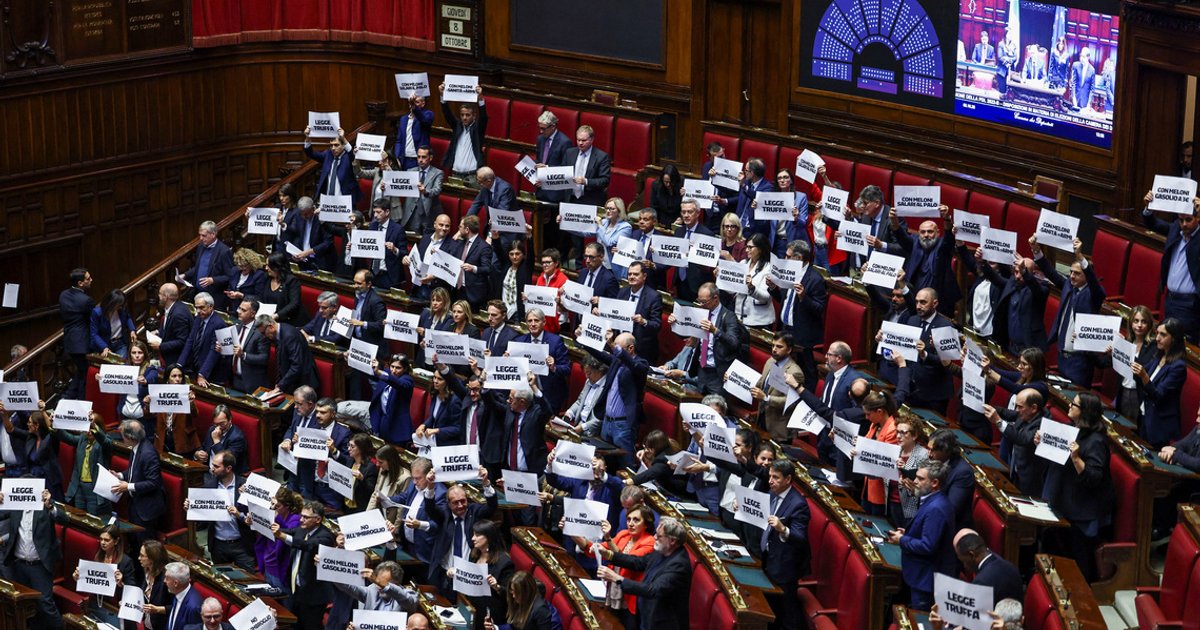
On October 8, 2026, Italy's Parliament approved a new electoral law proposed by Prime Minister Giorgia Meloni. This reform introduces a fully proportional system with bonus seats for any coalition winning over 42% of the vote, ensuring a working majority in both chambers. Critics argue this benefits Meloni’s hard-right government and undermines fair representation, while supporters claim it fosters political stability. The new law requires parties to nominate their candidate for prime minister before an election, complicating opposition unity but potentially benefiting them if they can overcome internal divisions and form a single coalition. Opposition lawmakers have vowed to challenge the changes in the constitutional court due to concerns over voter distortion.

Written for “Italian Electoral Law Reform” on 2026-11-21, grounded in this article and the 5 other(s) covering the same event.

How they differ

4 outlets covered “Italian Electoral Law Reform”.

What each outlet says

One AI summary per outlet of its latest article on this story, written from that article alone and checked against it. Open the article for the outlet's own words.

The Straits TimesThis outlet8 Oct

Italy's lower house of parliament approved a new electoral law on October 8, designed primarily by Prime Minister Giorgia Meloni to ensure more stable government through a purely proportional voting system. The reform includes a majority bonus: coalitions that win over 42% of the vote will receive extra seats in both houses of parliament, capped at 220 for the Chamber of Deputies and 113 for the Senate. Critics…

Key points in Italy's new electoral law (this article)2 articles from The Straits Times on this story
The Hindu9 Oct

Prime Minister Giorgia Meloni has passed a new electoral system reform in Italy, shifting to a fully proportional structure with bonus seats for the most popular party or coalition. Approved on October 8, 2026, by a vote of 227 to 164, the changes scrap first-past-the-post seats and introduce up to 70 bonus seats in the Chamber of Deputies and 35 in the Senate for parties securing at least 42% of votes. Supporters…

Meloni’s overhaul of Italian electoral system | Explained →2 articles from The Hindu on this story
Toronto Star8 Oct

On Thursday, Italy’s parliament passed a new electoral law known as the “Stabilicum,” giving Prime Minister Giorgia Meloni a significant political win. The reform aims to bolster stability in Italy’s political system and enhance the electoral chances of her center-right coalition. This move is expected to face constitutional challenges due to its controversial nature.

Italy’s parliament gives final approval to Meloni’s electoral reform →
The Guardian8 Oct

Italian Prime Minister Giorgia Meloni’s ruling right-wing coalition has passed a controversial electoral law change that introduces bonus seats for coalitions winning more than 42% of the vote, aimed at ensuring political stability but criticized as undemocratic by opposition parties. The bill was approved in a secret ballot with 227 votes in favor and 164 against, sparking protests from opponents who claim it…

Giorgia Meloni wins vote on controversial ‘bonus seat’ changes to electoral system →

Where they agree and split

Framing

How the first headlines put it

Stated as fact4
The headlines (4)

Italy Parliament votes on electoral law in key test for Meloni The Hindu · stated as fact

Key points in Italy's new electoral law The Straits Times · stated as fact

Italy’s parliament gives final approval to Meloni’s electoral reform Toronto Star · stated as fact

Giorgia Meloni wins vote on controversial ‘bonus seat’ changes to electoral system The Guardian · stated as fact

The full story: what happened, how it changed, and all 6 articles →

Compared with similar articles

This article reads unscored and hedges 0% of its claims. Each row says how that neighbour differs.
The Hindu
Leans right Hedges 7 of 19 claims Outlet record 60/100
The Straits Times
Leans left Hedges 2 of 28 claims Outlet record 64/100
Toronto Star
Leans right Hedges 0 of 2 claims Outlet record 64/100
The Guardian
Hedges 2 of 13 claims Outlet record 64/100
The Hindu
Leans right Hedges 2 of 23 claims Outlet record 78/100
“The articles describe approval of a new electoral law in Italy but differ in their details, with Article A specifying that this was given final approval on October 8th and providing more immediate context about the Prime Minister's current coalition being the longest-serving since WWII. Article B mentions the overhaul was approved 'weeks after' the coalition became the longest-serving without specifying a precise date.”
The Straits Times
Hedges 3 of 10 claims Outlet record 64/100
“Article A describes the initial confidence vote on Tuesday, while Article B discusses the final approval on Thursday.”

Story

Italian Electoral Law Reform
Politics · 6 article(s) covering the same event. Compare every outlet's account →
How this article was measured signals, leaning charts, publisher record, byline, topics and claims

Signals How these are calculated →

Claims extracted
14
sentences that state something as happening or true
Uncertain
0%
0 of 14 hedged ("reportedly", "may", "according to")
Leaning
withheld
no quote in the article backed the model's score
Publisher signals
64/100
The Straits Times's corrections and hedging, across everything collected from it. Not a measure of accuracy.
Outlets on this story
6
Politics
Same framing elsewhere
1
articles that frame the event the way this one does
Analyzed 2026-10-08 · how these are computed

How this is being covered How these are calculated →

Article leaning vs. publisher reliability
Source leaning vs. consistency

Publisher

The Straits Times · 5634 article(s) · 7 correction(s) detected
Running correction rate · 7 correction(s)

Who wrote this

The Straits Times
3888 article(s) here · 1 carrying a prediction
He told groups of subordinates that they had become so rich that he couldn’t motivate them simply with money, according to three people who spoke on the condition of anonymity to discuss confidential conversations.
The closed freeway lanes recall stems from unusual circumstances where a Waymo vehicle may enter and continue driving in a closed freeway lane, the company said, adding it is still working on the recall remedy.
Araqchi says Iran wants diplomacy to end war; Trump says terms unacceptable Nov 20 - Iran's Foreign Minister Abbas Araqchi said Tehran still hoped diplomacy could end its war with the United States, while US President Donald Trump said Iran wanted a deal but one that was not acceptable to him.
While You Were Sleeping: 5 stories you might have missed, Nov 21, 2026 Trump, Xi agree military AI decisions should involve humans US President Donald Trump and Chinese President Xi Jinping agreed humans should always be involved in military decisions that use artificial intelligence technologies, even as the two countries compete for AI supremacy, Treasury Secretary Scott Bessent said on Nov 20.
US Vice President Vance declines to say he would have ordered Iran strikes WASHINGTON, Nov 20 - US Vice President JD Vance on Friday declined to say whether he would have authorized strikes on Iran to prevent the country from developing a nuclear weapon, sidestepping President Donald Trump's calls for him to say the attacks were necessary and that he would carry them out again.
Some would blame Ottawa for the trade conflict while others pointed the finger at Washington.
Whoever wins will have to tackle multiple crises, including several wars, cutbacks in US contributions to the UN, and the 193-member body's declining political relevance as Washington has pulled out of dozens of its agencies.
I don’t think any human was about to find this,” Conrey said, adding that he believed “there will be simpler ways to do it.” The Riemann Hypothesis is one of seven Millennium Prize Problems selected by the Clay Mathematics Institute in 2000, which offers US$1 million (S$1.28 million) for a solution to each. Under the institute’s rules, a solution must be published in a peer-reviewed journal and withstand two years of scrutiny.
If the hearing proceeds as planned, it would mark Huang's first public testimony since stepping down as Nvidia's chief executive on November 12.
Denmark’s foreign minister on Nov 20 said Moscow’s defence attache in Copenhagen would be expelled after Russia was suspected of being behind an attempted assassination of a Ukrainian rapper.
Also by The Straits Times
Nothing else under this byline is closely related to this article, so these are simply their most recent.
All 3888 articles by The Straits Times →

Topics

Italy ROME Senate World War Two the Democratic Party

Subjects

Italy GPE · 4× Meloni PERSON · 2× Senate ORG · 2× BONUS ORG · 1× Chamber ORG · 1× Chamber of Deputies ORG · 1× Giorgia Meloni PERSON · 1× ROME GPE · 1× the 5-Star Movement ORG · 1× the Democratic Party ORG · 1×

Narrative

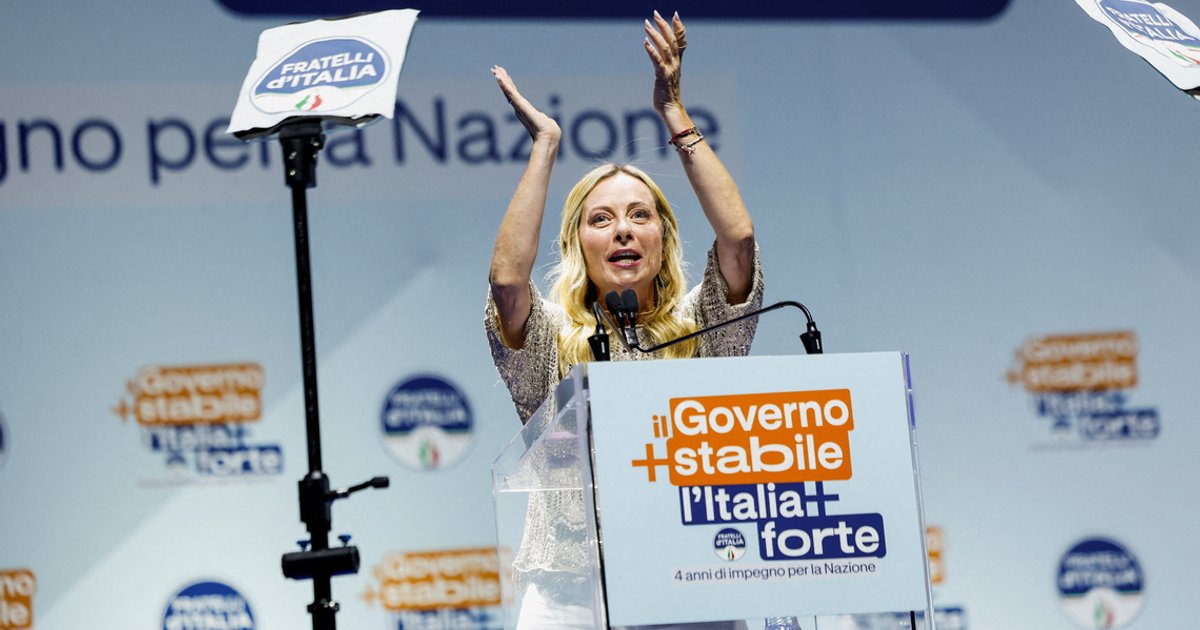
Italy's lower house of parliament on Thursday gave final approval to new voting rules ahead of a general election due next year, completing a reform championed by Prime Minister Giorgia Meloni.
framing: assertive · carried by 1 article(s) · first seen 2026-10-08
To boost stability, a working majority will be guaranteed to any coalition that wins more than 42% of the vote.
2026-10-08 · The Straits Times
Key points in Italy's new electoral law · assertive framing

Claims (14 extracted, 0 hedged)

Italy's lower house of parliament on Thursday gave final approval to new voting rules ahead of a general election due next year, completing a reform championed by Prime Minister Giorgia Meloni. asserted
house → give → Meloni
Meloni, whose government last month became the longest-serving since World War Two, says the new rules are intended to increase the prospect of stable government. asserted
rules → become → government
The opposition says the goal is to favour her ruling coalition at the election. asserted
goal → say → election
The reform introduces a purely proportional system (PR), replacing the previous hybrid one by which around two thirds of seats were elected by PR and one third in first-past-the-post races. asserted
thirds → introduce → races
To boost stability, a working majority will be guaranteed to any coalition that wins more than 42% of the vote. asserted
that → boost → vote
Italy's two main camps are Meloni's conservative alliance and the centre-left bloc, which includes the Democratic Party and the 5-Star Movement. asserted
which → include → Party
SEAT BONUS A coalition surpassing the 42% threshold will receive a "majority bonus" of 70 seats in the 400-member Chamber of Deputies and 35 seats in the 200-member Senate. asserted
coalition → surpass → Senate
However, to avoid excessively large majorities, the bonus is capped to prevent the winner getting more than 220 seats in the Chamber and 113 in the Senate. asserted
winner → avoid → Senate
If more than one coalition passes the 42% threshold, the one with most votes will get the bonus. asserted
one → pass → bonus
PRIME MINISTER CANDIDATE Each coalition or party running outside a coalition must indicate their candidate for prime minister. asserted
coalition → run → minister
However, under Italy's constitution the president formally chooses the prime minister, meaning the party designation will not be legally binding. asserted
designation → choose → minister
MINIMUM THRESHOLDS AND SIGNATURES Coalitions must secure at least 10% of the vote to enter parliament, while individual parties, both inside and outside coalitions, must obtain at least 3%. asserted
parties → secure → %
The reform raises to 6,000 from 1,500 the number of signatures parties currently outside parliament must gather in each constituency to field candidates. asserted
parties → raise → candidates
Critics say this makes it harder for small or new parties to compete in the elections. asserted
parties → say → elections
Give feedback · no sign-in needed

No sign-in needed for now. Your note is sent without a name, so it cannot be answered.

History Support