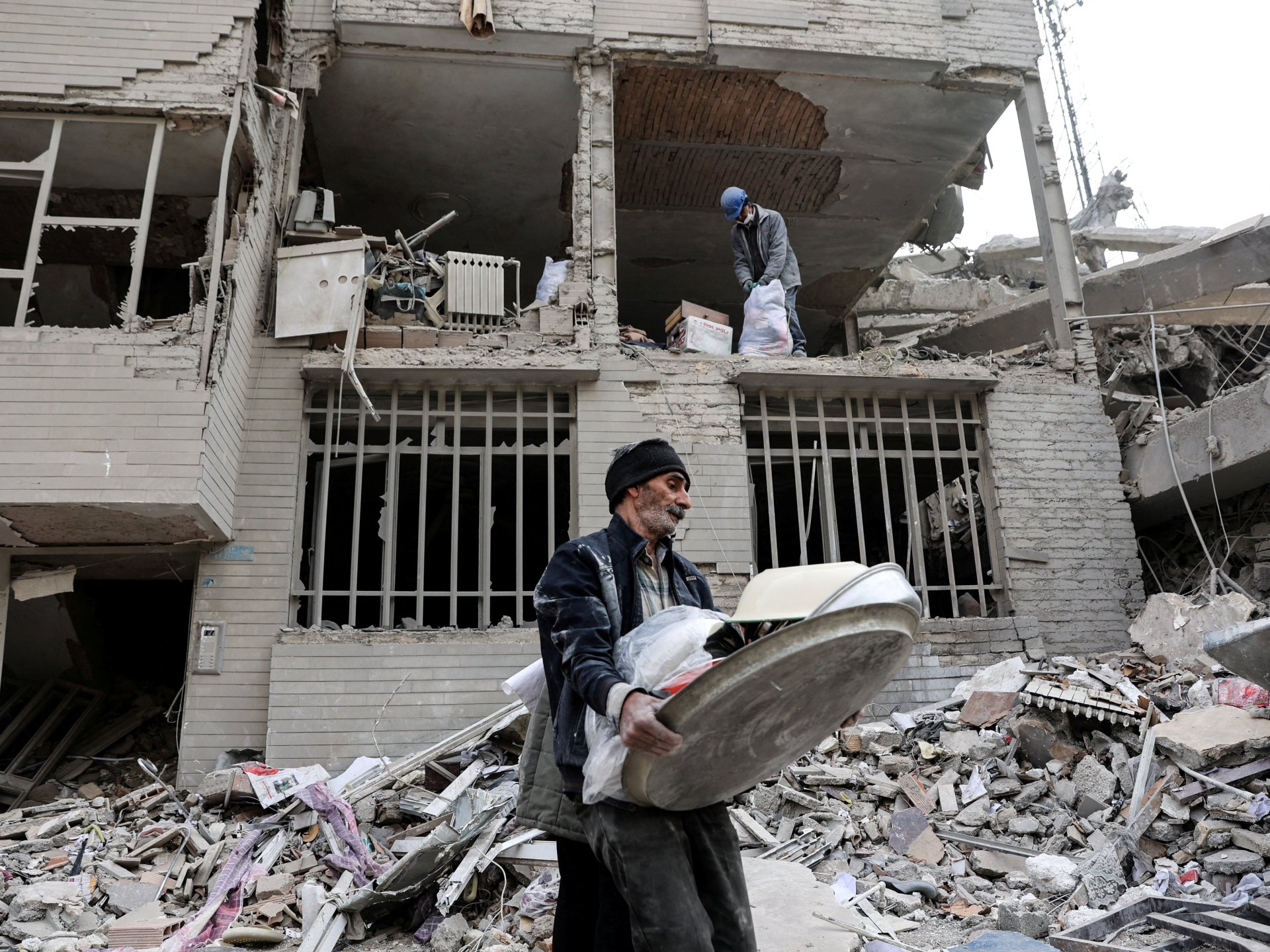
Photo via Al Jazeera

‘Anachronism’: Rubio’s civilisational rhetoric prompts pushback from Iran

Read the original at Al Jazeera ↗
Cite

Motamedi, M. (2026, October 10). ‘Anachronism’: Rubio’s civilisational rhetoric prompts pushback from Iran. Al Jazeera. https://www.aljazeera.com/news-analysis/2026/10/10/anachronism-rubios-civilisational-rhetoric-prompts-pushback-from-iran?traffic_source=rss

Dated when The Aporia collected the article, usually within hours of publication. Check the original for its exact date and byline.

Al Jazeera · collected 2026-10-10 · by Maziar Motamedi

Quick Summary

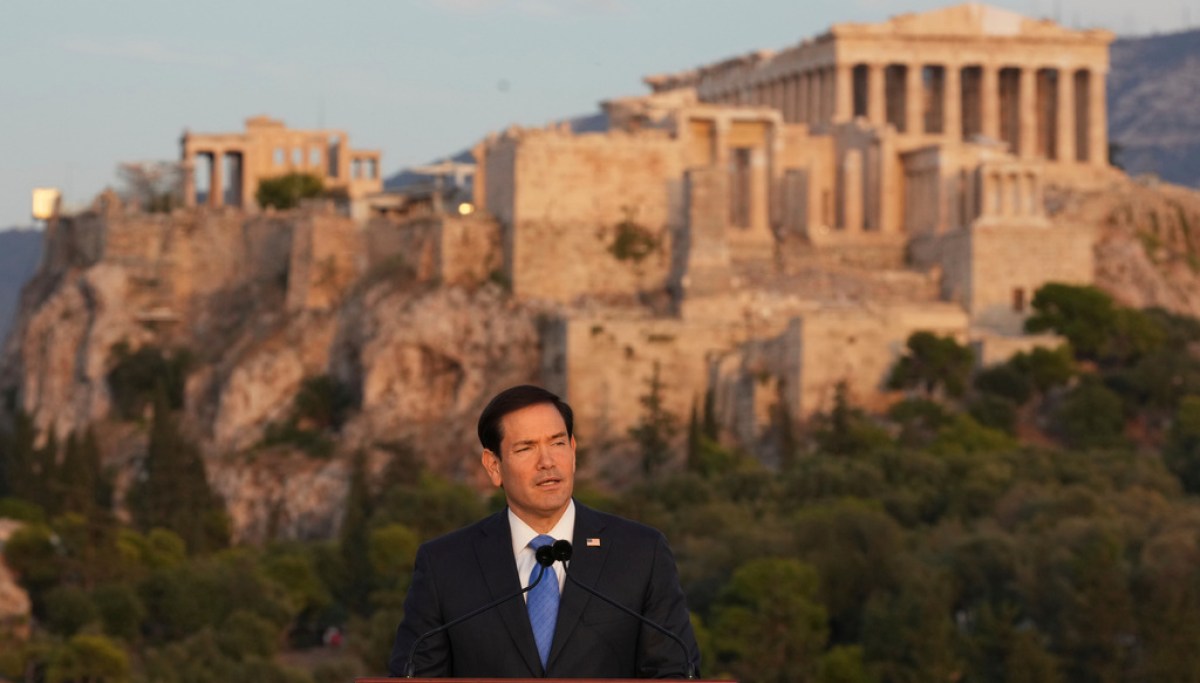
US Secretary of State Marco Rubio delivered a speech in Athens invoking ancient Western civilization, comparing contemporary threats faced by modern nations to historical conflicts like the Greco-Persian Wars. His remarks were met with criticism and derision from Iranian officials who accused him of using an "America First" narrative to justify military actions against Iran. Iran’s Ministry of Foreign Affairs described Rubio's rhetoric as anachronistic, accusing him of flattening history to legitimize aggressive policies.
Written by AI on 2026-10-10, from this article's own text only (the story summary below draws on all the coverage).
See how they differ ↓

AI analysis

Story summary

On October 7, 2026, US Secretary of State Marco Rubio delivered a speech in Athens near the Acropolis, calling on Western nations to return to their founding democratic values and civilizational roots. Rubio emphasized historical themes like ancient Greek virtues, linking them to President Trump’s "America First" agenda and urging for renewed ambition and power against contemporary threats from Russia, China, and Iran. The State Department framed his speech as a major address on democracy's future. However, his rhetoric drew criticism both domestically and internationally; an article in the Washington Examiner argued that Rubio overstated ancient Greece's influence, while Iranian officials dismissed his civilizational narrative as irrelevant to their current political context. Additionally, historian Ted Widmer critiqued the speech for ignoring modern issues like climate change and scientific research funding. Despite these criticisms, Rubio highlighted recent defense spending commitments by NATO members and stressed the importance of a strong alliance in confronting today's global challenges. The speech sought to reinvigorate Western confidence but faced significant pushback over its historical interpretation and current relevance.

Written for “Rubio Speech Greece Western Values” on 2026-11-21, grounded in this article and the 16 other(s) covering the same event.

How they differ

11 outlets covered “Rubio Speech Greece Western Values”.

What each outlet says

One AI summary per outlet of its latest article on this story, written from that article alone and checked against it. Open the article for the outlet's own words.

Al JazeeraThis outlet10 Oct

US Secretary of State Marco Rubio delivered a speech in Athens invoking ancient Western civilization, comparing contemporary threats faced by modern nations to historical conflicts like the Greco-Persian Wars. His remarks were met with criticism and derision from Iranian officials who accused him of using an "America First" narrative to justify military actions against Iran. Iran’s Ministry of Foreign Affairs…

‘Anachronism’: Rubio’s civilisational rhetoric prompts pushback from Iran (this article)
New York Post8 Oct

Marco Rubio, serving as Secretary of State, delivered a speech at the Parthenon in Athens defending Western democratic principles against what he sees as internal and external threats to these values. He criticized those who support ideologies opposed to Western civilization and highlighted the importance of preserving the West’s contributions to human rights, scientific progress, and technological innovation. Rubio…

Rubio stands up for the West against enemies — both within AND without →4 articles from New York Post on this story
Washington Examiner9 Oct

Marco Rubio delivered a speech in Greece emphasizing Western civilization's unique traits such as individuality and curiosity. However, the article critiques Rubio’s assertion by highlighting parallel examples from non-Western cultures like Buddha's pursuit of enlightenment, Genghis Khan's ambition, and Ibn al Haytham's scientific inquiries. The critique argues that while these qualities are not exclusive to the…

What Rubio gets wrong about the West →2 articles from Washington Examiner on this story
Evening Standard8 Oct

US Senator Marco Rubio, speaking in Portugal and Greece, emphasized the need for NATO countries to increase their defence spending without viewing it as hostile. He praised some nations like Germany for stepping up, while noting others are lagging behind. Rubio stressed that NATO's strength is crucial for deterring threats from Russia and China, urging all member states to contribute to the alliance’s military…

US calls for allies to hike defence spending ‘not a hostile thing’, says Rubio →2 articles from Evening Standard on this story
The Guardian12 Oct

In his October 7 speech in Athens, US Secretary of State Marco Rubio discussed the importance of rediscovering values tied to exploration and conquest to preserve Western civilization. Criticizing the decline of these values, he suggested they are crucial for avoiding irrelevance and decline. However, historian Ted Widmer critiques Rubio’s perspective, arguing it misrepresents historical figures like Jefferson and…

Marco Rubio is promoting troubling ideas about ‘Western civilization’ | Ted Widmer →2 articles from The Guardian on this story
The Hindu7 Oct

Secretary of State Marco Rubio plans to deliver a speech in Athens, Greece, on October 7, 2026, near the Acropolis, calling for Western nations to embrace their democratic roots and values that shaped global dominance. The speech aims to rally Americans and Europeans to renew their commitment to democracy amid concerns about declining adherence to traditional principles. Protesters, numbering around 1,500, organized…

Rubio, in Greece, set to call for the West to restore founding democratic principles and values →
Show 4 more outlets
The Straits Times7 Oct

On October 7, US Secretary of State Marco Rubio delivered a speech in Athens emphasizing ancient Greek values like heroism, honor, and duty to support President Donald Trump's "America First" policy. According to excerpts provided by the State Department, Rubio argued that prioritizing national interests is not selfish but necessary for maintaining Western dominance. He also highlighted the strategic alliance…

Rubio to link ancient Greek values to 'America First' speech in Athens →
BBC7 Oct

US Secretary of State Marco Rubio delivered a speech at the Acropolis in Athens, warning about the decline of Western civilization due to internal issues rather than external threats like terrorism or Iran's regime. He urged nations to revive ancient Greek values and rebuild alliances while maintaining national identities. Rubio emphasized the importance of patriotism and criticized contemporary trends such as…

Western civilisation at risk of 'atrophy, servitude and decline', Rubio says →
National Post8 Oct

U.S. Secretary of State Marco Rubio delivered a speech in Athens emphasizing America’s commitment to national power while urging Europe to increase its defense efforts. Speaking at Pnyx hill near the Acropolis, Rubio praised ancient Greece for its contributions to Western civilization but also warned that Western nations face a critical choice between asserting their power and facing decline. He highlighted…

Rubio praises U.S.’s ‘unapologetic pursuit of national power’, calls on Europe to ‘rekindle the fire’ →
Fox News8 Oct

Senator Marco Rubio delivered a speech in Athens at the Pnyx hillside, emphasizing the historical significance of ancient Greece to Western civilization. He argued that the West is facing critical decisions that will determine its future dominance or decline. Highlighting the contributions of classical Greek philosophy and governance, Rubio stressed the importance of qualities like individuality, curiosity, and…

SEC MARCO RUBIO: The West forgot what made it great. We must rediscover our roots before we lose them →

Where they agree and split

Agreed

AI · cited, from two or more outlets

  • Marco Rubio delivered a speech near the Acropolis in Athens on October 7, 2026.16
  • Rubio's speech invoked ancient Greek values and history to argue for Western nations' renewed commitment to democracy and national power.17

Disputed

Picked by our model, which is sometimes wrong

  • The Straits Times described Rubio as linking ancient Greek values to the 'America First' agenda, while The Guardian suggested his speech was not a defense of democracy like Pericles's.26

Framing

How the first headlines put it

  • The Hindu framed the event around restoring democratic principles and values, whereas Al Jazeera highlighted the anachronistic nature of Rubio’s civilisational rhetoric.15
  • The New York Post emphasized the inflection point in Western civilization, while The Guardian suggested that Rubio's ideas about 'Western civilization' are troubling.38
Attributed to a source3
Stated as fact6
The headlines (9)

Western civilisation at risk of 'atrophy, servitude and decline', Rubio says BBC · attributed to a source

Defence spending hike a sign ‘Europe can awaken from long slumber’, says Rubio Evening Standard · attributed to a source

US 'unapologetic' in 'pursuit of national power,' Rubio says Semafor · attributed to a source

Rubio, in Greece, set to call for the West to restore founding democratic principles and values The Hindu · stated as fact

Marco Rubio to call for the West to return to civilizational roots, restore founding democratic values New York Post · stated as fact

Rubio to link ancient Greek values to 'America First' speech in Athens The Straits Times · stated as fact

WATCH LIVE: Rubio speaks in Greece about Western civilization Washington Examiner · stated as fact

Rubio in Greece digs into past to tout Trump’s ‘America first’ approach The Guardian · stated as fact

Rubio praises U.S.’s ‘unapologetic pursuit of national power’, calls on Europe to ‘rekindle the fire’ National Post · stated as fact

The full story: what happened, how it changed, and all 17 articles →

Compared with similar articles

This article reads leans strongly left and hedges 5% of its claims. Each row says how that neighbour differs.
The Guardian
Hedges 2 of 24 claims Outlet record 64/100
New York Post
Leans right further right than this Hedges 0 of 65 claims Outlet record 66/100
New York Post
Leans strongly right further right than this Hedges 1 of 20 claims Outlet record 66/100
Washington Examiner
Leans left further right than this Hedges 5 of 56 claims Outlet record 67/100
The Guardian
Leans left further right than this Hedges 3 of 44 claims Outlet record 64/100
Fox News
Leans strongly right further right than this Hedges 2 of 41 claims Outlet record 66/100
“While both articles discuss Marco Rubio's speech in Athens and its context, Article B refers to a later reaction from Iran rather than the actual speech delivery described in Article A.”
Washington Examiner
Hedges 0 of 3 claims Outlet record 67/100
“While both articles refer to Rubio's speech in Athens and discuss similar themes, Article B describes reactions from Iran after the speech, which is a different event or subsequent reaction rather than the same specific occurrence as Article A.”
New York Post
Hedges 0 of 8 claims Outlet record 66/100
“Article A describes Rubio's speech at the Acropolis in Athens, while Article B discusses the reaction to Rubio's speech in Iran. They cover related topics but different specific incidents.”
The Hindu
Hedges 4 of 29 claims Outlet record 60/100
“The articles describe different stages of the same general trip: Article A describes Rubio's upcoming speech in Greece, while Article B covers the reaction to his actual speech.”
Semafor
Hedges 0 of 5 claims Outlet record 64/100
“While both articles mention Marco Rubio's speech in Athens, ARTICLE A focuses on Rubio's comments about NATO and US military pullbacks, while ARTICLE B discusses Iran's reaction to the same speech, framing it as a rhetorical challenge against Iran. They describe different aspects of the event.”

Story

Rubio Speech Greece Western Values
Politics · 17 article(s) covering the same event. Compare every outlet's account →
How this article was measured signals, leaning charts, publisher record, byline, topics and claims

Signals How these are calculated →

Claims extracted
44
sentences that state something as happening or true
Uncertain
5%
2 of 44 hedged ("reportedly", "may", "according to")
Leaning
Leans strongly left
of the writing, not the subject · beta estimate
Publisher signals
60/100
Al Jazeera's corrections and hedging, across everything collected from it. Not a measure of accuracy.
Outlets on this story
17
Politics
Same framing elsewhere
1
articles that frame the event the way this one does
Analyzed 2026-10-10 · how these are computed

How this is being covered How these are calculated →

Article leaning vs. publisher reliability
Source leaning vs. consistency

Publisher

Al Jazeera · 6194 article(s) · 4 correction(s) detected
Running correction rate · 4 correction(s)

Who wrote this

Maziar Motamedi
29 article(s) here · 1 carrying a prediction
Iranians say they are concerned about United States media reports that civilian infrastructure could be hit if the US launches a new war on Iran.
Iran holds the second-largest proven natural gas reserves in the world, only behind Russia, but its government last week forecast a peak-demand deficit of about 430 million cubic metres per day for winter that could impact both households and industries.
Decision-makers in Iran are now considering the implications of Vice President JD Vance’s removal from the Iran file to focus on domestic issues, which analysts say could increase the chances of conflict between the two sides.
US Secretary of State Marco Rubio told his Group of Seven (G7) counterparts in Paris on Tuesday that a naval blockade, stringent sanctions and overland border disruptions could continue without a clear endpoint in sight, according to US media.
Recommended Stories list of 3 items- list 1 of 3‘Another round of war less likely’: Momentum builds for peace in Iran - list 2 of 3Hegseth impeachment: What is he accused of, and could he be removed? - list 3 of 3What is Shahid Kaveh, the Iran cyberunit tied to France’s fridge hacking?
The Iranian government has reported more strikes by the United States but insists this pressure will not impact its demands to end the war.
“If the US [government] betrays their public will to serve international paymasters and blackmailers, it will learn our NO comes with a Nightmare,” read a post on his X account on Wednesday.
Ministry of Foreign Affairs spokesman Esmaeil Baghaei said Rezaei, not Ghalibaf, would respond to the letter if he chooses.
Iran’s military is warning that if all-out war breaks out again with the United States and Israel, it will be longer and more costly than their rivals expect.
At the same time, they have doubled down on a willingness to expand attacks or even launch preemptive strikes if they deem war is inevitable.
Also by Maziar Motamedi
Nothing else under this byline is closely related to this article, so these are simply their most recent.
All 29 articles by Maziar Motamedi →

Topics

Iran Iranian Israel State Western

Subjects

Iran GPE · 14× Iranian NORP · 6× Rubio PERSON · 6× Athens GPE · 4× Israel GPE · 3× Persian NORP · 3× Western NORP · 3× Greek NORP · 2× Roman NORP · 2× State ORG · 2×

Narrative

The top US diplomat also directed his rhetoric against Iran’s current leaders, who have been in power since a 1979 Islamic revolution, calling them “fanatics” who run a “death cult” that wields martyrdom as a tool to achieve their political objectives. “The threats we face today are every bit as real as they were on the dramatic stage of antiquity,” Rubio claimed.
framing: assertive · carried by 1 article(s) · first seen 2026-10-10
For Iranians who feel they were subject to an unprovoked attack by the US and Israel, this event could have modern-day relevance.

Claims (44 extracted, 2 hedged)

A speech by US Secretary of State Marco Rubio invoking memories of ancient Persia has been met with coldness or disdain across the Iranian political spectrum amid Washington’s ongoing war on Iran. asserted
speech → invoke → Iran
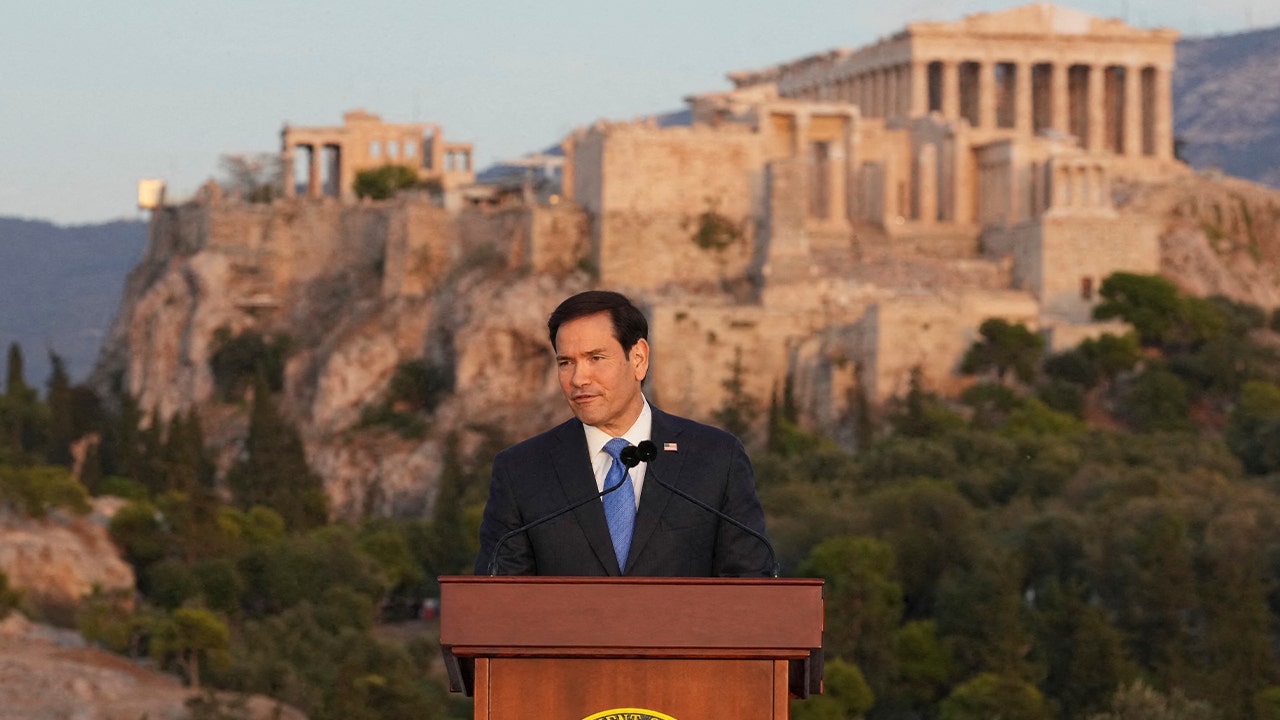
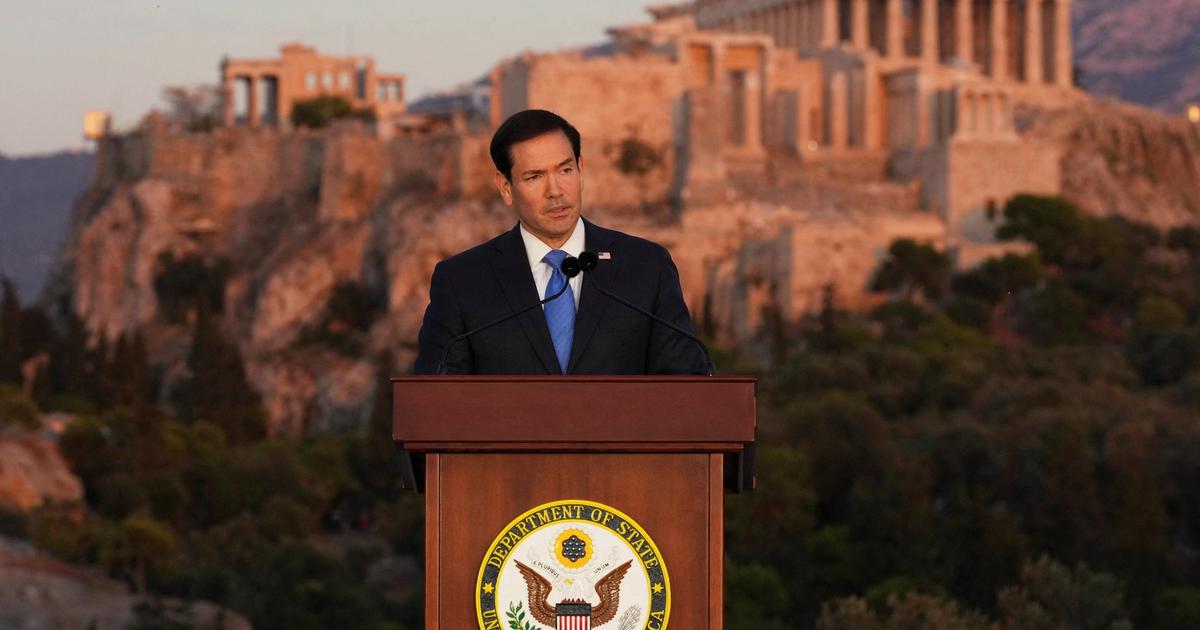
With the Acropolis in Athens as a backdrop, Rubio presented the United States, founded in the 18th century, as the inheritor of ancient Western civilisation running from Greece to Rome. asserted
Rubio → present → Rome
Recommended Stories list of 3 items- list 1 of 3Are the US and Israel waging war on Iran’s cultural heritage? - list 2 of 3How asserted
US → wag → heritage
US, Israel are waging a war on Iranian culture, education asserted
Israel → wag → education
- list 3 of 3Why has Iraq decided to ban online map service Waze? asserted
Iraq → decide → Waze
During the speech, he argued that modern-day Western countries have lost their confidence, weakened their industries and militaries, and need renewed ambition and power in the future. asserted
countries → argue → future
Referencing the ancient Greco-Persian Wars, he used the Persian destruction of Athens in 480 BC under King Xerxes I as an example of Western civilisation surviving an external enemy. asserted
civilisation → reference → enemy
“The Persians plundered the temples, burned the shrines and razed the Acropolis to the ground,” Rubio said. asserted
Rubio → plunder → ground
He subsequently hailed the return of the Athenians and the construction of the Parthenon under Pericles. asserted
He → hail → Pericles
The top US diplomat also directed his rhetoric against Iran’s current leaders, who have been in power since a 1979 Islamic revolution, calling them “fanatics” who run a “death cult” that wields martyrdom as a tool to achieve their political objectives. “The threats we face today are every bit as real as they were on the dramatic stage of antiquity,” Rubio claimed. asserted
Rubio → direct → antiquity
He boasted that the choice of President Donald Trump’s administration was the “unapologetic pursuit of national power”. asserted
choice → boast → power
The US and Iran have been at war since the US and Israel launched strikes on Iran on February 28. asserted
US → launch → February
While fighting between the two sides has subsided, the US has continued a naval blockade on Iran while shipping through the vital Strait of Hormuz remains disrupted. asserted
shipping → subside → Hormuz
Iran’s security chief, Mohsen Rezaei, and parliament Speaker and chief negotiator Mohammad Bagher Ghalibaf both responded by invoking the Roman Emperor Valerian, who was captured alive by Persian King Shapur I’s forces in battle in 260 AD. asserted
who → respond → AD
“Anyone who brings history into this must be prepared for its repetition,” Rezaei said. asserted
Rezaei → bring → repetition
Iran’s Ministry of Foreign Affairs accused Rubio of flattening Greek, Roman, Christian and modern history. asserted
Ministry → accuse → history
It also accused the secretary of state of incorporating an “America First” narrative to legitimise a military escalation against Iran after a relative decrease in fighting since June when a now-defunct memorandum of understanding was agreed. asserted
memorandum → accuse → understanding
“It appears that the US has concluded it is better to justify its policy of coercion and force to the world under the beautiful neon lights of ‘philosophy of history’, instead of naked bullying that uses the language of cowboys,” Foreign Ministry spokesman Esmaeil Baghaei said in a statement. asserted
Baghaei → appear → statement
He added that Rubio was resorting to “anachronism”, rehashing long buried historical events for modern-day legitimacy. asserted
Rubio → add → legitimacy
After the 2020 assassination of Qassem Soleimani, a commander in Iran’s Islamic Revolutionary Guard Corps, Trump threatened to hit 52 Iranian sites “very hard”, including places “important to Iran & the Iranian culture”. asserted
Trump → threaten → Iran
Since February, the US has been criticised for damaging Iranian historical and cultural sites during its bombing of Iran. asserted
US → criticise → Iran
Culture Minister Reza Salehi-Amiri urged Western politicians to speak about Iran with a “language of respect” since “it is not an enemy created in a political speech but a living civilisation, a great nation and a lasting reality in world history” that dates back millennia. asserted
that → urge → history
Iranian historian Touraj Daryaei told local media on Friday that while Rubio’s account of the sack of Athens was true, he omitted an important fact cited by Greek historian Herodotus and others – a major motivation for the Persian attack was retaliation. asserted
motivation → tell → attack
In 498 BC, Athens’ forces burned Sardis, a provincial Persian capital in western Anatolia. asserted
forces → burn → Anatolia
For Iranians who feel they were subject to an unprovoked attack by the US and Israel, this event could have modern-day relevance. uncertain
event → feel → relevance
Shima, a 26-year-old resident of Tehran, told Al Jazeera that she did not appreciate Rubio’s attempt to use conflicts 2,500 years ago to muster support for the ongoing war with Iran. asserted
she → tell → Iran
“They want to continue the war, and they will say whatever they think will work in the moment,” she said. asserted
she → want → moment
During his January 2025 Senate confirmation hearing, Rubio had referred to Iranians as “the people of an ancient civilisation and culture with tremendous pride and advances who take great pride in their Persian heritage and identity”. asserted
who → refer → heritage
“I don’t know of any nation on Earth in which there’s a bigger difference between the people and those who govern them,” he said at the time. asserted
he → know → time
“In no way are the clerics who run the country representative of the people and its history and contributions it’s made to humanity. asserted
it → run → humanity
But the US war on Iran, its naval blockade of southern Iranian ports and isolating sanctions have not had the worst impact on Iran’s government and leaders but on Iranians themselves and have failed to change the behaviour of the government. asserted
war → isolate → government
Trump’s comments on the potential “death of a civilisation” in Iran in case of a military escalation have instilled more pessimism among Iranians about the goals of the US war, which was initially cited as an attempt to free the people from their government. asserted
which → instill → government
Most Iranians reacted negatively to Rubio’s latest speech although some members of the diaspora or others opposed to the Islamic Republic argued that the US secretary of state is against Iranian authorities, not an entire ancient civilisation. asserted
secretary → react → authorities
Iranian state media were quick to slam Rubio for his remarks with the hardline Vatan-e Emrouz newspaper on Saturday publishing a front page image of Rubio in ancient Roman military attire and holding a shield and sword. asserted
newspaper → slam → shield
“Ancient war” read the headline. asserted
headline → read → ?
The newspaper claimed that Rubio was trying to “create historical-ideological backing for the US war against Iran”. asserted
Rubio → claim → Iran
Vali Nasr, professor of international affairs and Middle East studies at the Johns Hopkins School of Advanced International Studies in Washington, DC, told Al Jazeera he believes Rubio’s aim was to define a common enemy for the US and Europe to rebuild their relations around. asserted
US → tell → relations
“He decided that Iran, rather than Islam, which was previously viewed as the civilisational enemy, should play that role to bind the West together,” he said. asserted
he → decide → West
“It also reflects US frustration that Europe has not played a major role in the war and seeks to paper over deep divisions between the US and Europe on Russia and Ukraine.” asserted
Europe → reflect → Russia
Rubio delivered his speech as Trump struck a deal with Russian President Vladimir Putin to sell diesel fuel to the US and global markets despite sanctions on Russia. asserted
Trump → deliver → Russia
…and 4 more, not listed.
Give feedback · no sign-in needed

No sign-in needed for now. Your note is sent without a name, so it cannot be answered.

History Support