Photo via The Guardian

US and Israel are warned against launching fresh strikes on Iran

Read the original at The Guardian ↗
Cite

editor, P. W. D. (2026, October 23). US and Israel are warned against launching fresh strikes on Iran. The Guardian. https://www.theguardian.com/world/2026/oct/23/european-middle-eastern-ministers-summit-iran-us-israel

Dated from the outlet's own feed. Check the original for its byline.

The Guardian · collected 2026-10-23 · by Patrick Wintour Diplomatic editor

Quick Summary

Foreign ministers from eight European and Middle Eastern countries gathered in Istanbul to warn against renewed US and Israeli strikes on Iran, citing concerns over regional conflict escalation and rising oil prices. The summit, initiated by Turkey and Germany, also addressed issues like Houthi attacks on Saudi Arabia and the strait of Hormuz blockade by Iranian forces. Turkish Foreign Minister Hakan Fidan emphasized that military intervention in Iran would worsen the situation, while French Foreign Minister Jean-Noël Barrot highlighted the detrimental effects of another war between Iran and the US on global oil prices.
Written by AI on 2026-10-23, from this article's own text only (the story summary below draws on all the coverage).

AI analysis

Story summary

On October 23, foreign ministers from Pakistan, Egypt, Saudi Arabia, and Turkiye (the R-4 group) along with representatives from France, Germany, Italy, and the UK (E-3) met in Istanbul. The meeting focused on addressing regional security concerns, including the conflict between Iran and the United States, the Houthi attacks on Saudi Arabia, and the safety of shipping routes like the Strait of Hormuz and Bab el-Mandeb. Turkish Foreign Minister Hakan Fidan emphasized the need for a diplomatic solution to the US-Iran war and stressed the importance of maintaining freedom of navigation. The ministers expressed solidarity with Saudi Arabia over recent attacks by Yemen's Houthi rebels, urging an end to hostilities that threaten regional stability. They also warned against further military action in Iran, citing concerns about escalating conflicts and rising oil prices.

Written for “Middle East Diplomatic Meetings” on 2026-10-31, grounded in this article and the 4 other(s) covering the same event.

Story

📰 Middle East Diplomatic Meetings
World · 5 article(s) covering the same event. See how they differ ↓

Compared with similar articles

This article reads leans left and hedges 10% of its claims. Each row says how that neighbour differs.
Prudent warning Same event
Dawn
⚖️ Leans strongly left further left than this Hedges 4 of 22 claims Outlet record 71/100
Washington Examiner
⚖️ Leans right further right than this Hedges 1 of 2 claims Outlet record 70/100
“The articles discuss different topics within the broader context of Iran's situation—one about Iran's regime fearing peace and one warning against military strikes.”
Makkah pact clarity Different event
Dawn
⚖️ Leans strongly left further left than this Hedges 1 of 14 claims Outlet record 71/100
“The articles discuss different events related to defense pacts and warnings against military strikes on Iran, occurring at different times and places.”
The Straits Times
Hedges 8 of 48 claims Outlet record 66/100
“The articles discuss different aspects of the US and Iran situation but describe separate events - one focusing on expert analysis before midterms, the other reporting a summit warning against renewed strikes.”
Dawn
Hedges 1 of 10 claims Outlet record 71/100
Al Jazeera
⚖️ Leans strongly right further right than this Hedges 3 of 49 claims Outlet record 60/100
“The articles describe different events occurring at distinct times; Article A discusses a summit warning against US-Israel strikes on Iran, while Article B reports on Iranian hardliners' response to the threat of war by calling for withdrawal from the Nuclear Non-Proliferation Treaty.”
The Bulwark
Hedges 0 of 6 claims
“The articles discuss related themes but describe different events and contexts, with one focusing on a summit warning against new strikes and the other on broader analysis of potential future conflict phases.”
Euronews
Hedges 1 of 19 claims Outlet record 60/100
“The articles describe different meetings and warnings related to conflict with Iran but do not refer to the same specific incident.”
Al Jazeera
Hedges 0 of 2 claims Outlet record 60/100
“The articles discuss different aspects of tensions with Iran but do not describe the same specific incident.”
CBS News
Hedges 7 of 39 claims Outlet record 66/100
“The articles discuss different time periods and events related to Iran but do not describe the same specific incident.”
How this article was measured signals, leaning charts, publisher record, byline, topics and claims

Signals How these are calculated →

Claims extracted
20
sentences that state something as happening or true
Uncertain
10%
2 of 20 hedged ("reportedly", "may", "according to")
Leaning
Leans left
of the writing, not the subject · beta estimate
Publisher signals
66/100
The Guardian's corrections and hedging, across everything collected from it. Not a measure of accuracy.
Outlets on this story
5
World
Same framing elsewhere
1
articles that frame the event the way this one does
Analyzed 2026-10-23 · how these are computed

How this is being covered How these are calculated →

Article leaning vs. publisher reliability
Source leaning vs. consistency

Publisher

The Guardian · 2734 article(s) · 6 correction(s) detected
Running correction rate · 6 correction(s)

Who wrote this

Patrick Wintour Diplomatic editor
21 article(s) here · 1 carrying a prediction
🔮 Iran would portray either a reduction or complete withdrawal of US forces from the Gulf region as “a strategic success and vindication of its steadfastness, but also use it to embarrass the Gulf states about their decades-long courtship of US protection”.
🔮 Vowing the people of Taiz would resist until the end, he said statements of solidarity were of no use and that what was needed was access for aid agencies, including the UN, to deliver supplies to the city.
🔮 Lingering hopes of averting a major new conflagration between Iran and the US soon after Tuesday’s midterm elections could rest on Iran’s response to a personal letter from the US vice-president, JD Vance, offering to restart diplomacy.
🔮 The US is aware of the talks’ progress but is holding out for a concession that European powers suggest could involve Iran allowing UN weapons inspectors back into the country.
🔮 Security officials and diplomats at Monday’s meeting were expected to discuss how Iran could persuade the Houthis in Yemen to end their crippling missile and drone attacks on infrastructure in Saudi Arabia.
🔮 She has justified her late – but widely predicted – entry into the race on the grounds that the UN security council appears to be close to deadlock on the six remaining candidates in the race, with no one as yet able to establish a clear lead after six rounds of voting, the latest on 16 October.
🔮 Foreign ministers at a summit of eight European and Middle Eastern countries have urged the US and Israel not to renews their attacks on Iran, warning a fresh outbreak of fighting would spread conflict and push oil prices even higher.
🔮 They are trying to burn it, but we can only anticipate there will be diseases such as cholera in the near future.
🔮 Col Javad Mokhtar Rezaei, the deputy head of cultural and social affairs for Iran’s cyber police (Fata), told the Tasnim news agency: “In some cases, the phones offered may actually exist, but exposing electronic components to saltwater and extreme humidity can cause corrosion of internal components, damage to the boards, battery and display, and cause hidden malfunctions in the device’s performance.” Meysam Doost-Mohammadi, a spokesperson for the Iranian mobile association, said it would be unusual for valuable phones to be transported by ship. The bulk of the recent spate of attacks have occurred close to the coast with Oman, a route that Iran regards as unauthorised.
🔮 Unlawful settlement activity will be captured through a breach of international humanitarian law, including the Geneva convention on occupation.
Also by Patrick Wintour Diplomatic editor
Nothing else under this byline is closely related to this article, so these are simply their most recent.
All 21 articles by Patrick Wintour Diplomatic editor →

Topics

European Iran Israel Middle Eastern Saudi Arabia

Subjects

Iran GPE · 7× European NORP · 4× Hormuz GPE · 3× Saudi Arabia GPE · 3× Germany GPE · 2× Houthi NORP · 2× Israel GPE · 2× Istanbul GPE · 2× Middle Eastern NORP · 2× Turkey GPE · 2×

Narrative

The Istanbul meeting, an unprecedented gathering of regional and European leaders initiated by Turkey and Germany, represented a rare chance for European ministers to have any input into the crises afflicting the Middle East, including in Yemen, Palestine and Iran.
framing: assertive · carried by 1 article(s) · first seen 2026-10-23
🔮 Foreign ministers at a summit of eight European and Middle Eastern countries have urged the US and Israel not to renews their attacks on Iran, warning a fresh outbreak of fighting would spread conflict and push oil prices even higher.
2026-10-23 · The Guardian
US and Israel are warned against launching fresh strikes on Iran · assertive framing

Claims (20 extracted, 2 hedged)

Foreign ministers at a summit of eight European and Middle Eastern countries have urged the US and Israel not to renews their attacks on Iran, warning a fresh outbreak of fighting would spread conflict and push oil prices even higher. asserted
outbreak → urge → prices
The development of a new multinational “anti-war bloc” represents a challenge to the increasingly open plans by the US and Israel to relaunch strikes on Iran while talks on Tehran’s nuclear programme remain deadlocked. asserted
talks → represent → programme
The Turkish foreign minister, Hakan Fidan, joint convener of the summit in Istanbul, said: “Military intervention in Iran is not any kind of solution. asserted
intervention → say → solution
We agreed that a new military attack would spread the war and the conflict in the region. asserted
attack → agree → region
All the countries around the table do not want the war to spread even more, once again.” asserted
war → want → table
Ministers also demanded an end to the Houthi assaults on Saudi Arabia, and an immediate opening of the strait of Hormuz currently blockaded by Iranian ships and drones. asserted
Ministers → demand → ships
Jean-Noël Barrot, the French foreign minister, said another war between Iran and the US would be bad for both sides, and only worsen rising oil prices, which have hit their highest level since May. uncertain
which → say → May
Ed Miliband, the UK foreign secretary, also urged both sides to embrace diplomacy. asserted
Miliband → urge → diplomacy
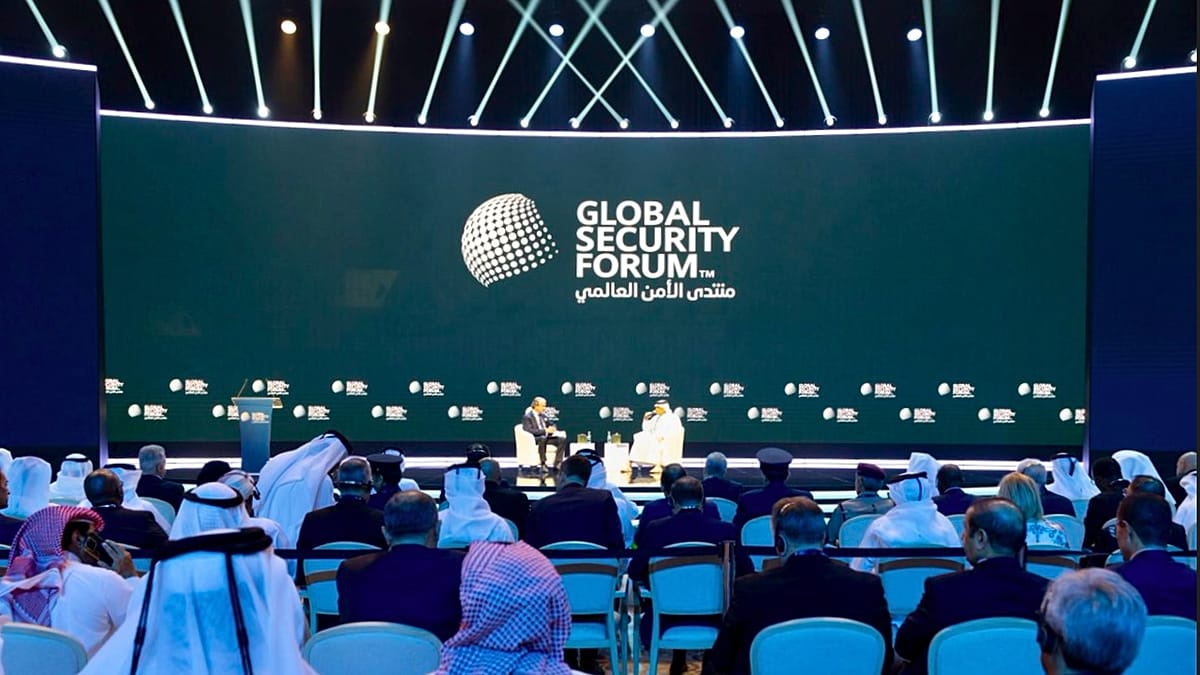
The Istanbul meeting, an unprecedented gathering of regional and European leaders initiated by Turkey and Germany, represented a rare chance for European ministers to have any input into the crises afflicting the Middle East, including in Yemen, Palestine and Iran. asserted
ministers → initiate → Yemen
They have largely been left as bystanders, apart from sending air force protection to Saudi Arabia as it tries to fend off Houthi drone and missile assaults on its airports and energy installations. asserted
it → leave → airports
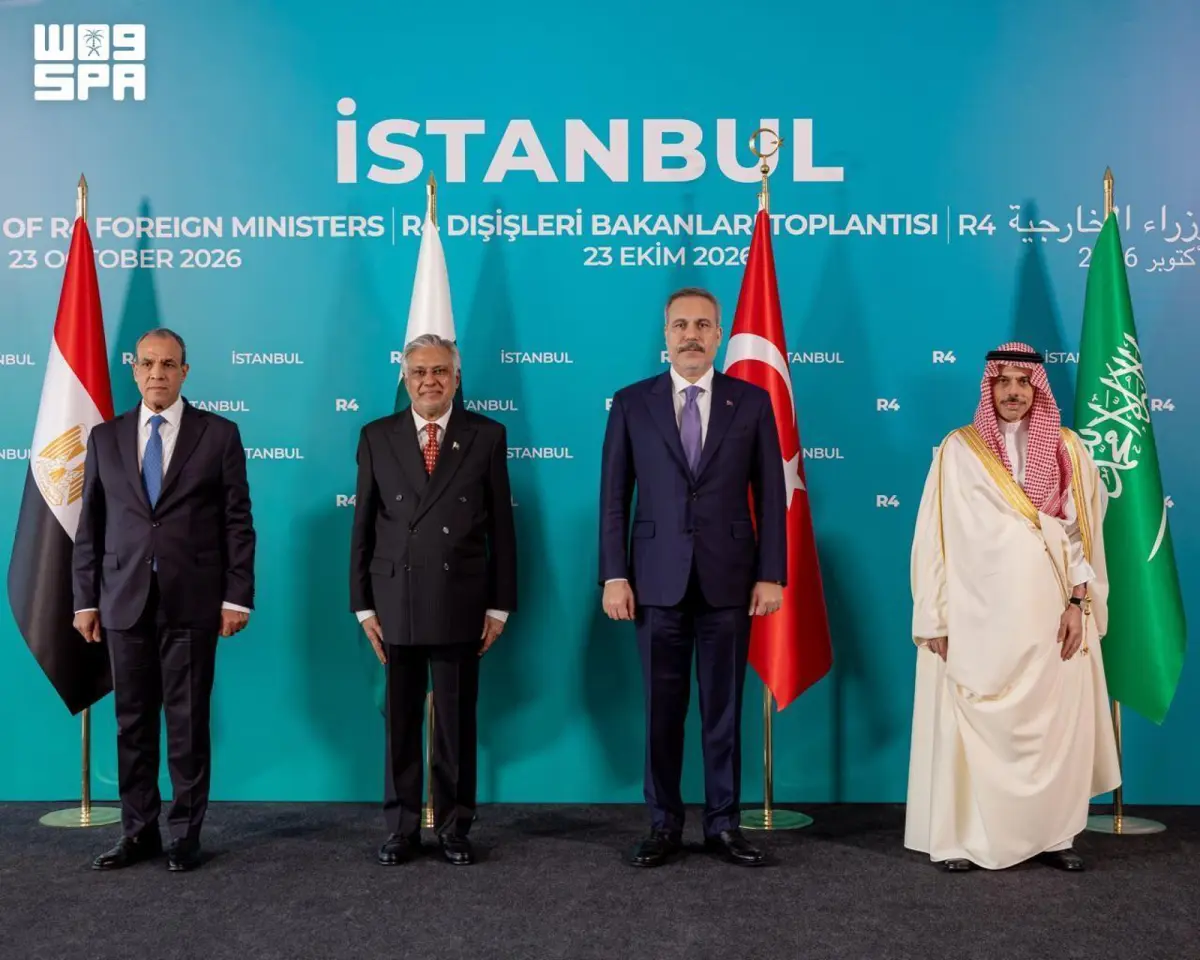
The Middle Eastern states were represented by Fidan, Egypt’s Badr Abdelatty, Pakistan’s Ishaq Dar and Saudi Arabia’s Faisal bin Farhan. asserted
states → represent → Fidan
Pakistan, Turkey and Saudi Arabia formed the Mecca defensive security pact in August, a grouping Egypt may join. uncertain
Egypt → form → August
The European side was represented by Barrot, Miliband, Germany’s Johann Wadephul and Italy’s Antonio Tajani. asserted
side → represent → Barrot
The agenda covered the Palestinian issue, including settlement expansion, settler violence and the two-state solution, as well as security in the strait of Hormuz, Yemen and efforts to end the Russia-Ukraine war and prevent spillover into the Black Sea. asserted
agenda → cover → Sea
Wadephul said: “We are united by the impact these deadlocked conflicts are having on the economy and security of our countries and by the will to seek new ways to bring about solutions.” asserted
conflicts → say → solutions
He made no criticism of the US but accused “the Houthis and Iran of blackmailing world trade and continuing to stranglehold global supplies of energy and fertiliser”. asserted
He → make → energy
“We are feeling the effects of the attacks on shipping routes and whether at the petrol pump or the supermarket,” he said. asserted
he → feel → pump
Tajani said the aim of the meeting was to work for “de-escalation to guarantee freedom of navigation”. asserted
aim → say → navigation
“I do not believe the problem can be solved from a purely military standpoint,” he added. asserted
he → believe → standpoint
“If we want to reopen Hormuz, which is vital for our economies, we must promote dialogue and make Iran understand that this attitude cannot continue.” asserted
attitude → want → dialogue

💬Give feedback
🕘History 🎫Support