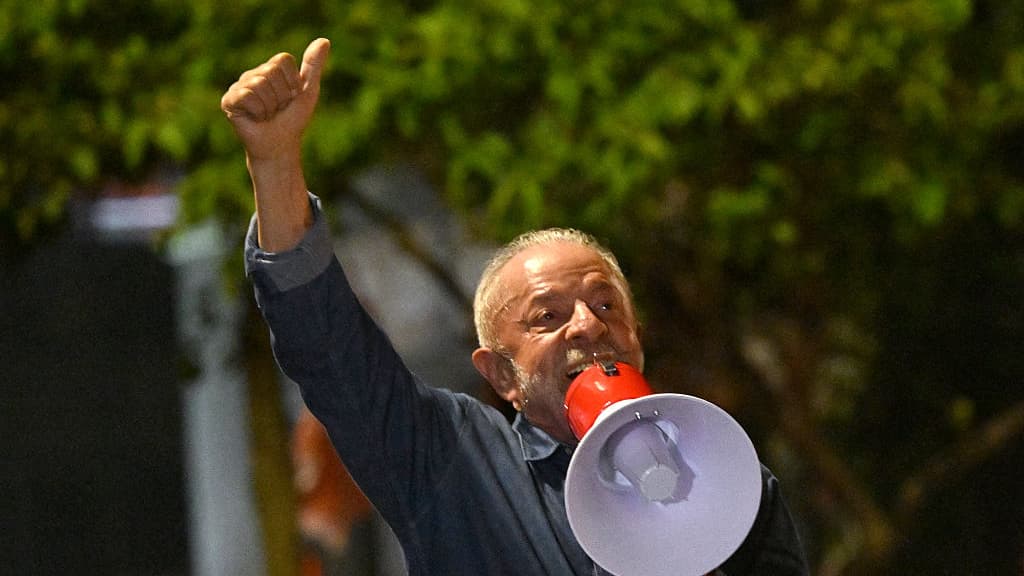
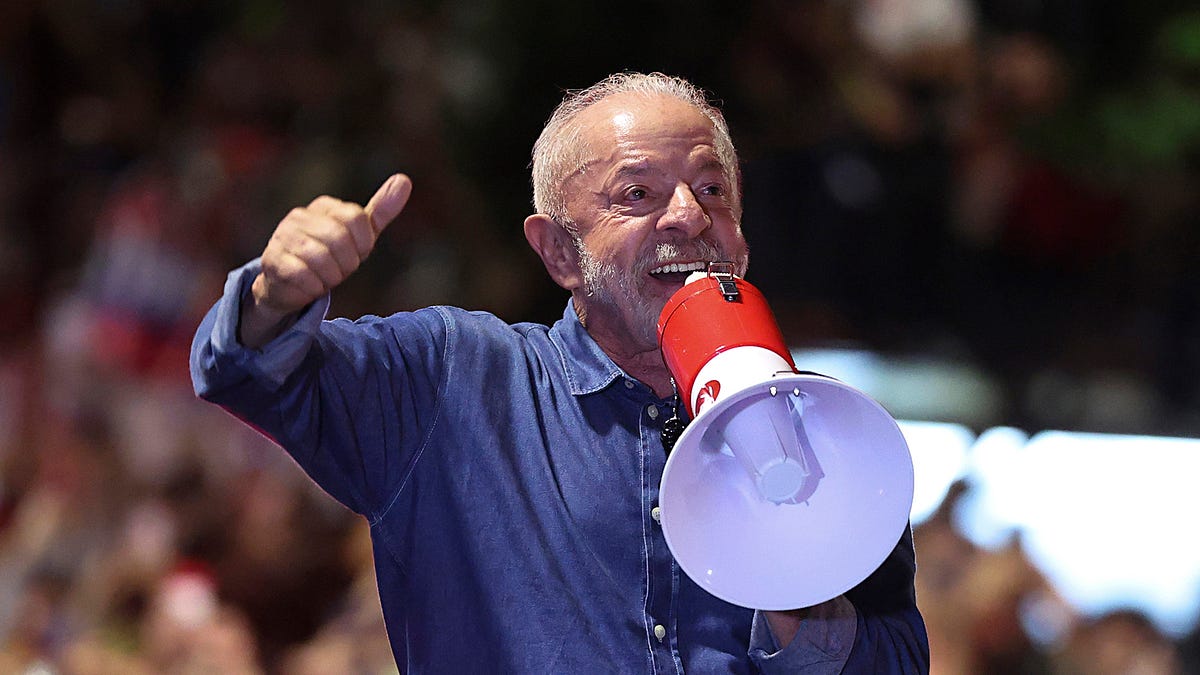
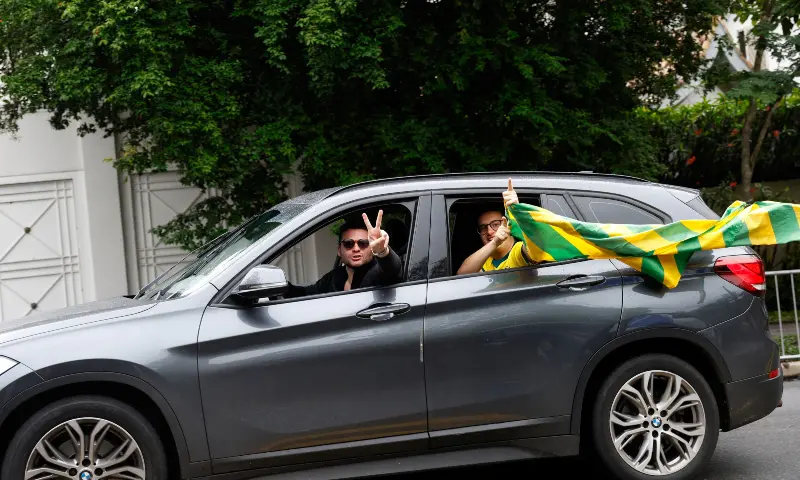
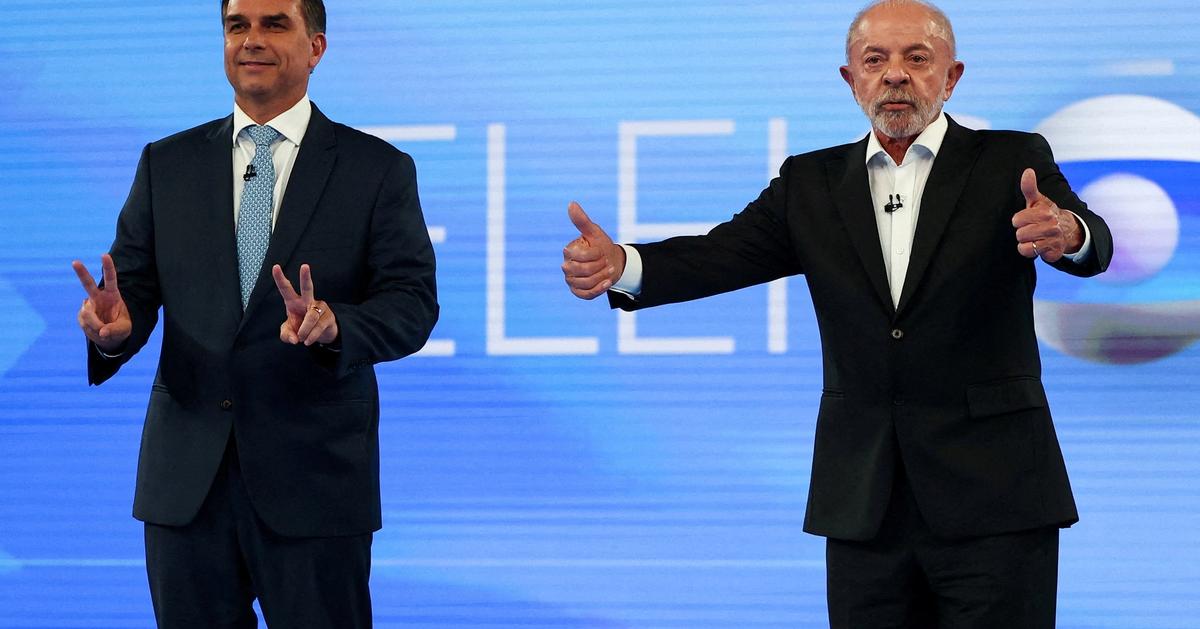
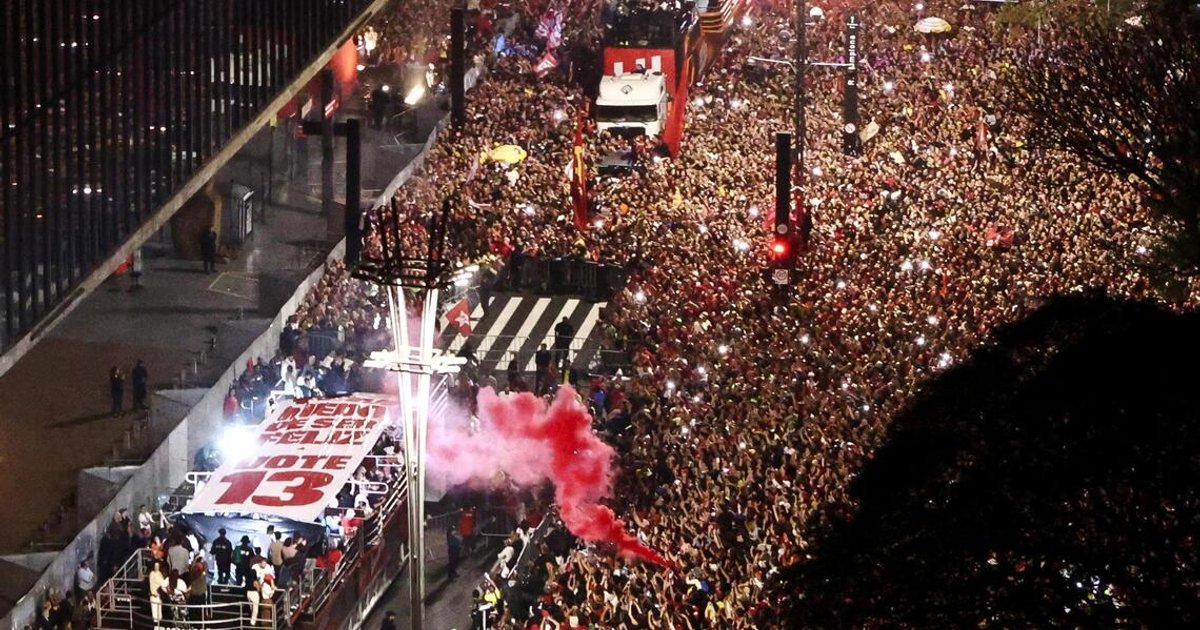
On Oct. 25, Brazil’s president, Luiz Inácio Lula da Silva, won an unprecedented fourth term, defeating the far-right senator Flávio Bolsonaro with 51.79 % of the vote, a margin of nearly 4.4 million votes.
asserted
president → win → votes
For the 80-year-old Lula, who had trailed his opponent by 2.2 million votes in the first round of elections just three weeks earlier, the victory was a remarkable comeback.
asserted
victory → trail → elections
Brazil is the largest country and economy in Latin America, and the contest had become a test of whether the region’s rightward shift could be stopped.
uncertain
shift → become → America
Lula’s victory interrupted that drift and dealt a setback to President Donald Trump’s ambition to build a hemisphere of governments aligned with his politics.
asserted
victory → interrupt → politics
Yet interpreting the result as a triumph for the left would be a mistake.
asserted
interpreting → interpret → left
Consider the first round of the elections in Brazil: more than 33 million Brazilians did not vote in the first round, an abstention rate of 21.08 %, the highest for a presidential election first round since 1998.
asserted
Brazilians → consider → 1998
Millions more cast blank or invalid ballots.
asserted
Millions → cast → ballots
Voting is optional for Brazilians aged 16 and 17 and for those 70 or older, but the scale of abstention points to a broader problem of political alienation.
asserted
scale → point → alienation
The high rejection rates for both candidates suggest that, for many voters, the election was not about electing a president but to ensure his opponent is not elected.
asserted
opponent → suggest → president
Flávio, whose father and former president Jair Bolsonaro is serving 27 years in prison for crimes against democracy, won the first round, with 2 million more votes than Lula, and his Liberal Party’s formidable showing in Congress in early October shocked the liberal world.
asserted
showing → serve → world
He ran as his father’s proxy.
asserted
He → run → proxy
He promised to pardon his father and his accomplices and to carry forward his political legacy.
asserted
He → promise → legacy
The new expectations of Lula’s children
It seemed puzzling that Lula needed such a dramatic comeback to win re-election when unemployment in Brazil stood at 5.3 %, near a historic low.
asserted
unemployment → seem → low
The International Monetary Fund projected that Brazil would become the world’s eighth-largest economy in 2027.
asserted
Brazil → project → 2027
Poverty in the country had fallen substantially during Lula’s third term, while real wages rose and food insecurity declined.
asserted
insecurity → fall → term
Violent deaths had fallen to their lowest level in over a decade.
asserted
deaths → fall → decade
Deforestation of the Amazon had fallen to its lowest level since records began in 1988.
asserted
records → fall → 1988
Incumbents have been re-
asserted
Incumbents → re → ?
The children of Lula’s social policies came of age in a rapidly changing world, and in a country where formal employment, labor unions, and traditional social protections have struggled to serve an increasingly informal workforce.
asserted
employment → come → workforce
Some turned toward market-oriented politics.
asserted
Some → turn → politics
Others found a sense of belonging in conservatism, part of a broader rightward turn among young men around the world.
asserted
Others → find → world
Brazil’s left governed for much of their formative years.
asserted
left → govern → years
Lula’s successor, Dilma Rousseff, was impeached in 2016 amid a bitter political crisis and corruption scandals that implicated political figures across party lines.
asserted
that → impeach → lines
For many Brazilians, the political establishment became synonymous with impunity and self-preservation.
asserted
establishment → become → impunity
They saw Lula’s Workers’ Party as the establishment.
asserted
They → see → establishment
And while Lula’s earlier corruption convictions had been annulled, the allegations continued to shadow him.
asserted
allegations → annul → him
Meanwhile, lethal violence had become a defining feature of everyday life.
asserted
violence → become → life
Brazil had urbanized rapidly without addressing deep inequality or reforming a public-security system inherited from the military dictatorship.
asserted
Brazil → urbanize → dictatorship
Overcrowded prisons became recruiting grounds for criminal factions.
asserted
prisons → become → factions
In Rio de Janeiro, militias made up largely of serving and former police officers and other security personnel initially claimed to protect residents from drug traffickers.
asserted
militias → make → traffickers
They evolved into criminal enterprises that extorted communities, struck deals with drug factions, and infiltrated local governments.
asserted
that → evolve → governments
Yet responsibility for confronting them remained fragmented.
asserted
responsibility → confront → them
State governments control most policing, leaving the federal government with limited direct authority over local law enforcement.
asserted
governments → control → enforcement
Flávio understood how to exploit voters’ distrust and frustration.
asserted
Flávio → understand → distrust
His promises of tougher security resonated with Brazilians desperate for protection.
asserted
promises → resonate → protection
His campaign drew comparisons to the hardline model of President Nayib Bukele of El Salvador.
asserted
campaign → draw → Salvador
Yet Bolsonaro Jr. also faced questions about his own associations with criminal figures in Rio, undermining his claim to offer a solution to the country’s security crisis.
uncertain
Jr. → face → crisis
During the campaign, new revelations about his ties to Daniel Vorcaro, the disgraced banker and owner of Banco Master at the center of a vast financial scandal, added to those doubts, even as he denies wrongdoing.
asserted
he → add → wrongdoing
Flávio's brother, Eduardo, had lobbied the Trump Administration to punish Brazil over the prosecution of their father.
asserted
brother → lobby → father
Washington imposed tariffs on Brazilian exports, explicitly linking the measures to the prosecution of Jair Bolsonaro.
asserted
Washington → impose → Bolsonaro
…and 32 more, not listed.
 The Aporia