Photo via Fox News

Israelis vote in record numbers in first national election since the Oct. 7 Hamas massacre

Read the original at Fox News ↗
Cite

Lachter, E. (2026, October 27). Israelis vote in record numbers in first national election since the Oct. 7 Hamas massacre. Fox News. https://www.foxnews.com/world/israelis-vote-record-numbers-first-national-election-since-oct-7-hamas-massacre

Dated from the outlet's own feed. Check the original for its byline.

Fox News · collected 2026-10-27 · by Efrat Lachter

Quick Summary

Israel held its first national election since the Oct. 7 Hamas massacre, with voter turnout reaching a historic high of 55.7% by 4 p.m. local time. Initial exit polls showed Benjamin Netanyahu’s Likud party leading with 25 seats in the 120-seat Knesset, but falling short of forming a majority government on its own. The projected results leave neither major bloc—the right-wing and religious parties nor the opposition—with the necessary 61 seats for a parliamentary majority, potentially setting up weeks of coalition negotiations.
Written by AI on 2026-10-27, from this article's own text only (the story summary below draws on all the coverage).

AI analysis

Story summary

On October 27, 2026, Israel held parliamentary elections with a voter turnout of 77.7%, the highest since 1999. The election saw Arab parties winning a record 19 seats, up from 10 in the previous election, making them key players in forming the next government. This surge is attributed to increased Arab voter participation and dissatisfaction with Prime Minister Benjamin Netanyahu’s leadership. Despite high stakes and contentious issues like security failures following the October 7, 2023 Hamas attacks, no single bloc achieved a clear majority of 61 seats required for control of the Knesset. The election outcome reflects deep divisions within Israeli society over military service exemptions for ultra-Orthodox Jews, future concessions in Gaza and Lebanon, and domestic security policies.

Written for “Israeli Election Results Unclear” on 2026-11-01, grounded in this article and the 223 other(s) covering the same event.

Story

📰 Israeli Election Results Unclear
Politics · 224 article(s) covering the same event. Compare every outlet's account →

Compared with similar articles

This article reads unscored and hedges 28% of its claims. Each row says how that neighbour differs.
Dawn
⚖️ Leans right Hedges 2 of 32 claims Outlet record 72/100
Al Jazeera
Hedges 0 of 2 claims Outlet record 60/100
BBC News
Hedges 3 of 35 claims Outlet record 68/100
Al Jazeera
⚖️ Leans left Hedges 3 of 42 claims Outlet record 60/100
Daily Mail
⚖️ Leans right Hedges 5 of 46 claims Outlet record 68/100
The Hindu
⚖️ Leans left Hedges 5 of 17 claims Outlet record 77/100
CBC News
⚖️ Leans right Hedges 8 of 35 claims Outlet record 60/100
Fox News
⚖️ Leans right Hedges 6 of 37 claims Outlet record 69/100
The Hindu
Hedges 2 of 24 claims Outlet record 77/100
Al Jazeera
⚖️ Leans left Hedges 5 of 35 claims Outlet record 60/100
How this article was measured signals, leaning charts, publisher record, byline, topics and claims

Signals How these are calculated →

Claims extracted
29
sentences that state something as happening or true
Uncertain
28%
8 of 29 hedged ("reportedly", "may", "according to")
Leaning
withheld
no quote in the article backed the model's score
Publisher signals
69/100
Fox News's corrections and hedging, across everything collected from it. Not a measure of accuracy.
Outlets on this story
224
Politics
Same framing elsewhere
1
articles that frame the event the way this one does
Analyzed 2026-10-27 · how these are computed

How this is being covered How these are calculated →

Article leaning vs. publisher reliability
Source leaning vs. consistency

Publisher

Fox News · 6141 article(s) · 11 correction(s) detected
Running correction rate · 11 correction(s)

Who wrote this

Efrat Lachter
29 article(s) here · 1 carrying a prediction
🔮 The source said opposition leaders are approaching coalition negotiations with patience and experience rather than treating the inconclusive results as a defeat, arguing that the next government could depend on their ability to forge partnerships that previously seemed unlikely.
🔮 With 93.8% of ballots counted as of 4 a.m. ET Thursday (10 a.m. local time in Israel), including votes from the double-envelope count, Netanyahu's right-wing and religious bloc was projected to win 53 seats in Israel's 120-member Knesset, compared with 48 for the opposition bloc led by former military chief Gadi Eisenkot.
🔮 As both Netanyahu and Eisenkot claimed victory Tuesday night, Israelis told Fox News Digital that although they had expected a tight race, the shifting numbers and uncertainty over who could form a government had left many confused about what comes next.
🔮 The projected parliamentary balance showed 50 seats for Netanyahu’s right-wing and religious bloc, 53 for the main opposition parties and 17 for Arab parties, leaving neither major bloc with the 61 seats generally needed to form a government. Although Netanyahu’s party is projected to remain the largest in parliament, his political future is far from secure.
🔮 The 54-year-old former technology entrepreneur, a familiar face on American television, believes his business background could help him work with President Donald Trump to advance regional diplomacy.
🔮 Asked whether Ukraine would honor the ceasefire, Zelenskyy answered, "Of course," insisting that Kyiv had already refrained from striking Russian energy facilities overnight.
🔮 As Israel prepared to assassinate Hezbollah leader Hassan Nasrallah in September 2024, Prime Minister Benjamin Netanyahu and his senior defense officials disagreed over whether to notify the Biden administration ahead of the operation, fearing Washington could try to stop the mission, according to Wall Street Journal editorial writer Elliot Kaufman and a second source familiar with the deliberations.
🔮 He said lights were kept on to prevent the hostages from sleeping and that captors would enter repeatedly during the night screaming in an effort to frighten them.
🔮 Its 2024 Arctic Strategy warned that growing Russia-China cooperation could "alter the Arctic’s stability and threat picture," and called for greater U.S. presence, exercises and military preparedness in a region becoming increasingly accessible.
🔮 At least 83 flights operated by U.S.-sanctioned Iranian airlines landed in Turkey in the five days after a key American sanctions deadline, according to flight data analyzed by the Foundation for Defense of Democracies, putting a new spotlight on whether Washington will enforce its escalating pressure campaign against companies servicing the carriers in a NATO ally.
Also by Efrat Lachter
Nothing else under this byline is closely related to this article, so these are simply their most recent.
All 29 articles by Efrat Lachter →

Topics

Arab Hamas Israel Israeli Likud

Subjects

Netanyahu PERSON · 8× Israel GPE · 7× Likud ORG · 5× Arab NORP · 2× Eisenkot PERSON · 2× Hamas ORG · 2× Iran GPE · 2× Israeli NORP · 2× Israelis NORP · 1× TEL AVIV GPE · 1×

Narrative

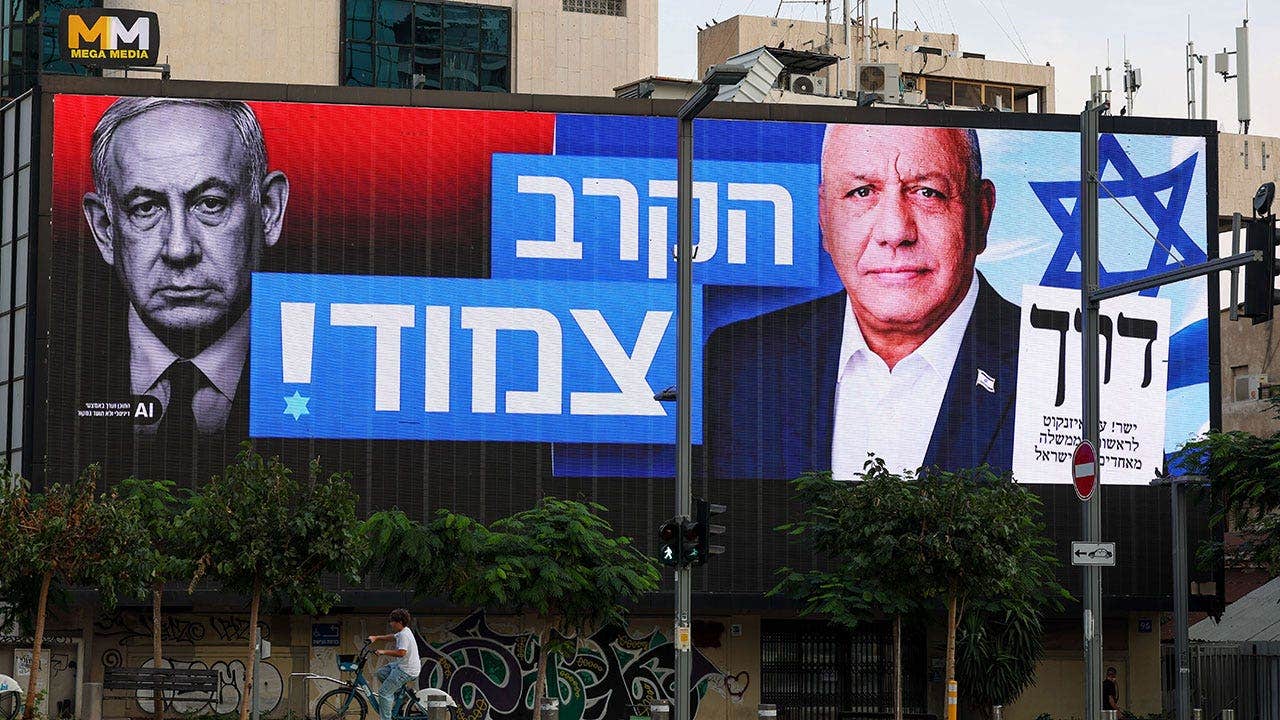
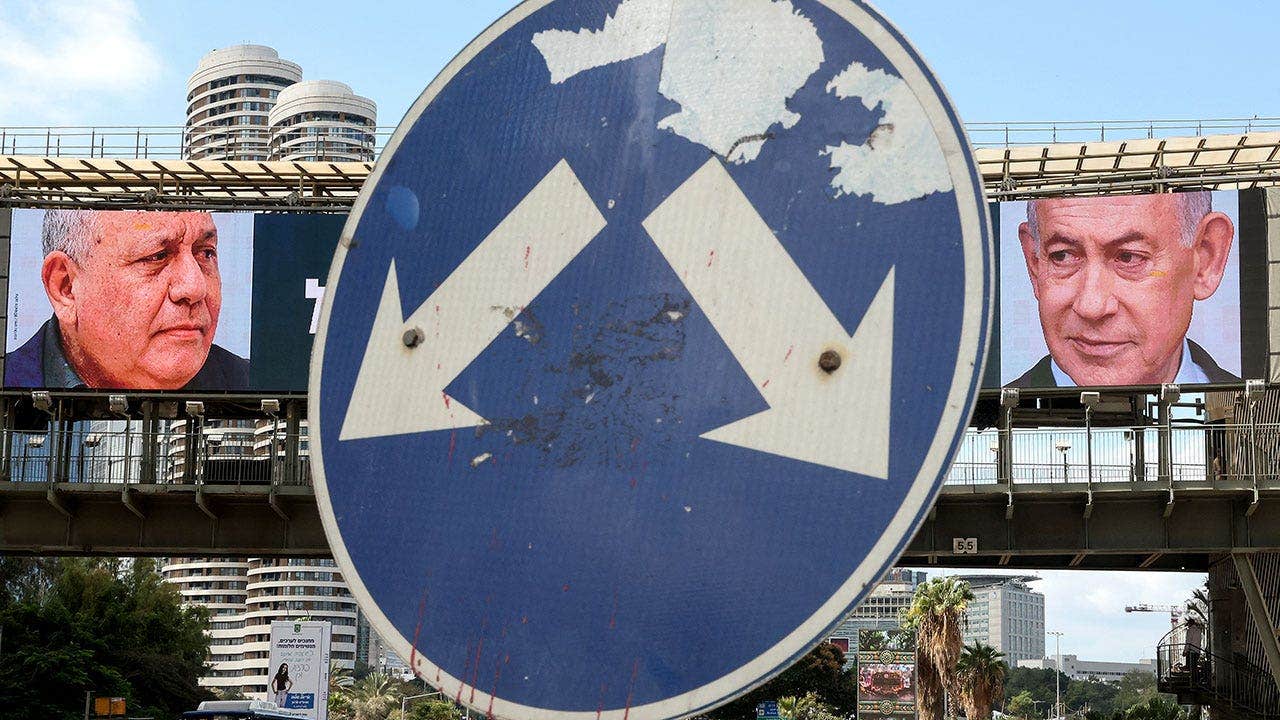
Israelis turned out in exceptionally high numbers Tuesday for the country’s first national election since the Oct. 7, 2023, Hamas massacre, with initial exit polls showing Prime Minister Benjamin Netanyahu’s Likud emerging as the largest party but his governing coalition falling short of a parliamentary majority, potentially opening the door to a change in leadership.
framing: mixed · carried by 1 article(s) · first seen 2026-10-27
🔮 The projected parliamentary balance showed 50 seats for Netanyahu’s right-wing and religious bloc, 53 for the main opposition parties and 17 for Arab parties, leaving neither major bloc with the 61 seats generally needed to form a government. Although Netanyahu’s party is projected to remain the largest in parliament, his political future is far from secure.

Claims (29 extracted, 8 hedged)

Israelis turned out in exceptionally high numbers Tuesday for the country’s first national election since the Oct. 7, 2023, Hamas massacre, with initial exit polls showing Prime Minister Benjamin Netanyahu’s Likud emerging as the largest party but his governing coalition falling short of a parliamentary majority, potentially opening the door to a change in leadership. asserted
coalition → turn → leadership
The projections released by Israel’s three major television networks after polls closed at 10 p.m. local time (4 p.m. ET) showed Likud winning 25 seats in the 120-seat Knesset, compared with 23 seats for former Israeli military chief Gadi Eisenkot’s Yashar party in Channels 12 and 13 exit polls, and 21 seats according to Kan 11. uncertain
Likud → release → Kan
The projected parliamentary balance showed 50 seats for Netanyahu’s right-wing and religious bloc, 53 for the main opposition parties and 17 for Arab parties, leaving neither major bloc with the 61 seats generally needed to form a government. Although Netanyahu’s party is projected to remain the largest in parliament, his political future is far from secure. asserted
future → project → parliament
The opposition parties, together with the Arab factions, would hold a combined 70 seats, although that does not mean they would necessarily agree to form a government together. asserted
they → hold → government
The results set the stage for potentially weeks of coalition negotiations, with the possibility that Netanyahu could lose power despite Likud finishing first. uncertain
Likud → set → power
Netanyahu fights for political future as Israel heads to polls with Iran threat looming The results are preliminary projections, not an official vote count, and could change as ballots are tallied in the coming days. uncertain
ballots → fight → days
The election followed an extraordinary day at polling stations across Israel, with long lines and voter participation reaching levels not seen in decades. asserted
lines → follow → decades
Israeli voter turnout surged to a historic high, with 55.7% of eligible voters casting their ballots by 4 p.m. local time (10 a.m. ET), according to Israel's Central Elections Committee. uncertain
% → surge → Committee
The figure marked the highest turnout recorded at that hour since measurements began in 1973, underscoring the intensity of the country's national election. asserted
measurements → mark → election
The unusually high participation prompted election officials to streamline voting procedures and assure voters that anyone arriving at a polling station before the 10 p.m. deadline would be allowed to cast a ballot. asserted
anyone → prompt → ballot
The vote was widely seen as a referendum on Netanyahu's leadership following three years of war and continuing questions about responsibility for the security failures that allowed Hamas terrorists to kill approximately 1,200 people and abduct 251 others on Oct. 7, 2023. asserted
terrorists → see → Oct.
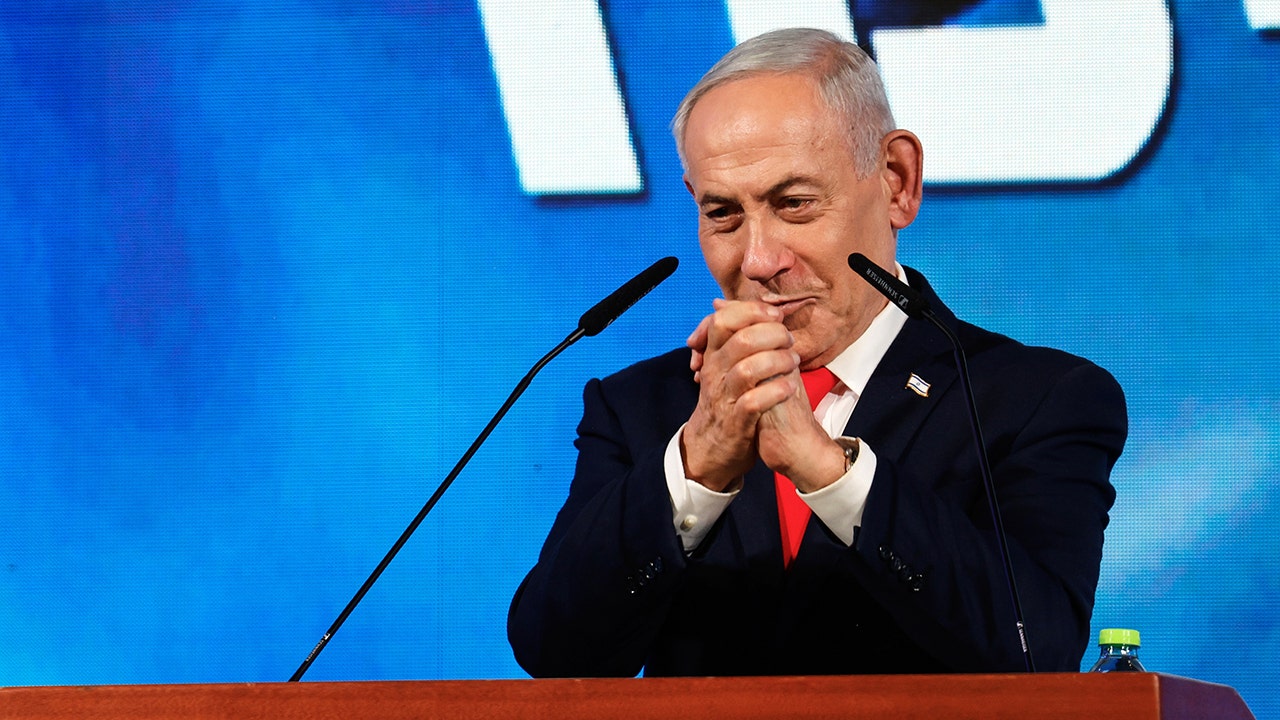
Netanyahu, Israel's longest-serving prime minister, campaigned on his record of confronting Iran and its regional proxies, highlighting Israel's military achievements and his relationship with President Donald Trump. asserted
Netanyahu → serve → Trump
His opponents accused him of failing to accept responsibility for the October 7 security failures and opposed his government's approach to investigating the failures that preceded the massacre. asserted
that → accuse → massacre
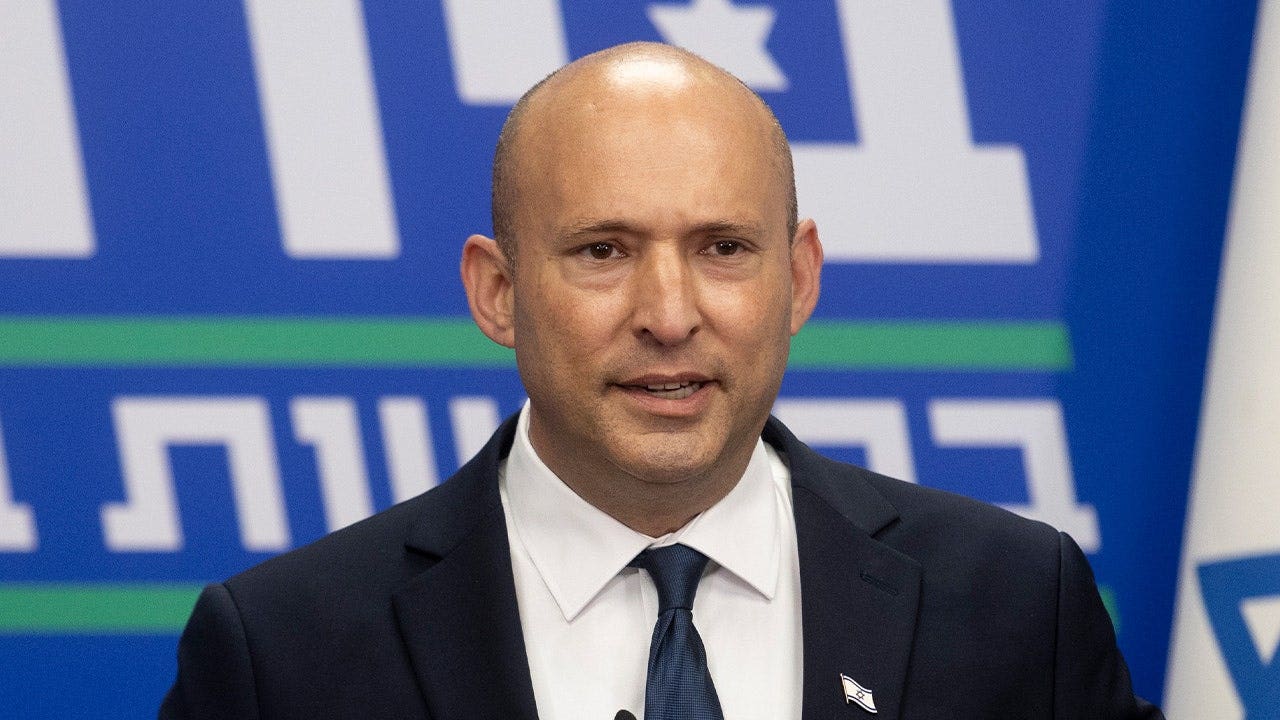
A last-minute battle for every vote Throughout the final hours of the campaign, Netanyahu, Eisenkot, former Prime Minister Naftali Bennett and other party leaders mounted an intensive effort to mobilize supporters and win over undecided voters. asserted
Netanyahu → mount → voters
Netanyahu's Likud party prepared hundreds of targeted campaign videos and social media messages, making digital outreach a central part of its last-minute election strategy. asserted
outreach → prepare → strategy
Eisenkot's campaign pushed supporters to rally behind Yashar as the leading alternative to Likud, while Bennett traveled between cities and engaged voters directly and through WhatsApp conversations. asserted
Bennett → push → conversations
The campaign's closing hours also featured personal appeals, phone calls to undecided voters and aggressive turnout operations across the political spectrum. asserted
hours → feature → spectrum
The final days were particularly important because a relatively small share of voters remained undecided about which party to support. asserted
share → remain → party
A Times of Israel poll published five days before the election found that 87% of respondents had already made their final choice, while 2.4% remained undecided between the pro- and anti-Netanyahu political blocs. asserted
% → publish → blocs
Other surveys suggested a larger pool of undecided voters, although many were choosing between parties within the same political camp rather than switching sides. uncertain
many → suggest → sides
That distinction could prove decisive in Israel's parliamentary system, where political parties need at least 3.25% of valid votes to enter the 120-seat Knesset. uncertain
parties → prove → Knesset
Even a slight change in the vote share of smaller parties could shift several parliamentary seats and determine whether either camp has a realistic path to power. What happens next? uncertain
What → shift → power
Despite the exit poll projections, the identity of Israel's next prime minister may remain uncertain for weeks. uncertain
identity → remain → weeks
Unlike in the United States, Israelis vote for political parties rather than directly electing their head of government. asserted
Israelis → vote → government
The 120 seats in parliament are allocated proportionally, and parties must secure at least 3.25% of valid votes to win representation. asserted
parties → allocate → representation
Once the final results are certified, Israeli President Isaac Herzog will consult with the newly elected political factions and select the lawmaker he believes has the strongest chance of forming a government. asserted
he → certify → government
That candidate will have 28 days to negotiate a governing coalition, with the possibility of a 14-day extension. asserted
candidate → have → extension
Official results are scheduled to be published by Nov. 4. asserted
results → schedule → Nov.
Until a new government takes office, Netanyahu's outgoing government will remain in power. asserted
government → take → power

💬Give feedback
🕘History 🎫Support