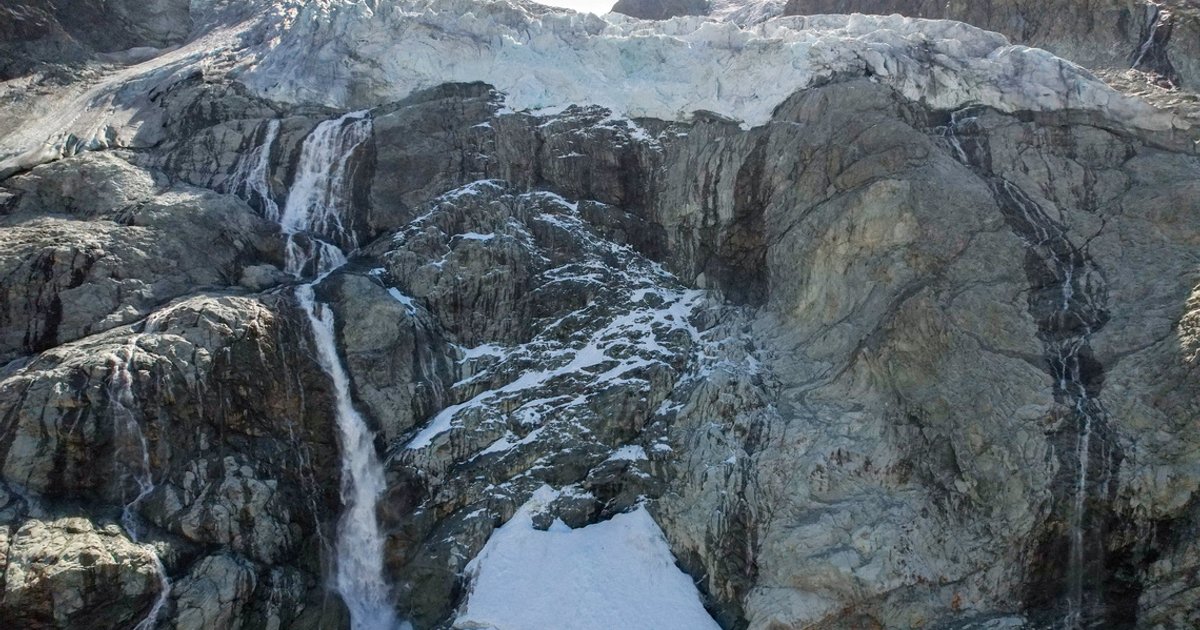
Photo via The Straits Times

UN reports warn of large-scale damage to Earth’s ice from climate change

Read the original at The Straits Times ↗
Cite

The Straits Times. (2026, November 2). UN reports warn of large-scale damage to Earth’s ice from climate change. The Straits Times. https://www.straitstimes.com/world/europe/un-reports-warn-of-large-scale-damage-to-earths-ice-from-climate-change

Dated from the outlet's own feed. Check the original for its byline.

The Straits Times · collected 2026-11-02 · by The Straits Times

Quick Summary

UN reports issued on November 2 warn about significant damage to Earth's ice due to climate change, emphasizing irreversible impacts if global temperatures exceed 1.5 degrees Celsius above pre-industrial levels. The reports highlight current warming at 1.37 degrees Celsius and project possible sea level rises up to five centimeters per year by 2150 under a worst-case scenario of 2.6 degrees Celsius warming by 2100, alongside severe consequences like permafrost thaw releasing large amounts of carbon dioxide.
Written by AI on 2026-11-02, from this article's own text only (the story summary below draws on all the coverage).

AI analysis

Story summary

On November 2, 2026, two UN reports issued in PARIS warned that exceeding 1.5°C of global warming will have irreversible consequences for glaciers, sea ice, and the Earth’s frozen regions. The landmark 2015 Paris Agreement aims to limit global warming to well below 2°C, with efforts to pursue a more ambitious target of 1.5°C to avoid climate change's worst impacts. However, current levels of warming are already unsafe for the Arctic, Antarctic, mountain glaciers, and polar oceans. Some effects of rising temperatures are already visible, such as a 20% loss in glacial mass in Switzerland. Even if returning to 1.5°C slows ice loss, a truly safe temperature is now thought to be closer to 1°C or even lower, emphasizing the urgent need for action.

Written for “UN Reports Warn Of Ice Damage” on 2026-11-03, grounded in this article and the 1 other(s) covering the same event.

Story

📰 UN Reports Warn Of Ice Damage
Environment · 2 article(s) covering the same event. See how they differ ↓

Compared with similar articles

This article reads unscored and hedges 19% of its claims. Each row says how that neighbour differs.
Dawn
⚖️ Leans left Hedges 4 of 18 claims Outlet record 72/100
How this article was measured signals, leaning charts, publisher record, byline, topics and claims

Signals How these are calculated →

Claims extracted
16
sentences that state something as happening or true
Uncertain
19%
3 of 16 hedged ("reportedly", "may", "according to")
Leaning
not political
takes no side on a contested political question
Publisher signals
66/100
The Straits Times's corrections and hedging, across everything collected from it. Not a measure of accuracy.
Outlets on this story
2
Environment
Same framing elsewhere
1
articles that frame the event the way this one does
Analyzed 2026-11-02 · how these are computed

How this is being covered How these are calculated →

Article leaning vs. publisher reliability
Source leaning vs. consistency

Publisher

The Straits Times · 4241 article(s) · 5 correction(s) detected
Running correction rate · 5 correction(s)

Who wrote this

The Straits Times
2766 article(s) here · 1 carrying a prediction
🔮 A US judge on Nov 2 temporarily barred the Trump administration from moving ahead with a plan it says would prevent non-citizen voting, but that critics say risks disenfranchising eligible voters and infringing on states’ authority over elections.
🔮 Distance from main parties Israeli President Isaac Herzog will begin meeting this week with representatives of parties that won seats in the Oct 27 vote, to determine to which leader to give the first shot at forming a government.
🔮 “And that would happen throughout the world,” he said adding that the world had been his “support network”.
🔮 When will we know who’s won the US midterm elections?
2026-11-03 · assertive framing · When will we know who’s won the US midterm elections?
🔮 Trump will have other ideas AI generated
2026-11-03 · mixed framing · Donald the Lame Duck? Trump will have other ideas
🔮 Itamar Ben Gvir, the far-right Israeli firebrand who achieved international notoriety as part of the outgoing government, fell short of expectations that he would gain ground in the latest election.
🔮 Earlier on Nov 2, US President Donald Trump raised doubts about whether he would follow through on a threatened resumption of military strikes against Iran and said a deal with Tehran could happen.
🔮 Investors nonetheless took his remarks as a sign that a fresh round of fighting between Tehran and Washington could be averted through diplomacy.
🔮 Now some of the local authorities have said they also fear that the President’s offer of a large financial incentive could foster unrest or even vigilantism, with Americans eyeing one another with suspicion as they head to the polls.
Also by The Straits Times
Nothing else under this byline is closely related to this article, so these are simply their most recent.
All 2766 articles by The Straits Times →

Topics

Australia European Copernicus PARIS Switzerland the University of New South Wales

Subjects

Australia GPE · 1× European Copernicus ORG · 1× Gunjan Silwal PERSON · 1× James Kirkham PERSON · 1× Kirkham PERSON · 1× Matthew England PERSON · 1× PARIS GPE · 1× Switzerland GPE · 1× the United States GPE · 1× the University of New South Wales ORG · 1×

Narrative

Some of the effects of the rise in temperature are already visible, such as the 20% loss in glacial mass in Switzerland. But even if the 1.5 deg C target remains relevant, it is already too high for the cryosphere, as current levels of warming were “already unsafe” for the Arctic, Antarctic, mountain glaciers and polar oceans, the UN warned. “Although returning to 1.5 deg C will slow ice loss, a truly ‘safe’ temperature for Earth’s ice is now thought to be closer to 1 deg C or even below over the coming centuries,” it added.
framing: assertive · carried by 1 article(s) · first seen 2026-11-02
🔮 PARIS - Exceeding 1.5 deg C of global warming will have “irreversible” consequences for glaciers, sea ice and the Earth’s frozen regions, two UN reports warned on Nov 2, calling for urgent action.
2026-11-02 · The Straits Times
UN reports warn of large-scale damage to Earth’s ice from climate change · assertive framing

Claims (16 extracted, 3 hedged)

UN reports warn of large-scale damage to Earth’s ice from climate change asserted
reports → warn → change
PARIS - Exceeding 1.5 deg C of global warming will have “irreversible” consequences for glaciers, sea ice and the Earth’s frozen regions, two UN reports warned on Nov 2, calling for urgent action. asserted
reports → exceed → action
The landmark 2015 Paris Agreement commits the world to limiting warming to well below 2 deg C and pursuing efforts to hold it at 1.5 deg C to try to avoid the worst effects of climate change. asserted
Agreement → commit → change
One of the reports said overshooting the 1.5 deg C target “will bring large-scale and in many cases irreversible impacts” for the cryosphere – Earth’s ice in all its forms. asserted
overshooting → say → forms
Melting of glaciers and sea ice, the thawing of permafrost and the accelerating rise in sea levels, will have widespread repercussions, from flooding to water shortages. asserted
Melting → accelerate → shortages
Some of the effects of the rise in temperature are already visible, such as the 20% loss in glacial mass in Switzerland. But even if the 1.5 deg C target remains relevant, it is already too high for the cryosphere, as current levels of warming were “already unsafe” for the Arctic, Antarctic, mountain glaciers and polar oceans, the UN warned. “Although returning to 1.5 deg C will slow ice loss, a truly ‘safe’ temperature for Earth’s ice is now thought to be closer to 1 deg C or even below over the coming centuries,” it added. asserted
it → remain → centuries
Global warming has already reached 1.37 deg C above pre-industrial levels and according to the European Copernicus network, the 1.5 deg C threshold could be exceeded around 2030. uncertain
threshold → reach → 2030
“There are no good outcomes in exceeding 1.5 deg C,” said glaciologist James Kirkham, lead author of one of the reports, entitled “Overshoot and the Cryosphere”, which was written with 80 scientists. asserted
which → be → scientists
“To contain the global fallout and damage from ice loss in the world’s polar and mountain regions, overshoot needs to be kept to the absolute minimum,” he said. “Every extra fraction of a degree and every year spent in overshoot means more devastating impacts. asserted
fraction → contain → impacts
Urgency Scientists warn in particular about the risks of crossing certain tipping points and say that, even if temperatures were to return to below the 1.5 deg C threshold, recovery would be very slow. Reducing warming to under 1.5 deg C and even 1 deg C could see some glaciers partially regenerate, while there could also be benefits for sea ice. But Matthew England, an oceanographer and climatologist at the University of New South Wales in Australia, said recovery could take “decades to centuries”. uncertain
recovery → warn → centuries
The second report – State of the Cryosphere 2026. The Cost of Overshoot – shows that exceeding 2.8 deg C into the next century would have significant consequences. asserted
exceeding → show → consequences
Sea levels could rise by up to five centimetres a year by 2150, compared to the current 0.45 centimetres while the thawing of permafrost could release as much carbon dioxide each year as the United States, the world’s second-largest polluter. uncertain
thawing → rise → States
A worst-case but not-so-improbable scenario is that the world is heading towards warming of 2.6 deg C by 2100 even if countries meet their climate commitments. asserted
countries → head → commitments
“Temporarily exceeding 1.5 deg C does not mean that the goals of the Paris Agreement are irrelevant but instead makes them more urgent,” argued Kirkham. asserted
Kirkham → exceed → Agreement
“Returning to 1.5 deg C or below by 2100 remains possible with sufficient political ambition and urgency, specifically by speeding the transition away from fossil fuel use to reach net-zero by mid-century,” he said. asserted
he → return → century
“Such urgent action can prevent and even reverse some cryosphere loss.” Gunjan Silwal, a Nepali glacier researcher, said decisions made in the next few years “will lock in the scale of the damage”, warning that August’s mountain and glacier collapse that killed more than 1,400 and left over 5,000 missing, was “only a foretaste”. asserted
that → prevent → 5,000

💬Give feedback
🕘History 🎫Support