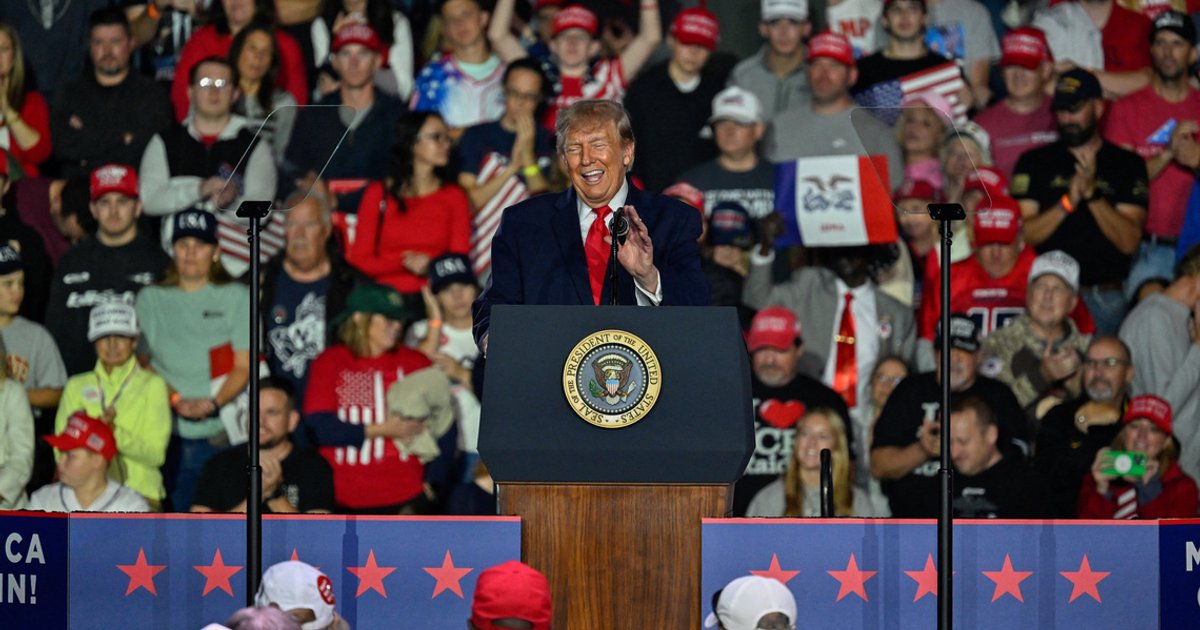
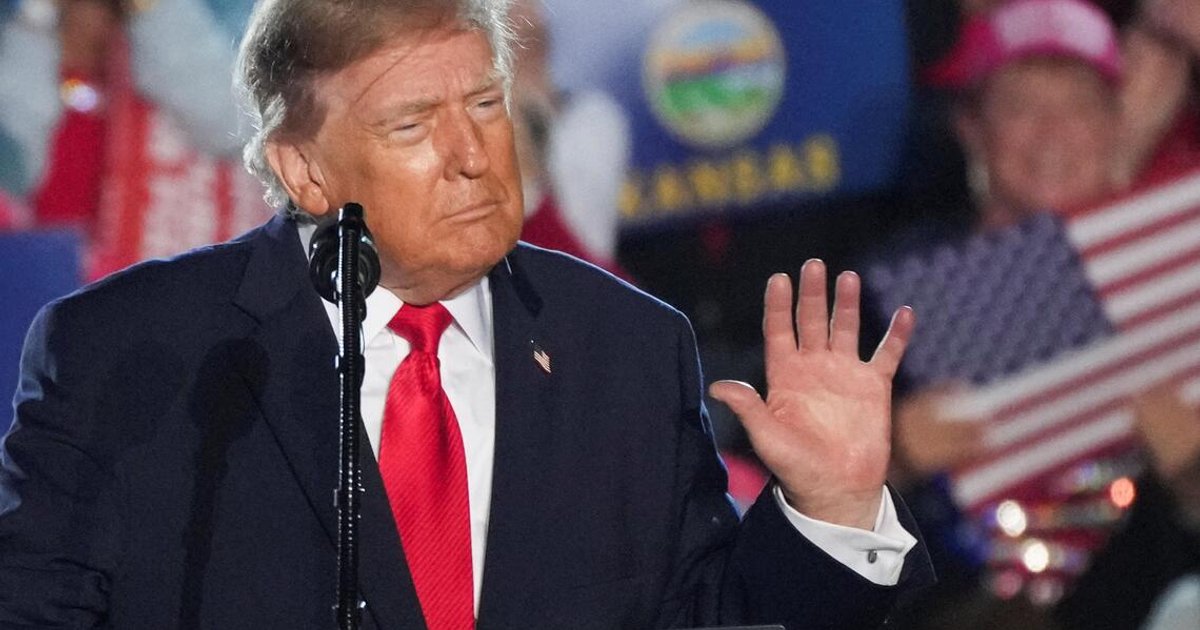
Photo via Global News

Why Trump could be more ‘aggressive’ as a lame duck president

Read the original at Global News ↗
Cite

Rana, U. (2026, November 4). Why Trump could be more ‘aggressive’ as a lame duck president. Global News. https://globalnews.ca/news/12136796/trump-lame-duck-president/

Dated from the outlet's own feed. Check the original for its byline.

Global News · collected 2026-11-04 · by Uday Rana

Quick Summary

The U.S. midterm elections resulted in Democrats gaining control of both the House and Senate, marking a significant setback for President Donald Trump. As he transitions into a lame-duck status, experts suggest that Trump may become more aggressive, using his executive powers extensively to push his agenda forward despite congressional opposition. Political analysts compare this potential scenario to Nixon's final months as president, citing historical precedent where presidents facing political challenges can exhibit belligerent behavior.
Written by AI on 2026-11-04, from this article's own text only (the story summary below draws on all the coverage).

AI analysis

Story summary

As of November 5, 2026, Democrats won control of both the House and the Senate in the U.S. midterm elections, marking a significant shift from the Republican majority previously holding power. The outcome is seen as a rejection of President Donald Trump's policies, including his war with Iran which contributed to rising gas prices and inflation. In Texas, Senator Ted Cruz called the results a “Watergate-level repudiation” of the GOP and warned that Democrats could push radical agendas harmful to states like Texas if not resisted strongly. The election results have also led to celebrations among American expatriates in London, with many viewing it as a sigh of relief for potential policy reversals on issues such as tariffs affecting countries like the UK.

Written for “US Midterm Election Results” on 2026-11-05, grounded in this article and the 608 other(s) covering the same event.

Story

📰 US Midterm Election Results
Politics · 609 article(s) covering the same event. Compare every outlet's account →

Compared with similar articles

This article reads leans right and hedges 8% of its claims. Each row says how that neighbour differs.
Al Jazeera
⚖️ Leans left further left than this Hedges 2 of 35 claims Outlet record 60/100
The Independent
⚖️ Leans left further left than this Hedges 4 of 21 claims Outlet record 59/100
The Straits Times
⚖️ Leans left further left than this Hedges 7 of 44 claims Outlet record 66/100
The Straits Times
⚖️ Leans left further left than this Hedges 6 of 95 claims Outlet record 66/100
“The articles discuss different aspects of President Trump's situation following midterm elections but do not describe the same specific incident or outcome.”
Al Jazeera
Hedges 2 of 3 claims Outlet record 60/100
“The articles discuss different aspects of the midterm election results and their implications for President Trump's presidency, rather than describing the same specific incident.”
South China Morning Post
⚖️ Leans left further left than this Hedges 1 of 8 claims Outlet record 62/100
“The articles describe different stages related to the midterm elections' outcomes and their implications for President Trump's presidency, rather than a single specific occurrence.”
Semafor
⚖️ Leans right Hedges 1 of 5 claims Outlet record 59/100
“The articles discuss related topics about Trump's future actions following midterm election defeats but do not describe the same specific incident or occurrence.”
The Straits Times
⚖️ Leans left further left than this Hedges 3 of 12 claims Outlet record 66/100
“While both articles discuss the results of the midterm elections, they describe different aspects and implications of the election outcome.”
Daily Mail
⚖️ Leans strongly right further right than this Hedges 5 of 46 claims Outlet record 69/100
“The articles discuss similar contexts but describe different aspects: Article A focuses on expected military actions against Iran post-election results, while Article B discusses Trump's potential aggressive behavior due to losing control of Congress.”
The Straits Times
⚖️ Leans right Hedges 9 of 31 claims Outlet record 66/100
“The articles discuss different aspects of potential scenarios for President Trump's presidency after midterm elections but do not describe the same specific incident or outcome.”
How this article was measured signals, leaning charts, publisher record, byline, topics and claims

Signals How these are calculated →

Claims extracted
39
sentences that state something as happening or true
Uncertain
8%
3 of 39 hedged ("reportedly", "may", "according to")
Leaning
Leans right
of the writing, not the subject · beta estimate
Publisher signals
63/100
Global News's corrections and hedging, across everything collected from it. Not a measure of accuracy.
Outlets on this story
609
Politics
Same framing elsewhere
1
articles that frame the event the way this one does
Analyzed 2026-11-04 · how these are computed

How this is being covered How these are calculated →

Article leaning vs. publisher reliability
Source leaning vs. consistency

Publisher

Global News · 2820 article(s) · 12 correction(s) detected
Running correction rate · 12 correction(s)

Who wrote this

Uday Rana
35 article(s) here · 1 carrying a prediction
🔮 The first half of Trump’s fractious second term in office concluded with him set to become a lame duck president now that control of the legislative chambers will be in the hands of the Democrats as of January, leaving him vowing to make extensive use of his presidential power to execute his agenda. Some experts say this signals a more combative Trump, willing to flex his executive muscle.
🔮 American voters are heading to the polls on Tuesday for the U.S. midterms and many in Ottawa will be watching the results closely for what it means for the future of U.S. President Donald Trump’s trade war and threats against Canada.
🔮 Americans will head to the polls on Tuesday for the midterms, with U.S. President Donald Trump’s war in Iran and trade war with Canada looming large in the election cycle.
🔮 A poor showing could end the 77-year-old’s lengthy career on a bitter note and open the door to a new era in Israeli politics.
🔮 While large data centre projects will require around 100 megawatts of power per building, there “may be some smaller ones” as well, he added.
🔮 He urged the Houthis and Saudi-backed government forces to avoid using explosive weapons in areas where they could hit civilians and civilian infrastructure.
🔮 Some employees would be offered transfers, but many would be out of work.
🔮 Member states of the International Energy Agency, including Canada, will release 20 million barrels of diesel “as soon as possible” into the global market to ease the pressure on fuel costs, the agency said in a statement.
🔮 “We don’t need them, but they need us,” Trump said, adding that Canada would be “doing something just like Greenland.”
🔮 Canadians shopping for a home say they are willing to live with mom and dad just to be able to afford a home, a new poll by the Royal Bank of Canada has found.
Also by Uday Rana
Nothing else under this byline is closely related to this article, so these are simply their most recent.
All 35 articles by Uday Rana →

Topics

Democrats Ohio Senate South Carolina U.S.

Subjects

Trump PERSON · 14× Democrats NORP · 8× Congress ORG · 3× Donald Trump PERSON · 2× Nixon PERSON · 2× Ohio GPE · 2× Senate ORG · 2× South Carolina GPE · 2× Texas GPE · 2× U.S. GPE · 2×

Narrative

The first half of Trump’s fractious second term in office concluded with him set to become a lame duck president now that control of the legislative chambers will be in the hands of the Democrats as of January, leaving him vowing to make extensive use of his presidential power to execute his agenda. Some experts say this signals a more combative Trump, willing to flex his executive muscle.
framing: assertive · carried by 1 article(s) · first seen 2026-11-04
🔮 The first half of Trump’s fractious second term in office concluded with him set to become a lame duck president now that control of the legislative chambers will be in the hands of the Democrats as of January, leaving him vowing to make extensive use of his presidential power to execute his agenda. Some experts say this signals a more combative Trump, willing to flex his executive muscle.
2026-11-04 · Global News
Why Trump could be more ‘aggressive’ as a lame duck president · assertive framing

Claims (39 extracted, 3 hedged)

Call it a blue wave or call it a red rout, the U.S. midterm elections delivered a huge blow to U.S. President Donald Trump as voters handed control of both the Senate and the House of Representatives to the Democrats on Tuesday. asserted
voters → call → Tuesday
The first half of Trump’s fractious second term in office concluded with him set to become a lame duck president now that control of the legislative chambers will be in the hands of the Democrats as of January, leaving him vowing to make extensive use of his presidential power to execute his agenda. Some experts say this signals a more combative Trump, willing to flex his executive muscle. asserted
this → conclude → muscle
“Lame ducks can be aggressive,” said Daniel Beland, director of the McGill Institute for the Study of Canada and a political science professor. asserted
Beland → say → Canada
Democrats flipped crucial Senate seats in Maine, Iowa, Kansas, North Carolina, South Carolina, Ohio and Texas. asserted
Democrats → flip → Maine
In a direct repudiation of Trump, several candidates in key races, including in South Carolina, Ohio and Texas, that Trump stumped for also lost to Democrats. asserted
Trump → include → Democrats
An embattled lame duck Trump might look a lot like an embattled Richard Nixon, who faced massive political headwinds over the Watergate scandal starting in 1972 until his resignation as president in 1974, said Drew Fagan, professor at the Munk School of Global Affairs and Public Policy. uncertain
Fagan → look → Affairs
The last days of the Nixon administration are documented in the book ‘Final Days,’ that paints the picture of a cornered president losing public support. asserted
that → document → support
“There’ve always been suggestions that Nixon in his final months or weeks was unstable,” Fagan said. “A lot of people would say Donald Trump’s been unstable for the last decade, and possibly longer.” A more belligerent Trump? uncertain
Trump → say → decade
Trump’s messaging has been mixed on how much he wants to cooperate with Democrats going forward. asserted
he → want → Democrats
In an interview with the New York Times, Trump said he was “absolutely willing to accept those results” and would “look forward to working with” Democrats. asserted
he → say → Democrats
However, he followed that up later in the evening by posting the picture of a red hat with the word “VETO” written on it. asserted
he → follow → it
In a rambling call-in to Fox News election special early Wednesday morning, Trump said he believes he “can work with (the Democrats) on many things.” asserted
he → say → things
But the president almost immediately said the Democrats could bring him 50 bills “they’re excited about” and he could veto each one. uncertain
he → say → one
What happens to Trump’s trade policy? asserted
What → happen → policy
The two areas where Trump can exercise the most amount of executive control are foreign policy and trade, Beland said. asserted
Beland → exercise → control
“In terms of foreign policy and trade, especially foreign policy, the president has a lot of power,” he said. asserted
he → have → power
The two major sets of tariffs – the Section 232 sectoral tariffs on steel, aluminum and autos as well as the sweeping 50 per cent Section 338 tariffs – were imposed via executive order, not Congress. asserted
sets → impose → order
Trump simply circumvented the U.S. Congress in imposing his tariffs on Canada. “In terms of trade, Congress normally should have a major say, but it hasn’t been the case since Trump returned to the White House,” Beland said. asserted
Beland → circumvent → House
For the Section 232 tariffs, Trump used the Trade Expansion Act of 1962 to exercise power. asserted
Trump → use → power
When imposing the Section 338 tariffs, he used an even older statute called the Trade Act of 1930, which enacted the so-called Smoot-Hawley tariffs, named after the Republican lawmakers who introduced the legislation during Herbert Hoover’s presidency. asserted
who → impose → presidency
“He interpreted that as giving him effectively, the right to impose tariffs, even if tariffs are taxes and that’s the responsibility of Congress,” Fagan said. asserted
Fagan → interpret → Congress
Until now, the act was arguably most famous for its mention during an iconic scene from the classic 1986 film Ferris Bueller’s Day Off, in which a droning high school teacher played by Ben Stein tries to teach Bueller’s class about the tariffs’ impact on the American economy. asserted
teacher → drone → economy
Section 338 of the act gives the president authority to determine “as a fact” whether a country’s trade policies discriminate against the U.S. and declare new or additional tariffs. asserted
policies → give → tariffs
Future of the Iran war Observers of Trump’s foreign policy will be watching “the war in Iran and the disruption that he can still cause,” Fagan said. asserted
Fagan → watch → that
On Tuesday, hours before voters were heading to the polls, Trump launched fresh strikes on Iranian targets in the Strait of Hormuz in a fresh sign of further escalation. asserted
Trump → head → escalation
The Middle East and beyond have been on edge about the prospects of the U.S. resuming full-scale operations against Iran for the first time in almost two months. asserted
U.S. → resume → months
Trump has alternated between threatening major strikes and pushing for a deal with Iran. asserted
Trump → alternate → Iran
Speaking to reporters after the midterm drubbing on Wednesday, Trump admitted that the war drove up the price of gasoline but added that “if I had to do it again, I’d have to do it again.” asserted
I → speak → it
Declaring war is the prerogative of Congress, not the president — but military action can be taken without a formal declaration of war. asserted
action → declare → war
Senate Minority Leader Chuck Schumer, who is poised to become the majority leader in January, said he will work with Republicans to end the war. asserted
he → poise → war
“We’re going to end the Iran war. asserted
We → go → war
We have some Republicans already who’ve joined us in ending the war,” Schumer said on Wednesday. asserted
Schumer → have → Wednesday
While Democratic control of Congress puts impeachment on the table, it will be a tall order. asserted
it → put → table
Trump was impeached twice during his first time. asserted
Trump → impeach → time
First in 2019, for abuse of power and obstruction of Congress, and later in January 2021, a week before his term ended, for inciting an insurrection. asserted
term → end → insurrection
In both instances, he was not removed from office because of the impeachment. asserted
he → remove → impeachment
A simple majority in the House is enough to impeach a president, but only a two-thirds vote by the Senate can convict and remove a president from office. asserted
vote → impeach → office
Trump has signaled he will become more confrontational in executing his agenda in the event of a Democratic sweep in the midterms. asserted
he → signal → midterms
“I guess I’ll become Mr. Veto,” Trump told the New York Post in a podcast that released on Monday. asserted
that → guess → Monday

💬Give feedback · no sign-in needed

No sign-in needed for now. Your note is sent without a name, so it cannot be answered.

🕘History 🎫Support