Photo via Semafor

Voters' data center rebuke hits some tech companies harder than others

Read the original at Semafor ↗
Cite

Capelouto, J. (2026, November 5). Voters' data center rebuke hits some tech companies harder than others. Semafor. https://www.semafor.com/article/11/04/2026/data-center-ballot-measures-hit-home-for-tech-giants

Dated from the outlet's own feed. Check the original for its byline.

Semafor · collected 2026-11-05 · by J.D. Capelouto

Quick Summary

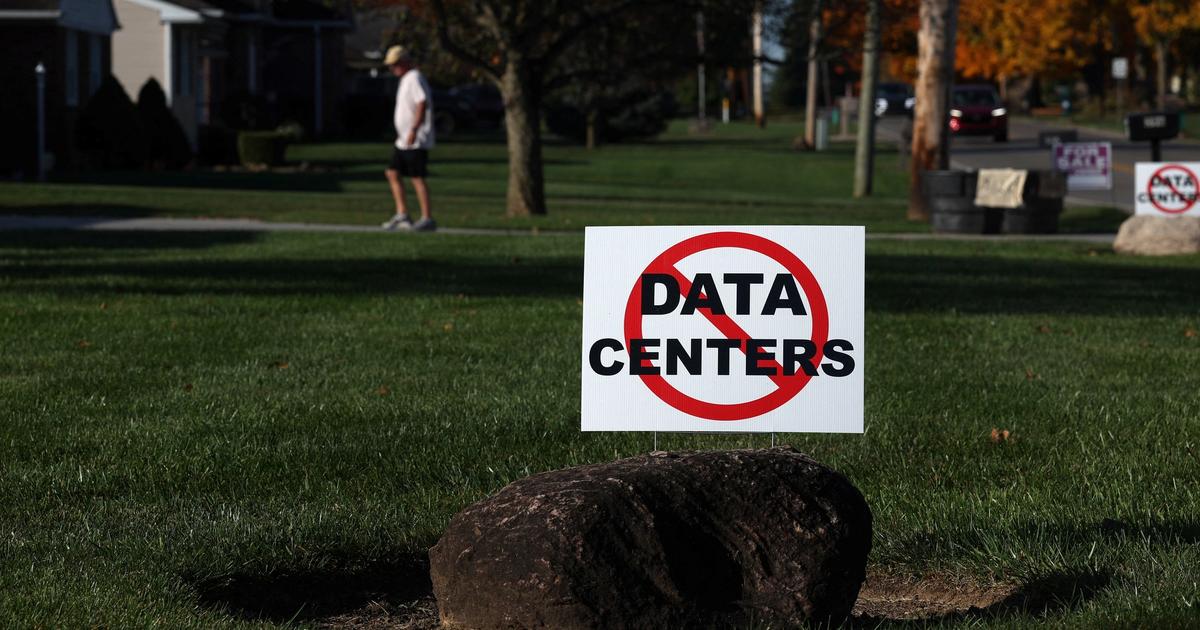
Voters in several Ohio towns rejected large data center projects backed by tech giants like Meta and Amazon. In Piqua, voters approved a ban on large data centers and recalled commissioners who supported Meta’s project, while similar bans passed in Trenton and Ashville. Nationwide, over 40% of planned US data center capacity is now subject to restrictions due to gubernatorial actions or ballot measures. This shift led to significant stock price drops for companies directly involved in building data centers, with Modine and Sterling Infrastructure seeing declines of about 21%. Meanwhile, stocks of hyperscaler tech giants like Meta rose as investors bet on increased value for their existing compute capacity under stricter regulations.
Written by AI on 2026-11-05, from this article's own text only (the story summary below draws on all the coverage).

AI analysis

Story summary

In the 2026 U.S. midterms, voters in numerous states rejected measures related to AI and data center development, dealing a significant blow to the tech industry's expansion plans. Ohio led with 21 ballot measures opposing large data centers, reflecting growing public concerns over environmental impacts and community disruptions. Other states like Texas, under Republican Governor Greg Abbott, saw efforts stall as new governors like Gina Hinojosa in Texas and Democrats across Georgia, Pennsylvania, and Michigan took office vowing stricter oversight. According to exit polls by NBC, 56% of voters cited AI and data centers as a "crucial or major factor" influencing their decisions. This rejection could slow down the rapid growth of tech companies like Meta and Amazon in key locations, potentially handing an advantage to competitors like China.

Written for “US Voters Reject Data Centers” on 2026-11-05, grounded in this article and the 16 other(s) covering the same event.

Story

📰 US Voters Reject Data Centers
Politics · 17 article(s) covering the same event. Compare every outlet's account →

Compared with similar articles

This article reads leans right and hedges 22% of its claims. Each row says how that neighbour differs.
CBS News
⚖️ Leans left further left than this Hedges 6 of 27 claims Outlet record 65/100
Reason
⚖️ Leans left further left than this Hedges 1 of 23 claims Outlet record 67/100
“While both articles discuss voter sentiment against data centers during elections, they describe different aspects of the overall trend: Article A focuses on the shift in public opinion and its potential impact on election outcomes, while Article B details specific ballot measures and results in Ohio.”
Reason
Hedges 4 of 32 claims Outlet record 67/100
“While both articles discuss voter sentiment against data centers across multiple states, Article A is a broader overview of ballot measures nationally, while Article B focuses specifically on several local results in Ohio.”
Washington Examiner
⚖️ Leans left further left than this Hedges 0 of 2 claims Outlet record 69/100
“While both articles discuss voter sentiment against data centers across multiple states, Article A provides an overview of nationwide results, whereas Article B focuses on specific ballot measures in Ohio.”
South China Morning Post
⚖️ Leans strongly left further left than this Hedges 1 of 3 claims Outlet record 62/100
“While both articles discuss voter backlash against data center projects, they describe different specific events - Article A provides a broader analysis of the trend nationally, while Article B focuses on specific local ballot measures and elections in Ohio.”
Semafor
⚖️ Leans left further left than this Hedges 0 of 7 claims Outlet record 59/100
“While both articles discuss a national trend against data centers through ballot measures on November 4th, they describe different specifics. Article A mentions Edgewater, Florida and Perry, Ohio while Article B focuses on several locations in Ohio (Piqua, Trenton, Ashville).”
404 Media
⚖️ Leans strongly left further left than this Hedges 1 of 40 claims Outlet record 95/100
“While both articles discuss a nationwide trend against data centers, Article A covers a broader overview of voting results across multiple states, while Article B focuses on specific local races in Ohio. They do not describe the same specific incident at the same time and place.”
New York Post
Hedges 7 of 35 claims Outlet record 66/100
“While both articles discuss voter sentiment towards data centers during election time, they describe different aspects of the issue: Article A is a broader commentary on national polls and lack of importance to voters, while Article B focuses specifically on local ballot measures in Ohio.”
Semafor
⚖️ Leans left further left than this Hedges 2 of 3 claims Outlet record 59/100
“While both articles discuss anti-tech sentiment and data center issues, they describe different specific events and outcomes.”
The Straits Times
Hedges 1 of 26 claims Outlet record 66/100
“While both articles discuss anti-data center sentiment during US midterms, they describe different specific events: Article A focuses on Democratic wins and moratoriums in Texas and Georgia, while Article B discusses local ballot measures in Ohio.”
How this article was measured signals, leaning charts, publisher record, byline, topics and claims

Signals How these are calculated →

Claims extracted
18
sentences that state something as happening or true
Uncertain
22%
4 of 18 hedged ("reportedly", "may", "according to")
Leaning
Leans right
of the writing, not the subject · beta estimate
Publisher signals
59/100
Semafor's corrections and hedging, across everything collected from it. Not a measure of accuracy.
Outlets on this story
17
Politics
Same framing elsewhere
1
articles that frame the event the way this one does
Analyzed 2026-11-05 · how these are computed

How this is being covered How these are calculated →

Article leaning vs. publisher reliability
Source leaning vs. consistency

Publisher

Semafor · 1518 article(s) · 3 correction(s) detected
Running correction rate · 3 correction(s)

Who wrote this

J.D. Capelouto
26 article(s) here · 1 carrying a prediction
🔮 The votes were hyperlocal and often emotional in nature, but they could carry financial consequences, because some of the projects at stake were already in motion.
🔮 Anthropic advertises a salary floor of $265,000 for charmers willing to spend half their time on the road in increasingly hostile territory.
2026-10-30 · assertive framing · The AI boom spawns job market for data-center liaisons
🔮 The company reported an 85% gross profit margin on the core work of running its existing AI models — as The Information wrote, it’s “a reality check” for skeptics who thought the consumption-based, pay-as-you-go pricing wouldn’t be profitable.
2026-10-28 · assertive framing · Anthropic’s key number is its 85% gross margin
🔮 If even they’ve given up on “SI,” there may be little hope for it catching on among the general public.
🔮 Another feature lets users build a 3D map of their house, then pull in Ring cameras to monitor people and cars moving around outside — the kind of spatial data home robots will eventually need, too.
2026-10-28 · mixed framing · Tech companies lean into AI at home
🔮 Proof-of-human technology, which can let a person vouch for the AI agents acting on their behalf, could keep bad bots off of websites without forcing platforms to block all of them.
2026-10-23 · mixed framing · The race to tell humans from AI agents
🔮 The New York City chapter of the Democratic Socialists of America is divided over whether the AI industry is a destructive capitalist force that could kill everyone, or merely an overhyped capitalist hustle.
🔮 Eventually, Perla said he wants to launch the “New York Token Exchange,” a marketplace for AI models in which thousands of models from thousands of hosting providers — any data center willing to run an open model — would compete to serve each request, turning AI tokens into a commodity that could be traded with futures, hedges, and price indices, like oil or electricity.
2026-10-16 · mixed framing · OpenRouter challenger closes seed round
🔮 More than half of the references to data centers on Fox News over the last two years would have left viewers with a favorable impression, compared to less than 10% on CNN and 5% on MS NOW, according to a new Semafor analysis of mentions of data centers on each network.
🔮 The AI bill is coming for governments and businesses, and no one knows whether the money will be there to pay it.
2026-10-02 · assertive framing · AI costs are rising for organizations, reports warn
Also by J.D. Capelouto
Nothing else under this byline is closely related to this article, so these are simply their most recent.
All 26 articles by J.D. Capelouto →

Topics

Ashville Meta Ohio Piqua Trenton

Subjects

Ohio GPE · 5× Meta ORG · 3× Piqua GPE · 3× Amazon ORG · 2× Ashville GPE · 2× Congress ORG · 2× Democrats NORP · 2× Semafor ORG · 2× Trenton GPE · 2× Washington GPE · 2×

Narrative

Incoming Democrats in the House and Senate say they’re going into Congress with a mandate to do something about AI data centers, and Republican groups who pushed their party to listen to grassroots concerns about data centers are saying Washington Republicans can only blame themselves for the midterm losses after aligning with AI companies.
framing: mixed · carried by 1 article(s) · first seen 2026-11-05
🔮 The votes were hyperlocal and often emotional in nature, but they could carry financial consequences, because some of the projects at stake were already in motion.

Claims (18 extracted, 4 hedged)

In Piqua, Ohio, voters on Tuesday approved a ban on large data centers and recalled the commissioners who backed Meta’s massive project there. asserted
who → approve → project
In Trenton, less than 50 miles south, a similar ban passed. asserted
ban → pass → Trenton
And outside Columbus, the heart of Ohio’s data center boom, voters in Ashville repealed the village’s deal with developer EdgeConneX. These Ohio races were part of a swell of anti-data-center sentiment that echoed across the country in dozens of ballot measures concerning bans, moratoriums, or stricter regulations and oversight. asserted
that → repeal → bans
The votes were hyperlocal and often emotional in nature, but they could carry financial consequences, because some of the projects at stake were already in motion. uncertain
some → carry → motion
- Meta bought more than 600 acres in Piqua last year for about $110 million, and signed agreements with the city in January. asserted
Meta → buy → January
“We are proud of our investments in Ohio, and will work with local officials to determine the future of our investment in Piqua,” a Meta spokesperson told Semafor on Wednesday. asserted
spokesperson → work → Wednesday
- Amazon had proposed a 600-acre campus on land Trenton hoped to annex; the ban effectively blocks that plan, according to local news. uncertain
ban → propose → news
An Amazon spokesperson didn’t directly comment on the vote but said the company is “committed to setting a high bar for responsible data center development in Ohio, and will continue engaging communities early as we build out this important infrastructure.” asserted
we → comment → infrastructure
- EdgeConneX said its development in Ashville is moving forward despite the vote, given that its permits are secured and construction is underway. asserted
construction → say → vote
More than 40% of the US’ planned data center capacity is located in states where governors or governors-elect have pledged or already imposed a pause on new data centers, according to a Cleanview analysis. uncertain
governors → plan → analysis
That doesn’t mean the data center buildout will grind to a halt, but markets are pricing in a slowdown. asserted
markets → mean → slowdown
Shares of companies that are directly exposed to the physical buildout of data centers tanked Wednesday, including Modine (a maker of data center HVACs, down about 21%) and Sterling Infrastructure (site prep and electrical work, also down 21%). asserted
that → expose → HVACs
Hyperscaler stocks, though, soared, with traders betting they will be forced to rein in the rapid spending that has pushed their free cash flow to negative territory. asserted
that → soar → territory
More restrictions on data center construction also means tech giants’ compute capacity “potentially even becomes more valuable,” Morgan Stanley US Equities Strategist Andrew Pauker told Semafor. asserted
Pauker → mean → Semafor
The View From Washington Tech companies are also recalibrating their data center strategies in Washington as they prepare for a Democrat-controlled Congress. asserted
they → recalibrate → Congress
One tech-focused public affairs adviser suggested companies work with Democrats to craft national rules around data center development. uncertain
companies → focus → development
Incoming Democrats in the House and Senate say they’re going into Congress with a mandate to do something about AI data centers, and Republican groups who pushed their party to listen to grassroots concerns about data centers are saying Washington Republicans can only blame themselves for the midterm losses after aligning with AI companies. asserted
Republicans → income → companies
Ellen DiMauro contributed to this story. asserted
DiMauro → contribute → story

💬Give feedback · no sign-in needed

No sign-in needed for now. Your note is sent without a name, so it cannot be answered.

🕘History 🎫Support