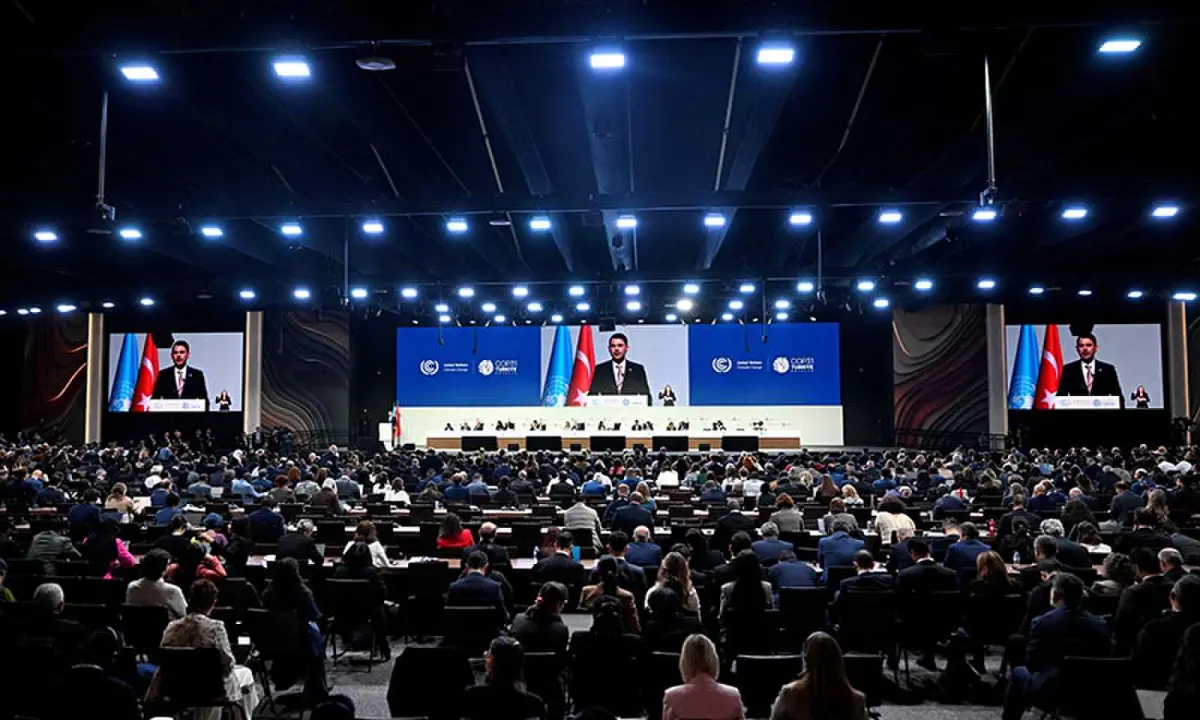
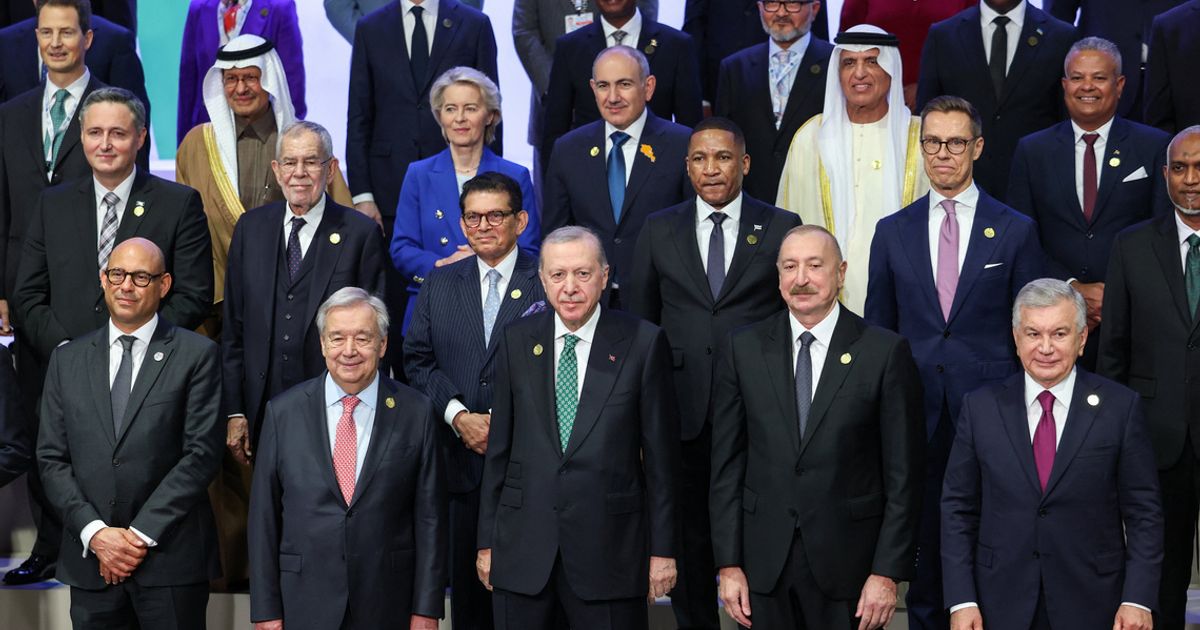
Right now, thousands of diplomats, bureaucrats and campaigners are meeting in Türkiye yet again for the 31st United Nations climate summit.
asserted
thousands → meet → summit
The demand will be the one made repeatedly at previous conferences: net zero by 2050.
asserted
demand → make → 2050
What nobody will say is what that costs, or what it buys.
asserted
it → say → what
In 30 summits, nobody has calculated the price versus the benefit.
asserted
nobody → calculate → benefit
So I have.
asserted
I → have → ?
I built NetZeroCostBenefit.com that lets anyone see what the United States, or any other country or group of countries, would achieve by reaching net zero in 2050, what it would cost, and what the climate benefit would be worth.
asserted
benefit → build → what
None of the inputs are mine: The climate model, MAGICC, is used throughout the UN’s own climate reports and can translate any country’s promised emissions cuts into lower temperatures by 2100.
asserted
model → use → 2100
The costs come from the UN’s own surveys of economic models, and the damage estimates from the two most recent syntheses of the economics of warming.
asserted
costs → come → warming
Anyone can check the arithmetic, though few delegates in Antalya will want to.
asserted
delegates → check → Antalya
For its latest report and updates, the climate panel gathered nearly a thousand model estimates of what climate policy costs.
asserted
policy → gather → what
Almost none of them get anywhere near net zero by 2050, because it is so hard and costly.
asserted
it → get → 2050
Only three models reach net zero starting from today’s actual emissions, rather than assuming cuts that began years ago.
asserted
that → reach → cuts
They find that global net zero would cost between 3% and 19% of global GDP in 2050, because expensive energy throttles growth.
asserted
energy → find → growth
My website uses the middle one, estimating a loss of 7.2% of GDP in 2050, measured from current policies.
asserted
website → use → policies
The benefits come from the two most recent syntheses of the damage from warming, by one of the most quoted climate economists, Richard Tol, and the other by William Nordhaus, the only climate economist to win the Nobel prize in economics.
asserted
benefits → come → economics
Given the warming the UN model projects under current policies, they find that climate change will cost the world 1.8% to 2.8% of GDP by 2100.
asserted
change → give → 2100
That is a real loss, but nowhere near the catastrophes bandied about.
asserted
That → bandy → catastrophes
Moreover, net zero only avoids part of the damage.
asserted
zero → avoid → damage
Nor does one country’s effort buy much.
asserted
effort → buy → much
If the United States reaches net zero in 2050 and stays there, the UN model says global temperature in 2100 would be 0.14°F lower.
asserted
temperature → reach → 2100
Nobody would notice.
asserted
Nobody → notice → ?
Yet Americans would certainly notice the cost: by 2045 the annual cost would be $1.2 trillion a year.
asserted
cost → notice → 2045
Over the century the cost adds up to $12.7 trillion in today’s money.
asserted
cost → add → money
The global climate benefit adds up to just under $2 trillion.
asserted
benefit → add → trillion
The American sacrifice delivers 15 cents of benefits for every $1 spent.
asserted
sacrifice → deliver → 1
Some will object that no country should look at its own numbers this way, because if everyone notices large costs but tiny benefits, nothing will get done.
asserted
nothing → object → costs
But a global deal that only works if nobody checks the numbers is not much of a deal.
asserted
nobody → work → deal
And the math doesn’t improve by pooling: the website shows that every nation ends up doing much less good for the world than what they put in.
asserted
they → improve → what
Indeed, when you look at the whole world, global net zero by 2050 would avoid $24 trillion in climate damage this century but cost $255 trillion, both in today’s money.
asserted
net → look → money
That’s 9 cents on the dollar.
asserted
That → ’ → dollar
The problem isn’t that countries act alone.
asserted
countries → act → ?
It’s that the policy itself costs more than it delivers.
asserted
it → ’ → more
Fossil fuels remain cheap and plentiful, despite price fluctuations.
asserted
fuels → remain → fluctuations
It is little wonder that they still supply more than four-fifths of global energy, and emissions rose again last year.
asserted
emissions → supply → energy
At the pace of the past half-century, they won’t be gone by 2050.
asserted
they → go → 2050
They’ll be gone a millennium later, in 2997.
asserted
They → go → 2997
There are much better ways to spend money than chasing “net zero,” although most won’t be on the climate agenda at COP31.
asserted
most → be → COP31
The summit president has already made the August glacier flood in Nepal, which killed more than 1,400 people, his exhibit A: “If we want to understand the consequences of climate change, we need only look at Nepal.”
asserted
we → make → Nepal
Yet nothing agreed in Antalya will make the next flood measurably smaller.
asserted
flood → agree → Antalya
Early-warning systems and sturdier bridges would save far more Nepalese lives, far sooner, for far less money.
asserted
systems → save → money
…and 6 more, not listed.
 The Aporia